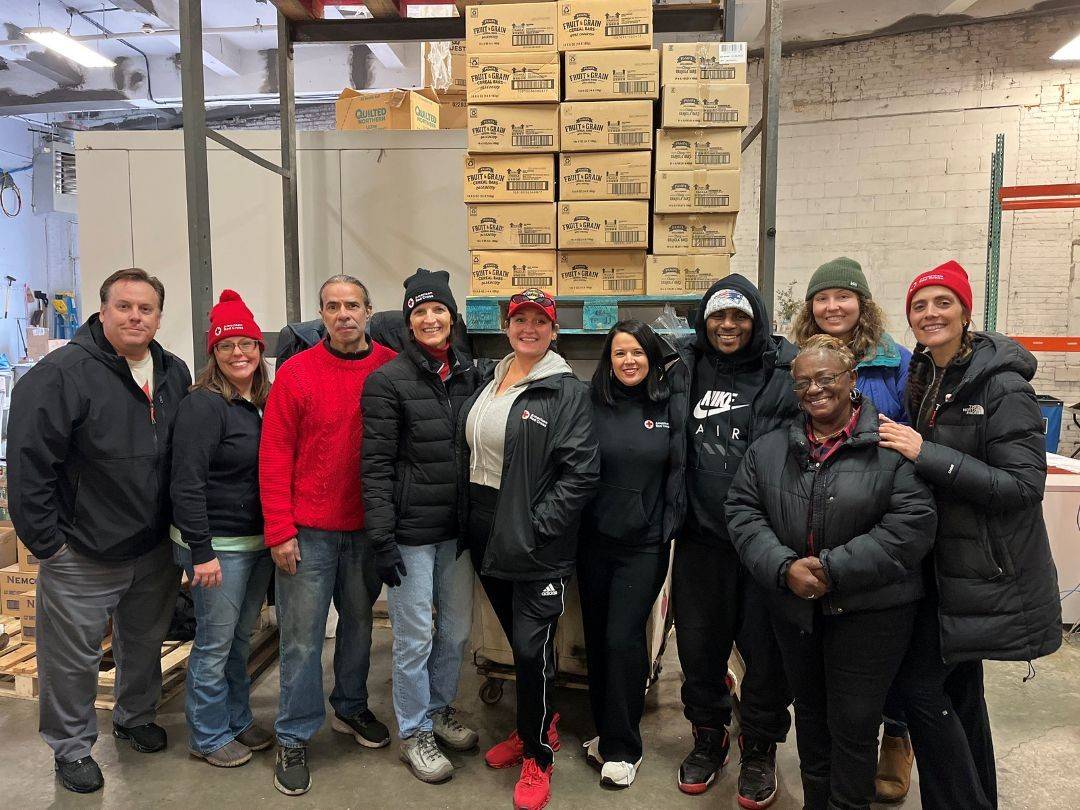
The American Red Cross Massachusetts Region is part of the largest and most diverse service organization in the United States, serving the 6.9 million residents of the 351 cities and towns of Massachusetts.
Has the Red Cross impacted your life? Share your story.
Do you have a great Red Cross experience to share? Has the Red Cross impacted your life as a client, volunteer or through one of our training programs? If so, we want to hear from you!
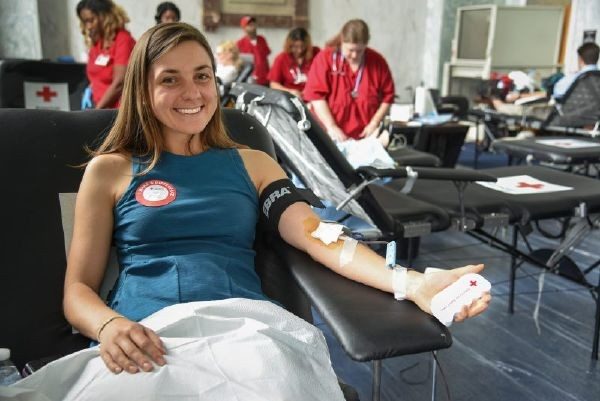
The need for blood is constant and your contribution is important for a healthy and reliable blood supply. You will feel good knowing you've helped change a life. Schedule an appointment at one of our locations.
View Locations
Blood Donation Center Locations
Springfield Red Cross Blood, Platelet and Plasma Donation Center - MA
Feb. 4, 2026 BOSTON — The first professional football game Eric Jellison attended in person was Super Bowl LX, thanks to a blood donation he made in January 2026. Eric has been a blood donor most of his life, but it was his donation on January 2 near his home in Wakefield that became a … Continue reading "Local fan wins big with trip to Super Bowl LX"
New Bedford – The stretch of Acushnet Avenue running through New Bedford’s North End operates on a distinct rhythm. It is a neighborhood built on a century of arrivals, where old-school Portuguese bakeries and restaurants sit shoulder to shoulder with Central American markets and family-run businesses. But the architecture that makes this area so close-knit … Continue reading "Smoke on The Ave: A North End Block Rallies After A Restaurant Fire"
INTERNATIONAL SERVICES ACTIVITY UPDATE September 17, 2026 The International Services Monthly Activity Update provides a brief snapshot of significant international disaster events that the American Red Cross is currently responding to and monitoring. This update will also feature clips of stories, blog posts and photos published on redcross.org and affiliated sites about our ongoing international … Continue reading "Red Cross Mission Work Across the Globe"
INTERNATIONAL SERVICES ACTIVITY UPDATE August 20, 2026 The International Services Monthly Activity Update provides a brief snapshot of significant international disaster events that the American Red Cross is currently responding to and monitoring. This update will also feature clips of stories, blog posts and photos published on redcross.org and affiliated sites about our ongoing international … Continue reading "Red Cross Mission Work Across the Globe"
INTERNATIONAL SERVICES ACTIVITY UPDATE July 15, 2026 The International Services Monthly Activity Update provides a brief snapshot of significant international disaster events that the American Red Cross is currently responding to and monitoring. This update will also feature clips of stories, blog posts and photos published on redcross.org and affiliated sites about our ongoing international … Continue reading "Red Cross Mission Work Across the Globe"