


Ensure every member of your family learns to swim so they at least achieve skills of water competency: able to enter the water, get a breath, stay afloat, change position, swim a distance then get out of the water safely.
Employ layers of protection including barriers to prevent access to water, life jackets, and close supervision of children to prevent drowning.
Know what to do in a water emergency – including how to help someone in trouble in the water safely, call for emergency help and CPR.
It only takes a moment. A child or weak swimmer can drown in the time it takes to reply to a text, check a fishing line or apply sunscreen. Death and injury from drownings happen every day in home pools and hot tubs, at the beach or in oceans, lakes, rivers and streams, bathtubs, and even buckets.
The Red Cross believes that by working together to improve water competency – which includes swimming skills, water smarts and helping others – water activities can be safer… and just as much fun.

Red Cross swim lessons help children & adults gain water safety and swimming skills. Ages 6 months – adult.
Water competency is a way of improving water safety for yourself and those around you through avoiding common dangers, developing fundamental water safety skills to make you safer in and around the water, and knowing how to prevent and respond to drowning emergencies. Water competency has 3 main components: water smarts, swimming skills and helping others.
Take these sensible precautions when you’re around water (even if you’re not planning to swim):
Learn how to perform these 5 skills in every type of water environment that you may encounter (such as in home pools, oceans, lakes, rivers and streams):
These actions will help your family avoid emergencies – and help you respond if an emergency occurs:
Want to learn more about water competency? Check out Water Safety USA, a consortium of the American Red Cross and other leading national governmental and nongovernmental organizations whose mission includes drowning prevention.

Provide close and constant attention to children you are supervising in or near water.

Fence pools and spas with adequate barriers, including four-sided fencing.

Learn swimming and water safety survival skills.

Children, inexperienced swimmers, and all boaters should wear U.S. Coast Guard-approved life jackets.

Always swim in a lifeguarded area.
Don’t wait until it’s too late: learn how to respond to aquatic and other emergencies by taking Red Cross first aid, CPR and water safety courses.

Recognize the signs of someone in trouble and shout for help.

Rescue and remove the person from the water (without putting yourself in danger).

Ask someone to call emergency medical services (EMS). If alone, give 2 minutes of care, then call EMS.

Begin rescue breathing and CPR.

Use an AED if available and transfer care to advanced life support.


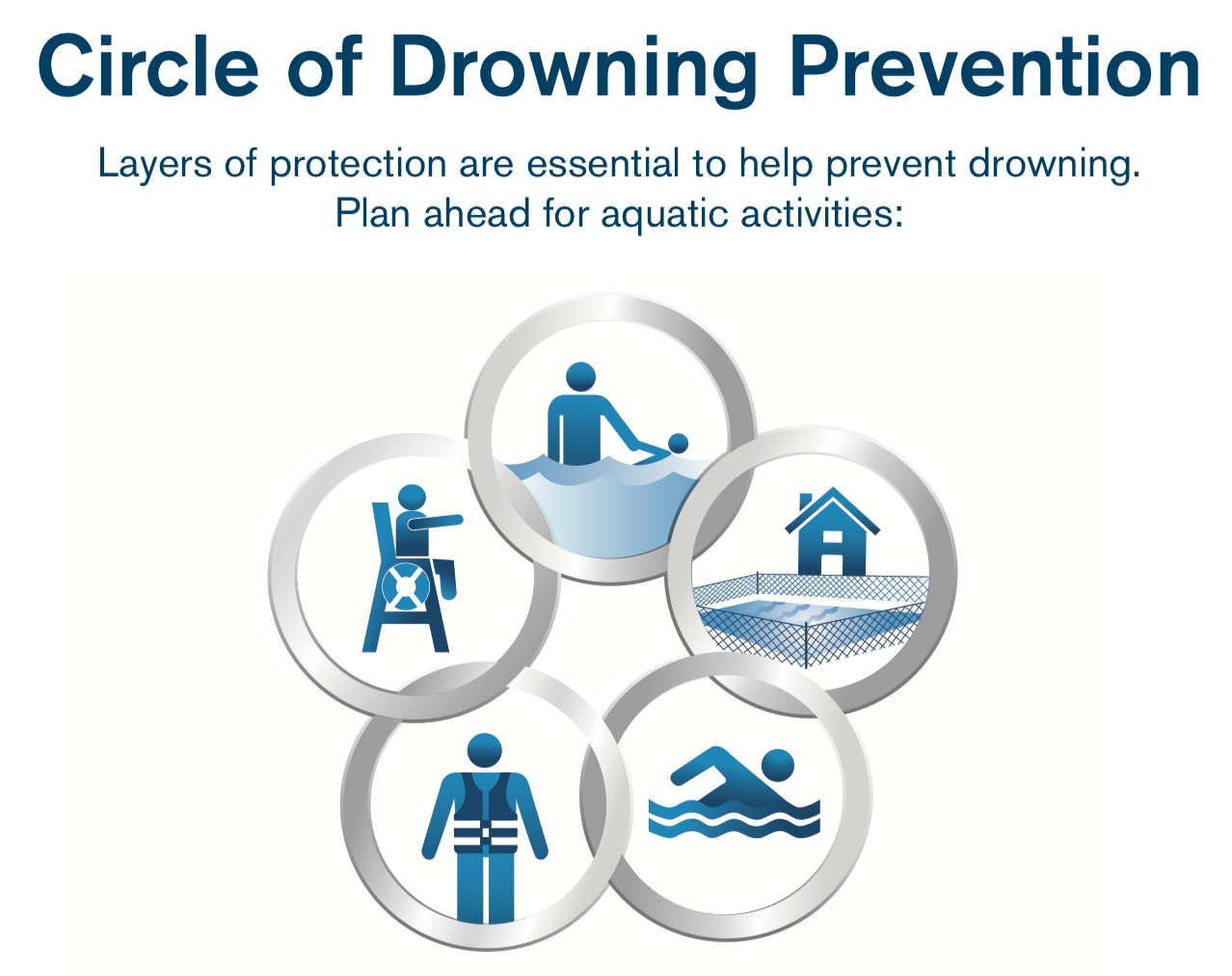
Layers of protection are essential to help prevent drowning. Plan ahead for aquatic activities. Available in English, Spanish, and Haitian Creole.
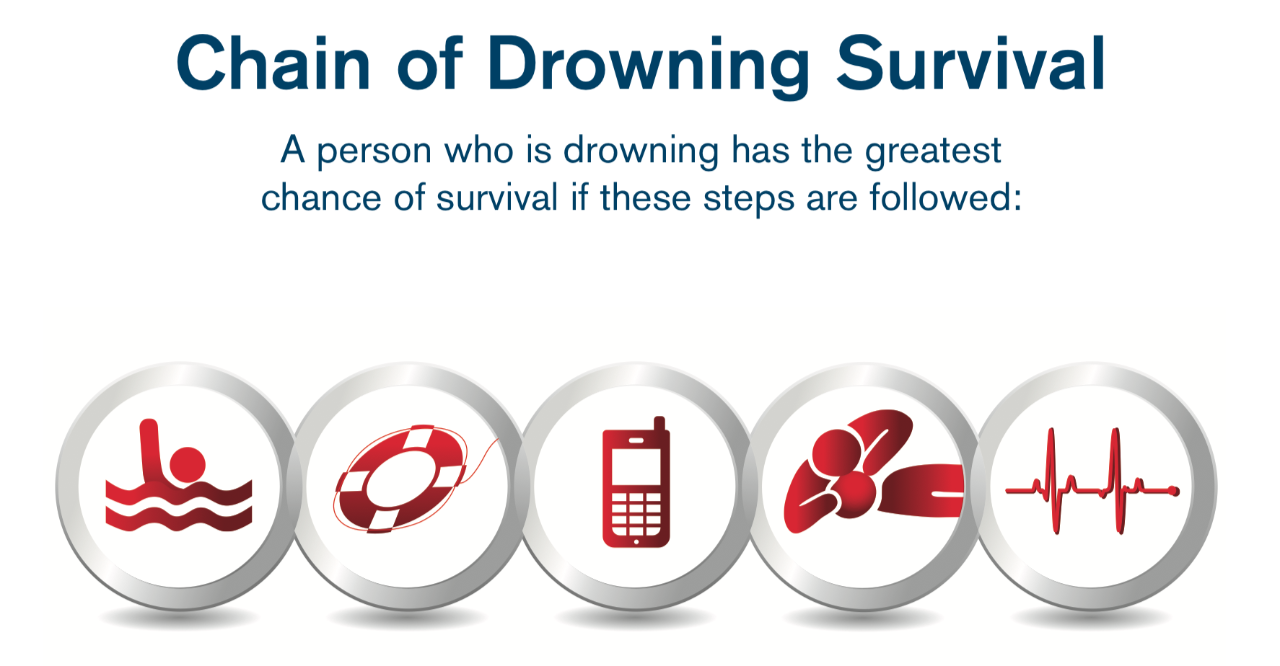
A person who is drowning has the greatest chance of survival if these steps are followed. Available in English, Spanish, and Haitian Creole.
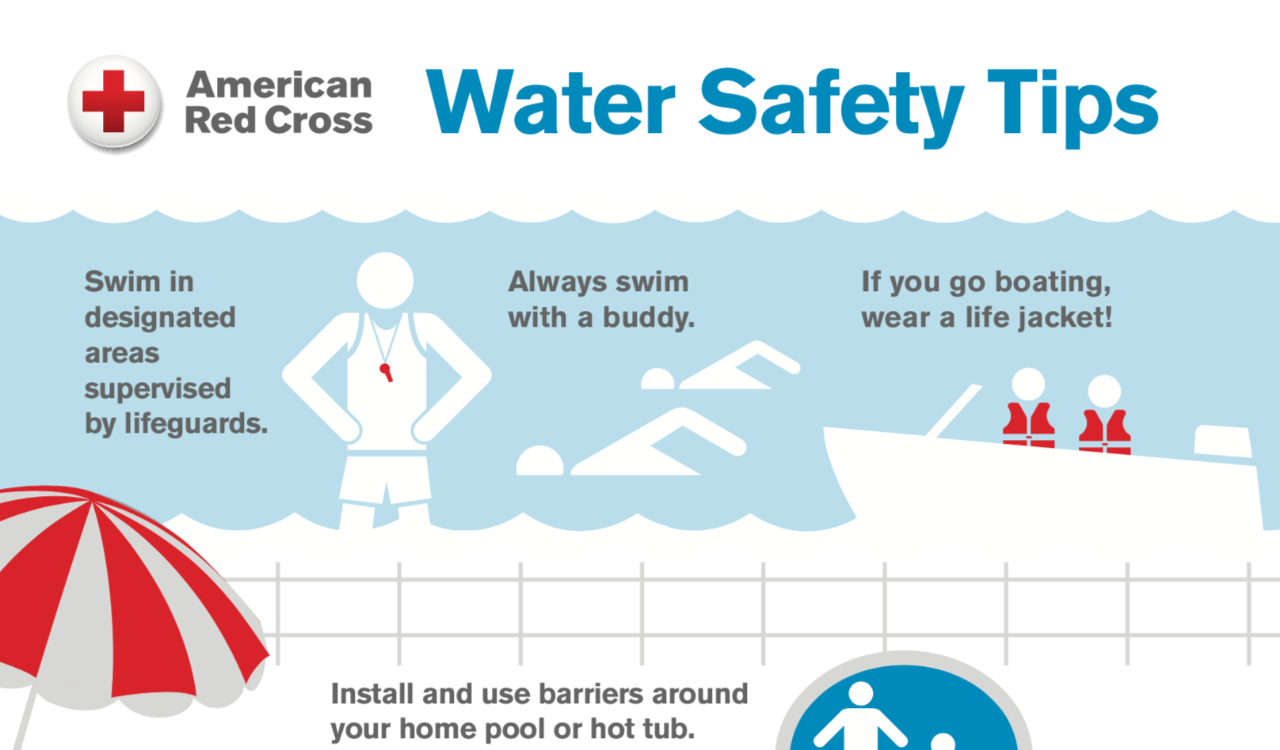
See our top tips for staying safe in the water.
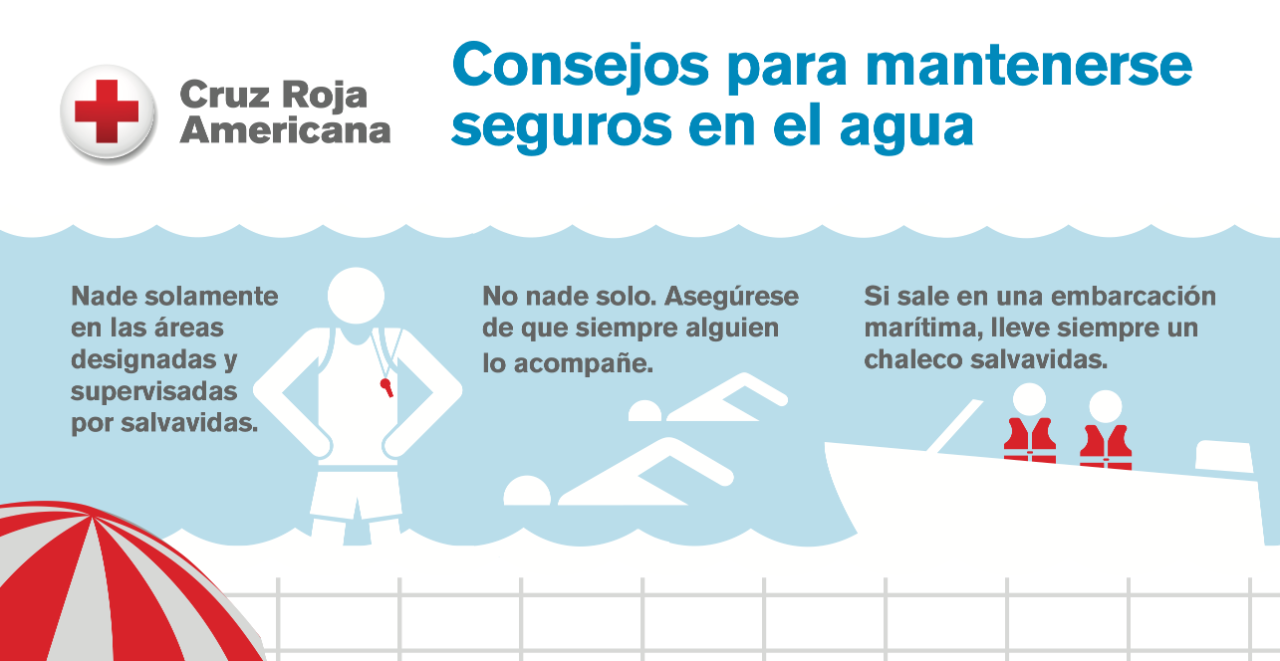
Learn the top 5 tips to save yourself in the water. Available in English, Spanish, and Haitian Creole.
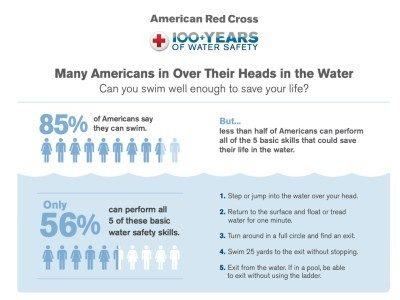
Can you swim well enough to save your own life?
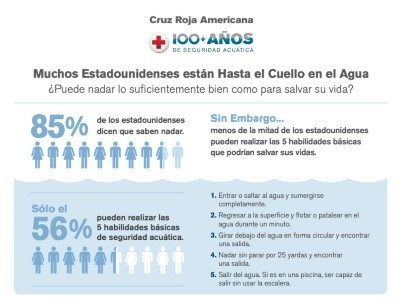
¿Puede nadar lo suficientemente bien como para salvar su vida?
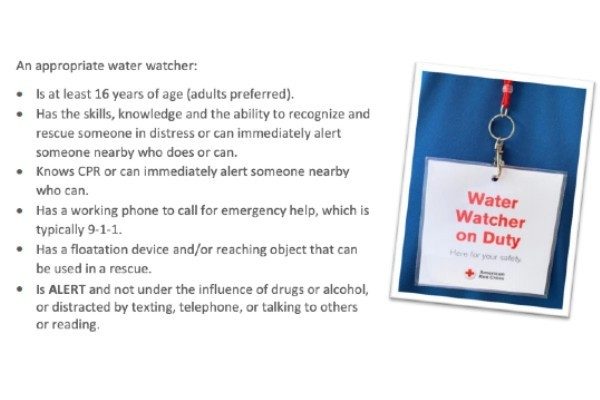
Learn the importance of water watchers for keeping children safe during in-water activities.
Help Your Family Be Safer in and Around Water. Children and adults can learn to be safer in and around water with Swim by the American Red Cross. Knowing how to swim is exciting and opens the door to many opportunities, but water is not without risk. Learning to enjoy the water safely should be the first step for anyone who will be around water. Have fun learning water safety in an engaging way with video and activities for kids and families. Track your kids’ progress with this FREE app as they learn to swim.


Or text: "SWIM" to 90999
Thanks to our sponsor

Call: 1-800-RED-CROSS (1-800-733-2767)
Email: support@redcrosstraining.org
Hours