Tsunami Preparedness
Learn how, why and where to evacuate if conditions suggest a tsunami risk in your area.
Need Help Now?
If you are in immediate need of help, please contact your local Red Cross or find an open shelter.
Tsunamis are large ocean waves generated by major earthquakes beneath the ocean floor or major landslides into the ocean. Rising to several feet or higher, they can strike the coast with devastating force. People on beaches or in low coastal areas, such as estuaries and rivers, need to be aware that a tsunami could arrive within minutes of a severe earthquake – and the danger period can continue for many hours. Tsunamis can occur any time of year, day or night.
Top Tips
Know the difference!
Before a Tsunami
VIDEO: 3 Easy Steps to Prepare
Prepare in Advance
How to Prepare for a Tsunami
• Prepare a pet emergency kit for your companion animals.
• Ensure that any outbuildings, pastures, or corrals are protected in the same way as your home. Fence lines should enable your animals to move to higher ground in the event of a tsunami.
• Avoid building or living in buildings within several hundred feet of the coastline. These areas are more likely to experience damage from tsunamis, strong winds, or coastal storms. For more information, check out the Institute for Business and Home Safety at www.ibhs.org.
• If you do live in a coastal area, elevate your home to help reduce damage. Most tsunami waves are less than 10 feet (3 meters).
• Take precautions to prevent flooding.
• Have an engineer check your home and advise about ways to make it more resistant to tsunami water. There may be ways to divert waves away from your property. Improperly built walls could make your situation worse.
• Make a list of items to bring inside in the event of a tsunami watch or warning being issued for your area. But remember, you may need to evacuate immediately – don’t risk your safety to save your belongings.
During a Tsunami
If You Feel a Strong Coastal Earthquake
• Drop, cover, and hold on to protect yourself from the earthquake.
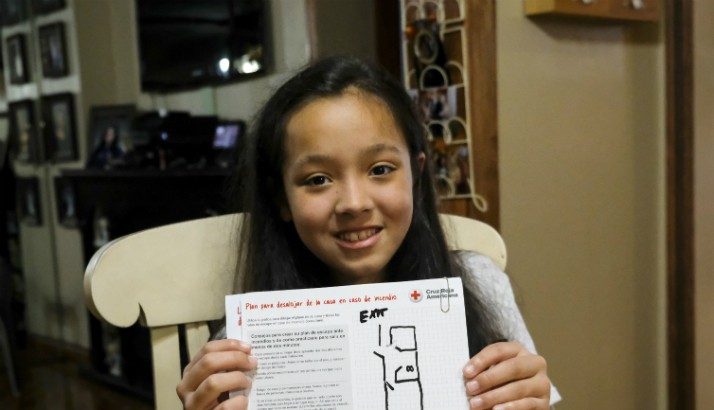
• When the shaking stops, gather members of your household and review your evacuation plan. A tsunami may be coming within minutes.
• Use a NOAA Weather Radio or stay tuned to a Coast Guard emergency frequency station, or a local radio or television station for updated emergency information.
• Follow instructions issued by local authorities. Recommended evacuation routes may be different from the one you planned, or you may be advised to climb higher.
• If you hear an official tsunami warning or detect signs of a tsunami, evacuate at once. A tsunami warning is issued when authorities are certain that a tsunami threat exists, and there may be little time to get out.
• Take your emergency preparedness kit. Having supplies will make you more comfortable during the evacuation.
• If you evacuate, take your animals with you. If it is not safe for you, it is not safe for them.
• Get to higher ground as far inland as possible. Watching a tsunami from the beach or cliffs could put you in grave danger. If you can see the wave, you are too close to escape it.
• Avoid downed power lines and stay away from buildings and bridges from which heavy objects might fall during an aftershock.
• Stay away until local officials tell you it is safe. A tsunami is a series of waves that may continue for hours. Do not assume that after one wave the danger is over. The next wave may be larger than the first one.
• If you evacuate, take your animals with you. If it is not safe for you, it is not safe for them.
• Get to higher ground as far inland as possible. Watching a tsunami from the beach or cliffs could put you in grave danger. If you can see the wave, you are too close to escape it.
• Avoid downed power lines and stay away from buildings and bridges from which heavy objects might fall during an aftershock.
• Stay away until local officials tell you it is safe. A tsunami is a series of waves that may continue for hours. Do not assume that after one wave the danger is over. The next wave may be larger than the first one.
After a Tsunami
Staying Safe After a Tsunami
If you do nothing else:
1. Let friends and family know you’re safe.
2. If evacuated, return only when authorities say it is safe to do so.
3. Continue listening to local news or a NOAA Weather Radio for updated information and instructions.
4. If people around you are injured, practice CHECK, CALL, CARE. Check the scene to be sure it’s safe for you to approach, call for help, and if you are trained, provide first aid to those in need until emergency responders can arrive.
After a Tsunami
Take pictures of home damage, both of the buildings and its contents, for insurance purposes.
Tsunami Fact vs Fiction
Fiction
Tsunamis are giant walls of water.
Fact
Occasionally, tsunamis can form walls of water (known as tsunami bores) but tsunamis normally have the appearance of a fast-rising and fast-receding flood. They can be similar to a tide cycle occurring in just 10 to 60 minutes instead of 12 hours.
Fiction
A tsunami is a single wave.
Fact
A tsunami is a series of waves. Often the initial wave is not the largest. In fact, the largest wave may not occur for several hours. There may also be more than one series of tsunami waves if a very large earthquake triggers local landslides which in turn trigger additional tsunamis.
Fiction
Boats should move to the protection of a bay or harbor during a tsunami.
Fact
Tsunamis are often most destructive in bays and harbors, not just because of the waves but because of the violent currents they generate in local waterways. Tsunamis are least destructive in deep, open ocean waters.
Fiction
A tsunami is the same thing as a tidal wave.
Facts
Tidal waves are regular ocean waves, and are caused by the tides. These waves are caused by the interaction of the pull of the moon’s gravity on the earth. A “tidal wave” is a term used in common folklore to mean the same thing as a tsunami, but is not the same thing.
You are using an outdated browser. Please