
American Red Cross Hawaiʻi History and Legacy
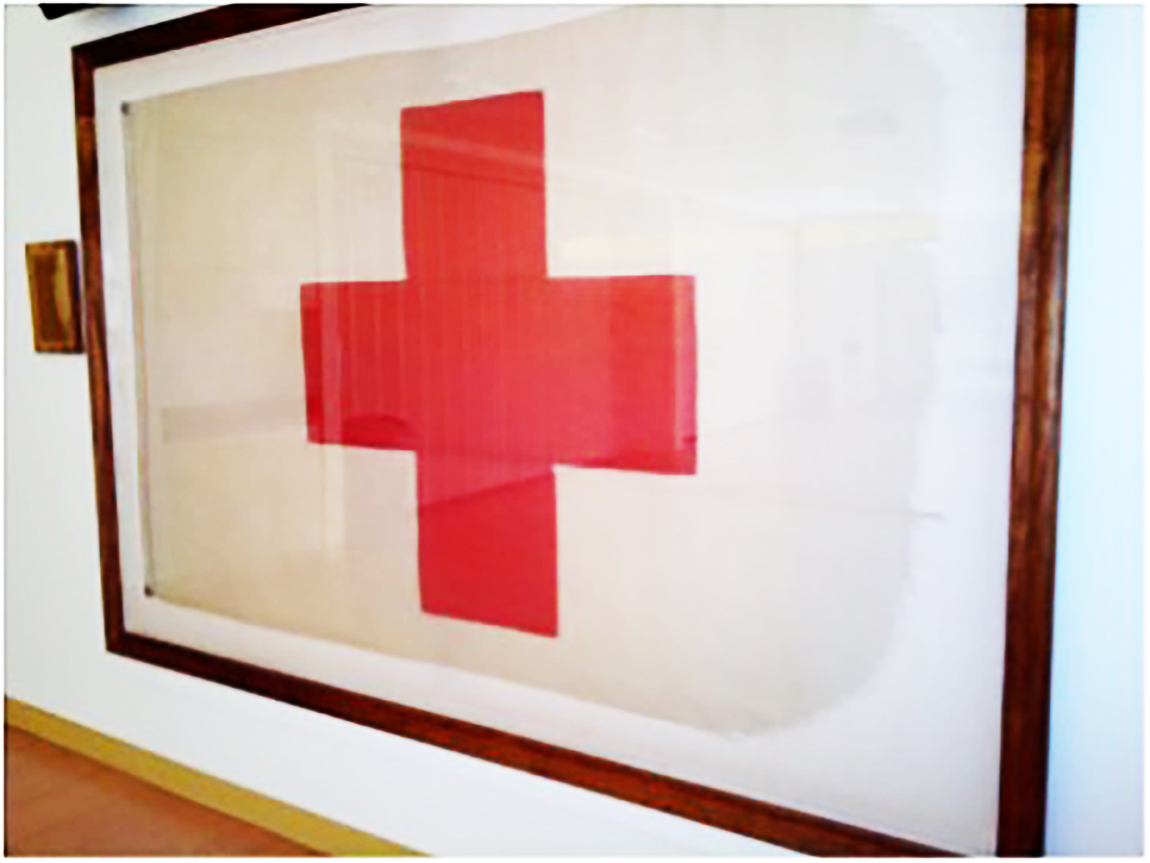
Queen Liliʻuokalani’s hand‑stitched Red Cross flag, which once flew above ʻIolani Palace.
Queen Liliʻuokalani’s hand‑stitched Red Cross flag, which once flew above ʻIolani Palace.
The American Red Cross in Hawaiʻi was formally chartered in 1917, during World War I, though Red Cross activities had taken place in the islands earlier during the Spanish-American War in 1898. The Hawaiʻi chapter was established as part of a national effort to provide humanitarian aid to wounded soldiers and civilians, independent of government affiliation, political belief or social standing.
From its earliest days, the Red Cross promise in Hawaiʻi was clear: to provide compassionate assistance to people in need, without discrimination. That principle drew widespread community support and inspired generations of leaders, volunteers and supporters across the islands.
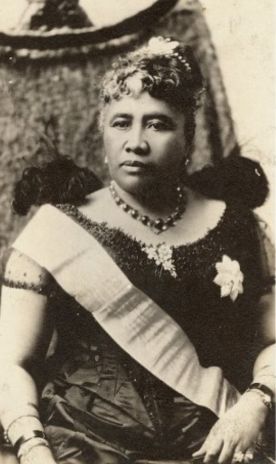
Drawn to the organization’s humanitarian, Queen Liliʻuokalani supported the Red Cross during the final years of her life.
Queen Liliʻuokalani was a documented supporter of the Red Cross in Hawaiʻi during the final years of her life. She was drawn to the organization’s humanitarian purpose and its commitment to aiding those affected by war and suffering, regardless of nationality or status.
In September 1917, Queen Liliʻuokalani became a patron in perpetuity of the American Red Cross with a $100 donation, a significant contribution at the time. Her patronage supported the launch of the first Red Cross membership drive in Hawaiʻi, which raised more than $16,000 and enrolled approximately 16,000 members, representing a substantial portion of Oʻahu’s population.
During this period, while living at Washington Place, the Queen, with the assistance of helpers, sewed a large Red Cross flag. At her request, the flag flew above ʻIolani Palace throughout World War I as a visible sign of support for humanitarian relief efforts. On Sept. 14, 1917, the flag was formally presented to the American Red Cross.
The Queen described the flag as “an expression of my warm and hearty sympathy for the cause of humanity.” Today, the flag is preserved by the American Red Cross and displayed in the boardroom of the Hawaiʻi Red Cross headquarters at Diamond Head, where it remains a tangible symbol of her humanitarian legacy.
Although Duke Kahanamoku was not formally enrolled as a Red Cross volunteer, his connection to Red Cross service was shaped early in his life. His mother was actively involved in volunteer service, instilling in him strong values of community responsibility and generosity.
As an Olympic gold medalist and internationally recognized waterman, Duke traveled widely giving swimming and surfing demonstrations. Because amateur athletes were prohibited from earning income at the time, Duke spent his personal time knitting socks, scarves and sweaters, which he sold to raise money. A portion of those proceeds was donated to the American Red Cross to support wartime relief efforts.
Duke also had a lasting impact on water safety. During visits to Hawaiʻi by Wilfred E. Longfellow, a leader in Red Cross water safety and lifesaving education, the two developed a collaborative relationship. Duke shared his extensive knowledge of ocean swimming, surf rescue and lifesaving techniques, which informed and strengthened Red Cross water safety and lifeguarding programs nationwide.
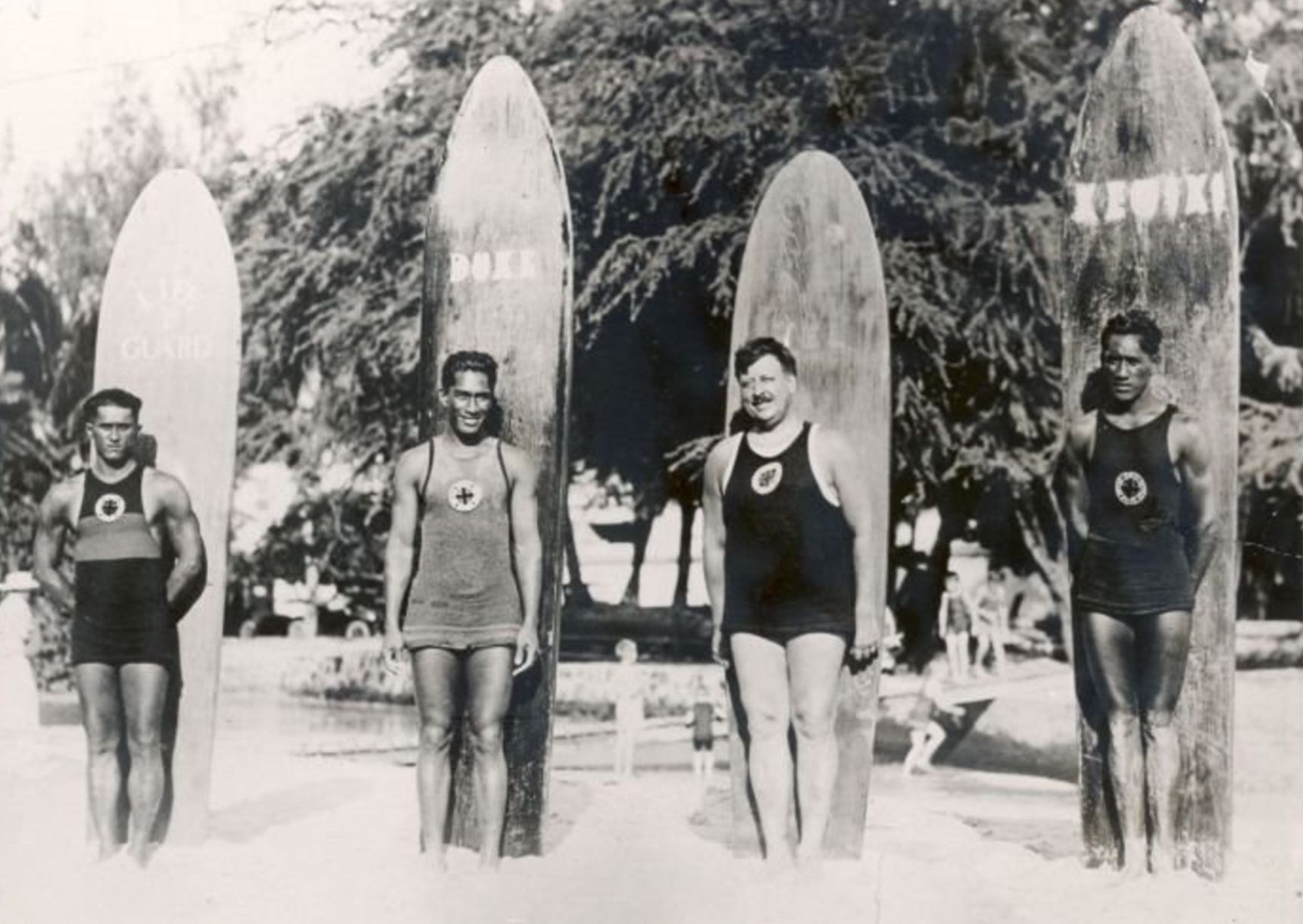
Duke, second from left and Wilfred Longfellow, second from right.
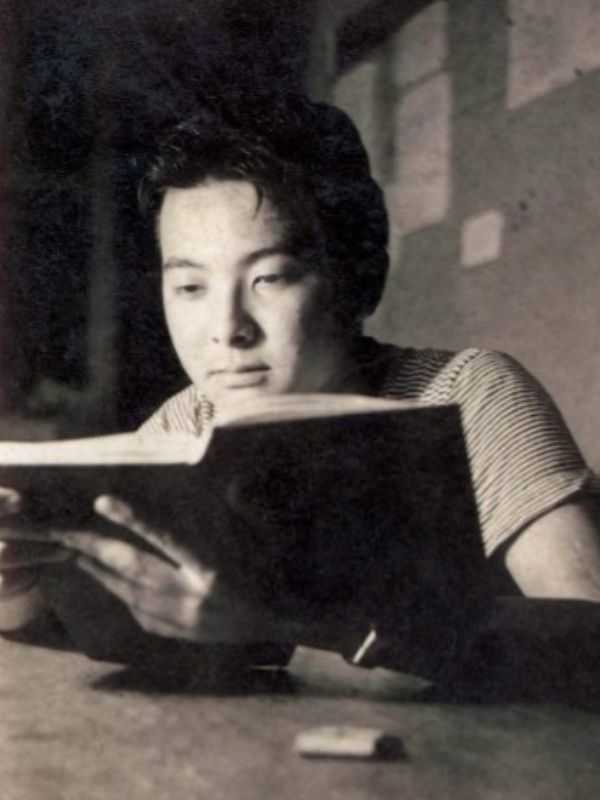
17‑year‑old Daniel Inouye studying for a Red Cross first aid exam.
On December 7, 1941, 17-year-old Daniel K. Inouye responded to the attack on Pearl Harbor by reporting to a Red Cross first aid station. Using skills gained through Red Cross first aid training, he assisted in caring for individuals injured during the attack.
Inouye worked continuously for several days, often sleeping little and returning only briefly for food, as the Red Cross mobilized emergency aid across Oʻahu. His actions reflected the critical role of Red Cross-trained youth and volunteers during one of the most significant crises in Hawaiʻi’s history.
After turning 18, Daniel K. Inouye enlisted in the U.S. Army, later becoming a decorated World War II veteran and, ultimately, a long-serving United States senator. His early service through the Red Cross foreshadowed a lifetime dedicated to public service and leadership.
From Queen Liliʻuokalani’s wartime patronage, to Duke Kahanamoku’s contributions to water safety, to Daniel K. Inouye’s hands-on service during Pearl Harbor, the history of the American Red Cross in Hawaiʻi is deeply intertwined with compassion, civic responsibility and community care.
These legacies continue to guide the American Red Cross in Hawaiʻi as it carries out lifesaving work across the islands today.