By Kate Walters, American Red Cross
Paper maps covered the table as six American Red Cross volunteers leaned toward a laptop, tracing roads through the Aspen Acres Fire burn area and deciding where each team would begin.
Some homes were already marked with digital pins. Others remained hidden beneath smoke in earlier aerial images or sat along roads that had only recently reopened. The assignment was simple in purpose but exacting in practice: find damaged homes, document what happened and make sure no one was overlooked.
As the Red Cross response to the Aspen Acres Fire in Southern Colorado begins to shift toward recovery, damage assessment teams are working across Beulah, Colorado City and Rye. The information they collect will help determine which residents may be eligible for Red Cross recovery assistance.
Before volunteers entered the field, technology had already provided an important first look. A Red Cross dashboard compiled information gathered through virtual imagery, allowing teams to review the fire's path and identify concentrations of damage. At the time of the briefing, 272 properties had been assessed virtually, including 267 homes classified as destroyed.
The virtual work had focused primarily on locating destroyed homes. Field teams would look more closely, searching for homes with major or minor damage, properties affected by the fire and locations that remained inaccessible.
Technology changed where the day began. Instead of starting with a blank map, volunteers could focus on roads where damage appeared likely, verify homes already marked and search for properties that smoke, tree cover or limited imagery may have obscured.
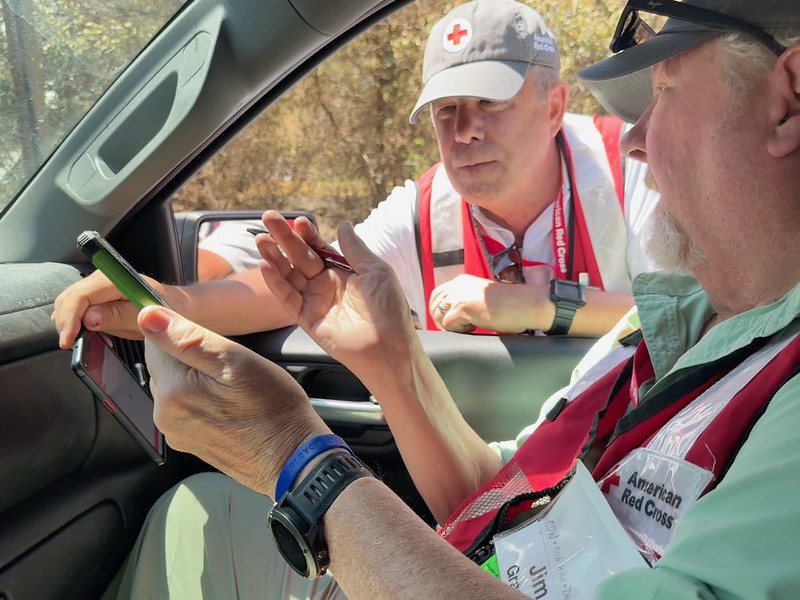
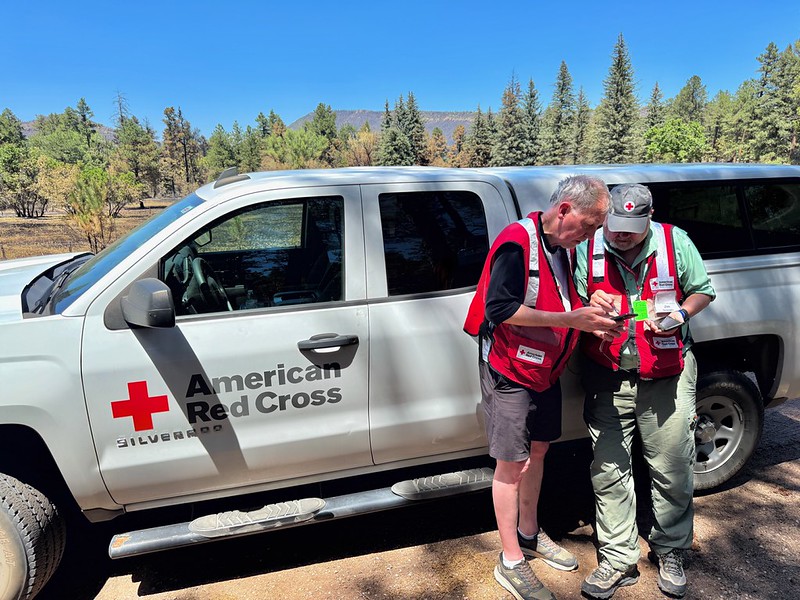
The table itself showed how damage assessment is evolving. Printed maps sat beside smartphones and laptops. Volunteers moved between a Red Cross geographic information system, Google Earth, county drone footage and live location tools. A digital pin could show an address and an earlier determination. A phone could guide a team to a narrow mountain road. Drone footage could reveal damage not visible from the main route.
But technology does not replace the need for people on the ground.
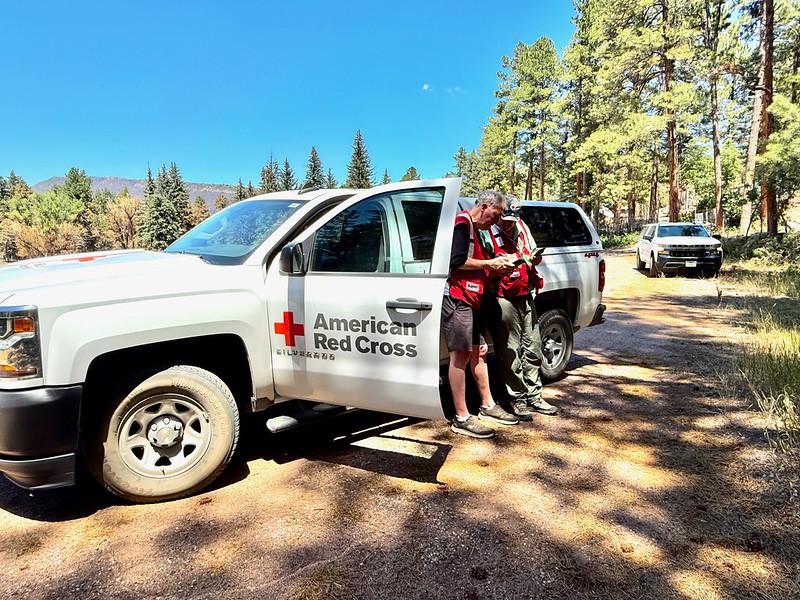
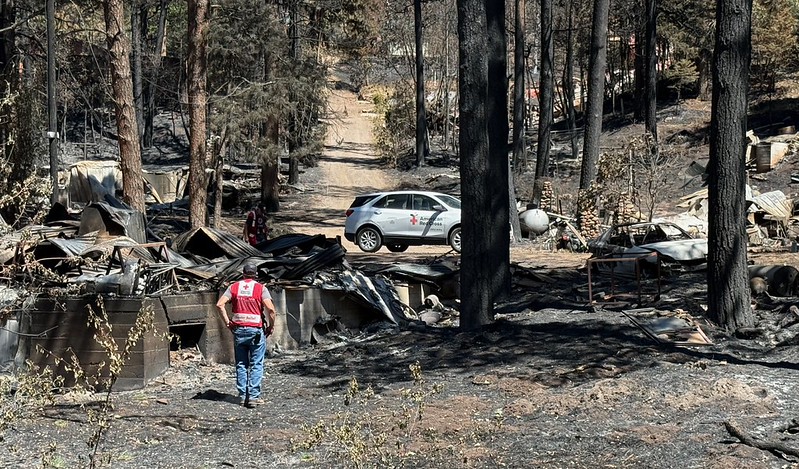
Along cleared roads in Beulah, volunteers stopped to compare the digital map with what stood before them. In some places, green trees and intact homes remained. Just beyond them, fire-blackened trunks surrounded foundations, burned vehicles and the remnants of household belongings. Team members photographed damage, confirmed locations and entered their findings into the system.
Every correction mattered. A home missed in the database could mean that a resident arriving at an assistance center would need additional verification before receiving help. Field teams were prepared to return to an address when needed, helping ensure the information reflected what was actually there.
The work also required patience and caution. Much of the fire area remained inaccessible and teams could travel only where officials had cleared the roads. Volunteers were asked to report downed lines and other hazards while remaining alert to changing conditions around them.
For Harry Ladewig of Denver, the day represented another chapter in an extraordinary Red Cross career. When asked how long he had volunteered, he answered simply, "Fifty-eight years."
"I started doing first aid and CPR," Harry said. He has spent roughly 35 of those years supporting disaster operations. Now, surrounded by paper maps, digital dashboards and smartphone navigation, he was part of a process that looks very different from the one he first joined.
Harry deployed with Simón Hylson-Smith of Colorado Springs, Ron Post of Aurora, Curtis Jack of Colorado Springs, Tom Bethke of Boulder and Jim Granath of Highlands Ranch. Together, the six volunteers divided into teams and moved into the affected communities.
Their work is largely unseen by residents and donors, but it forms an important bridge between emergency response and recovery. Shelters, meals and immediate support help people through the first days of a disaster. Damage assessment helps the Red Cross understand what comes next.
Behind every map symbol is a home. Behind every address is someone waiting to learn what help may be available.
By combining new technology with careful observation and human judgment, Red Cross volunteers are working to make sure every damaged home counts and that people affected by the Aspen Acres Fire are not left to navigate recovery alone.
Support all the urgent humanitarian needs of the American Red Cross.
Find a drive and schedule a blood donation appointment today.
Your time and talent can make a real difference in people’s lives. Discover the role that's right for you and join us today!