By Christopher Quinn, Red Cross Volunteer
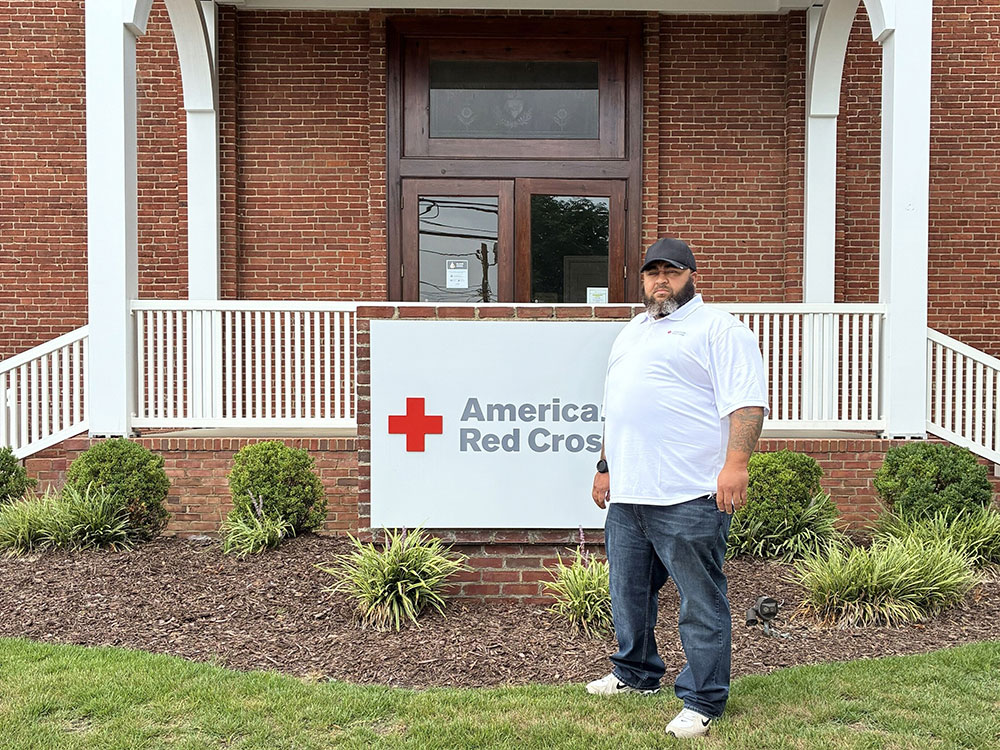
Marc Matthews’ hope for a positive break in life was fading in 2019 after a long string of mishaps, injuries and failed surgeries after a motorcycle accident left the Army veteran, mechanic and volunteer firefighter with a paralyzed right arm.
“I went into a dark spot,” Matthews, now 45 years old, said.
“I just didn’t want to be here. I was real depressed. Part of that came from trying to find work and constantly getting denied because of my arm.”
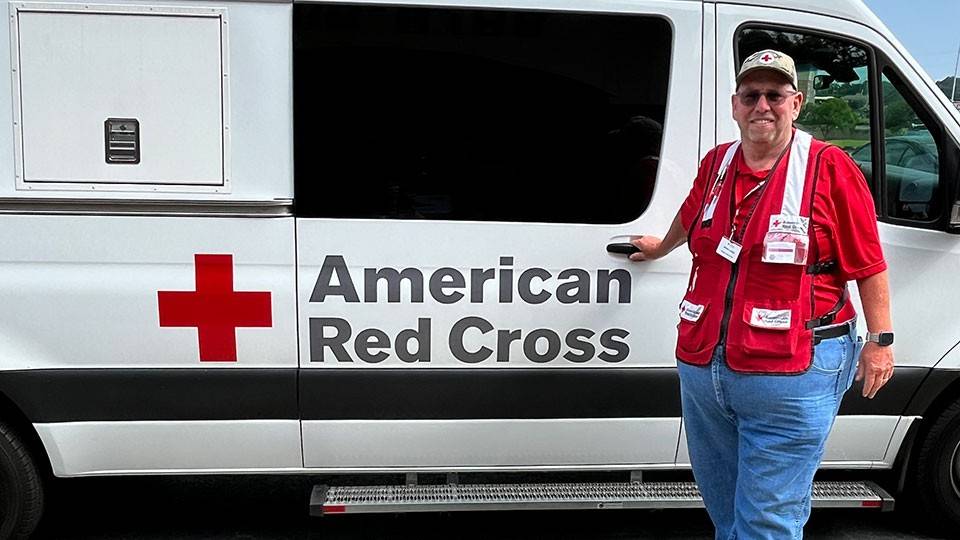
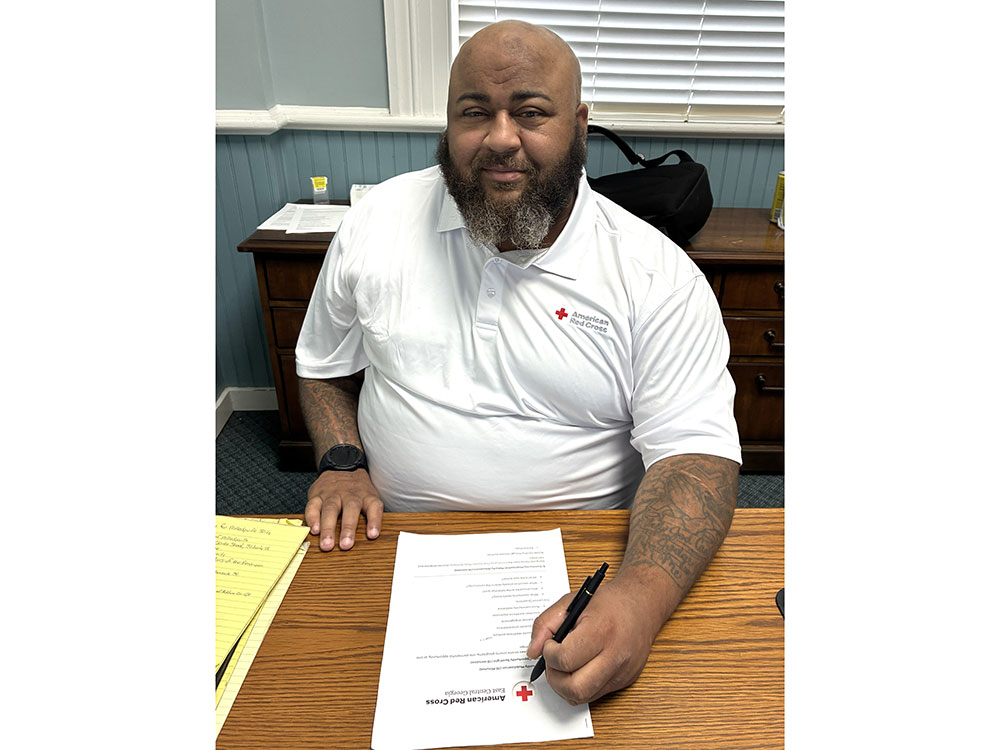
A light finally dawned in 2025 when Matthews came to the American Red Cross East Central Georgia Chapter in Augusta, Georgia, not for help, but to help others. He started as a volunteer, getting training and experience in logistics and sheltering and feeding people who have experienced an emergency.
He worried about not being able to do things other volunteers did. “But [the Red Cross workers] looked at me like I was never disabled,” he said.
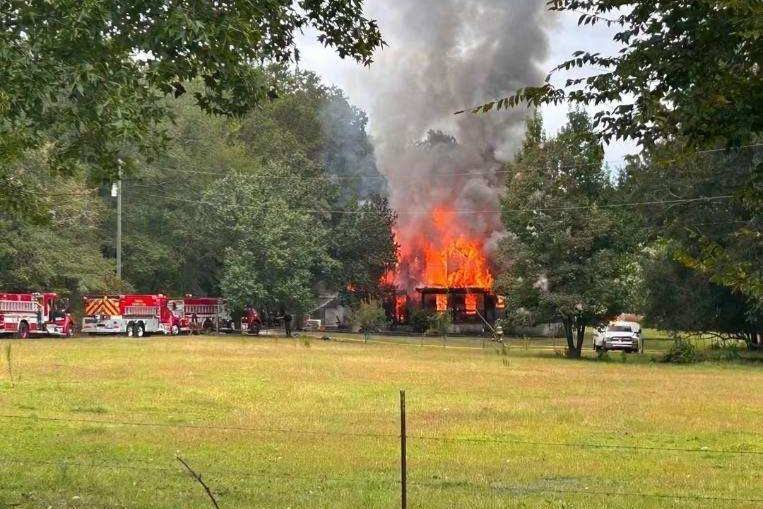
And he worked as if he wasn’t. The Red Cross hired him as a full-time Community Disaster Program Specialist in 2026. Now, when first responders east of the Atlanta region find a person or family in need after a house fire or other disaster, they call Matthews. He swings into action, assigning and coordinating Disaster Action Teams (DAT) of trained volunteers who give relief and support to those affected.
“It’s been years of finding myself again,” he said.
The long history of the Red Cross incorporating people who have been discriminated against or are disabled dates to its founding, when freed slave and abolitionist Frederick Douglass encouraged and supported Clara Barton’s efforts to gain the organization’s acceptance into the global Red Cross network. Dr. Charles Drew, also an African American, was appointed as the organization’s first medical director in 1941. The Red Cross formalized its approach to fostering a welcoming work and volunteer environment for people from all walks of life in 1992. That helps American workers while bringing new strengths to the organization.
“When people see themselves and their experiences reflected among those delivering Red Cross services, it can help build trust, strengthen connection and reinforce that everyone has a place in our mission,” said Hanna Malak, the Chief Mission Impact and Inclusion Officer for the American Red Cross. “It also demonstrates that people of all different backgrounds, identities, experiences and abilities are valued not only as members of the communities we serve, but as essential contributors to the work itself.”
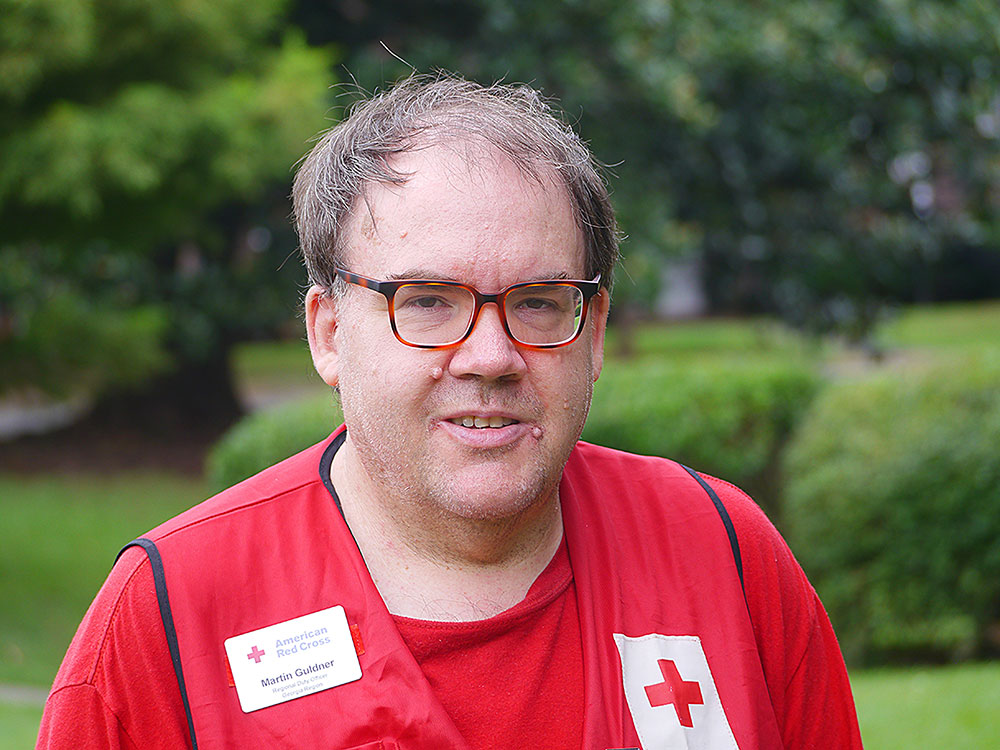
Martin Guldner, a Red Cross volunteer Disaster Services Duty Officer in Atlanta, was diagnosed late in life as an autistic person. Guldner is recognized in Georgia for his advocacy and work with neurodiverse students, volunteering with the Marcus Autism Center Neurodiversity Task Force, and state agencies dealing with disabilities.
His duties with the Red Cross are similar to Matthews’, and he also does presentations on home fire safety and disaster preparedness to groups, including the disabled.
His thoughts doubled down on Malak’s statement about the importance of Red Cross workers reflecting the whole community.
“Since I have a disability, I think it is empowering that I am able to use what I’ve learned about disaster preparedness and response. Having that perspective, it makes me a credible person to share with the disability community.”
He has a long history with the Red Cross. Guldner worked for AmeriCorps, which assigned him to the Red Cross for two stints decades ago. His service included being posted to New York City after 9/11 to help run a feeding operation. He did his second AmeriCorps stint in Atlanta. He stayed after it ended and took other jobs. He came back to the Red Cross as a volunteer in 2017 after seeing the need created in Georgia by Hurricane Irma.
“It gives me satisfaction that I am helping someone who is in a predicament,” Guldner said. He earned his empathy the hard way, from tough experiences.
At points in his life in Atlanta, Guldner, now 50 years old, struggled financially, his mother died, and he found himself homeless at one point. “I have that empathy for being homeless. I’ve had people help me get me out of my homeless situation,” he said.
And now, “I like to pass on the help that someone else gave me,” Guldner said.
Guldner’s experiences bring strength to the Red Cross mission.
Malak said, “People bring insight shaped by their lived experiences. That range of perspective can help us better understand community needs, identify barriers others may overlook, and develop more accessible and effective ways to deliver Red Cross services. It also strengthens how we listen, solve problems, and respond to community members during some of the most difficult moments of their lives.
“I believe an inclusive workforce is a stronger workforce. When people are supported in contributing their skills, perspectives and experiences fully, teams become more adaptable, thoughtful and innovative. Inclusion also helps the Red Cross attract and retain talented people, strengthen collaboration, and expand our collective capacity to carry out the mission.”
Like Guldner, Matthews’ experiences, including Army service in Iraq, taught him much about empathy.
“Going to war you’ve seen suffering,” he said. And as a former volunteer fireman in McDuffie County, he also was acutely aware of the families who lost what they have in house fires.
“You put the fire out, but you don’t know how the family recovers,” he said. “But when I came over to the Red Cross, I was able to see the other side of that.”
Seeing beyond the suffering to others’ first steps to recovery through their work leaves Matthews and Guldner satisfied, and they are grateful for the role the Red Cross has played in their lives as well. Matthews’ infectious enthusiasm and optimism leave him wanting not just to help but also inspire others.
“It is a chance to show them that just because you have a disability you can always defy the odds,” Matthews said. “When I first had my disability, I went through the Social Security process and heard, ‘You’ll never work again.’ So that affects you.
“Defy the odds, because we are still functioning. It takes longer to do certain tasks, but you can adapt to any task.
“Red Cross gave me an opportunity and also a chance to show others with a disability that because we are looked at differently, doesn’t mean you are different.”
He hopes to continue rising in the organization as he works on a college degree in emergency management and homeland security.
“People with disabilities bring valuable experience, perspective, and talent to every part of our organization,” Malak said. “We are so proud of our employees and volunteers with disabilities whose leadership, expertise and commitment make the Red Cross stronger every day.”
About the American Red Cross:
The American Red Cross shelters, feeds and provides comfort to victims of disasters; supplies about 40% of the nation’s blood; teaches skills that save lives; distributes international humanitarian aid; and supports veterans, military members and their families. The Red Cross is a nonprofit organization that depends on volunteers and the generosity of the American public to deliver its mission. For more information, please visit redcross.org or CruzRojaAmericana.org, or follow us on social media.
Learn about volunteering with the Red Cross here.
Support all the urgent humanitarian needs of the American Red Cross.
Find a drive and schedule a blood donation appointment today.
Your time and talent can make a real difference in people’s lives. Discover the role that's right for you and join us today!