By Jennifer Costa, regional communications director
“I was driving down the street, and I saw this light, pillowy smoke coming out from behind some trees near a row of buildings.”
John Montes, Red Cross regional disaster officer for Northern New England, is no stranger to emergency response. But these unexpected disasters do not typically happen right in front of him.
“As I got within a block of it, there was a fire truck outside and then there was a big boom and everything shook,” Montes recalled. “My instinct was to get out of there because it was not good. It was probably a gas line. I pulled into a gas station and turned around. But very quickly that area got closed off and there were emergency vehicles coming from every angle and there was gridlock.”
According to New Hampshire fire officials around 2:15pm on February 2, a 911 call came in reporting a gas smell at a mental health clinic in Nashua. The building is located on one of the busiest streets in the city. As fire crews were investigating, an explosion occurred and a massive fire erupted.
“I thought there's a strong possibility the Red Cross was going to get involved,” Montes continued. “What's unique about this case is that it was a commercial property. Typically, we focus on residential, but very quickly our role came into focus as the city’s emergency manager called our community disaster program manager and local Red Cross volunteers for help.”
The city needed to prepare for a possible evacuation. And if that happened, they would need help receiving a high volume of evacuees.
“The Red Cross is very well equipped to set up and manage a reception center – a safe place to keep people warm and fed, providing the ability to plan for next steps until we can get them back to their vehicles and homes,” Montes said.
At the time of the explosion there were approximately 200 vehicles that ended up in the cordoned off area, trapped between a maze of fire hoses and emergency vehicles.
“It was a very chaotic, very fluid situation,” Montes said. “There were obvious access challenges and gridlock, so we knew we had to keep our response small, but efficient and effective.”
The Red Cross quickly mobilized its local disaster action team. Six volunteers and three staff members were assigned to the response. The first volunteer was on the scene within just six minutes.
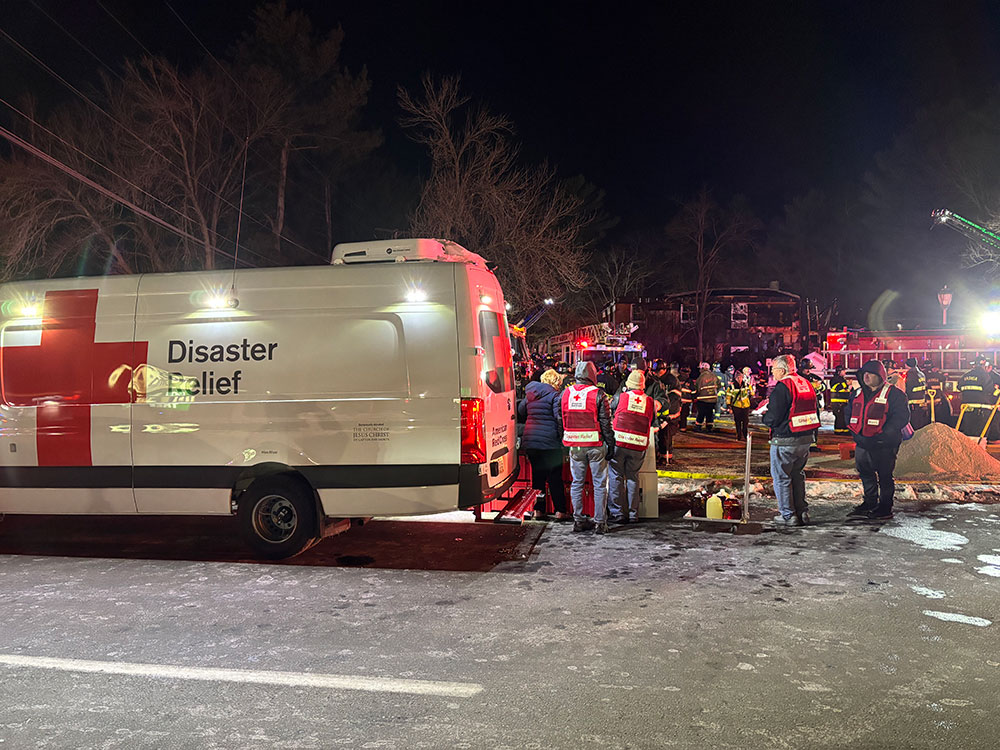
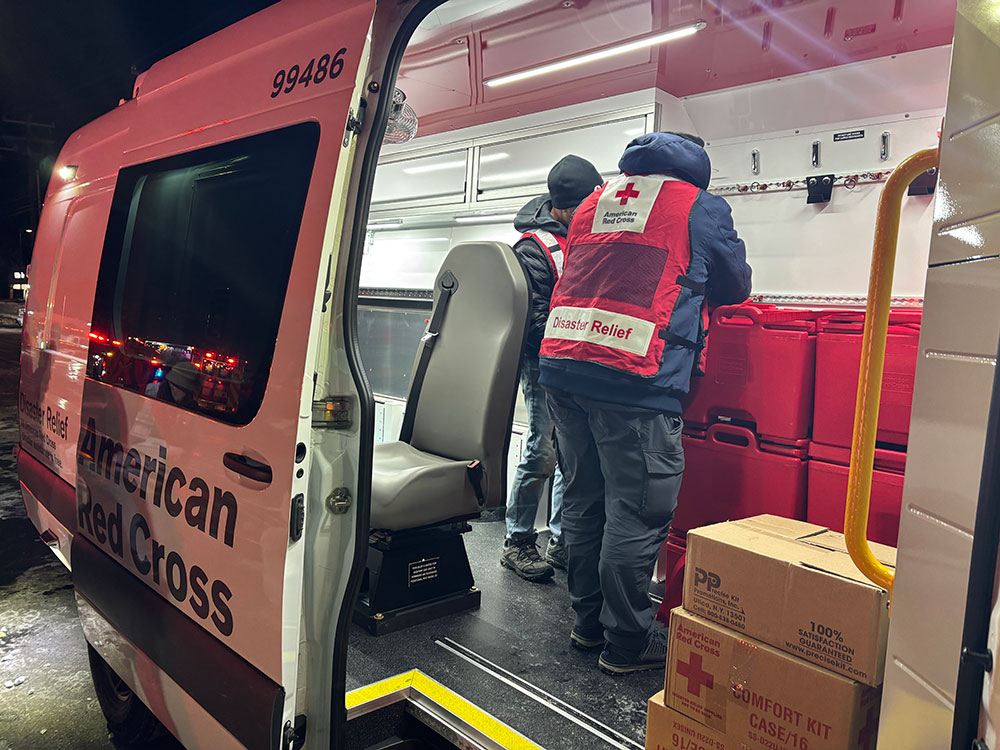
“We responded immediately,” said Norm Gentry, a seasoned Red Cross disaster volunteer. “Two responders went ahead with our emergency response vehicle – and I took our Red Cross truck and made a couple stops, picking up feeding supplies and hand warmers.”
From there, the team split in two. Most worked with a local business across the street from the scene to establish a reception center, while Montes and another Red Crosser assisted first responders with making sure everyone in the building was accounted for. There were 40 people to track down.
“Fortunately, all of them were either with us or they had gone home and were safe,” said Montes.
Meanwhile progress was being made at the reception center too. The team was able to determine that most of the stranded drivers were able to walk home – or were picked up by friends and family members. So, the Red Cross mission morphed.
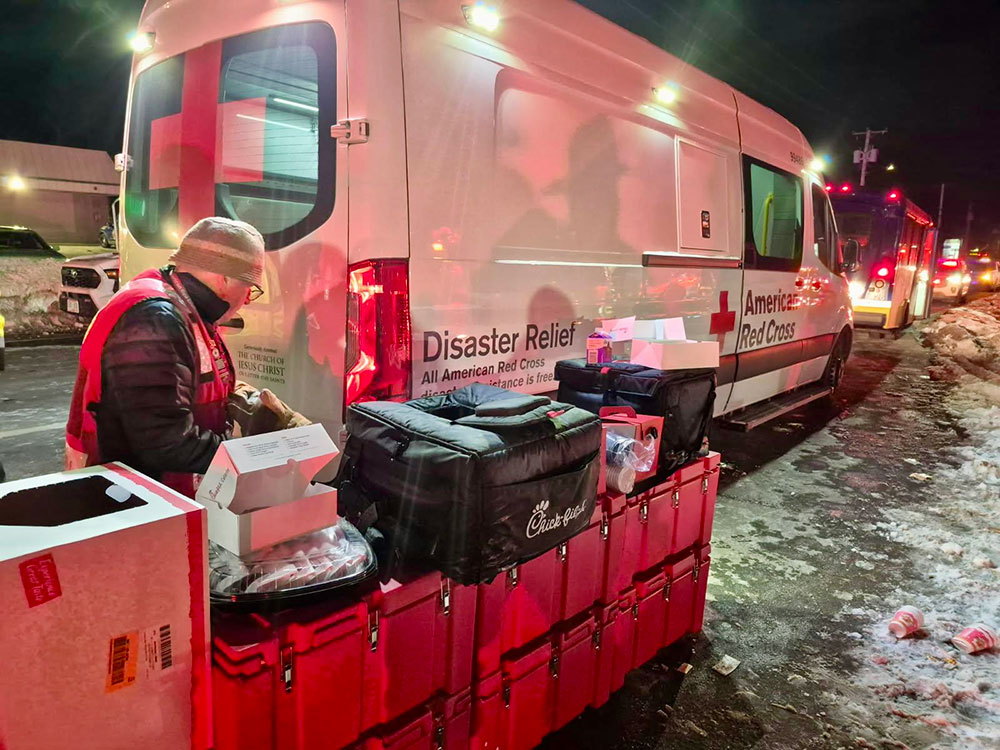
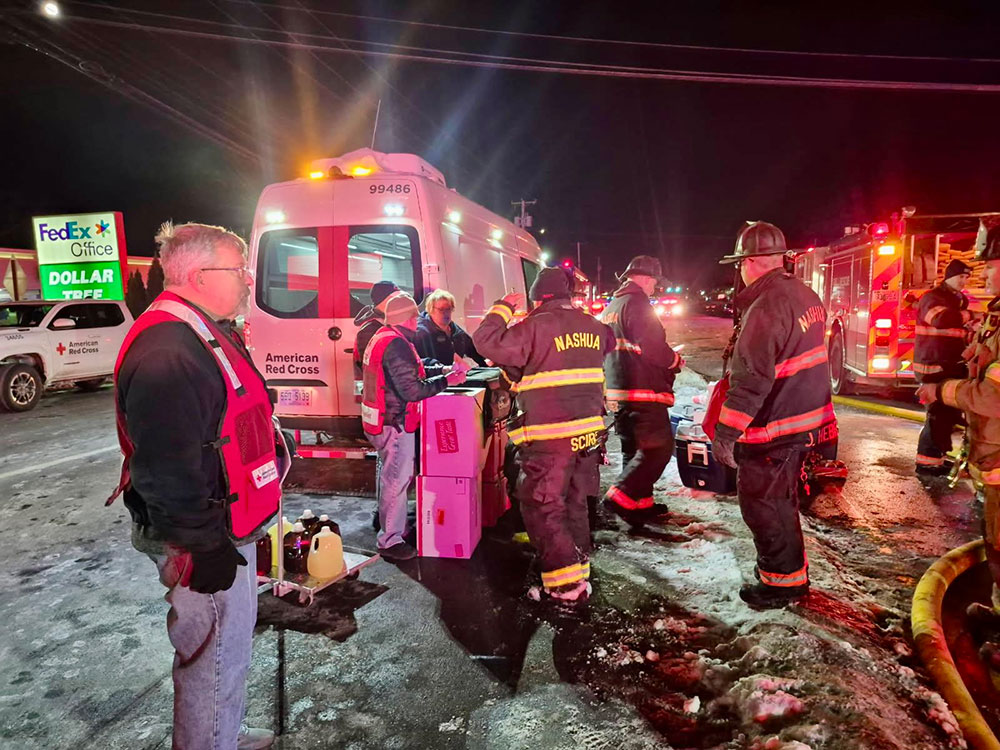
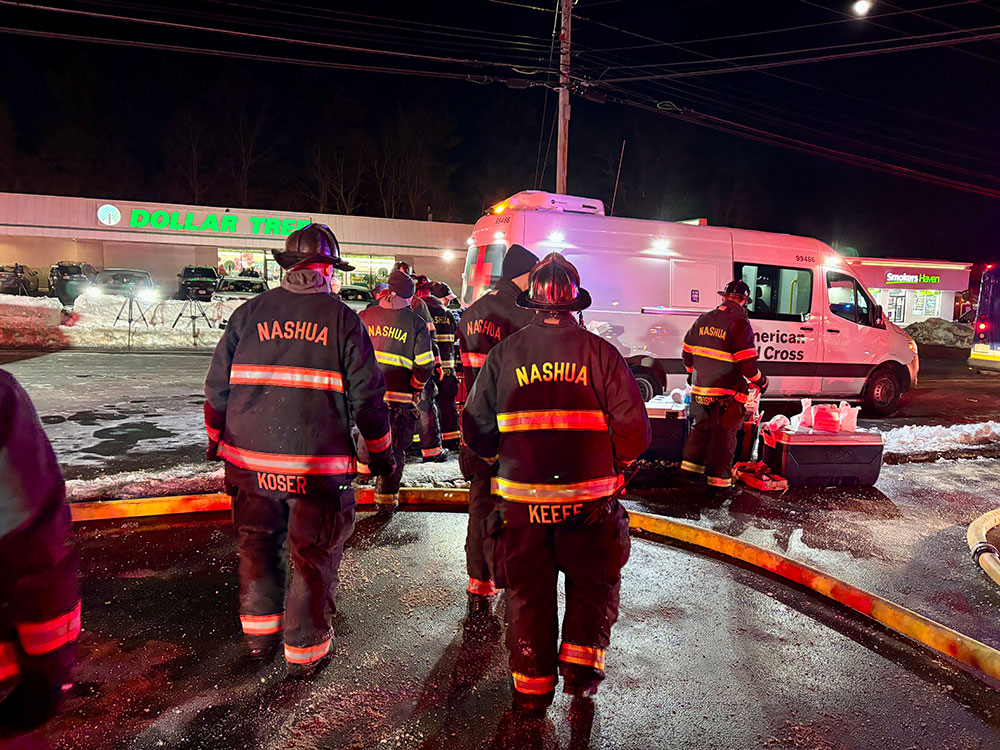
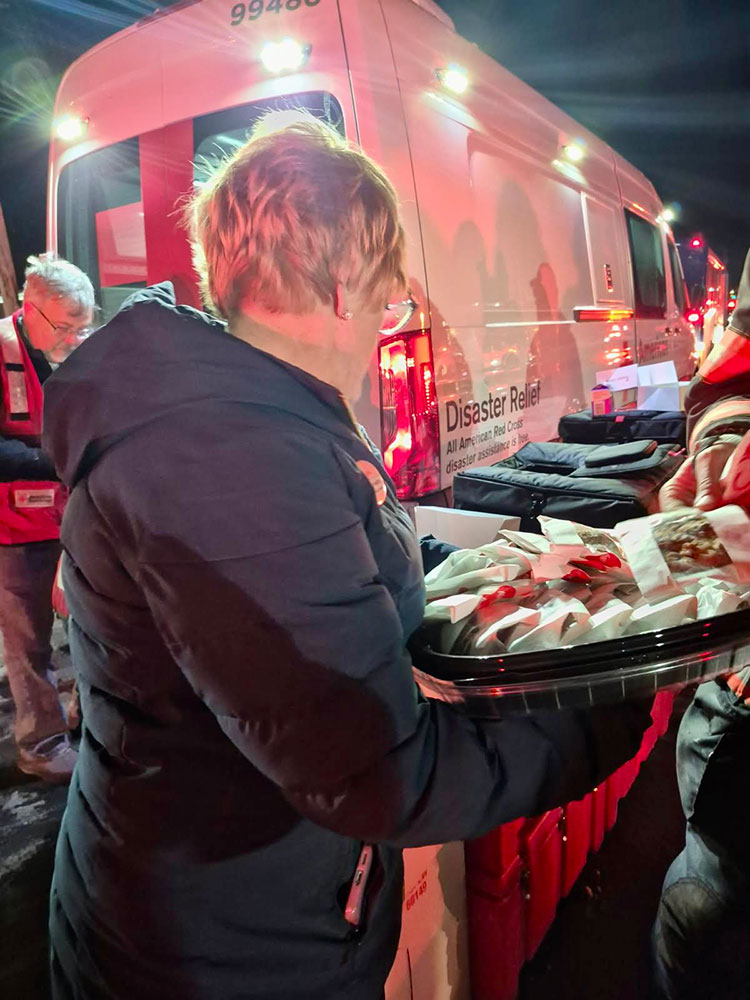
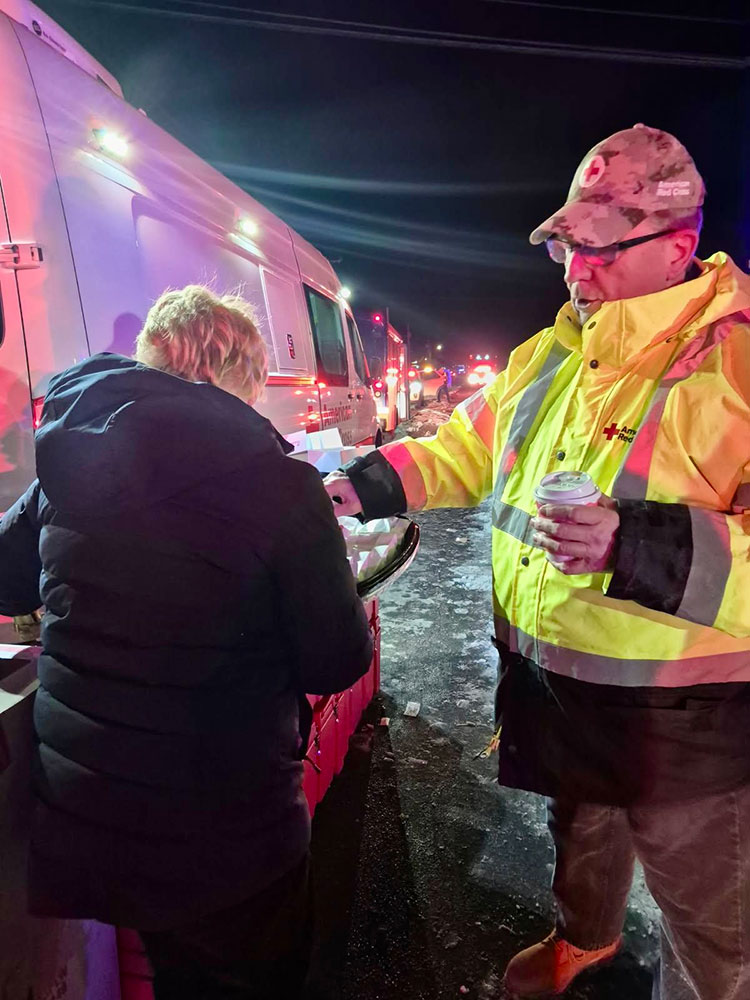
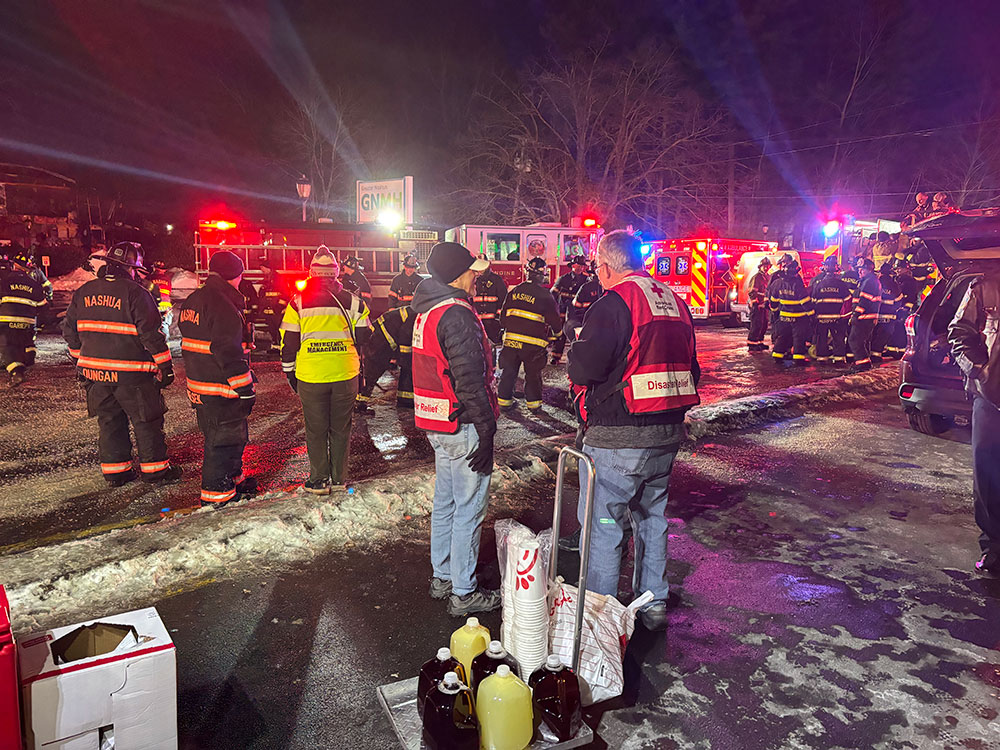
“We transitioned down to the fire scene when emergency management told us that the firefighters needed support. I was helping to direct that effort,” said Gentry. “We had coffee, hot chocolate, sandwiches, desserts that Chick-fil-A provided. And we were also passing out the hand warmers to the firefighters because they were pretty frozen.”
This is a support service that the Red Cross calls ‘canteening.’ Montes says it is a vital part of disaster relief. And through an outstanding partnership with the local Chick-fil-A, we were able to provide hot meals, hot coffee, beverages, and desserts to more than 50 first responders.
“With firefighters, it’s critical to keep them hydrated, keep them fed and keep them in the fight. Many of them had been on scene for five hours in the cold battling the fire when we brought them nutrition, hydration and warming support,” Montes explained. Over the course of the 7-hour operation, the Red Cross also provided comfort and emotional support to more than 20 individuals who had evacuated from the impacted area. An extraordinary amount of mass care went into this response – something Montes says could not have happened without the unwavering dedication of the chapter’s Red Cross volunteers.
“Having these volunteers trained and ready to respond at a moment’s notice means first responders are going to be taken care of and able to continue to fight the fire. It means people who have been displaced have someone to wrap a blanket around them and tell them they are going to get through this. It’s a special gift that these volunteers give to their communities and we’re so lucky to have them,” he said.
“There was a constant stream of ‘thank-yous,’” Gentry said. “Everyone who came up was thanking us for being there and it was clear the hot drinks, the hand warmers and the hot sandwiches meant a great deal to them.”
For Gentry, it is experiences like these that inspire him to keep putting on his red vest and continuing to answer the call day after day.
“There are so many things we can do in the volunteer world where you don’t see the end result,” Gentry reflected. “In this case, we go out, we do the work and we see the immediate result of what we do. It’s that feeling of instantly knowing that we’ve done good. And that we’ve truly helped people and our community.”
Support all the urgent humanitarian needs of the American Red Cross.
Find a drive and schedule a blood donation appointment today.
Your time and talent can make a real difference in people’s lives. Discover the role that's right for you and join us today!