By Heidy Rivera, American Red Cross
For the American Red Cross, volunteers play a crucial role as a leading disaster response organization. Red Cross volunteers respond to natural disasters, host blood drives, and teach disaster preparedness and more, helping thousands of people each year.
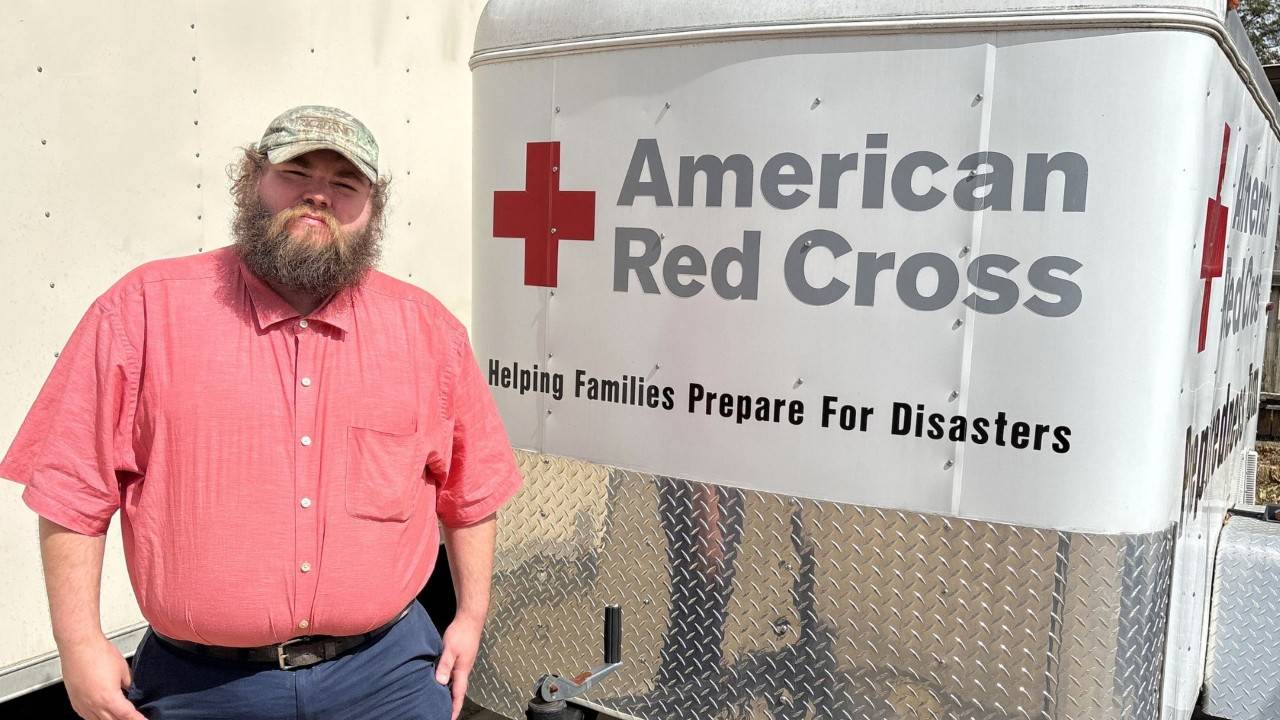
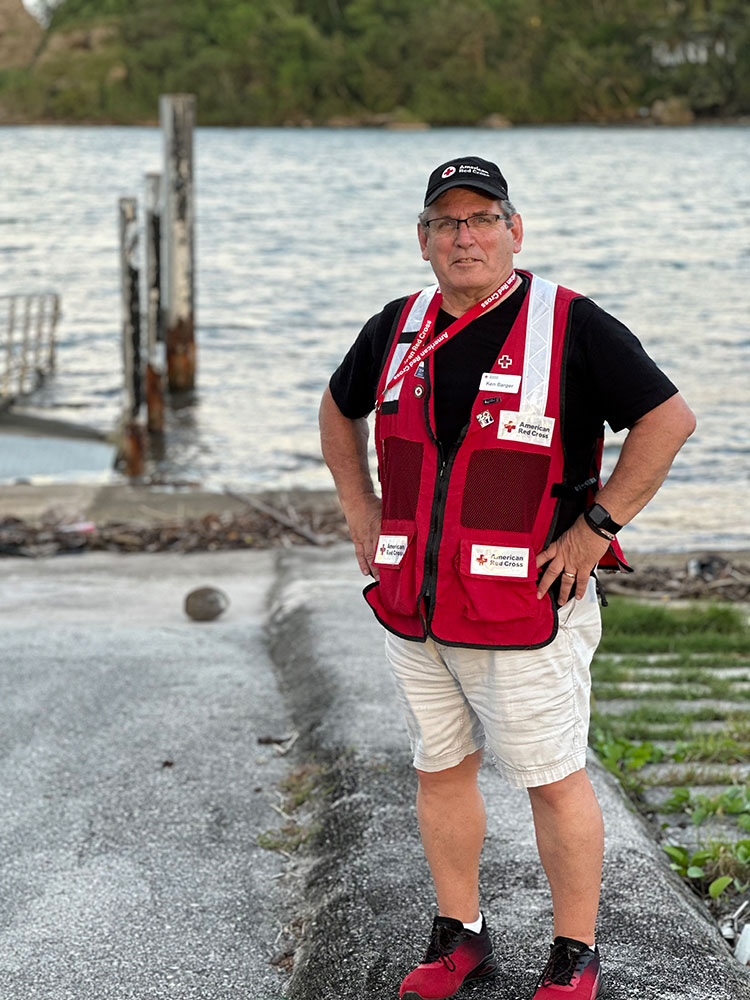
One of those dedicated volunteers is Ken Barger, who joined the American Red Cross after disaster relief teams assisted his son during an apartment fire. He transformed gratitude into a mission of giving hope and relief to others through Red Cross.
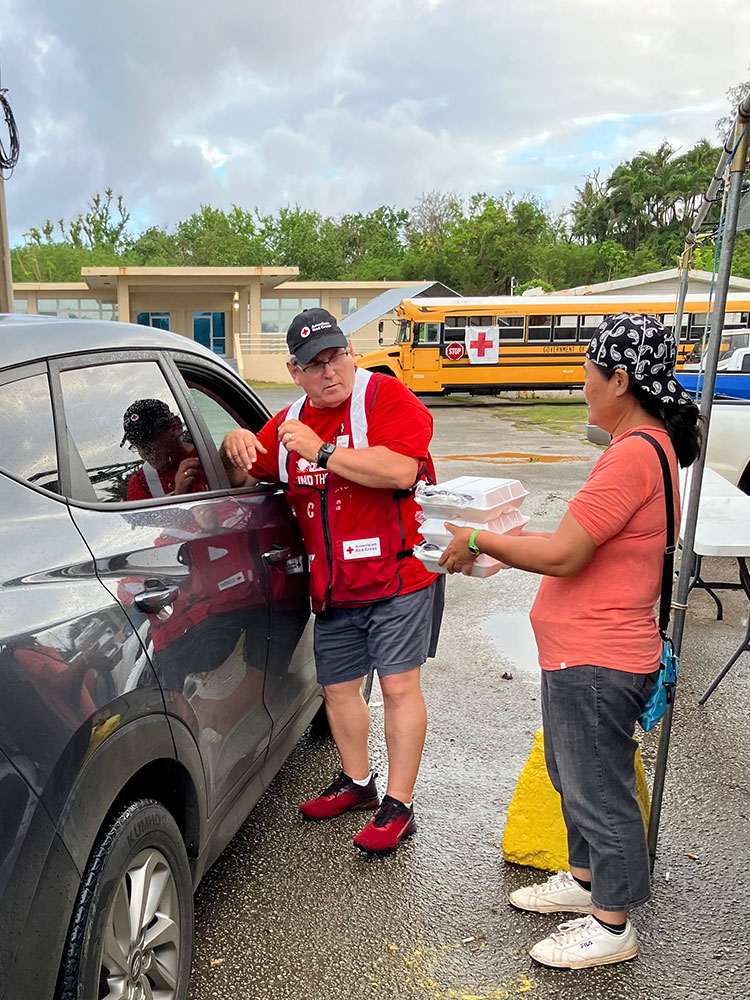
Ken represents a versatile group of disaster volunteers who pivot seamlessly between distinct phases of disaster relief, witnessing both the destruction and the recovery of affected families. When major crises strike, he deploys nationwide to manage large-scale sheltering, mass feeding operations, and technical damage assessment.
During the catastrophic wildfires in Maui, Hawaii, Ken was part of a massive sheltering effort that housed roughly 9,500 displaced residents. Managing a shelter of that magnitude requires flawless team coordination to guarantee clients receive safety, emotional support, and emergency medical care.
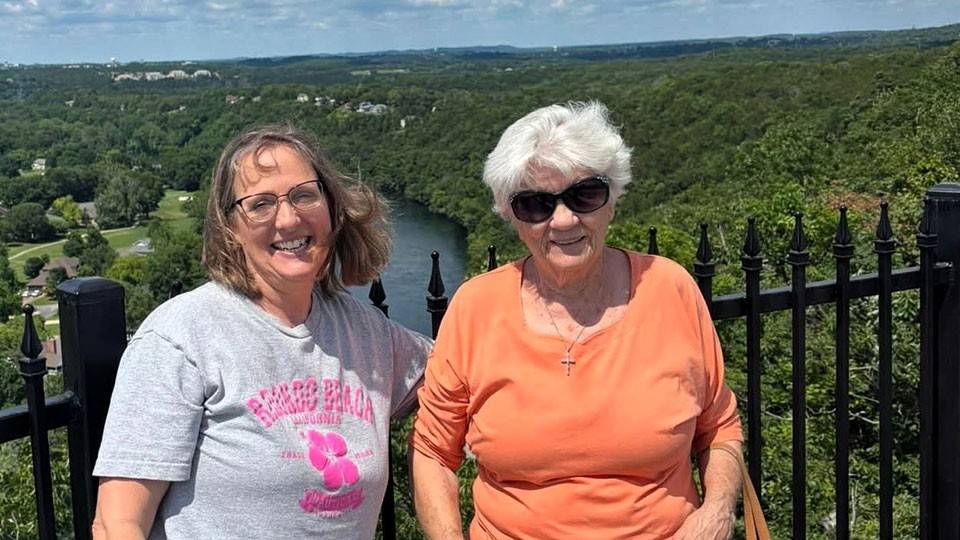
It was during this deployment that Ken met an 88-year-old native Hawaiian woman who had lost her lifelong business and her apartment on Lahaina's main strip. Ken remembers she said: “I don't know what I'm gonna do. You know, they're saying, you know, it's gonna take a good ten years to rebuild. I'm eighty-eight years old. I don't have ten years to rebuild.”
Distraught and entirely alone on the island, she initially refused to speak with case workers or government officials out of fear that sharing her personal data would lead to property seizure. Ken spent two weeks talking with her and building trust until she finally shared her details and mentioned she had a daughter in Oklahoma but zero resources to get there. Ken immediately introduced her to the shelter transition team and to FEMA (Federal Emergency Management Agency). Within 48 hours, the Red Cross secured her financial relief and an airline ticket, reuniting her permanently with her family.
Ken’s deployment history also includes navigating a massive truck through flooding after a hurricane storm in Louisiana. His mission was to deliver hot food, clean water, and relief kits to an entire county left completely without electricity. Driving down narrow, single-lane gravel roads, Ken sought out isolated families who were cut off from standard aid stations.
One afternoon, Ken pulled up to a ranch-style home where four different families, some with small children, had gathered under one roof to share a single gas generator. The crowded household was completely overwhelmed trying to manage waste and clean up flood debris. When Ken asked the mother who owned the property if she could use heavy-duty trash bags to help with cleanup, she became visibly emotional. Ken says as a team, “we don't give up on people”.
Damage assessments are another part of the relief efforts that Ken supports. Unlike sheltering or feeding where volunteers interact directly with families in need, damage assessment is largely technical. Teams log photographs and data directly into a specialized mobile application.
When asked how he balances the technical side of damage assessment with the emotional reality of disasters, Ken said “even in this objective role, the ultimate goal remains humanitarian and to help those in need.”
When it comes to being a humanitarian, Ken advises that anyone can support the Red Cross mission whether it is by deploying to disasters, through local blood donations or by volunteering in a virtual role from their home.
Support all the urgent humanitarian needs of the American Red Cross.
Find a drive and schedule a blood donation appointment today.
Your time and talent can make a real difference in people’s lives. Discover the role that's right for you and join us today!