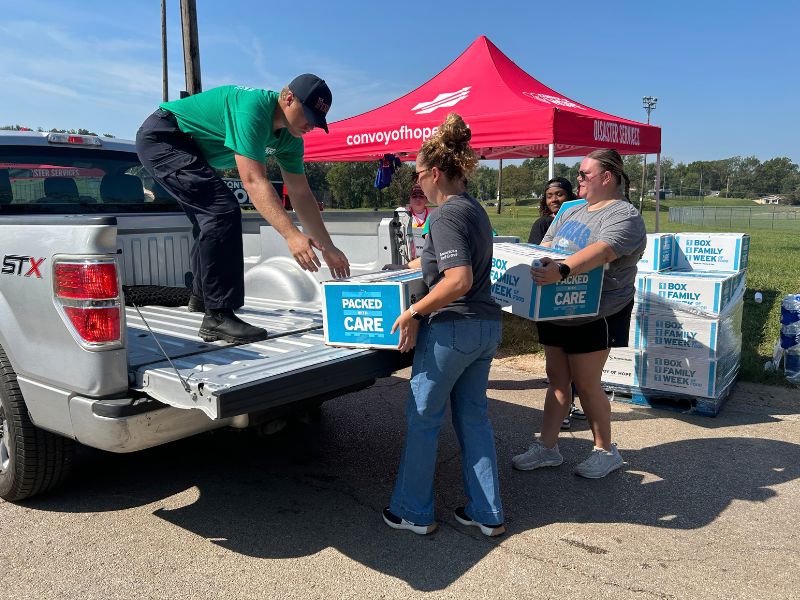
Volunteers loading cars with non-perishable food boxes.
When severe storms tore through Kansas City, Kansas-- toppling trees, damaging homes, and leaving thousands of people without power for weeks-- the devastation was palpable. Streets were blocked, trees tore through roofs, neighborhoods were dark, and the heat that followed made recovery even harder.
The American Red Cross of Greater Kansas City and Northwest Missouri opened a shelter that operated for ten days, giving families a safe place to stay and providing meals, mental and spiritual care, emergency supplies, financial assistance, and connections to critical resources. But even as Red Cross teams worked around the clock, one truth became clear: no single organization could meet every need alone.
In a disaster, meaningful recovery takes neighbors, nonprofits, first responders, churches, and local leaders working side by side, each filling in the gaps the others cannot.
JoAnn Woody, Executive Director of the Greater Kansas City and Northwest Missouri Chapter, captured that spirit:
“If anyone wants to see what community means, they just have to look at what’s been going on in Kansas City, KS following the storms. It’s neighbors helping neighbors to provide what is needed when it’s needed where it’s needed.”
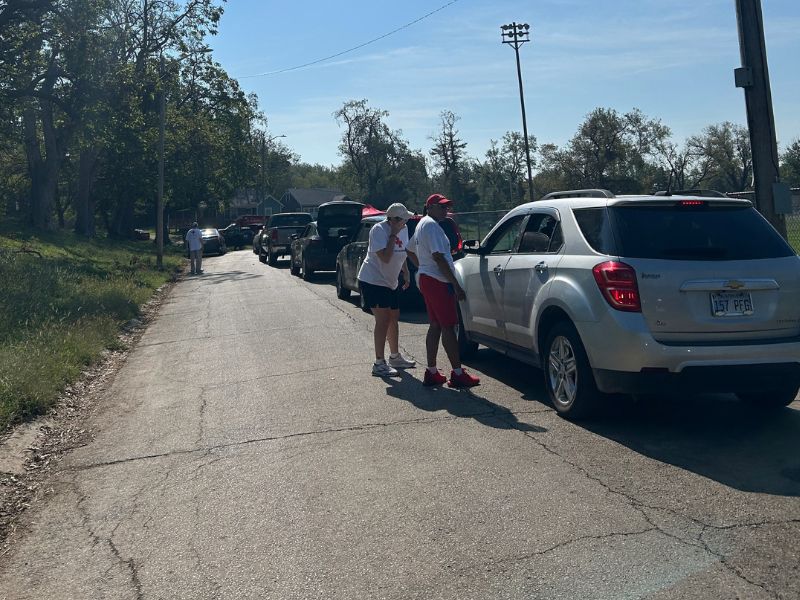
Line of cars for community
food distribution “drive-thru”.
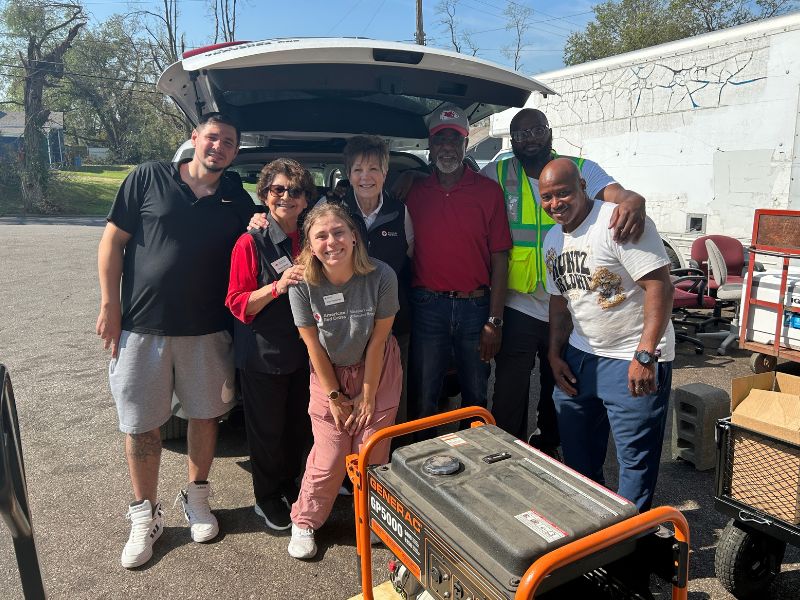
Red Crossers dropping off a generator to The Village Initiative. Randy pictured in middle.
With electricity out, one of the most pressing needs for the community was non-perishable food. Organizations like Convoy of Hope, Justice for Wyandotte, KCK Fire Department, and the Red Cross partnered up to find a solution: An organized food distribution drive thru. Cars stretched through the streets in a long, steady line. Each family was greeted by smiling volunteers ready to help.
In just three hours, volunteers handed out 625 food boxes—each with enough non‑perishable food to feed a family of four for up to seven days—along with hygiene kits and water... That’s 17,500 meals.
It was 100 degrees. The heat was intense. Yet volunteers worked with compassion, efficiency and a shared determination to make sure families had what they needed.
Paul Logan, Deployment Director for Disaster Relief at Convoy of Hope, emphasized the importance of partnership:
“We can do more together. When we come to an area, we know we don’t know it like the locals do. So, it’s essential that we rely on local information and local partners to get us where we need to be. The local Red Cross and Fire Department here in KC helped us arrive today. We wouldn’t be here if it weren’t for our local partners.”
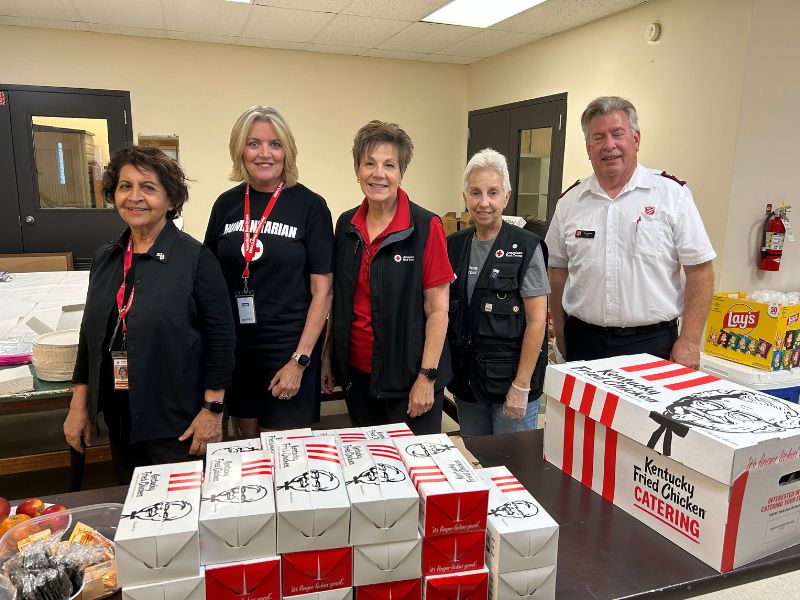
Salvation Army and Red Cross volunteers setting up dinner for families staying in the shelter.
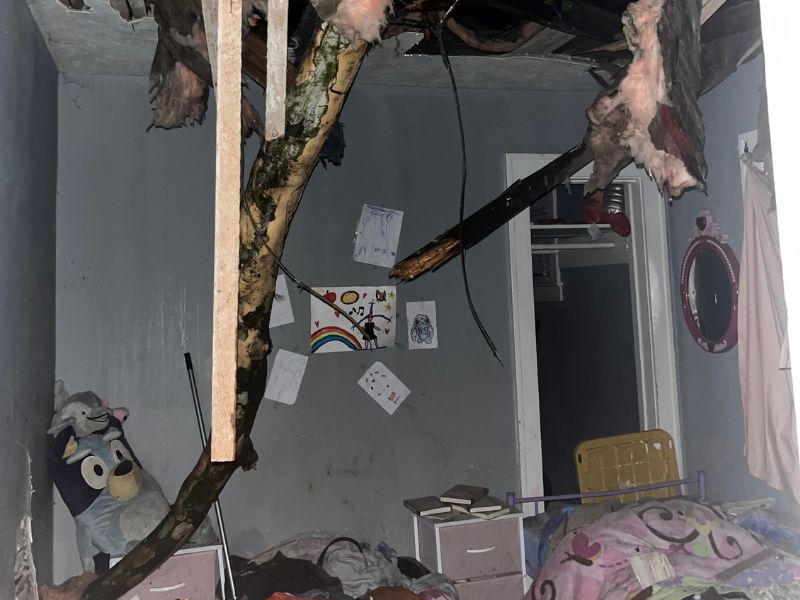
Damage from the storm.
Across Kansas City, Kansas, organizations stepped up to support families in ways big and small. During the initial response, The Village Initiative, a local nonprofit helping feed families without electricity, was also affected by the storm but kept their operations running with generators loaned by Emergency Management. The Red Cross also donated a generator to help ensure they had the power and resources to support the community the next time disaster strikes.
For Randy George, director of The Village Initiative, the gesture was deeply moving. After the generators were unloaded, he hugged each Red Cross team member and told them he loved them. It was a simple, unmistakably genuine expression of humanity: The gratitude to continue helping those in need.
Local churches also played a vital role. Pastor Julian Brown of Stranger’s Rest Baptist Church helped feed families across the community.
“You can’t have church or organizations without caring for the people you do life with,” Pastor Brown shared. “It has meant the world to us, to be able to serve. That’s what we do.”
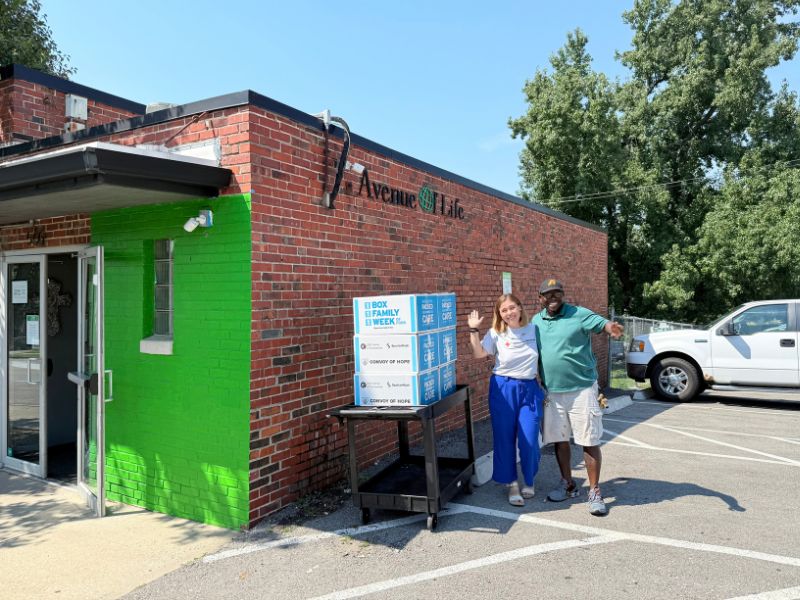
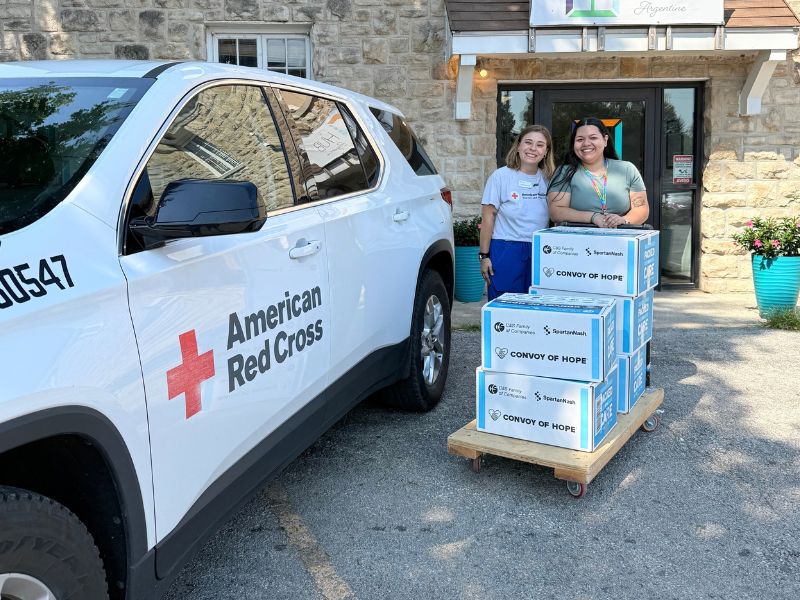
The storms caused destruction, but the response revealed something stronger: a living canvas of what community looks like when people show up for one another, each individual, each non-profit, each fire fighter, offering their unique stroke of color to the painting.
The Red Cross is proud to be part of that piece of art-- not as the sole responder, but as one partner amongst many, working collectively to help families recover, rebuild, and regain stability.
Resilience isn’t just about weathering a storm… It’s about showing up, linking arms, and embracing community every step of the way.
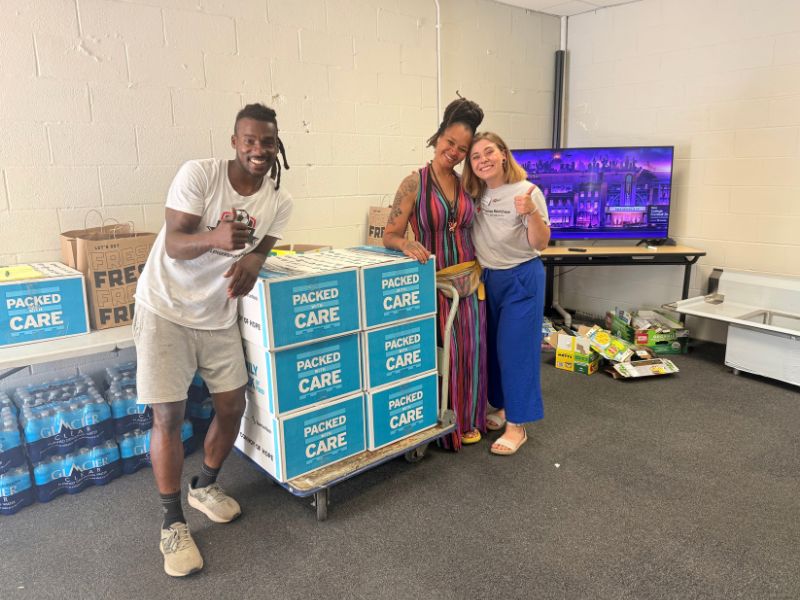
Support all the urgent humanitarian needs of the American Red Cross.
Find a drive and schedule a blood donation appointment today.
Your time and talent can make a real difference in people’s lives. Discover the role that's right for you and join us today!