By Sheri Odell, American Red Cross
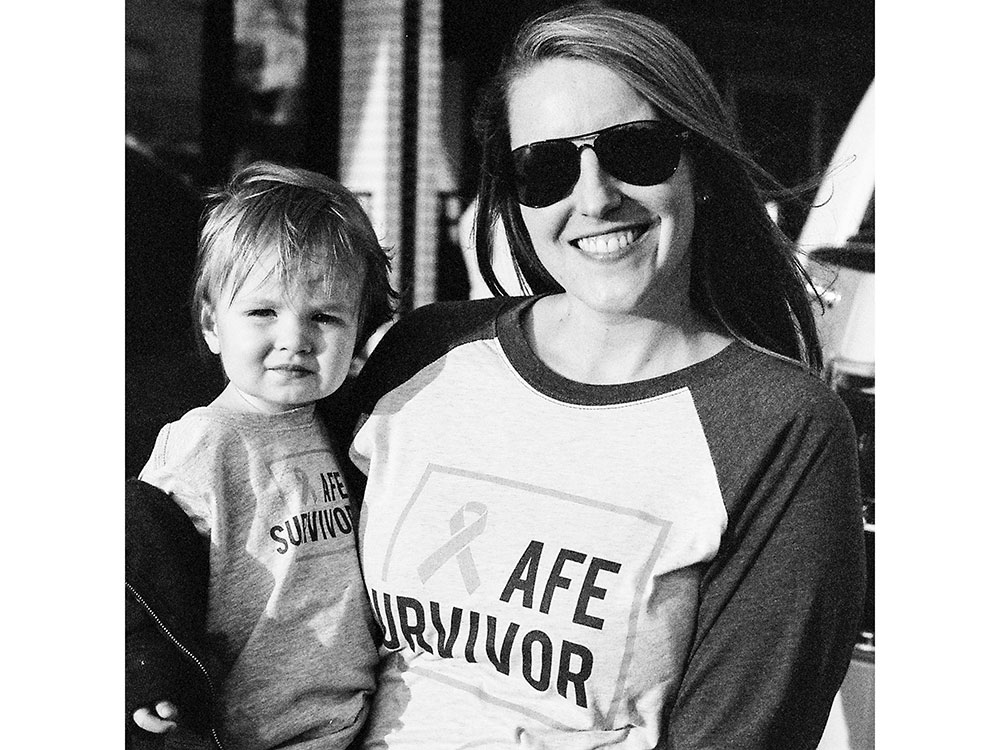
When Meghan Jolliffe looks at her 8-year-old son, Sully, she sees a boy who loves basketball, plays soccer and recently competed in javelin at the Junior Olympics.
She also sees the impact of people she has never met. That of blood donors.
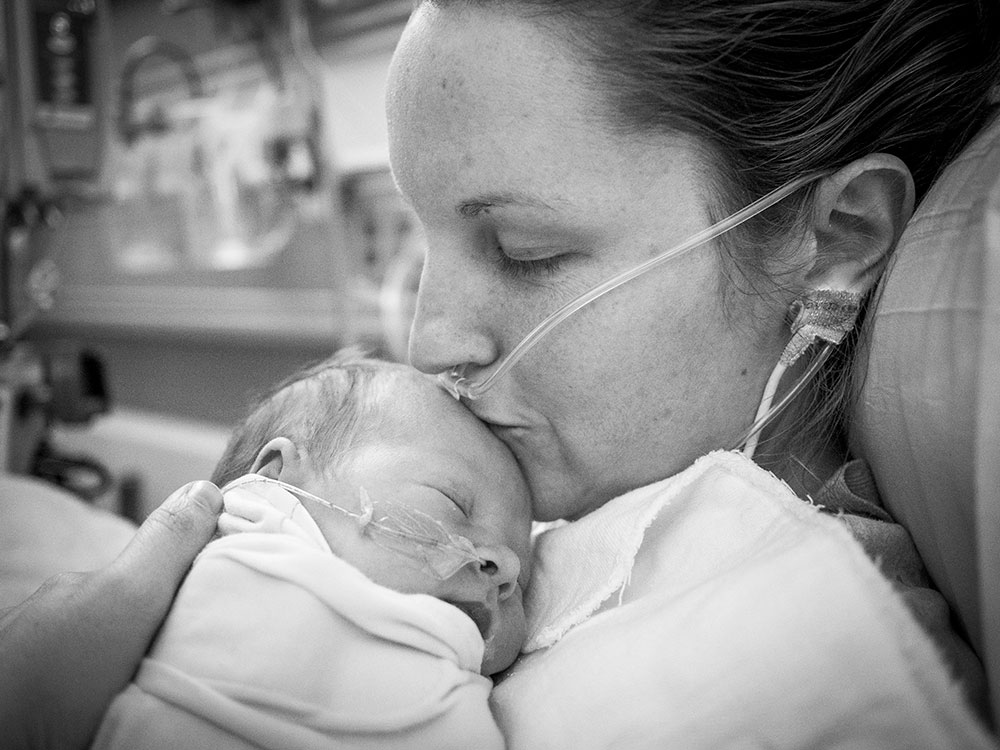
In 2018, Meghan, then a healthy 29-year-old runner, went to an Overland Park, Kansas-area hospital to be induced for the birth of her first child. Early the next morning, shortly after her water broke, her heart stopped.
Doctors determined Meghan was experiencing an amniotic fluid embolism, a rare and life-threatening childbirth emergency. An emergency cesarean section was performed while medical personnel worked to resuscitate her.
Sully was delivered in less than a minute and rushed to the neonatal intensive care unit. He had gone without oxygen for several minutes, and doctors could not initially predict whether he would survive or what long-term effects he might face.
Meanwhile, Meghan began experiencing catastrophic bleeding.
Her medical team activated a massive transfusion protocol. Cooler after cooler of blood products was brought into the hospital as doctors fought to keep her alive.
Over the course of her treatment, Meghan recalls receiving more than 100 units of blood and blood products. Sully also needed a transfusion.
Behind every one of those blood products was a donor, a stranger who had taken the time to roll up a sleeve without knowing who might someday need that gift.
Her recovery was difficult. Once strong and independent, Meghan initially lacked the strength to lift her arm without help. It would be three months before she could stand and hold her baby.
As she recovered, she set a goal: help replace the blood that had been there when she needed it.
“I wanted to replace the amount of blood that I received,” she said.
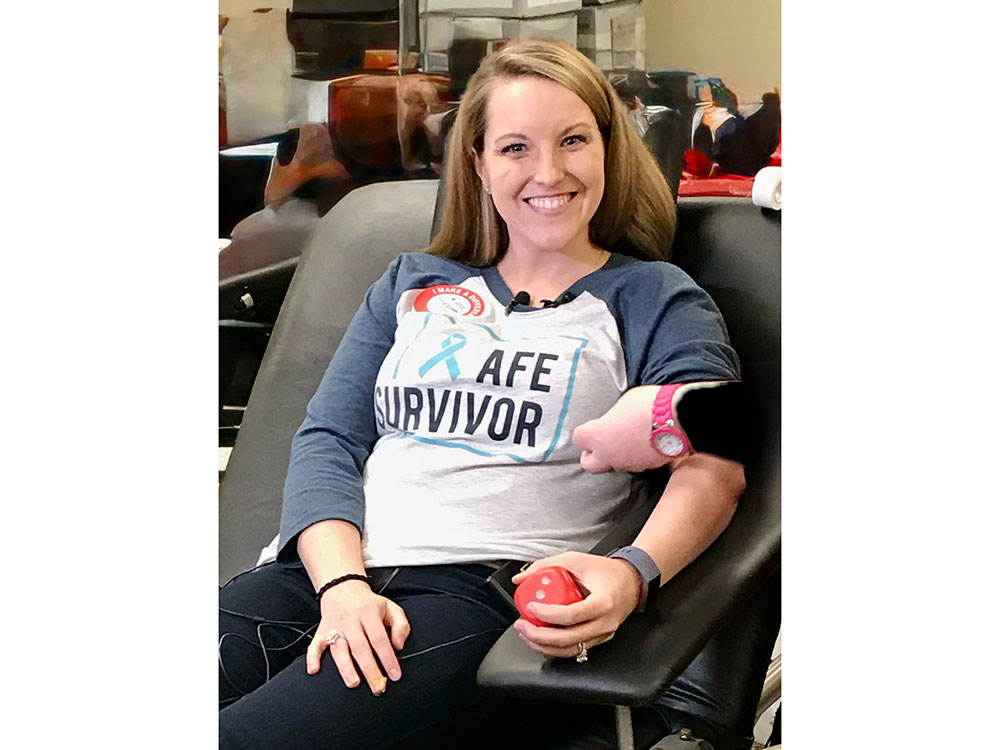
Meghan began organizing Red Cross blood drives, with some initially collecting 60 to 80 units. Eventually, one reached a milestone especially meaningful to her: 100 units.
Today, Meghan continues supporting the Red Cross by sharing her story and encouraging others to understand why a strong blood supply matters.
“I want every woman who is going through childbirth to have the same opportunity to fight for her life that I did,” she said. “I want all people to have access to blood.”
That includes trauma patients, people undergoing surgery and cancer treatment, individuals living with blood disorders and patients like Meghan whose need for blood develops without warning.
“You can’t create this in a lab,” Meghan said. “It’s a constant need. We always need it.”
For people who are nervous about donating, Meghan tells them to give it a try.
“It is so much easier than it seems,” she shared. “It takes about an hour and it DOES save lives.”
And if someone cannot donate, she says they can still help by sharing information about a blood drive or reminding someone else to make an appointment.
Eight years later, Meghan still does not know the donors whose blood products helped save her life. She cannot personally thank the individuals whose blood products reached the hospital during those frantic hours…but if she could meet them, she knows what she would say.
“Thank you.”
Because their gifts gave her more than another day. They gave her years of birthdays, basketball games and ordinary moments with a son doctors once weren’t sure would survive.
That may be the most important part of Meghan’s story.
A blood donor may never see what happens after their donation is complete.
But somewhere, there may be an entire lifetime unfolding because they showed up.
Support all the urgent humanitarian needs of the American Red Cross.
Find a drive and schedule a blood donation appointment today.
Your time and talent can make a real difference in people’s lives. Discover the role that's right for you and join us today!