By Volunteer Julia Zauner
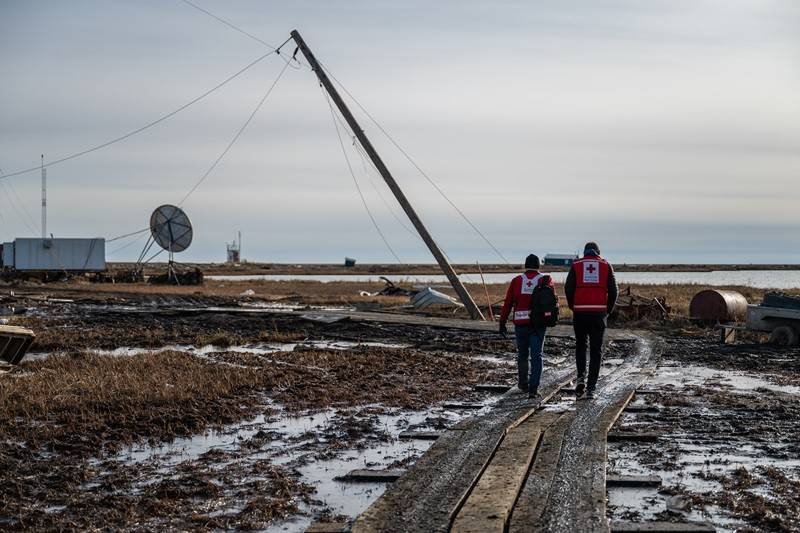
In October 2025, the remnants of Typhoon Halong swept across Alaska’s Yukon–Kuskokwim Delta, leaving entire coastal villages uninhabitable. More than 2,000 residents — many of them Yup’ik — were airlifted hundreds of miles away to Anchorage, uprooted from their ancestral homes, culture, and way of life.
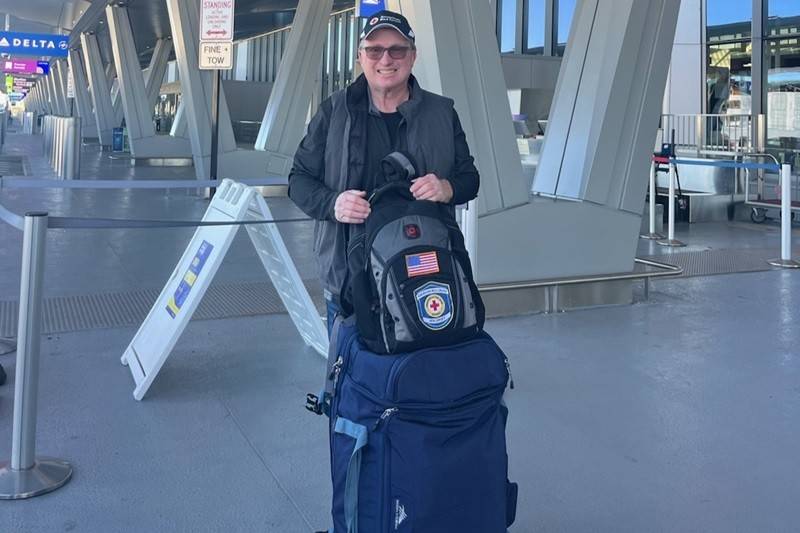
On October 15, the American Red Cross of Alaska launched a large-scale disaster response in partnership with state, tribal and municipal partners. Among the hundreds of trained volunteers supporting the effort were two dedicated responders from northern New Jersey: Doug Paugh and Andrea Webb.
Providing Compassionate Care in Anchorage
Andrea Webb, a registered nurse with a strong background in business operations, has been a Red Cross volunteer for three years and has completed more than 25 deployments. During the Alaska response, she served for three weeks as the Health Services Manager in the Red Cross shelters established at the Alaska Airlines Center at the University of Alaska Anchorage and at the William A. Egan Civic and Convention Center.
Webb worked closely with partners from State of Alaska, Tribal Health and municipal partners to support the needs of evacuees. Stationed in the shelter, Webb and her team provided consistency for clients who needed someone to talk to, providing guidance and helping people access the services they needed. While the Tribal Health system was the lead in providing care, Webb and her team conducted triage and helped facilitate care.
Understanding the cultural trauma faced by the Yup’ik community, the Red Cross placed a strong emphasis on cultural awareness for this deployment. Volunteers were trained in cultural sensitivity, signage was printed in Yup’ik, and traditional foods such as fish soup, seal meat, caribou, and reindeer soup, were incorporated into meals.
“The local Red Cross team is very attuned to cultural norms and were willing to teach us,” explained Webb. “We practiced how to say ‘thank you’ in the native language and other phrases. They were very patient in teaching us. We were trying to understand culture, cultural needs and preferences,” added Webb. “Warmth and caring are a part of their culture, and they could tell that we cared.”
The impacted villages have a subsistence lifestyle where they hunt, fish and gather throughout the spring, summer and fall to store enough food for the winter. For many of the residents, their winter food stores were washed away or destroyed in the storms. Webb witnessed the profound grief of men who had lost their season’s food supplies and despair that they couldn’t provide for their families.
“In Alaska there was an extraordinary group of caring and kind people from Tribal Care, to State of Alaska, to volunteers who were there to make sure that things were done right for the individuals in our care,” said Webb.
“I feel privileged and honored to have been there to make a difference.”
Supporting Remote Communities in Bethel
Doug Paugh, a longtime Red Cross volunteer from Northern New Jersey, deployed for two weeks to support operations in Bethel, a key central hub for nearly 50 villages impacted by the storm. Over his eight years as a volunteer, Paugh has completed more than 55 deployments and responded to more than 400 Disaster Action Team (DAT) calls across New Jersey.
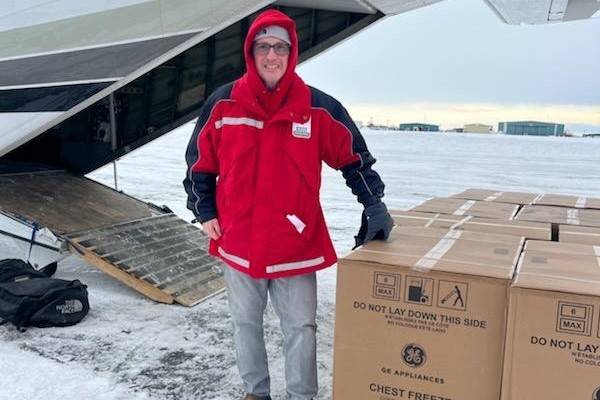
Initially serving as a safety officer in Alaska, Paugh also assisted with client intake and emergency supply distribution. He met with Tribal Elders, with the help of translators, to understand the unique needs of each community and the best ways the Red Cross could support them.
He also listened — an important cultural tradition for the Yup’ik people, who often share their experiences through storytelling. Many wanted to recount where they were during the storm: 120 mph winds, catastrophic flooding, and terrifying uncertainty. Paugh heard stories of resilience and survival, including a young man whose home floated seven miles from its foundation and a family whose house came loose and wedged between a utility pole and a hill. Paugh recalled that listening to the stories was emotional but essential to supporting the needs of these residents and starting the healing process.
“The history of these communities goes back hundreds of years,” Paugh said. “This is their ancestral land.”
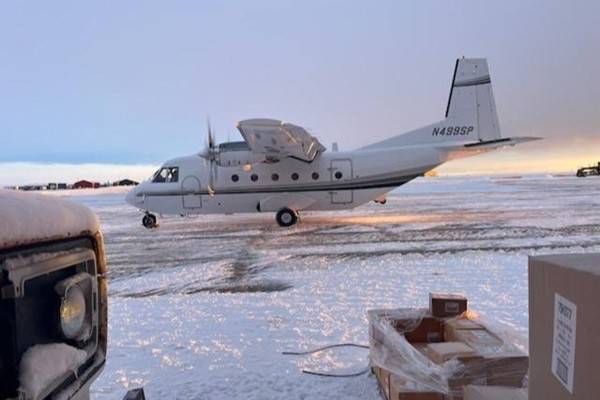
Doug and other Red Cross volunteers worked alongside the Army National Guard to load planes with emergency supplies so families would have what they needed to make it through the winter. With waterways freezing and roads becoming impassable, access to many villages depended entirely on aircraft, making timely supply deliveries essential.
Honoring the Work of Disaster Volunteers
The communities of the Yukon–Kuskokwim Delta face a long and difficult recovery. In these challenging circumstances, the dedication of Red Cross disaster responders, including volunteers like Andrea Webb and Doug Paugh, plays a vital role in supporting families through crisis, uncertainty, and loss.
The American Red Cross of New Jersey extends its deep appreciation to all disaster relief volunteers whose compassion and commitment bring comfort and relief to communities near and far. Their willingness to serve and support people in their most difficult moments reflects the very heart of the Red Cross mission.
Support all the urgent humanitarian needs of the American Red Cross.
Find a drive and schedule a blood donation appointment today.
Your time and talent can make a real difference in people’s lives. Discover the role that's right for you and join us today!