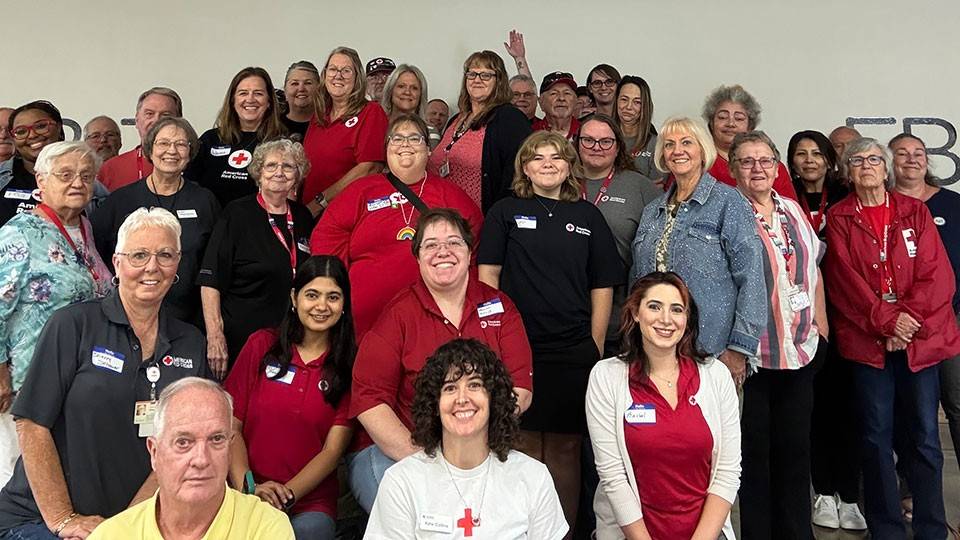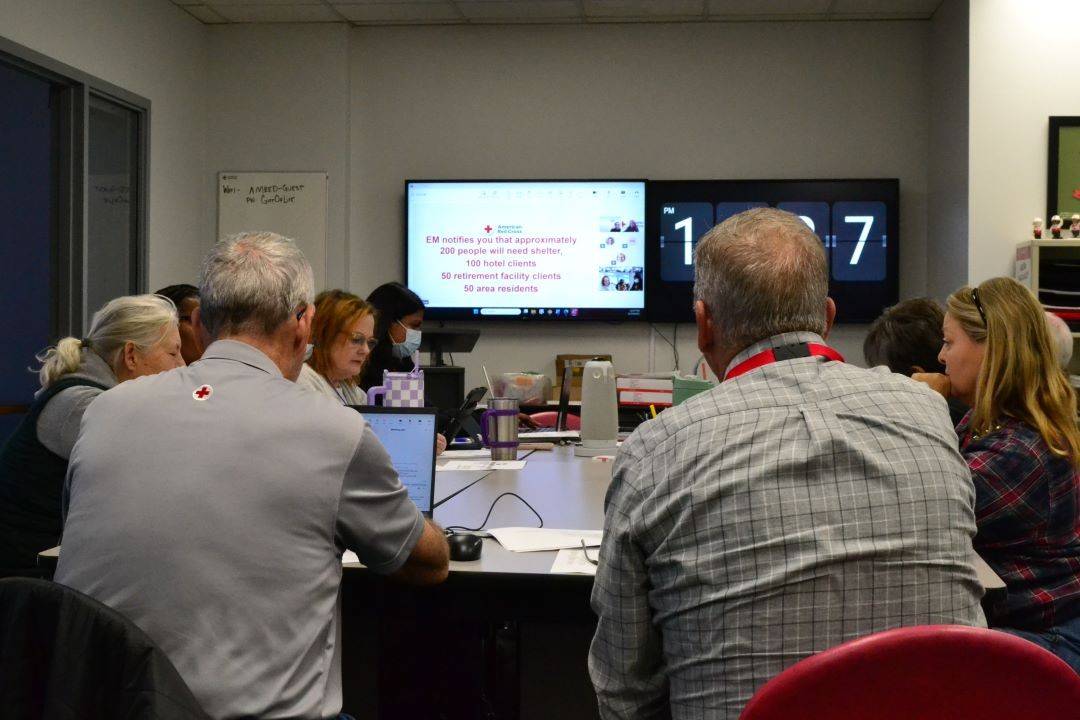
Tulsa Area Chapter disaster workers participate in a tabletop exercise. Their scenario was opening two shelters for people displaced by an early morning chemical spill.
Wednesday, 2:30 a.m. — Anhydrous ammonia leaks from a tanker truck parked near a hotel, a retirement facility and a residential area. Roughly 200 people must be evacuated because of the toxic gas, and it’s up to American Red Cross disaster workers to open safe shelters for them.
This was the scenario for recent tabletop disaster exercises held throughout the Kansas and Oklahoma Region. Each chapter — except for one, which had an event that required disaster workers to open an actual shelter — hosted an exercise for volunteers and staff to go through the steps they’d take to respond when contacted by an emergency manager to shelter people after a chemical spill.
“The big picture is that these are helping us organize and prepare with our teams and identify partners that we will be working with,” said Deputy Regional Disaster Officer David Sherwood.
The exercises required disaster workers not only to identify two shelter locations, but also to staff those shelters and plan for needs like feeding clients and staff, getting necessary equipment and technology in place, and staying on top of changing conditions.
Disaster workers’ planning required them to pin down the finer details of their sheltering response, just like they would during a real event. Locations alone weren’t enough.
They needed to assemble four shelter teams of at least two qualified workers, providing their names, positions and shift durations; come up with external points of contact for shelters; track supply trailer numbers and their locations; and even list Red Cross vehicles and their drivers.
And, just like in real life, they were limited to their immediate areas.
In the Tulsa Area Chapter, that meant the tabletop exercise participants could only assign disaster workers from the chapter’s six counties. Volunteers and staff from other chapters would be too far away to respond quickly enough during a real event.
Given the potential danger of responding to a chemical spill, volunteer Bill Casey brought up the potential need for personal protective equipment, like respirators. His logistics team quickly had trucks ready to go with PPE and shelter supplies, including water. They also discussed needing to communicate to the duty officers who dispatch responders to local disasters that the chapter is responding to a large incident so they don’t pull away needed volunteers for something like a home fire.
The Tulsa participants also identified someone to serve as government operations liaison at the emergency operations center, giving the Red Cross necessary eyes and ears as the situation evolved.
Volunteer Kathy Gradwohl took charge of the shelter opening process, like needing to execute a facility inspection and signed agreement at shelter locations, assigning someone to handle intake at both sites, and setting up separate sleeping and common areas within shelter facilities.
Working together, the Tulsa Area team did everything needed to complete the exercise within a couple of hours.
“The cooperation was really good, we identified our needs … it was really good to see what you guys did today,” said Regional Mass Care Manager Nick Richardson.
Every day, Red Cross volunteers like those at these tabletop exercises respond to disasters of all sizes. They also support blood drives, assist veterans and military families, and teach essential lifesaving skills such as first aid and CPR.
Visit redcross.org/volunteer to check out opportunities near you.
Support all the urgent humanitarian needs of the American Red Cross.
Find a drive and schedule a blood donation appointment today.
Your time and talent can make a real difference in people’s lives. Discover the role that's right for you and join us today!