By Scott Marder, American Red Cross
“My son has nothing left,” Famina Martinez said. “Totally damaged.”
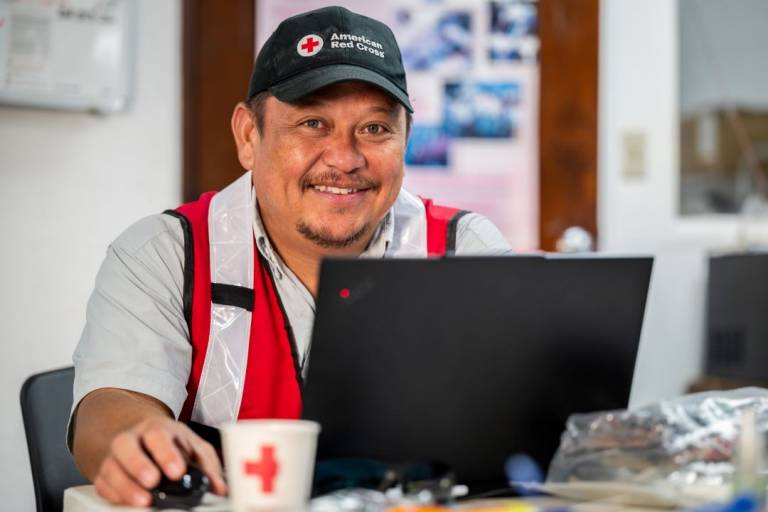
When she arrived at the Red Cross shelter at Marianas High School, her own family was still facing what Super Typhoon Sinlaku had taken. Her son’s home was gone. There was nothing she could do in that moment to change that, so she did what she could.
“The damage has been done,” Famina said. “Right now, I am here at the Red Cross to help others.”
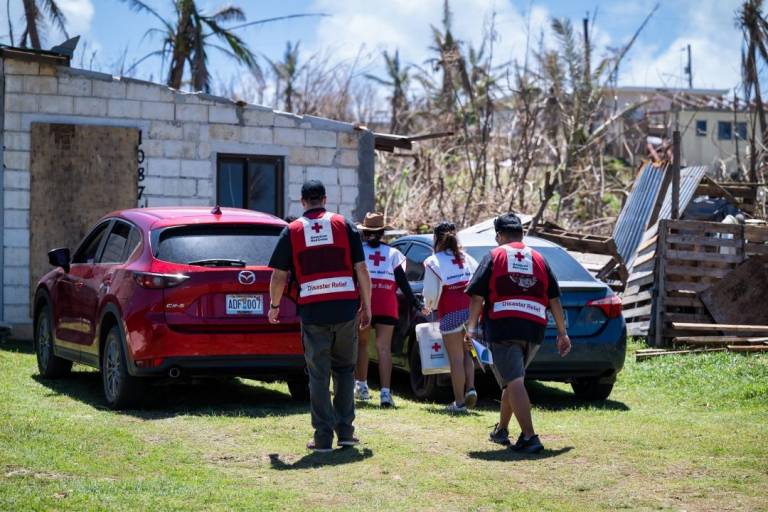
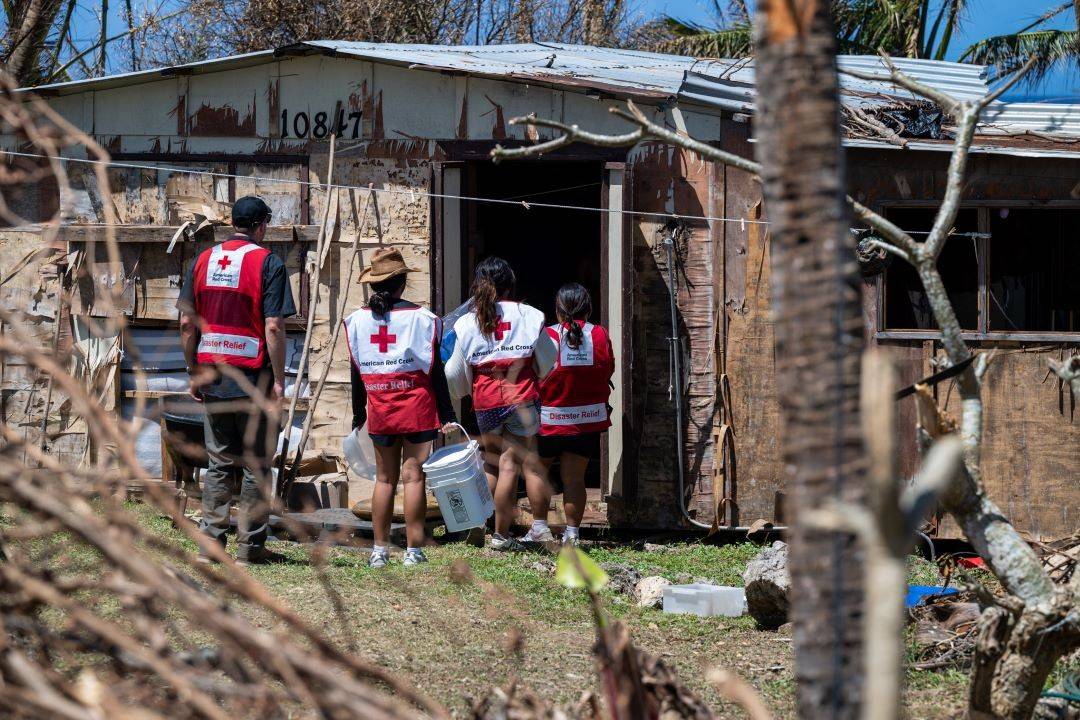
Across Saipan, that same choice was being made again and again. People whose homes were damaged, whose farms were flooded and whose families were still waiting for answers began reporting to shelters, warehouses and distribution sites. Some had slept in cars. Some were staying with relatives. Some were still trying to understand the full extent of their own loss.
They came as Event-Based Volunteers, or EBVs, local residents who step into a Red Cross disaster response when their community needs help. During a disaster, EBVs can be recruited, scheduled, placed into shifts and quickly connected to the work that needs to be done, from sheltering and feeding to logistics, intake, distribution and other response needs.
For JD Tenorio, the Red Cross Disaster Program Manager for the Northern Mariana Islands, that willingness to step forward reflects something deeply rooted in Saipan.
“People here think about what’s good for the community,” he said. “Not just about themselves.”
Tenorio grew up on Saipan. He knows storms are part of life here, but he also knows familiarity does not make the damage easier. Sinlaku was the third major typhoon to strike the Commonwealth in just a few years. Roofs that had been repaired were torn open again. Crops families depended on were wiped out again. For many residents, recovery had barely begun before they were forced to begin again.
Tenorio was living that reality too. He lost much of his own roof during the storm. His family moved in with relatives. Still, he continued helping coordinate the Red Cross response.
One longtime volunteer told him they had been sleeping in their car at night and arriving early each morning to help.
“If that isn’t a testament to commitment and willingness to roll up their sleeves and help their community,” Tenorio said, “then I don’t know what is.”
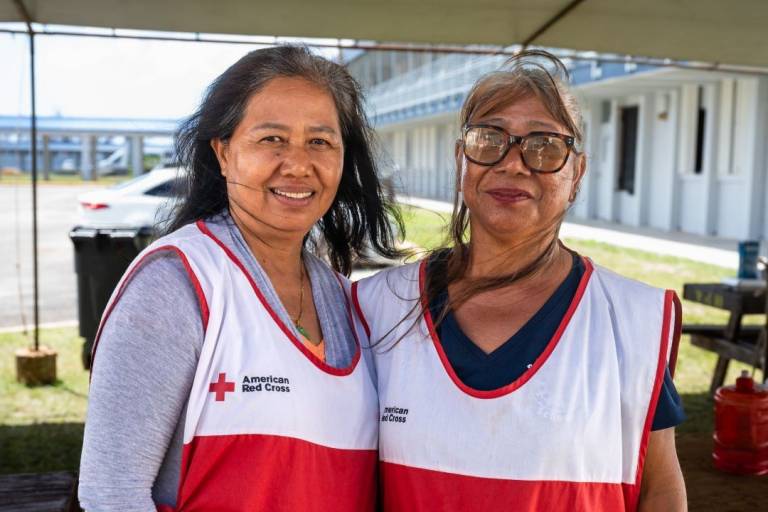
Famina has lived on Saipan since 1987. She spent years as a teacher. When families arrive at the shelter, she is not a stranger in a Red Cross vest. She recognizes people. Sometimes she knows their parents. Sometimes she taught their children.
People ask questions they might not ask an outsider. They admit when they are scared or confused. They accept comfort from someone who already understands the island, the relationships and the weight people are carrying.
That kind of trust cannot be flown in after a storm. EBVs bring it with them because they already belong.
Crisita Calage brought that same connection to the shelter, even as she worried about her own home and farm. Her family depends on the fresh vegetables they grow, but Sinlaku destroyed much of what they had planted. Each day, her husband stayed behind to feed the animals and manage what remained. Crisita came to volunteer.
Inside the shelter, she helped feed families who did not know when they could go home. Parents asked her questions she could not answer. She was waiting for answers too.
“I feel bad,” she said. “They don’t know where they go. I don’t know also.”
Still, she kept coming back.
By the time Rachel Snyder arrived to support the Red Cross workforce operation, local residents were already stepping into the work. Snyder, who served as the workforce EBV engagement manager for the operation, said close to 200 people across Guam and the Northern Mariana Islands applied to help, with roughly 50 to 70 signing up for shifts.
Many learned about the opportunity through word of mouth, WhatsApp chats, youth networks and a QR code shared in the community before and during the storm. They staffed shelters, helped with feeding, moved supplies through warehouses and supported responders unfamiliar with the island.
Their value was not only availability. It was knowledge.
“Local volunteers, the EBVs, even if they’re new, they know the area, they know their communities,” Snyder said. “They’re connected.”
That local knowledge matters in any disaster. On an island, it can be essential.
Responders from outside Saipan can bring experience, training and additional capacity. But they do not immediately know which roads are passable, which neighborhoods are hardest to reach, which families may need extra help or how information moves through local relationships. EBVs help close that gap.
They keep the response closely connected to the community it serves.
In Saipan, the Red Cross response is strongest when it is built with the community, not simply delivered to it. EBVs make that possible. The Red Cross provides structure, training, scheduling, supplies and support. Local volunteers bring trust, language, cultural understanding, relationships and the lived knowledge of their own home.
That partnership is especially important in a place where distance makes every part of disaster response more complicated. Supplies must travel farther. Transportation can be difficult. Outside help takes time to arrive. The local workforce is not a nice addition to the operation. It is part of what makes the operation work.
Tenorio said this kind of community response is not new. During past storms, including Soudelor and Yutu, local volunteers were essential to the work of the Red Cross. Many were young people. Some had lost homes themselves. Still, they stepped forward.
“These typhoons are a way of life,” Tenorio said. “It’s a part of life here.”
But accepting that storms happen does not mean accepting that people face them alone.
As the response continues, some EBVs may become long-term Red Cross volunteers. Others may return fully to their families, jobs, farms and homes. Either way, their contribution will last beyond this operation.
Every person who stepped forward strengthened the response. Every relationship formed inside a shelter or warehouse added to the network that will be there the next time help is needed.
And in Saipan, there will be a next time.
After Sinlaku, the Red Cross response looked like Famina helping shelter residents while her own son had lost his home. It looked like Crisita handing out meals while worrying about her farm. It looked like a volunteer sleeping in a car, then arriving early the next morning to help someone else.
The Red Cross did not create that commitment. The community already had it.
The Red Cross gave it a place to go.
“I’ve seen volunteers who lost their homes sleep in their cars and still show up the next morning to help their community. That’s not something you can create overnight.”
JD Tenorio, Disaster Program Manager
Support all the urgent humanitarian needs of the American Red Cross.
Find a drive and schedule a blood donation appointment today.
Your time and talent can make a real difference in people’s lives. Discover the role that's right for you and join us today!