By: Scott Marder/American Red Cross
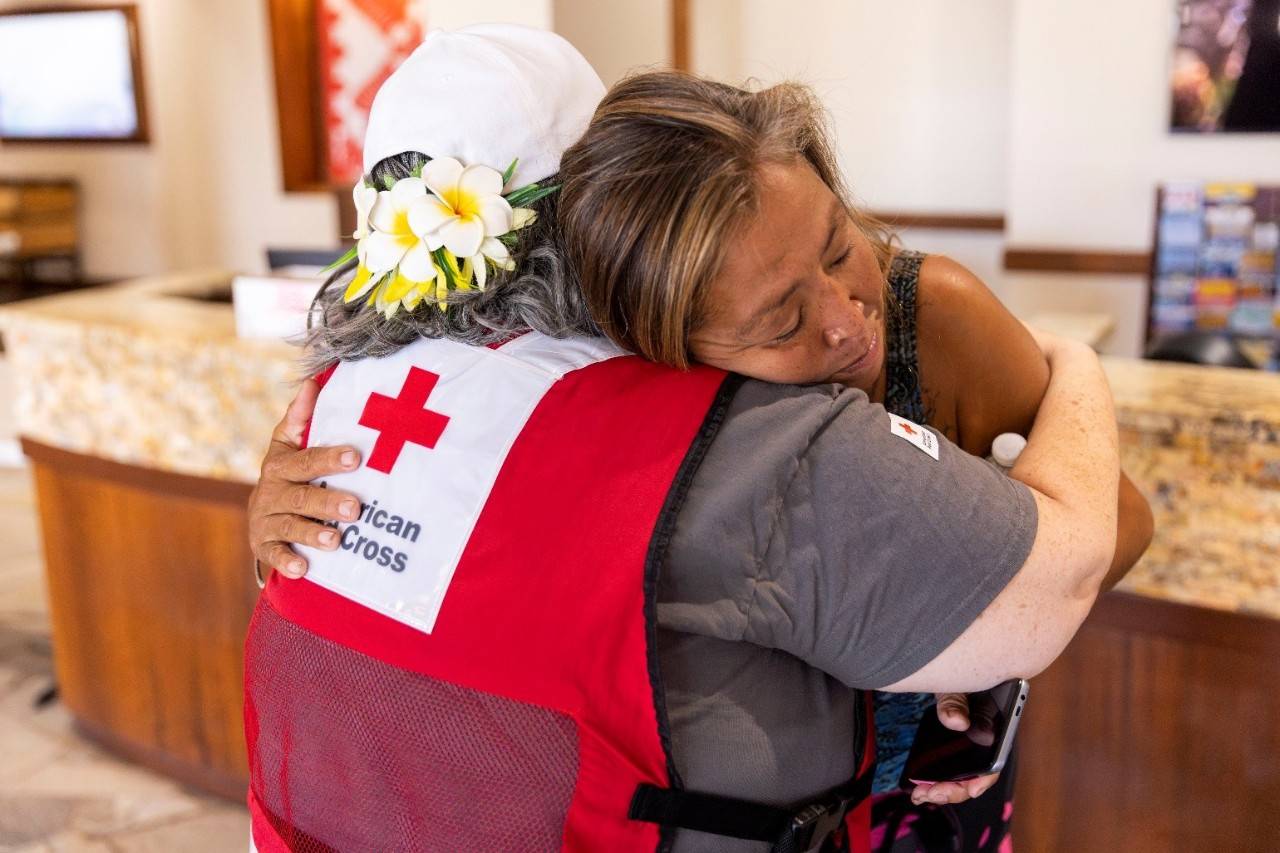
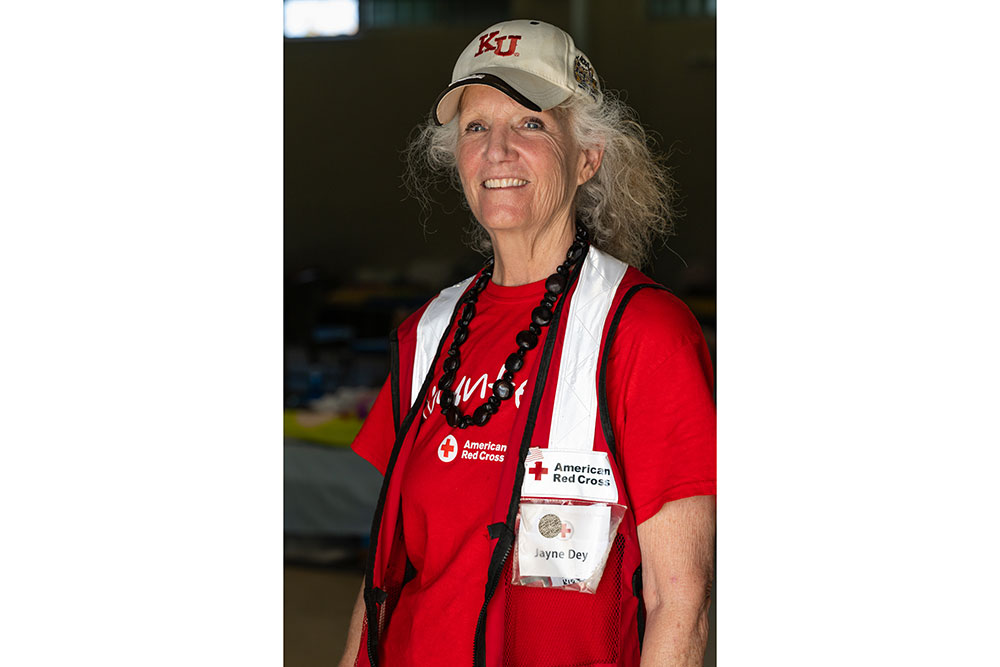
Days after Typhoon Sinlaku tore apart homes across Saipan and Tinian, Red Cross volunteer Jayne Dey received an unexpected gift inside a shelter on Saipan.
A family placed healing beads in her hands, blessed by a local medicine woman. Another later presented her with a traditional headdress worn during important occasions.
“Both times, I cried,” Dey said.
For Dey, a retired teacher from Kansas who has responded to disasters across the United States, the gestures reflected something she quickly recognized about the Northern Mariana Islands. Even while recovering from devastating losses of their own, people continued showing up for one another.
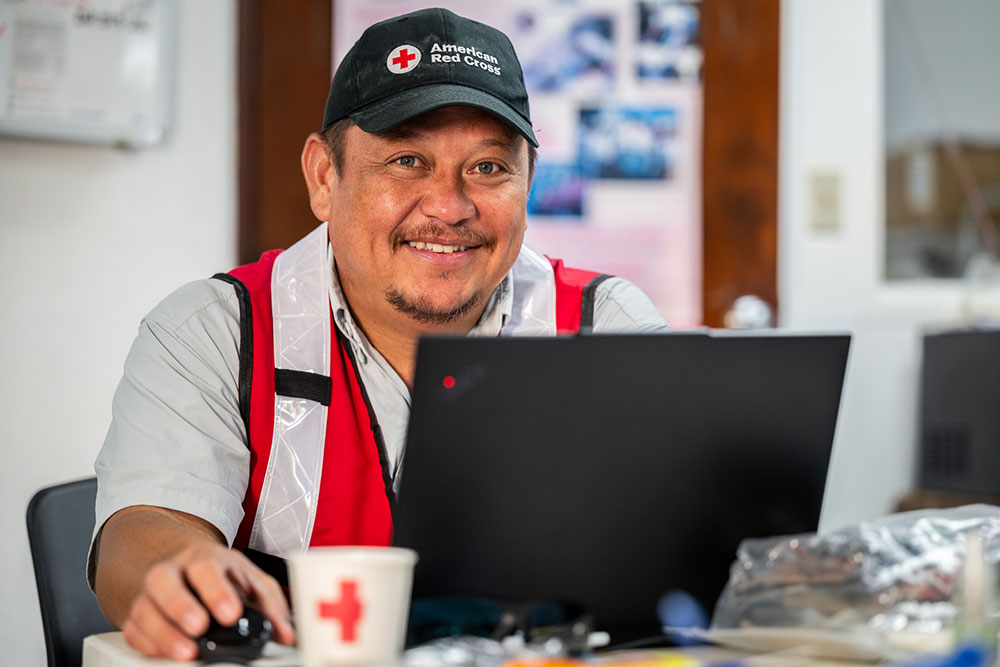
“That’s the Mariana’s way,” said JD Tenorio, disaster program manager for the American Red Cross Northern Mariana Islands Chapter.
Tenorio described a Chamorro concept known as Inafa’maolek, a spirit of mutual care, respect and responsibility to the community.
“It’s about the community here,” Tenorio said. “Not so much the individual. People are always thinking about what’s good for us.”
“It’s about the community here. Not so much the individual. People are always thinking about what’s good for us.”
- JD Tenorio
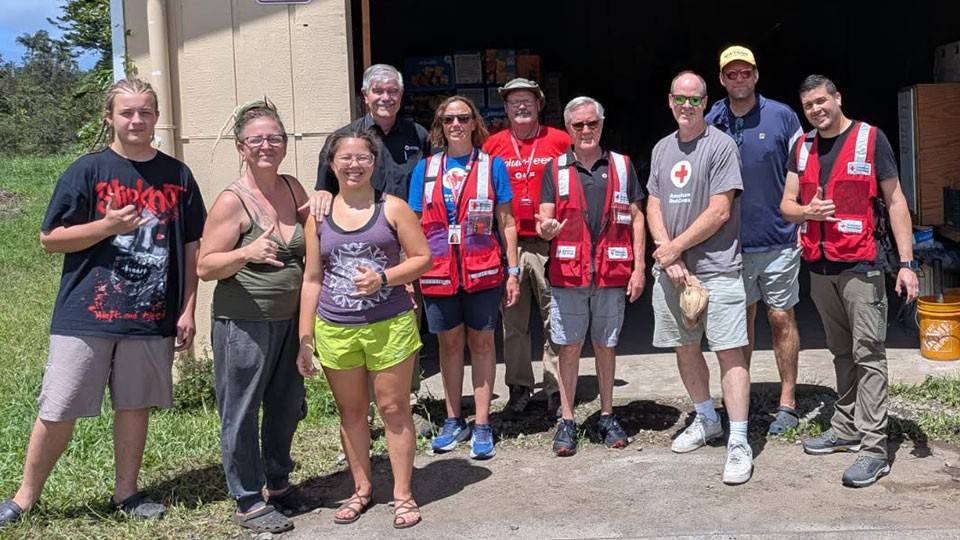
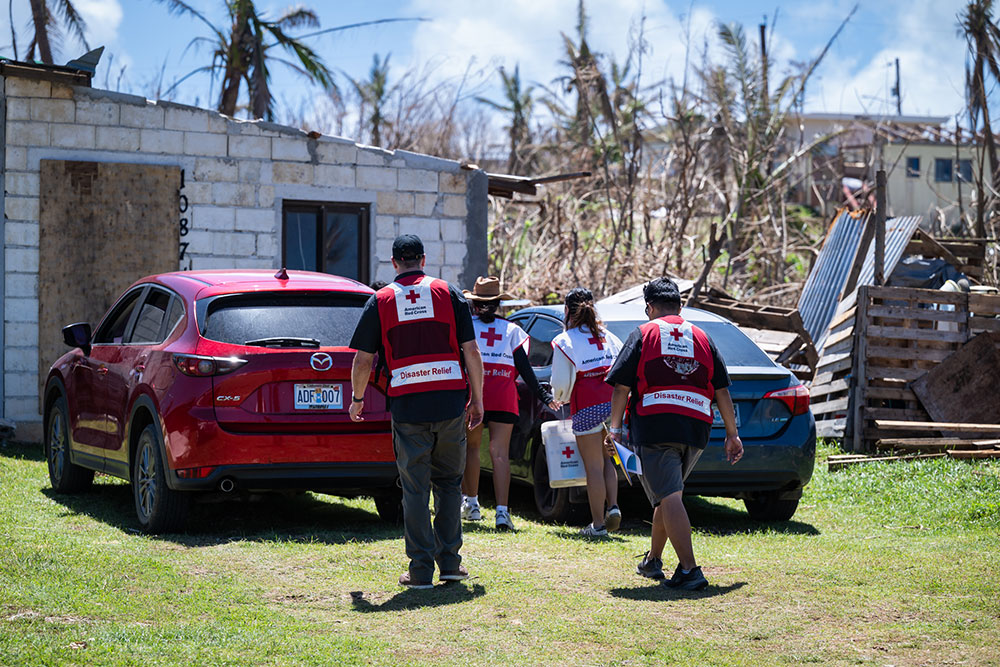
That spirit became visible across the islands in the days after the storm. At shelters, distribution sites and Red Cross facilities, local volunteers worked alongside disaster responders from across the country. Many of them were also recovering from major losses at home, damaged roofs, flooded houses and uncertainty about what recovery would look like in the weeks ahead.
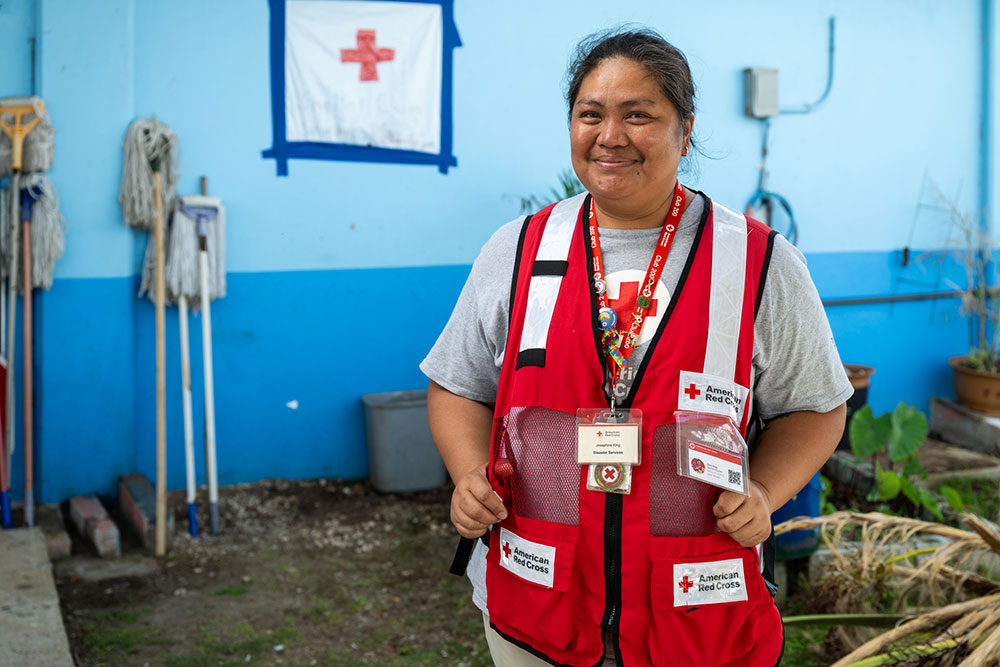
On Tinian, longtime Red Cross volunteer Josephine “Zoe” King was navigating those challenges while continuing to help others.
The storm tore through her family’s home, flooding bedrooms and scattering belongings across the neighborhood. Her husband’s tools were destroyed. Her daughter’s iPad, which helps support her disability needs, was blown apart during the storm. Even the treadmill her son had purchased to prepare for possible Air Force service was ruined.
Yet Zoe spoke less about what her family lost than about the people around her, especially those staying in shelters with nowhere else to go.
“We’re still fortunate,” she said. “There’s some other people, when I see these people here in the shelter, literally, they lost everything.”
Zoe has volunteered with the Red Cross for nine years while also working as a special education teacher’s aide and helping rescue animals through local organizations on Tinian. She said volunteering became a way to connect people in her community with help and resources, especially those who may never ask for assistance themselves.
“My community, they don’t really ask,” Zoe said. “I want to become that person to be able to help, to make community.”
That sense of responsibility extends across generations, according to Tenorio. He said students throughout the islands regularly step forward after storms, even while dealing with damage to their own homes and uncertainty about what comes next.
“Some of them will say, ‘Oh, we lost our house, but it’s okay. We’re going to rebuild,’” Tenorio said.
For Tenorio, those moments reflect the deep importance of family and community across the Northern Mariana Islands.
“People realize not everybody has that family unit to turn to,” he said. “That’s where the community members kind of step up and lend a hand.”
On Saipan, Famina Martinez also chose to volunteer after the storm damaged her family’s property and destroyed her son’s home. A former environmental science teacher, Martinez said helping others gave her renewed connection to the community around her.
“I’m happy because everybody’s supposed to help each other,” she said.
For outside responders like Dey, the experience of working alongside local volunteers and residents has left a lasting impression.
“The people have lost everything, and they are the most kind, compassionate, wonderful people,” Dey said. “They are my inspiration for the rest of my life.”
Recovery across Saipan and Tinian will continue long after emergency shelters close and cleanup crews leave the islands. Families are still sorting through damaged belongings, repairing homes and rebuilding daily routines.
But throughout the recovery effort, volunteers across the Northern Mariana Islands continue showing what Inafa’maolek looks like in practice, people stepping forward to help one another even while recovering themselves.
Some of the students volunteering now, Tenorio said, lost parts of their own homes in the storm. Still, they continue showing up each day to help their neighbors and community move forward together.
“That’s the Mariana’s way,” he said. “People step up for each other.”
Support all the urgent humanitarian needs of the American Red Cross.
Your time and talent can make a real difference in people’s lives. Discover the role that's right for you and join us today!