By: Chris Allen, Northwest Arkansas Volunteer
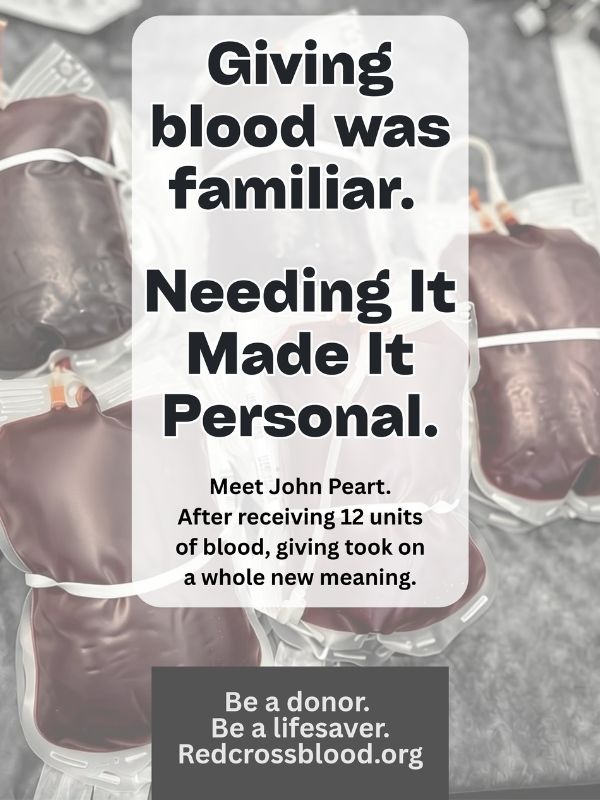
John Peart received 12 units of blood after a terrible motorcycle crash, and over the years has more than paid it back.
John was driving his motorcycle late at night on a Florida highway in 2015, when a woman turned left in front of him three miles from his home in Ruskin. He was going 50 miles an hour.
“The only thought I had was this is going to hurt,” he said. It was the last thought he had until he woke up from a medically induced coma three weeks later.
He had five fractures in his left leg, and eight in his right, leaving the right leg six inches short.
“I don’t know how many surgeries I went through,” he said. In all, he received twelve units of A+ blood. That’s roughly the amount of blood in the male body. “I’m pretty lucky there’s a lot of A+ out there.”
“They told me I’d never walk again.”
After multiple surgeries to repair his legs, including bone grafts for the right leg, he spent four months on his back in convalescence. When he was able to return home, he spent the next seven months progressing from a wheelchair to a walker to a cane and eventually was able to walk on his own.
He even returned to his job at a chemical plant in Florida but had to take medical retirement a few years later.
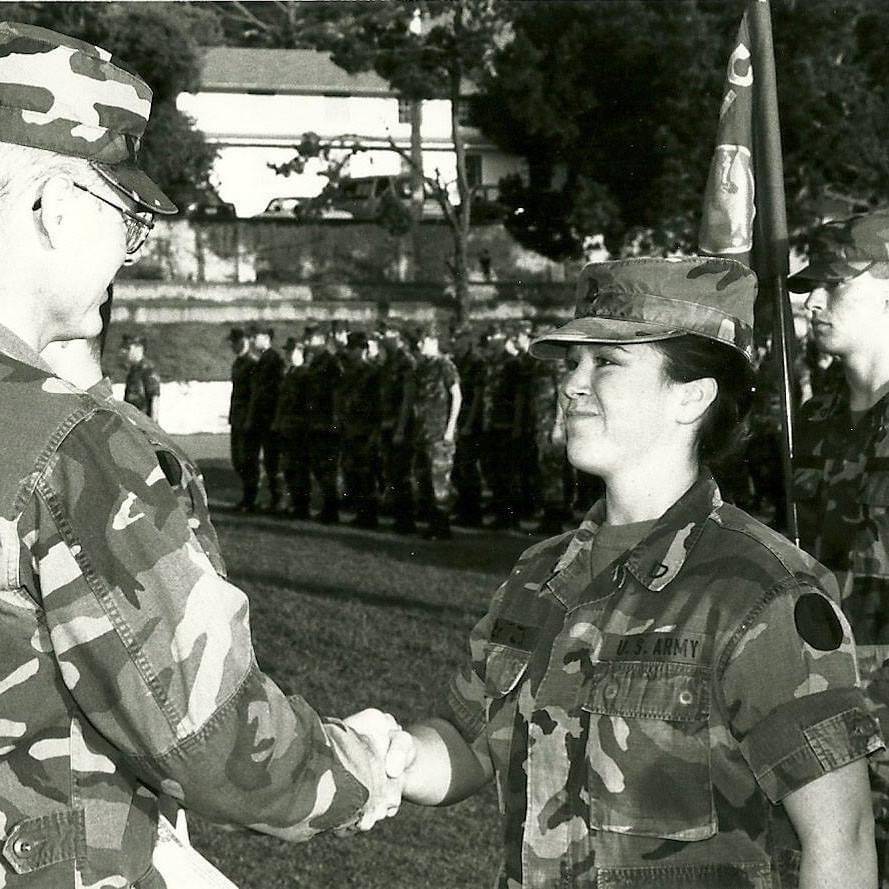
As soon as he could, John began donating at Red Cross donation drives. “I had given a lot during my 20 years in the Navy,” he said. “I’ve been a regular donor ever since the accident.”
Three years ago, John Peart moved to Northwest Arkansas to care for his mother. His latest donation was at a Fayetteville drive.
John was 51 when the crash occurred. Now at 63, he has donated far more than the 12 units he received, but he continues to give every time he is eligible.
He Needed 12 Units of Blood to Survive a Horrific Crash. Now He Donates Every Chance He Gets.
John Peart was driving home late one night in 2015 when his life changed in an instant.
He was riding his motorcycle along a Florida highway near his home in Ruskin when a woman turned left directly in front of him. John was traveling about 50 miles per hour.
“I remember thinking, ‘This is going to hurt,’” John recalled.
It was the last thing he remembered from that night.
John wouldn’t wake up again for three weeks. Doctors had placed him in a medically induced coma as they worked to save his life and repair the devastating injuries he suffered in the crash.
He had five fractures in his left leg and eight in his right. His right leg was left six inches shorter than it had been before the crash.
And there was another number that would stay with him: 12.
John received 12 units of A+ blood during his treatment, which is roughly the amount of blood in the average adult man's body.
He underwent surgery after surgery, including bone grafts to repair his badly damaged right leg. He spent four months recovering on his back before he was finally able to return home.
Doctors had warned him that walking again might not be possible, but he was determined to prove them wrong.
Over the next seven months, John worked his way through an exhausting progression: first a wheelchair, then a walker, then a cane. Eventually, step by step, he was walking on his own.
He even returned to his job at a Florida chemical plant. A few years later, however, the lasting effects of his injuries forced him to take medical retirement.
Through it all, John never forgot the people who helped keep him alive, and he knew exactly how he wanted to repay them.
John had donated blood before. During his 20 years in the U.S. Navy, he had regularly rolled up his sleeve to help others. After his crash, blood donation took on an entirely different meaning.
“As soon as I was able, I started donating again,” he said. “I knew firsthand what it meant to need blood.”
John became a regular blood donor with the American Red Cross, returning to donation drives whenever he was eligible.
Three years ago, John moved to Northwest Arkansas to care for his mother. He has continued that tradition, most recently donating blood at a Red Cross blood drive in Fayetteville.
At 63, John has now donated far more blood than the 12 units he received after his motorcycle crash.
He doesn't see that as settling a debt. He simply sees it as continuing something that someone else started for him.
“When I needed blood, somebody I didn’t know took the time to give it,” John said. “Now I have the opportunity to do the same thing for someone else.”
For John, every donation is a reminder of just how quickly any one of us can become a patient.
Eleven years after his accident, John is still walking.
And every time he rolls up his sleeve, he is helping make sure someone else gets the chance to keep walking, too.
Support all the urgent humanitarian needs of the American Red Cross.
Find a drive and schedule a blood donation appointment today.
Your time and talent can make a real difference in people’s lives. Discover the role that's right for you and join us today!