Damakant Jayshi, Communications Volunteer
For Hope Hall, life in Statesboro, Georgia, has long revolved around family, school and community.
A health and physical education teacher at Statesboro High School, Hall spent her days balancing work, motherhood and family life with her husband and their two young sons. Mornings were busy. Afternoons were filled with sports, school activities and family time. Like many parents, she tried to enjoy what she calls “the little moments together.”
Then, in 2024, just a day before her 40th birthday, everything changed.
“I still remember the moment I found out I had AML leukemia,” Hall said. “It was overwhelming and life changing.”
The diagnosis abruptly shifted her focus away from everyday routines to treatment, hospital stays and survival.
For Hall, the diagnosis did not arrive in isolation. It interrupted a life centered on caring for others – teaching students, raising children and staying involved in a close-knit community. The sudden shift from caregiver to patient was both emotional and disorienting.
“Hearing the diagnosis was scary,” she said, “but I also knew I had to stay strong and keep faith through the process.”
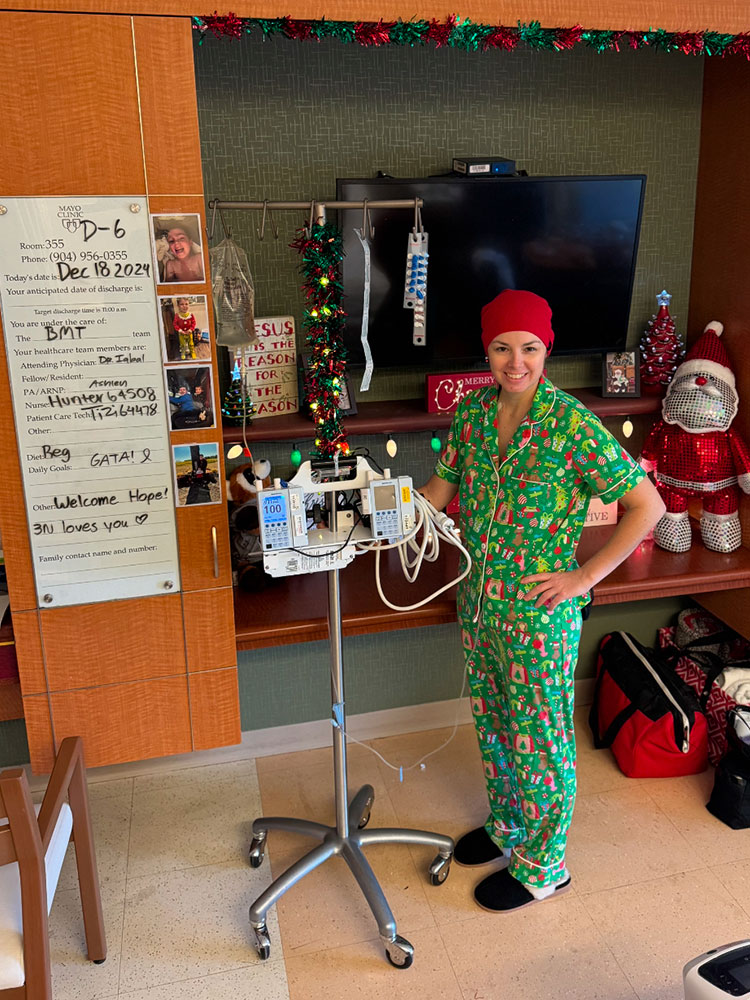
Hope Hall in the hospital.
A Difficult Diagnosis
Acute myeloid leukemia (AML) is a fast-growing cancer that starts in the bone marrow, where blood cells are made. The disease interferes with the body’s ability to produce healthy blood cells, leaving patients vulnerable to infections, bleeding and severe fatigue. Symptoms can include exhaustion, bruising, fever, shortness of breath and frequent infections. Treatment often involves intensive chemotherapy, blood and platelet transfusions, and in some cases, bone marrow or stem cell transplants, according to Penn Medicine.
After undergoing multiple rounds of pre-transplant chemotherapy, her doctors decided to inject healthy stem cells to replace her diseased bone marrow. But Hall’s path to recovery became even more challenging when her first bone marrow transplant did not fully engraft, meaning the donor cells did not establish themselves in her bone marrow as expected.
Her medical team ultimately determined that a second transplant was necessary, a rare and demanding step that came less than a year after the first. During the months between the two procedures, blood and platelet transfusions became a critical lifeline.
“Between transplants, I was sustained by weekly blood and platelet donations and the grace of the Good Lord,” Hall said.
“There were times when I needed them frequently, sometimes multiple transfusions during hospital stays,” she said. “Those transfusions became a critical part of helping keep me alive and strong enough to continue treatment.”
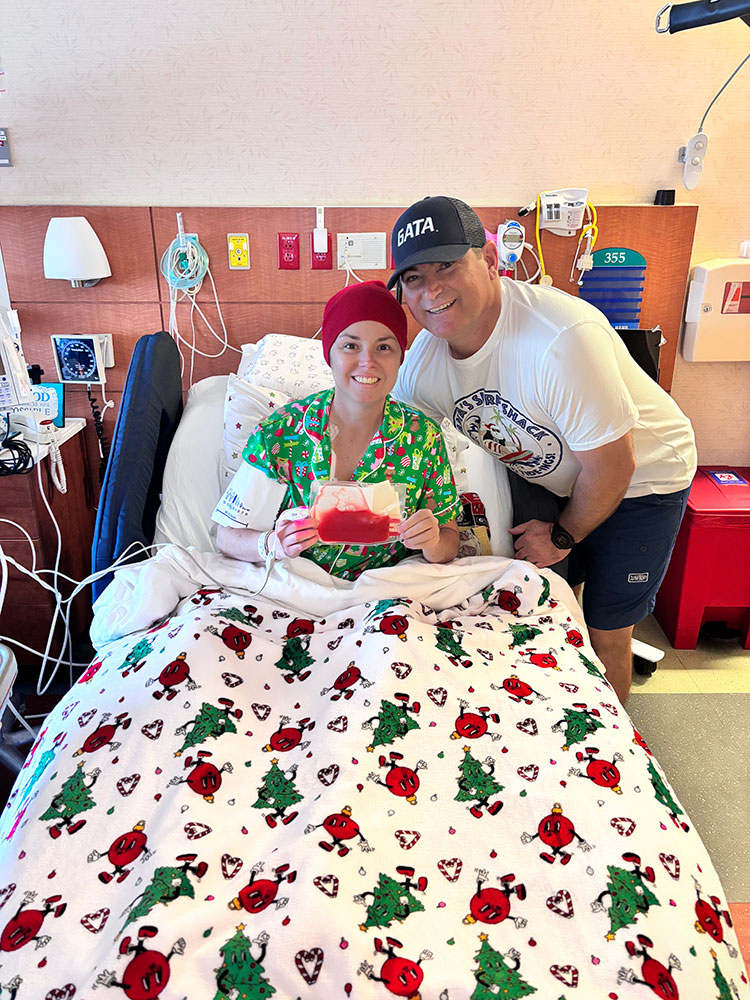
Hope Hall with her husband, Bo Hall.
Donated blood: a Lifeline
Before becoming a patient herself, Hall had not given much thought to where donated blood comes from or who might one day depend on it. That changed once transfusions became an integral part of her treatment. For many recipients, donated blood is not a one-time emergency measure but an ongoing lifeline. She said she saw firsthand how much those donations meant to patients like her. “I first became fully aware of the role of the American Red Cross during my treatments and transfusions,” she said. “Before my diagnosis, I honestly do not think I realized how important blood donations truly are.”
“Once I became the person needing those donations, it completely changed my perspective and showed me how lifesaving every donor can be.”
But Hall’s story is not only about illness and treatment. It is also about the support system that surrounded her during this difficult period of her life. “As a teacher and mom, it was difficult stepping away from the routines and people I loved,” she said.
What carried her through was the support she received from family, friends, coworkers, students and the broader Statesboro community.
“Their encouragement carried me through some of my hardest days.”
But Hall is too modest to mention another factor that played an important role in her recovery: her own perseverance and determination to reclaim as much normal routine as possible. A serious diagnosis can leave people overwhelmed and uncertain about the future. After the initial shock, Hall focused on facing AML one step at a time and continuing to move forward through treatment, setbacks and recovery.
As she continues recovery following her two bone marrow transplants, Hall remains focused on taking things one day at a time.
She has also had to deal with graft-versus-host disease, or GVHD, a complication that sometimes occurs after bone marrow transplants when donor cells attack healthy tissues in the body. GVHD can affect the skin, digestive system, liver and other organs and symptoms can range from mild to serious. Hall said it affected many parts of her daily life, making it more challenging to eat, exercise and manage everyday routines. She has had to balance doctor appointments, medications, and recovery while returning to work.
Still, she remains hopeful.
“I am thankful for every step forward and for the medical teams supporting me throughout this process.”
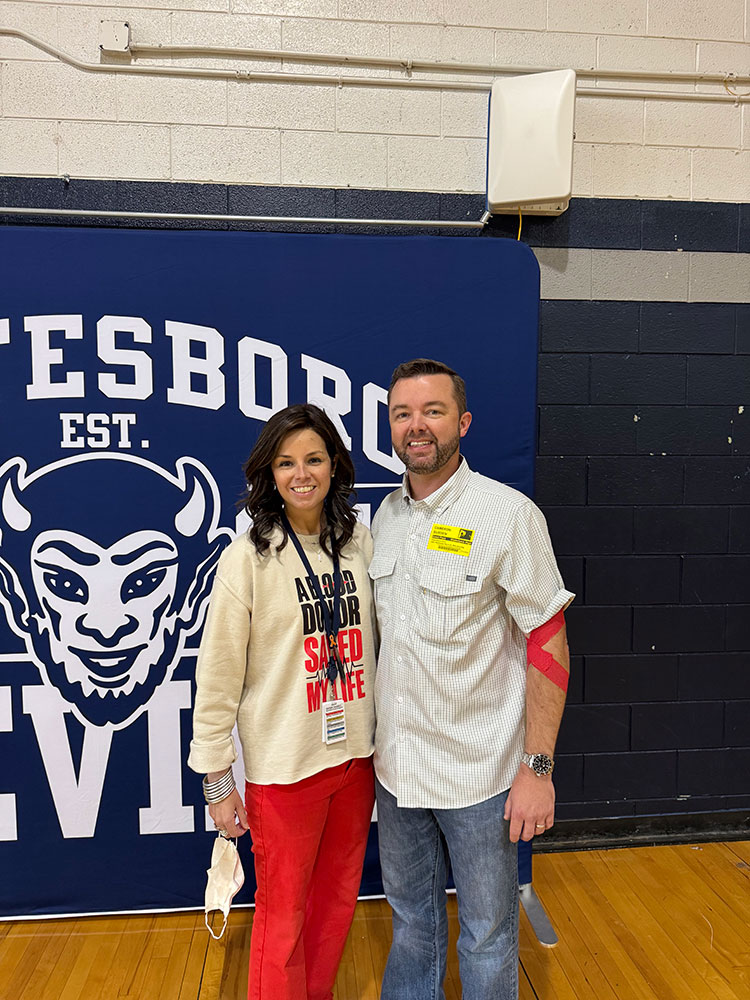
Hope Hall with her brother Cameron Durden, after he donated blood.
Giving back through blood drives
Her experience has also transformed her relationship with blood donation and with the American Red Cross. Hall has since become involved in blood drives and awareness efforts in her community and local schools, motivated by the knowledge that donations from strangers helped save her life.
“It has become very personal to me because I know those donations helped save my life,” she said. Today, Hall wants people to understand that donating blood is not an abstract act of charity.
For patients battling cancer and other serious illnesses, it can mean more time with family, another round of treatment or another chance to recover.
“One donation can impact multiple lives, and you never know whose family you may be helping,” said Hall. “I also hope people understand the importance of community, faith and support during difficult times. I would not have made it through this journey without mine.”
For many donors, giving blood may feel like a simple act of community service, with little knowledge of who might eventually receive it. Hall’s story is a reminder that those donations often become part of someone else’s journey to survive – helping patients gain more time, more treatment and, in many cases, another chance at life.
And to the donors, volunteers and organizations that make those lifesaving transfusions possible, Hall has a simple message:
“Thank you. Blood donors truly give people hope and a chance to keep fighting.”
About the American Red Cross:
The American Red Cross shelters, feeds and provides comfort to victims of disasters; supplies about 40% of the nation’s blood; teaches skills that save lives; distributes international humanitarian aid; and supports veterans, military members and their families. The Red Cross is a nonprofit organization that depends on volunteers and the generosity of the American public to deliver its mission. For more information, please visit redcross.org or CruzRojaAmericana.org, or follow us on social media.
Support all the urgent humanitarian needs of the American Red Cross.
Find a drive and schedule a blood donation appointment today.
Your time and talent can make a real difference in people’s lives. Discover the role that's right for you and join us today!