There's a moment in every marathon that the official race photos never capture.
It happens long after the runners have broken the tape, after the sponsors have begun packing up their banners, after the finishing chute has grown quiet. A runner, whose legs are burning, feet blistered, body running on borrowed time, rounds the last corner onto Boylston Street. Nobody is screaming their name. The grandstands are half empty. The clock on the finish line now reads something like seven hours, twelve minutes.
But they finish.
And when they do, a small group of Red Cross volunteers is there to make sure they get there safely.
Walking the Final Miles
In 2025, the Boston Athletic Association approached the American Red Cross with a question: what happens to the runners who don't make the official six-hour cutoff?
The answer, before the Final Finishers program, was often: not much. Runners outside the cutoff window found themselves on a course being dismantled around them: water stations gone and medical tents closing. They were attempting one of the most physically demanding things a human body can do, and they were doing it increasingly alone.
The BAA wanted to change that. The Red Cross, with its 20-year history of staffing course medical tents at the Boston Marathon, was the natural partner.
The volunteers who show up for this work aren't disaster responders or medical professionals. Many are first-timers who simply wanted to do something meaningful.
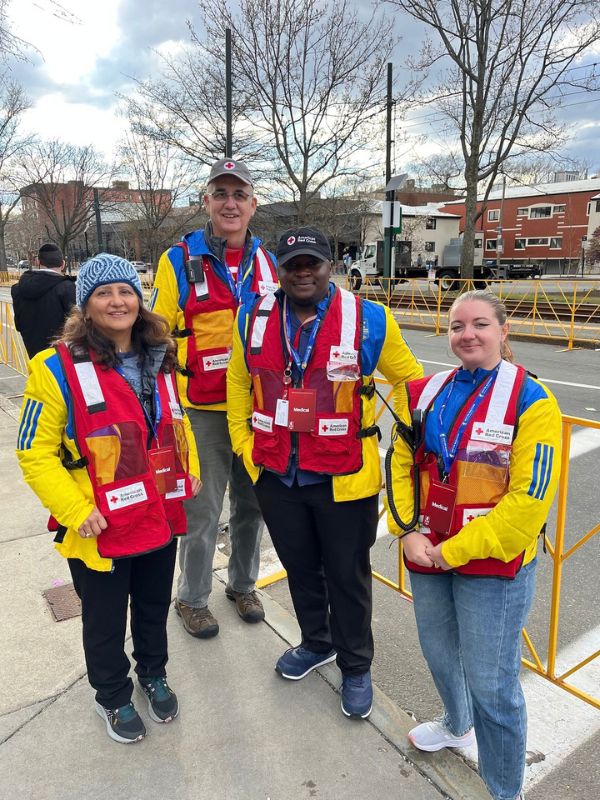
Mani Peri, a retiree who had been volunteering with the Red Cross for just over a year, was waitlisted when she first applied. She got a call last week that a spot had opened up. Race day was her first time.
"I have family and friends who run marathons," she said, stationed near the 24-mile marker on Beacon Street. "And I know that some of them are disappointed when they don't finish. In the Tokyo Marathon, they have a hard stop. They just move people out. I know these runners felt really bad.”
What the Course Looks Like After the Clock Stops
By 5:30 PM on race day, the official Boston Marathon infrastructure has largely vanished. Medical tents close. Crowds thin. The race, as most people experience it, is over.
Karam, a first-time Red Cross volunteer, described the scene: "The police and the local government staff cleaned up very, very quickly. The tent was gone, the fields were cleaned up. It almost looked like it wasn't there within a few hours."
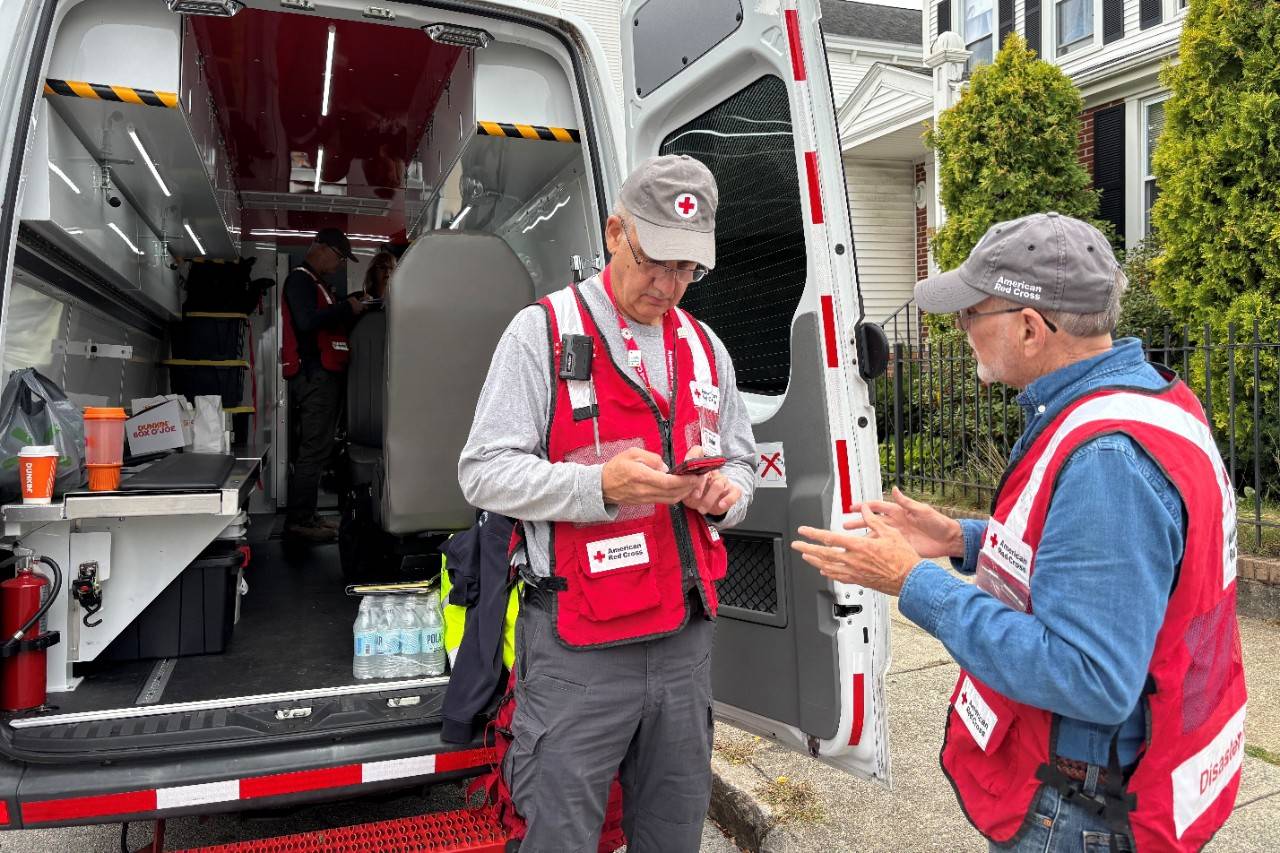
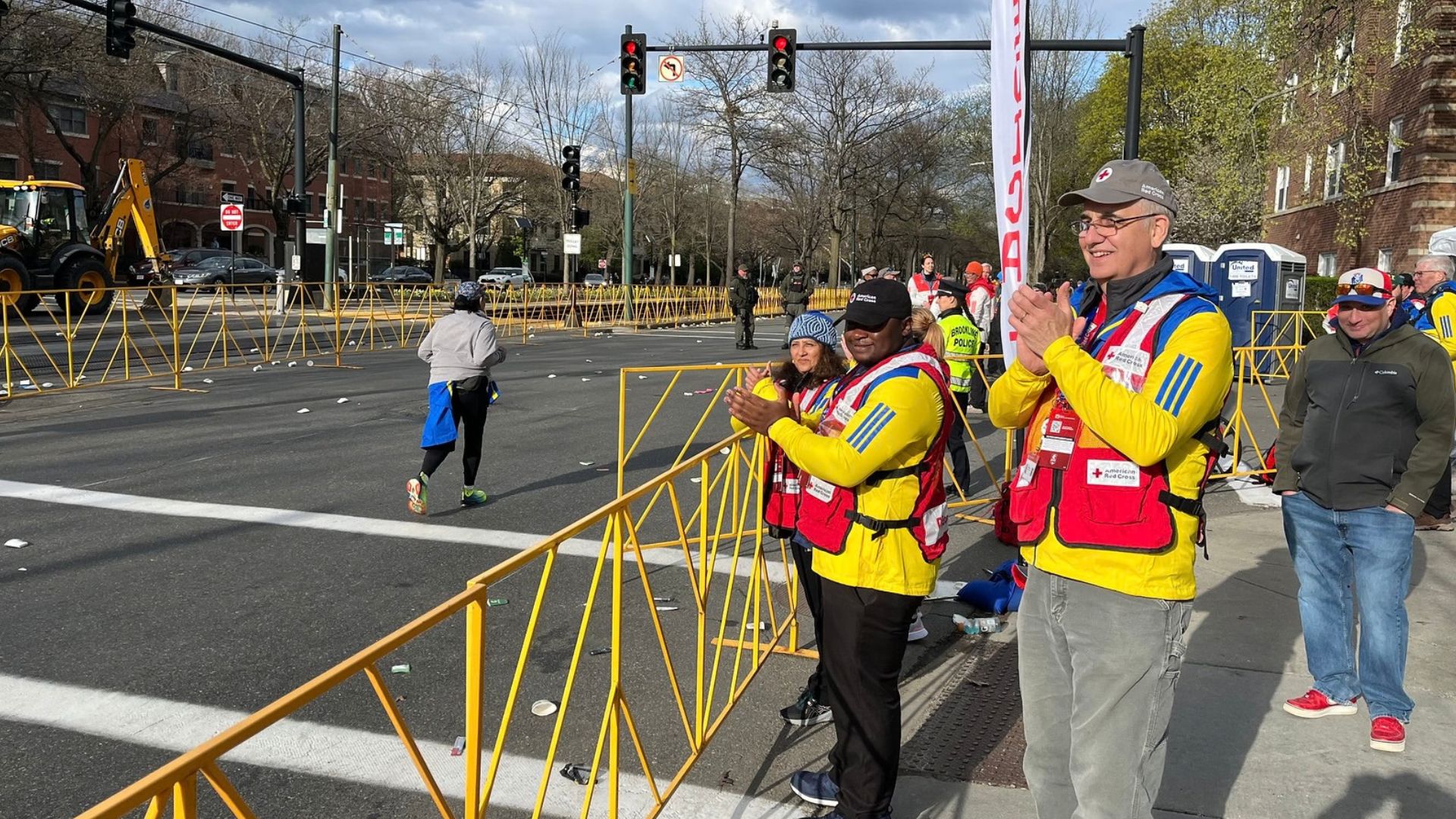
Into that emptied landscape walk the Final Finishers volunteers. Small clusters stationed every few blocks between the late runners and Boylston Street, picking up where the official race leaves off.
"What happens is, when they close it, they move all the runners to the sidewalk," Mani explained. "They open the roads up. That's where we come in to help guide them, help them if they need anything. Motivate them, direct them."
The work itself, Karam said, turns out to be simpler than you might expect. "We were just clapping and cheering them on. And a lot of them just asked pretty basic information like how much is left? We said two miles. They asked if they should stay on the sidewalk. We said yes. Really simple things like that."
Simple, but not small.
Karam described how the experienced volunteer he was paired with gave him a simple but effective orientation before the shift began. "She gave me a good briefing. Like, okay, if anybody comes up to us, this is what we do, this is what we offer, this is what we can do."
What they can offer is deliberately modest but meaningfully human: emotional support, course guidance, water, a band-aid, and if necessary, a call to 911 or help arranging transportation off the course. "We are technically not medical, so we can't do anything beyond calling 911," Mani said. "We are more like motivators.”
They'll Be Back
Ask either volunteer if they'd do it again, and the answer comes quickly.
"I really enjoyed how it was set up," Karam said. "I think I'm going to be looking forward to more Red Cross volunteer opportunities."
Mani had been thinking about what it would look and feel like when the streets reopened to traffic, the temperature dropping, runners moving through a city that had mostly moved on. "These runners will be on the sidewalk, it'll be a little colder. We need to keep checking who's running, who's walking, try to keep them safe. Clear the path for them."
There's something quietly radical about a program built on that premise: that a runner who takes eight hours deserves the same dignity as one who takes two. In a culture that glorifies speed, choosing to honor the slow finish is a different kind of statement.
For Mani, who came to the Red Cross in retirement looking for something more than she'd expected to find, it landed somewhere personal.
"For the marathoners," she said, "finishing is the big deal."
Support all the urgent humanitarian needs of the American Red Cross.
Find a drive and schedule a blood donation appointment today.
Your time and talent can make a real difference in people’s lives. Discover the role that's right for you and join us today!