By: Frederic Klein
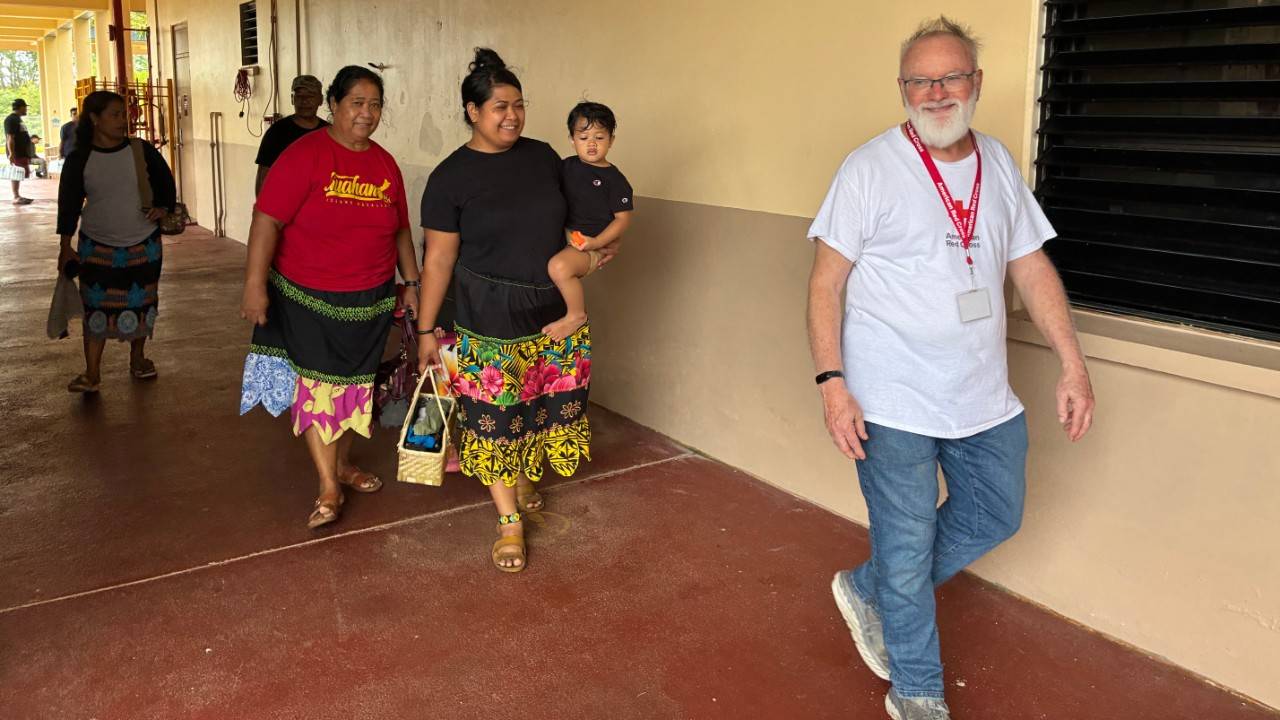
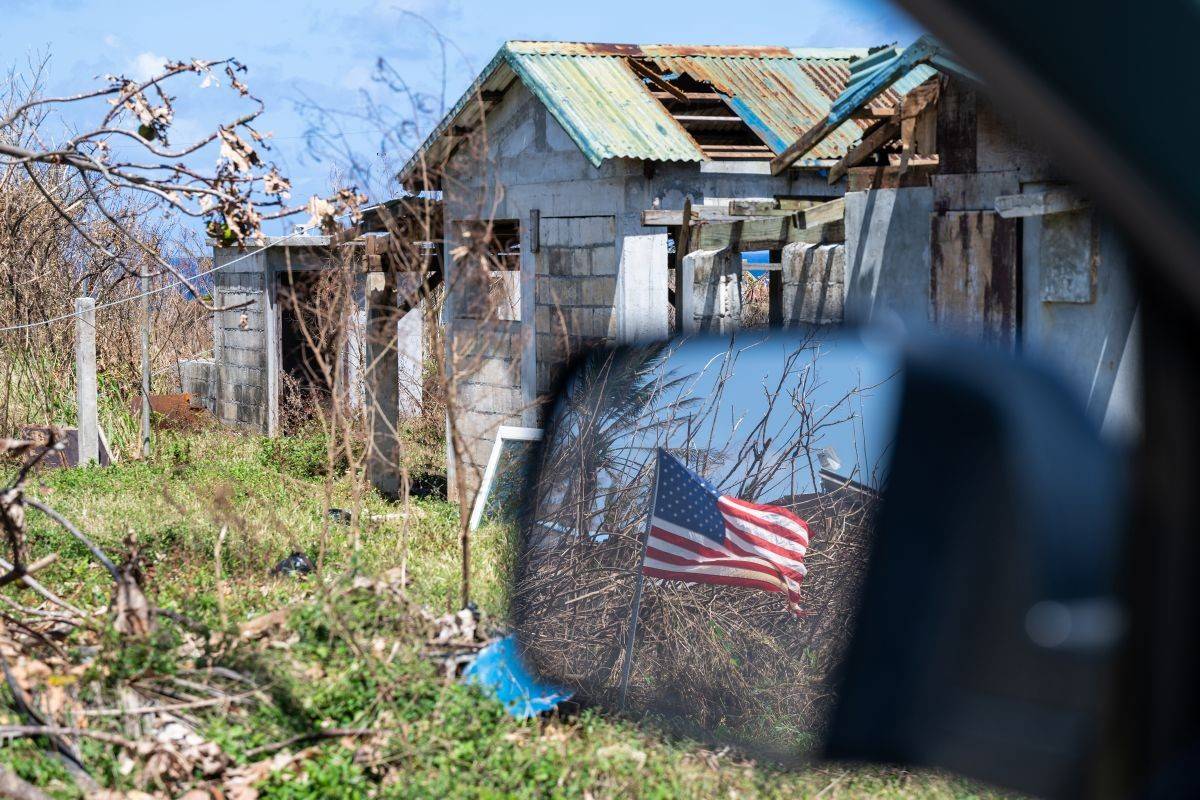
As Super Typhoon Sinlaku tore across Saipan, an unsuspecting group of heroes endured hours of fierce wind and rain. The damage to the island was severe, but so was the spirit of hundreds of residents who arose from the debris to support their neighbors.
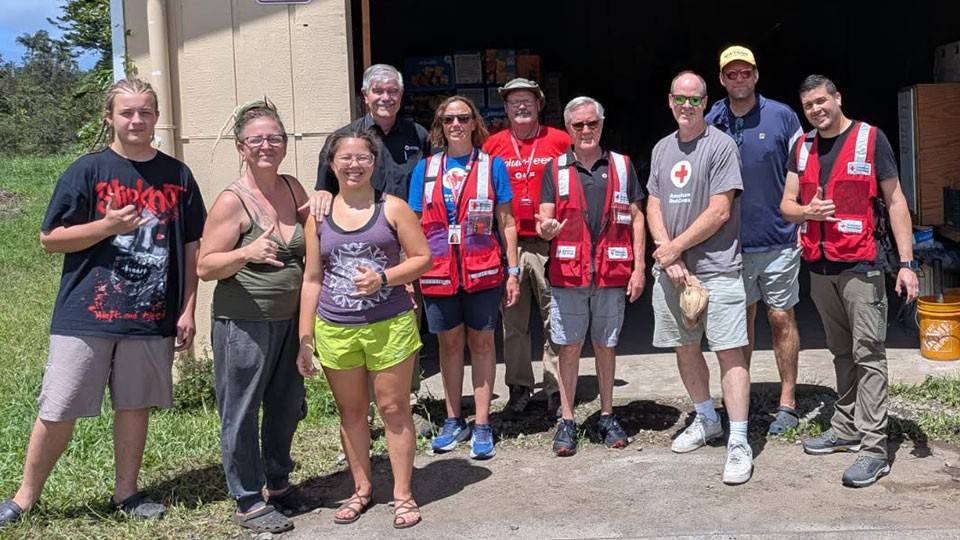
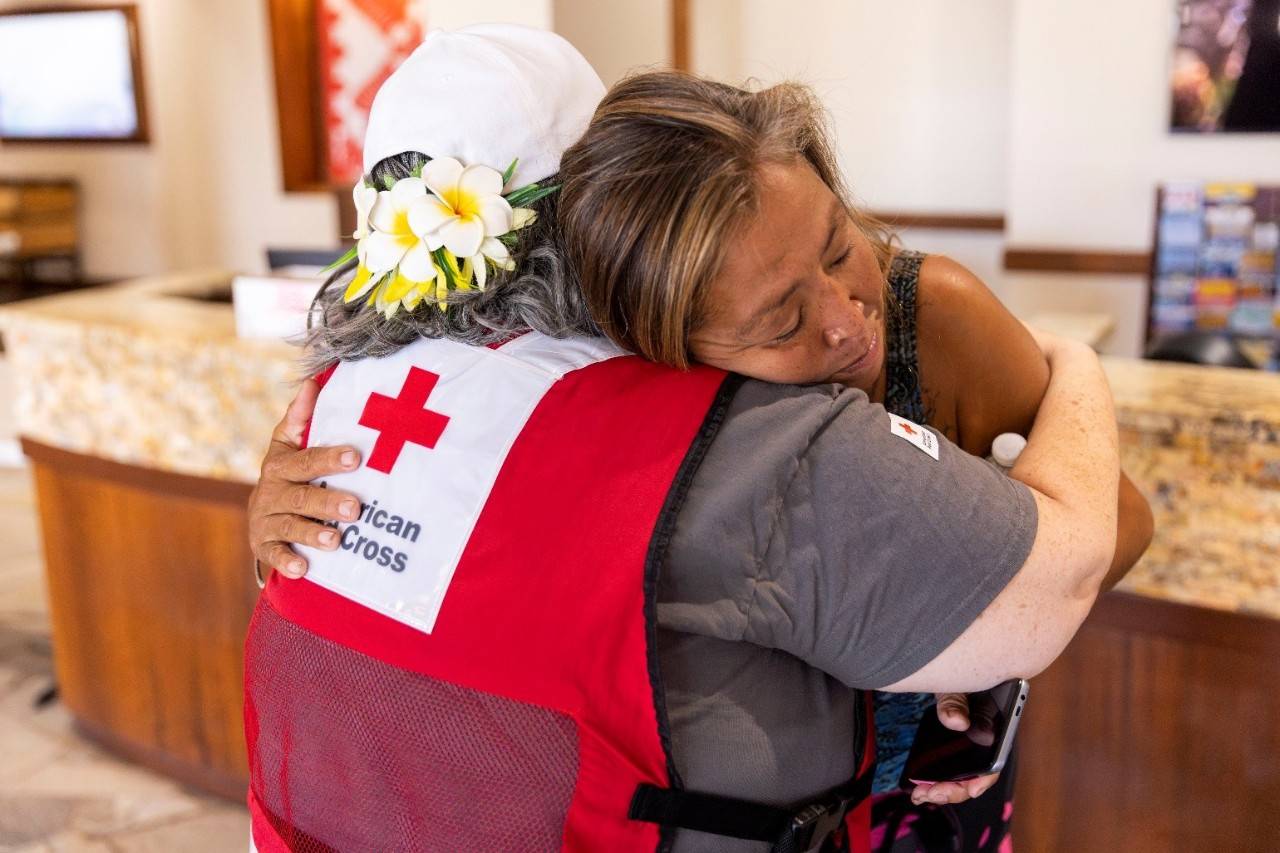
Among those putting on a red vest to help in the days and weeks that followed, dozens of teenagers came to help the Red Cross, looking for somewhere to direct their time and energy after typhoon damage forced schools to close. Working together with more than 630 trained disaster responders from throughout the United States, they quickly became invaluable assets to the relief operation.
Oliver Burnette, an experienced disaster workforce manager for the American Red Cross, noticed a difference in the young volunteers who stepped up to help after Sinlaku as compared to adult volunteers from other disasters.
“With the youth, they said ‘how can we help?’ That’s it — they didn’t care what their assigned job was, they just said ‘we want to help.’” recounted Oliver. “I’ve seen this more than ever on Sinlaku — it’s what we say in the Red Cross: Sleeves Up, Hearts Open, All In.”
Below are a few of the local heroes who supported the Red Cross after Super Typhoon Sinlaku:
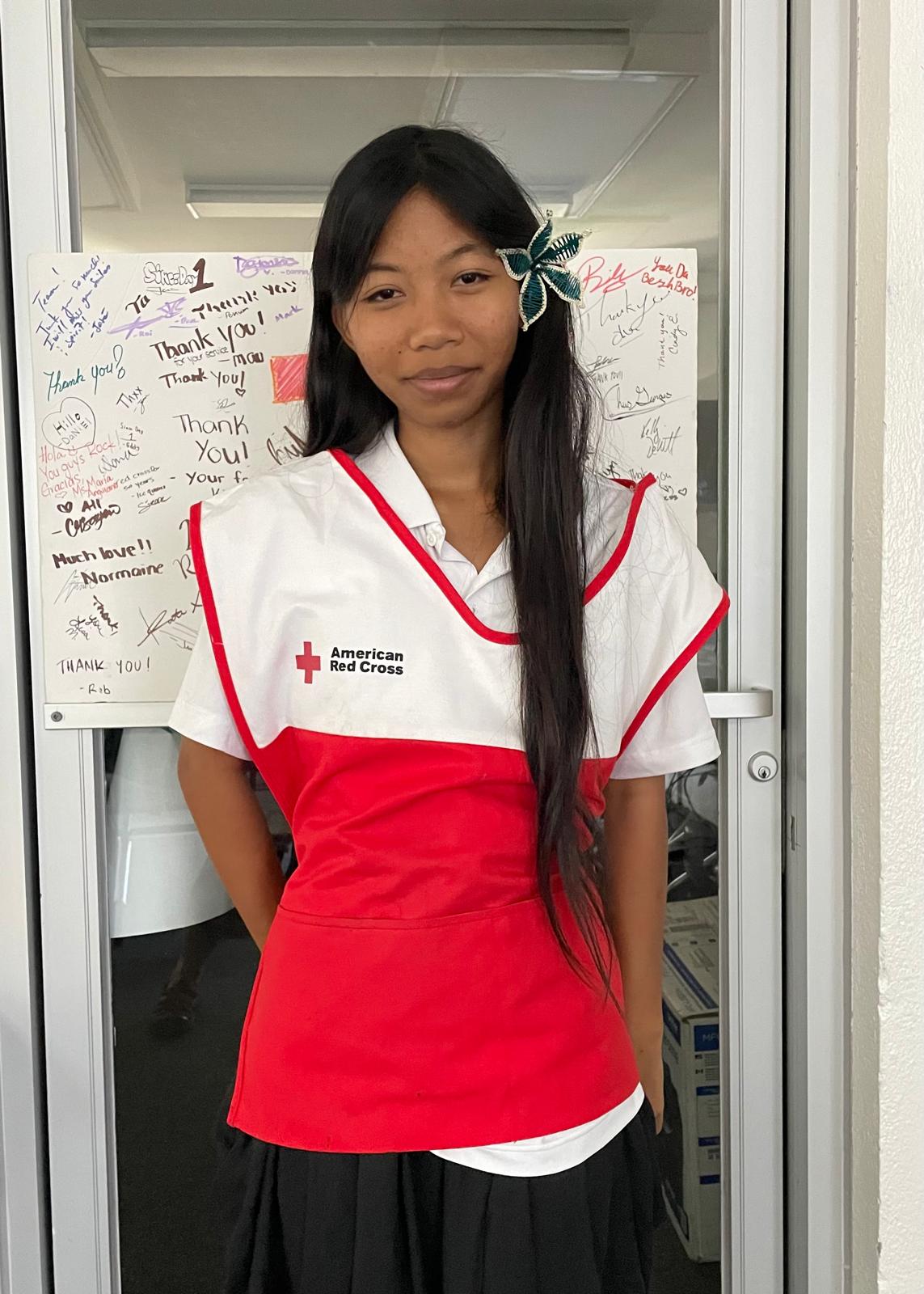
DAVERISH ALQUEZA
An officer of the Red Cross Club at Marianas High School, Daverish Alqueza had been planning for college in Chicago when Super Typhoon Sinlaku struck the island. After making sure her home was okay, she was one of hundreds of local community members who set to work supporting her neighbors.
“My home, thankfully, was concrete so we only had minor flooding,” said Daverish. “Our solar panels did come off, but it’s not a big issue compared to a lot of other people. It feels very humbling because I’m able to go home after Red Cross. I have a roof over my head, I have food and I have a generator, so I have power for now. And I see everyone’s houses when I do [damage assessments] or I hear their stories when I’m doing intake [for financial assistance applications.]”
In the span of less than a month, Daverish went from helping organize beach cleanups and leading presentations on CPR and community preparedness to actively helping people impacted by a major disaster on Saipan. She translated for Chamorro-speaking residents, distributed emergency supplies and assisted families applying for aid. As she shared her love for Saipan with volunteers who came to help from around the United States, she found herself reflecting on the responders she got to meet during the relief operation.
“If I met these people under a different situation, they would have been like my grandparents or something,” said Daverish. “Like, can you adopt me? Respectfully, you can be my auntie or something. These guys, they feel like my family – like familia.”
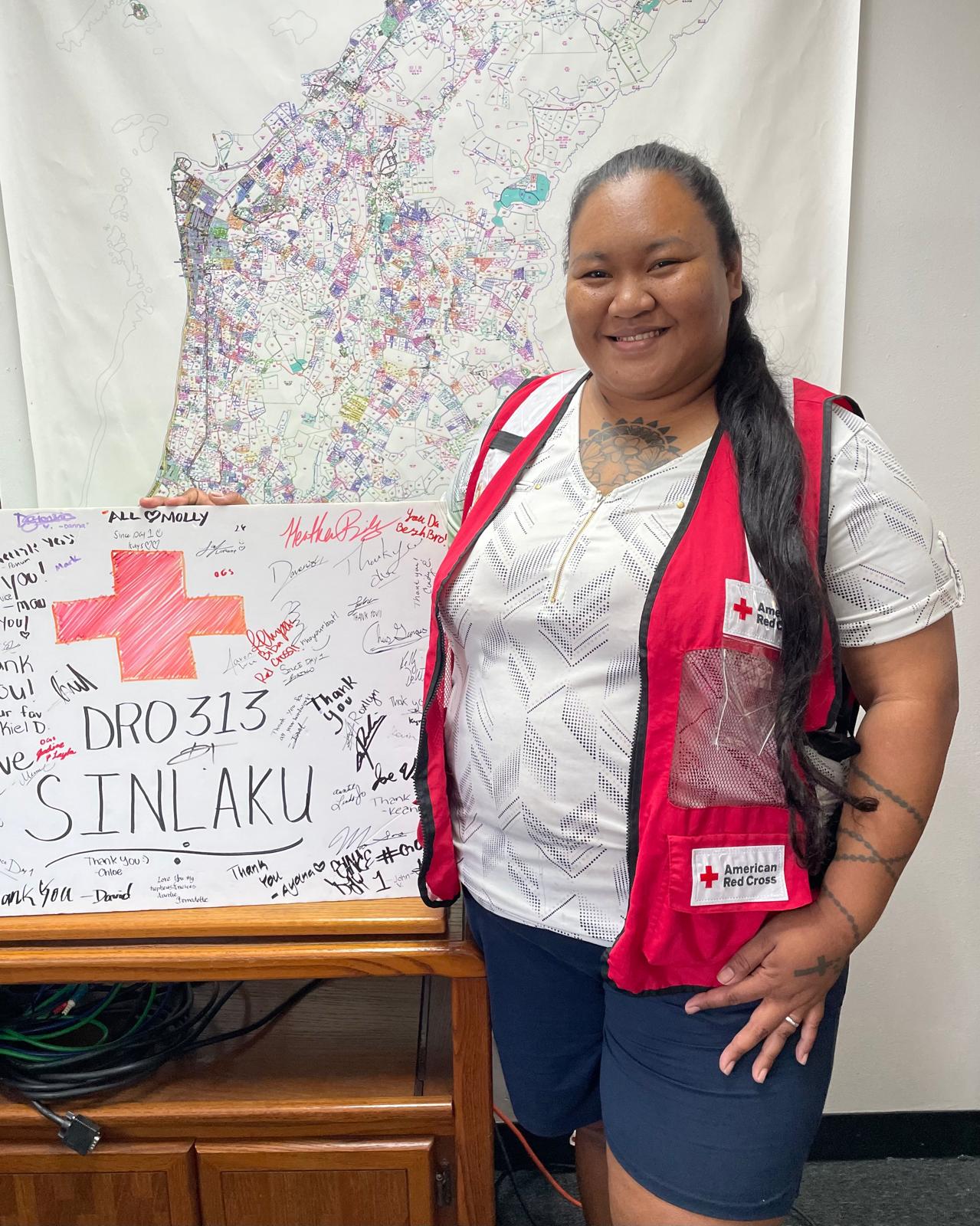
EMMA CORPUZ
Emma Corpuz is perhaps happiest in the kitchen with her two daughters, cooking meals together and making memories. Helping seems to run in the family, even if her three-year-old’s version often results in making a bigger mess than before she got involved. For Emma, her version of helping is rooted deeply in who she is and how she shows up for her community.
As a volunteer who first raised her hand to help with the Red Cross after Super Typhoon Yutu in 2018, she usually helps people after disasters such as home fires. When Super Typhoon Sinlaku struck, she quickly returned to volunteer to help her neighbors start to recover.
“I’ve always had a passion for helping people,” said Emma. “After Sinlaku, since the day they opened the [service delivery] site, I’ve been there from when it starts til it ends, like every day.”
Alongside her auntie, who by coincidence also decided to volunteer with the Red Cross, she helped run a site on Saipan where impacted residents could come register for emergency assistance with the Red Cross. Together, they grew close with their fellow volunteers, a roughly even mix of local volunteers and Red Crossers from around the country. They bonded over a shared love of bananas, a readily available snack on the disaster relief operation, and affectionately dubbed themselves the “Banana Crew.” They even made custom t-shirts for each other.
“There wasn’t a day where, you know, nobody felt like they were higher than each other or their status was this and this, said Emma. “Everybody felt equal.”
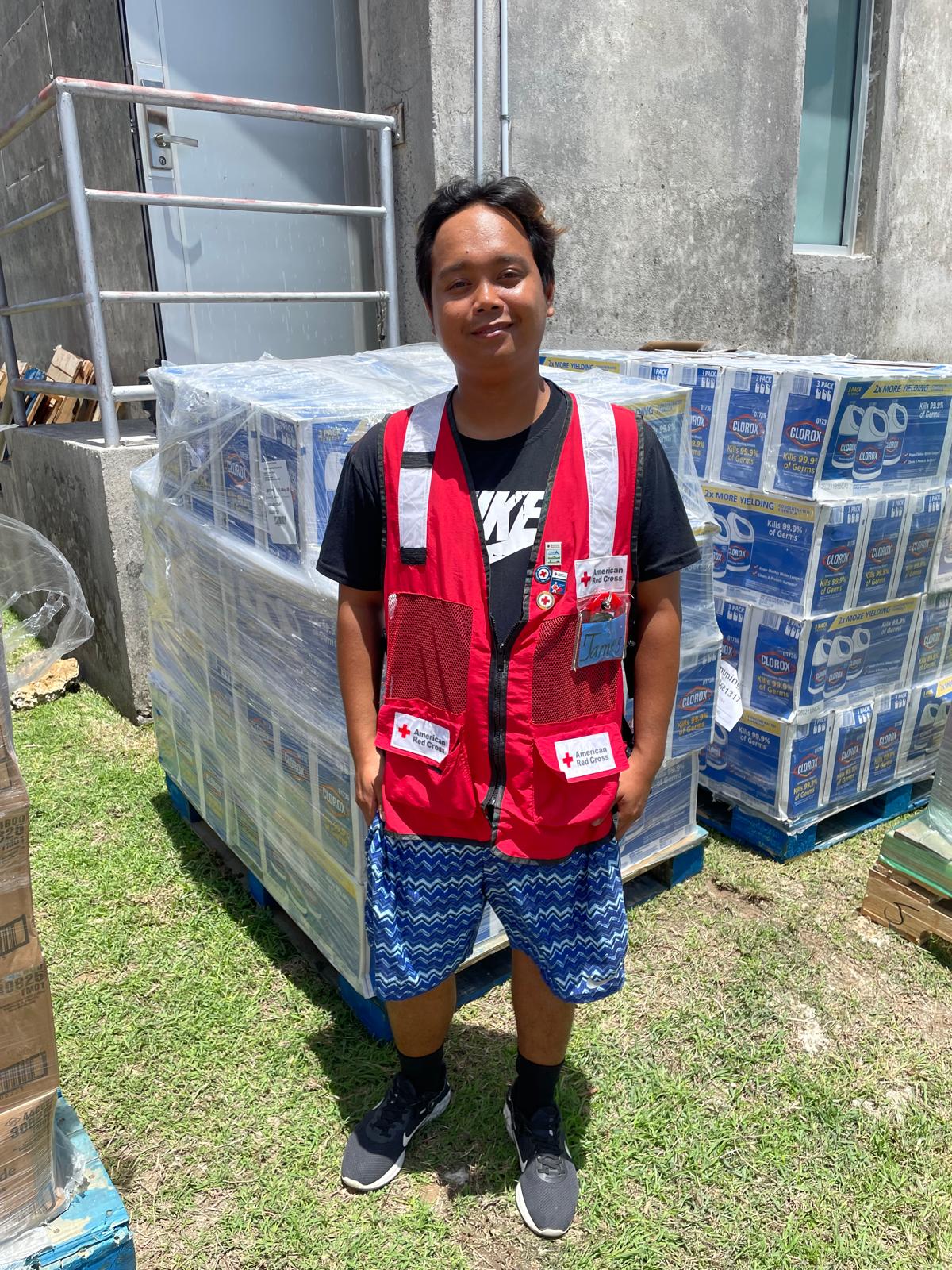
JAMES CARLO ASUNCION
Growing up with family split between the Philippines and Saipan, James Asuncion had lived through typhoons before — Sinlaku was different.
“During the storm, that was my worst typhoon ever,” said James, who is a civil engineer by trade and also tutors math and science as a hobby. “It felt like I was inside a hurricane. My house roof flew — good thing I was with my mom’s house just across the street.”
His mom, who recently had open heart surgery, has a house made from containers and reinforced by concrete which held up better to the storm. As winds grew so strong they couldn’t open the windows, James helped decipher weather maps to try and keep his family — mother, uncle, and his nine-year-old niece — as calm as possible
After the storm passed, finding themselves without power or water, James set off to start helping. He remembered that one of his favorite beach spots had a shower and fortunately found that its water tank was still usable for his family and him to bathe.
After a week or two of helping care for his family, James reached out to the Disaster Program Manager for the Red Cross of the Northern Mariana Islands — who he had been working with as a general volunteer before the storm. He got to work, distributing emergency supplies, assessing home damage, and supporting warehouse operations. He soon began managing an outpouring of support from local teenagers who wanted to help their community recover.
“I didn’t even notice that I was teaching 69 kids at the same time,” said James. “Basically, they’re just taking shifts, like in the morning some will come and go, and then the other half come in the afternoon.”
He established clear priorities for the teenagers to work on, most importantly managing the lines that formed at service delivery sites by helping make sure people waiting knew the right information to get the help they needed. The final priority was for them to go to the beach and have fun — his way of dismissing them for the day and reminding them to take time for themselves.
“These are our children, our niece, our grandchildren,” said James. “They’ve been asking me, like ‘Kuya [big brother in Tagalog], is Red Cross done?’ They’re sad, basically. I tell them no, we’re not done. We’re almost done with this program but there’s gonna be more programs after this.”
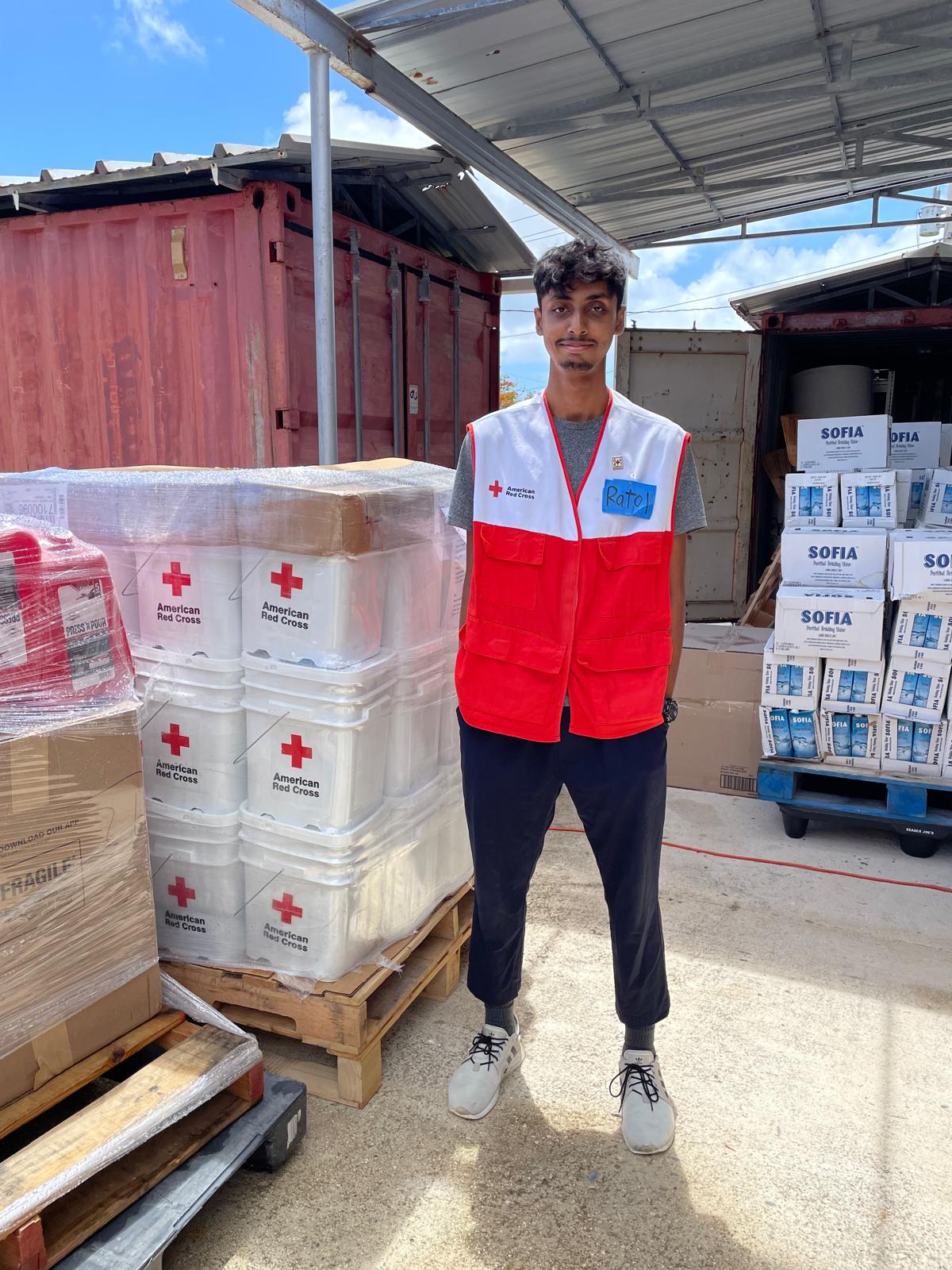
ROBAIT RATOL
While many in the world of soccer fans in April focused on which club would be crowned champion of champions, Robait Ratol was understandably focused on other things when his preferred team was eliminated from the tournament on April 14 — the same day that Super Typhoon Sinlaku devastated his community on Saipan.
“It was a scary moment because I was by myself, because my mom, dad and my siblings had to evacuate because of the flooding and the water was rising,” said Robait, the older sibling of two brothers and a sister. “I was there almost the whole night. In the morning time, I evacuated also. I experienced the other typhoon [Yutu] in 2018, but this is the longest one I experienced.”
The family had recently repaired their home, making the damage especially difficult. Half of their home remained unsafe even six weeks after the storm, so all seven of them have been living more closely than normal — but Robait remains grateful.
“My family’s also affected, but I think there’s more families that their house is totally lost and they’re just staying in a tent or shelters,” said Robait. “So I’m here to help them, because at least my family has this — a roof to stay under and a safe place to stay. Some families don’t even have a house right now.”
A week after Sinlaku passed, Robait decided he needed to do more to give back to the community where he grew up. He decided to join the Red Cross — helping drop off supplies at shelters, shuttle disaster responders from place to place, and helping support his neighbors looking for help with their recoveries from Sinlaku. Originally from Bangladesh, Robait also helped translate for the local Bengali population to make sure they understood how to access recovery resources from the Red Cross and other organizations.
“I think the Red Cross did a fantastic job with helping the community recover,” said Robait. “I’ll see in the future, hopefully in the future, I’ll stay with the Red Cross. If there’s any time they need, I’ll be here.”
For more than six weeks since the landfall of Super Typhoon Sinlaku in the Pacific Islands, the American Red Cross has worked closely with community partners to help support impacted residents as they begin to recover after the storm. With the help of hundreds of local volunteers, the Red Cross has provided more than 220,000 snacks and meals, distribute more than 75,000 clean-up kits and other emergency supplies, and provide more than 19,500 overnight stays to more than 1,100 people at 29 emergency shelters.
Put on a red vest and join us. Visit redcross.org/volunteer to find an opportunity that is right for you.
Support all the urgent humanitarian needs of the American Red Cross.
Find a drive and schedule a blood donation appointment today.
Your time and talent can make a real difference in people’s lives. Discover the role that's right for you and join us today!