News Summary:
- The American Red Cross is coordinating response plans with state and county partners in Hawaii as a storm approaches which could bring “life-threatening” flooding to the state.
- Disaster teams are being identified, and the Red Cross is preparing to move disaster supplies if necessary.
- Residents are urged to prepare for the storm now ─ to stay informed, secure any outdoor loose items and sign up for emergency alerts.
A storm is headed toward Hawaii where, beginning Friday, the islands could see strong winds, as much as 20 inches of rain and dangerous surf from what is predicted to strengthen to Tropical Storm Lala. The American Red Cross is monitoring the storm and preparing to respond if necessary.
The system is expected to grow to a tropical storm named Lala over the next few days and approach the Big Island Saturday morning. Lala is predicted to bring 5 to 10 inches of rain across most of the island state, with some areas possibly seeing as much as 20 inches of precipitation. The storm could cause “life-threatening” flooding, mudslides, surf and rip currents.
As Hawaii prepares for the storm, the state’s Kilauea volcano has erupted again, spewing ash as much as 18,000 feet above sea level. Volcanic gas can impact people downwind, especially those with respiratory issues. The storm’s strong winds could cause additional impacts with gas and ash from the volcano.
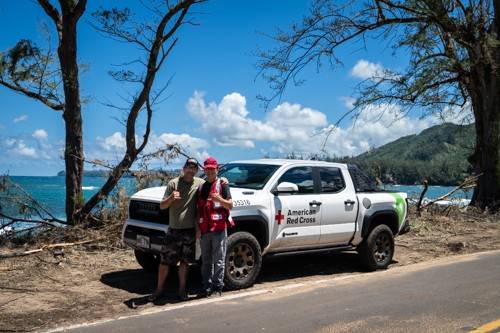
Officials are urging residents to make their storm preparations now. The Red Cross is working with state and county partners, coordinating response plans, identifying disaster teams and preparing to move disaster supplies as necessary.
HOW TO GET READY People should make their preparations now, remain vigilant and be alert for any warnings for their community.
- If you need to leave your home, think about where you’ll go, how you’ll get there, where you’ll stay and what you’ll take with you. Don’t forget to include pets in your plans.
- Write down important phone numbers on a contact card and carry it with you.
- Have a backup battery or another way to charge your cell phone, and a battery-powered or hand-crank radio.
- Sign up for free emergency alerts from your local government and make sure you know what different types of alerts mean.
- Gather critical supplies — like food, water and medicine — and organize them into a go-kit and a stay-at-home kit. Your go-kit should include three days of supplies that you can carry with you. Your stay-at-home kit should have two weeks of food and water and a one-month supply of medications and medical supplies.
- If you have pets, include leashes, carriers, food, bowls, litter, litterbox and photos of you with your pet in case you’re separated. If you have young children, include diapers, wipes and formula.
- Keep your personal, financial and medical records in a safe place that’s easy to access (hard copies or securely backed up). Consider keeping a list of your medications and dosages on a small card to carry with you.
- Download the free Red Cross Emergency app for real-time alerts, expert advice in English and Spanish, and available disaster shelter and support locations.
FLOOD SAFETY Be prepared to evacuate immediately if officials ask you to do so. Don’t return home until they say it is safe.
- A flood/flash flood WATCH means a flood or flash flood is possible. A flood/flash flood WARNING means flooding or flash flooding is already occurring or will occur soon. TAKE IMMEDIATE PRECAUTIONS!
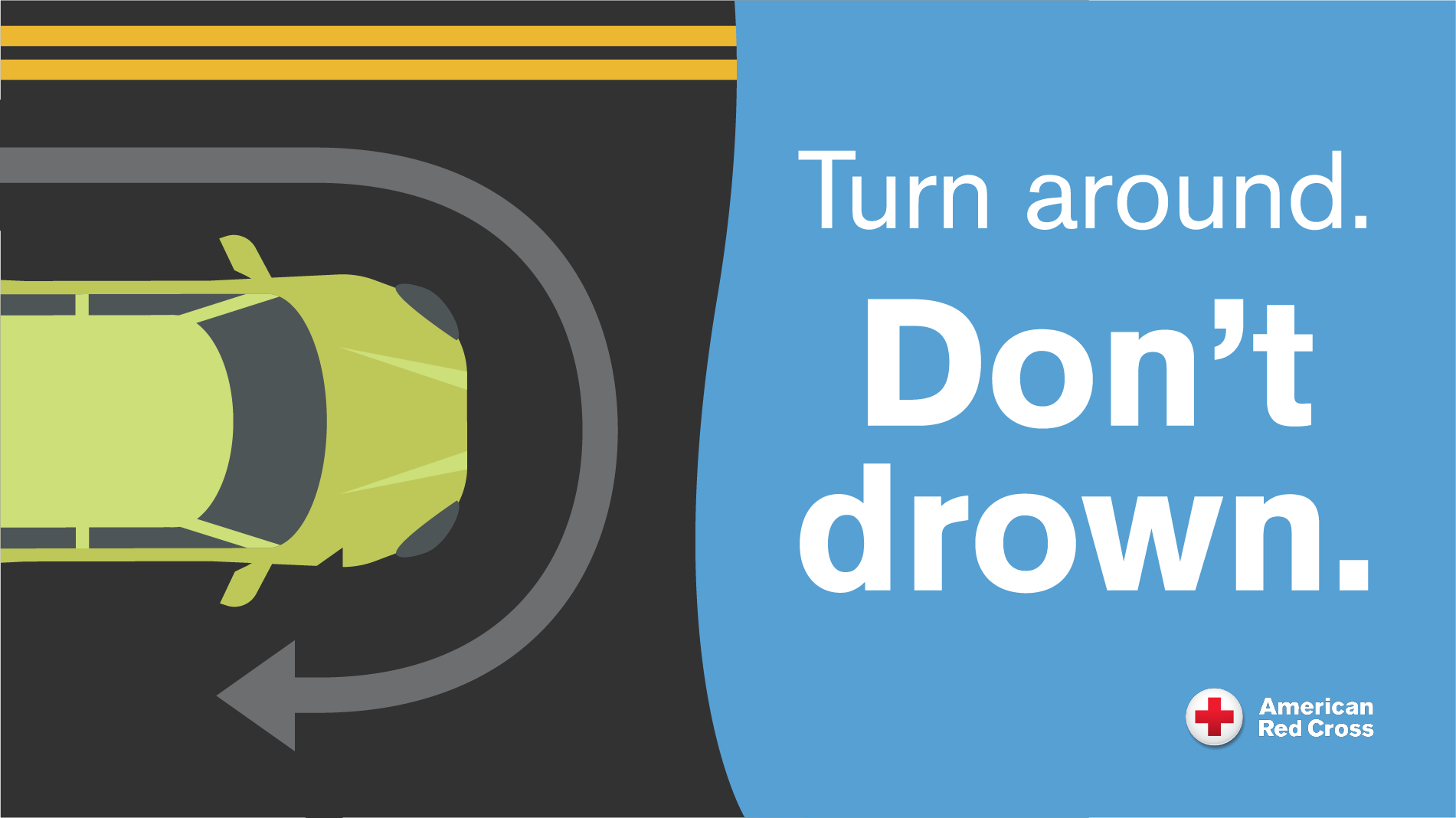
- Turn around, don’t drown! Don’t walk, swim or drive through floodwaters.
- Stay off the roads. If you must drive and you encounter a flooded roadway, turn around and go another way.
- Follow evacuation routes and don’t try to take shortcuts because they may be blocked.
- If you’re caught on a flooded road and waters are rising around you, quickly get out of the car, move to higher ground and stay there.
- Check with loved ones and neighbors to see if they need help.
About the American Red Cross:
The American Red Cross shelters, feeds and provides comfort to victims of disasters; supplies about 40% of the nation’s blood; teaches skills that save lives; distributes international humanitarian aid; and supports veterans, military members and their families. The Red Cross is a nonprofit organization that depends on volunteers and the generosity of the American public to deliver its mission. For more information, please visit redcross.org or CruzRojaAmericana.org, or follow us on social media.