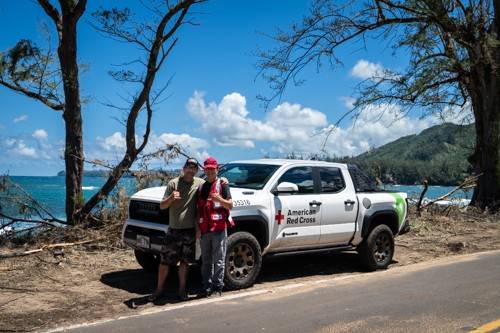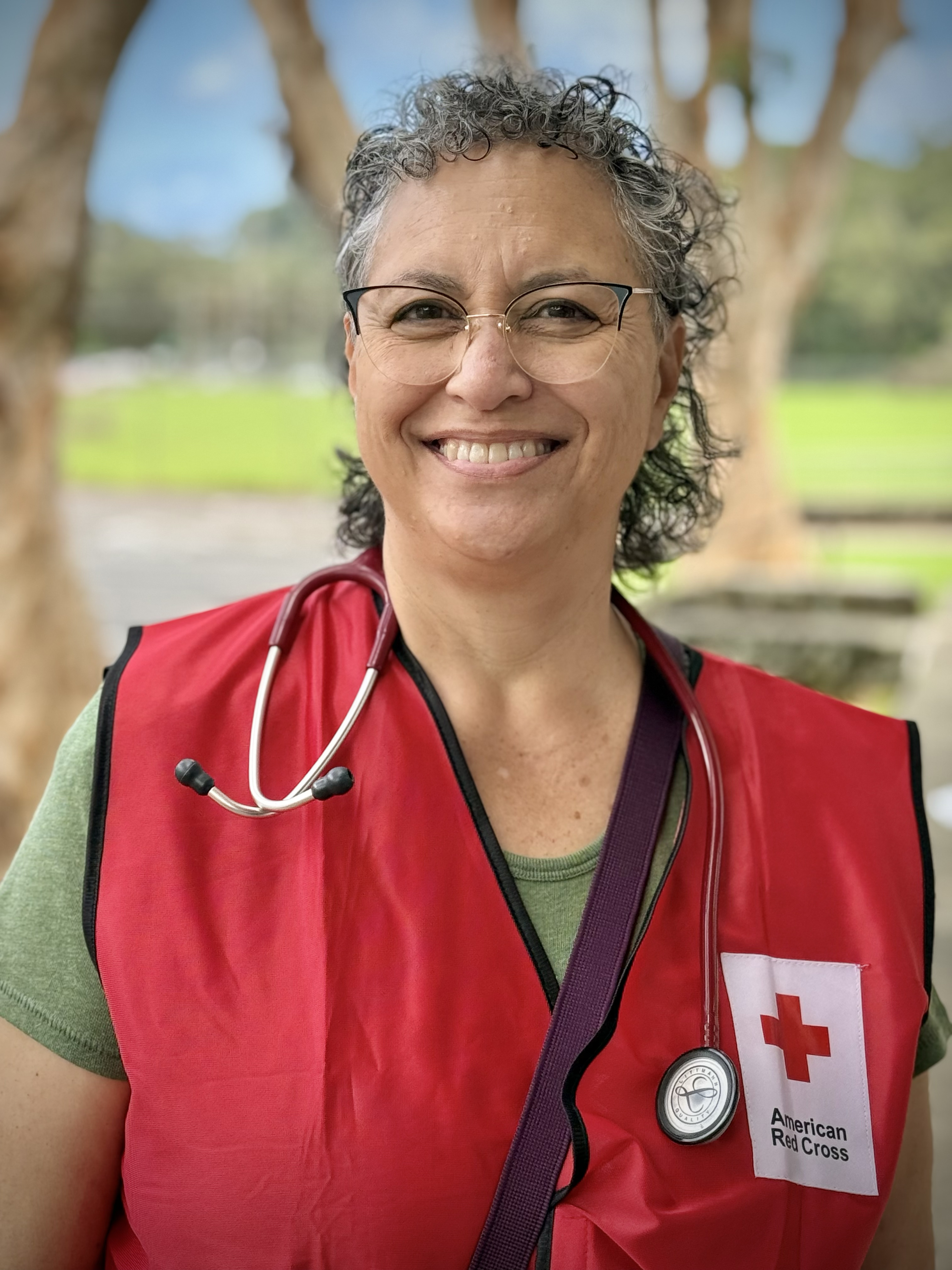
U’ilani Chow-Rule volunteers her medical skills and steady compassion to people staying in Red Cross emergency shelters across Hawai'i. (Photos by Mimi Teller/American Red Cross).
Emma Needell/American Red Cross
U'ilani Chow-Rule gripped her steering wheel, as the dim orbs of her headlights pierced the heavy rains. There were no streetlights to guide her, as the Kona Low storm had taken out the island’s main power grid. Coming directly from her job as a nursing professor at the University of Hawai’i, she was reporting for volunteer duties to support the American Red Cross disaster response that had begun only hours before.
She pulled into the parking lot of Nānākuli High School and circled around the building, unsure of where to go, when she spotted a small pin of amber light through the rainfall. A flashlight. A fellow Red Cross volunteer stood by the door to the cafeteria, waving her toward the emergency shelter.
Once inside, Chow-Rule took a moment to appreciate the transformation of the local high school cafeteria. There were check-in and resource stations, tables full of donated food and water and in the back, a medic and triage zone, the outpost where Chow-Rule would spend her volunteer shifts. But it was the center of the room that really caught her eye, where dozens of evacuees were hunkered down on cots between rows of mobile bench tables that had been flipped on their sides—a makeshift attempt at privacy for those who had already lost everything.
For those in the room, the flood was a "double disaster." These were people who had been unhoused before the tropical storm began. She and the other volunteers were now managing both an acute disaster response and the layers of complexity that these disasters cause for people who had been in a chronic crisis long before the first raindrop even fell.
The way these vulnerable residents even arrived at the Red Cross shelter was a testament to the island’s strong community bonds. Chow-Rule described how local church members had fanned out across the region to find unhoused individuals they knew personally, then escorted them from flooded encampments to the safety of the shelters. It was a grassroots network of care, of neighbors looking out for neighbors. For Chow-Rule, this community-led rescue was a living example of the very foundation for why she became a nurse in the first place.
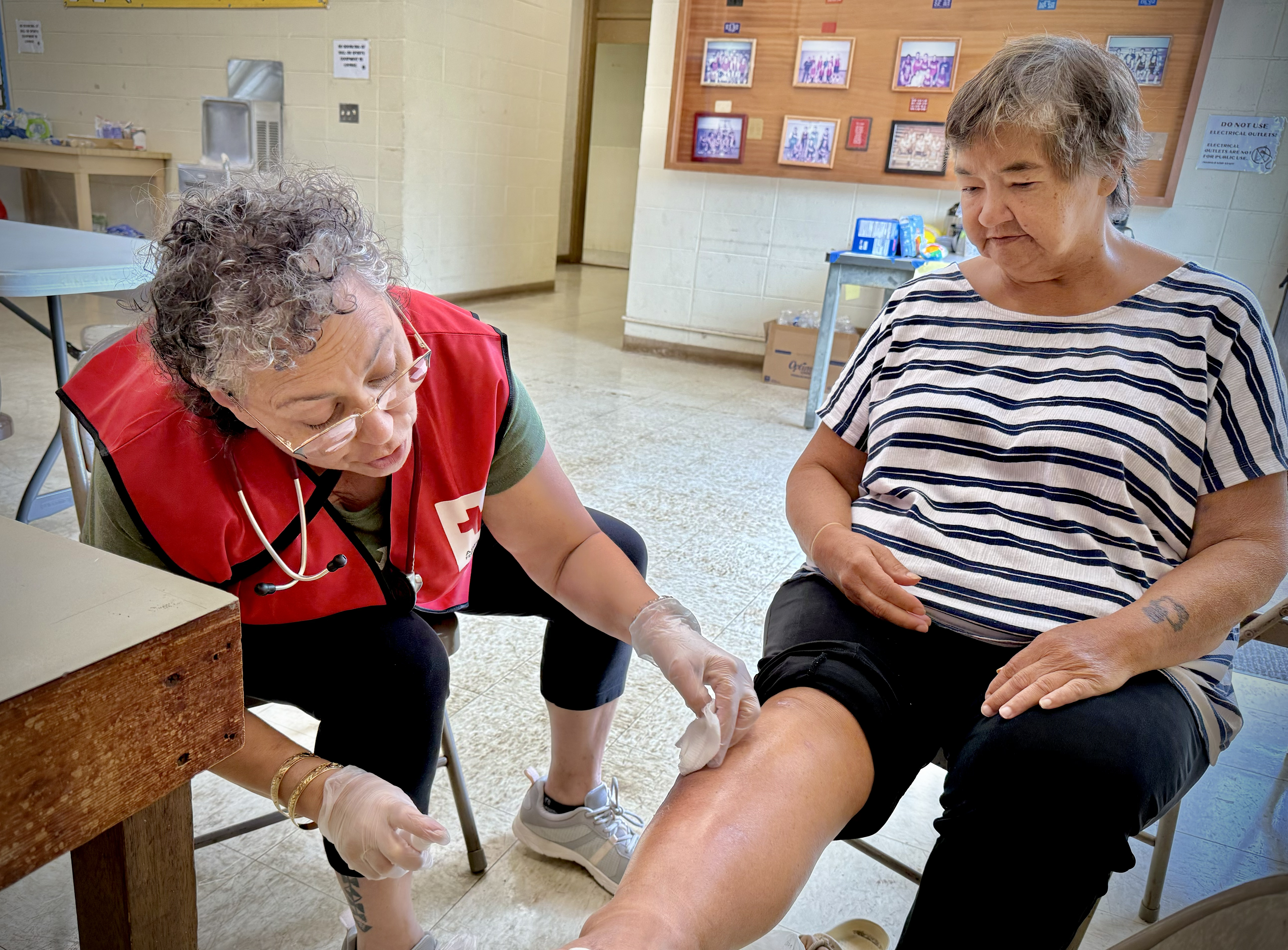
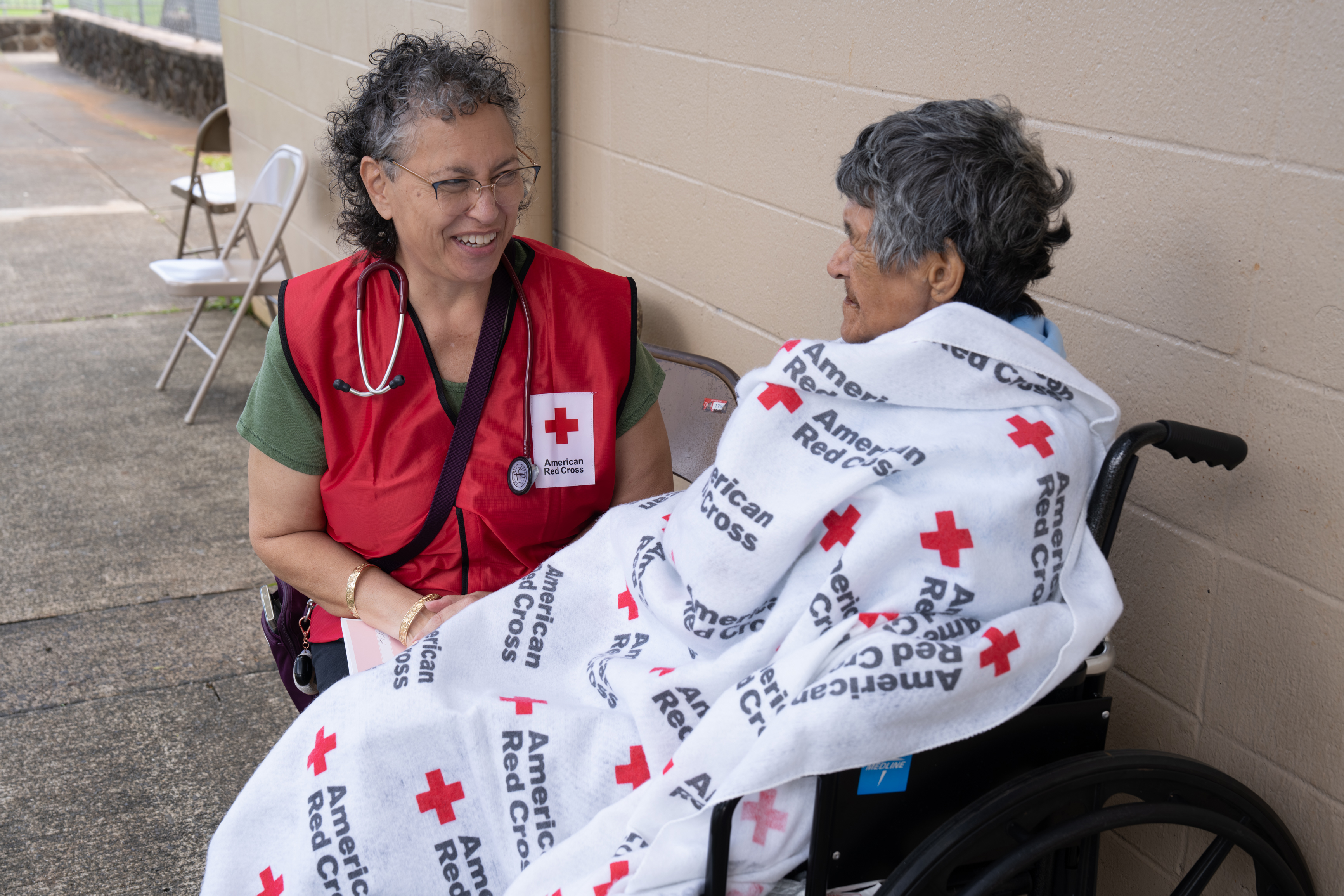
“Community health nursing is the very basis of all nursing,” she explains. “That’s how nursing started—working with people in the community, going out to their homes.”
Scenes like this unfold every day across the country after disasters, made possible not by chance, but by people who choose to serve. For nearly 145 years, the Red Cross mission has been carried forward by volunteers whose compassion turns moments of crisis into moments of hope.
Today, nearly 90% of the Red Cross mission is carried out by dedicated volunteers; neighbors who step forward when compassion is needed most. From disaster shelters to disaster health care, they serve with humility, courage and an unshakable belief in helping people not as disasters, but as individuals worthy of dignity, care and respect.
Chow-Rule's story is one example of what it truly means to treat the person, not the disaster, and a powerful reflection of the volunteers who make this lifesaving work possible every day.
Over the course of the disaster, Chow-Rule volunteered in two different Red Cross shelters: first at the Nānākuli High School cafeteria, then at a gym in Kāneʻohe District Park. She recognized early on that in such a high-stress deployment, a clinical checklist was not enough to truly administer care. Instead, she began her assessments by greeting the evacuees in Pidgin. This shared language among native Hawaiians acted as a bridge, dissolving the barriers of fear and exhaustion that go together with a crisis. By leading with a shared identity rather than a bureaucratic intake form, she ensured that the "task to be done never became more important than the person to be loved." This rapport established an immediate sense of belonging and dignity, enabling Chow-Rule to care for those in need with greater precision and compassion.
Chow-Rule speaks of her Red Cross service with a candor that is almost reverential. There is a sense of joy in her commitment to community healthcare and volunteer work, a feeling that showing up for the most vulnerable is, in a way, a beautifully selfish act because of the life it breathes back into her.
“When you know you can do something that made a difference in somebody’s life... it’s empowering,” Chow-Rule said. “I’m doing it for others, but I’m also getting something out of it, too.”
This reciprocity was never more evident than on her final shift. As she gathered her things to leave the shelter, she was met with a chorus of voices. People she had met only weeks prior–strangers she had cared for at their lowest points–called out to her from their cots.
“When I left, everybody was waving and saying thank you,” she recalls with a smile. “It wasn’t just thank you, but thank you, my friend.”
About the American Red Cross:
The American Red Cross shelters, feeds and provides comfort to victims of disasters; supplies about 40% of the nation’s blood; teaches skills that save lives; distributes international humanitarian aid; and supports veterans, military members and their families. The Red Cross is a nonprofit organization that depends on volunteers and the generosity of the American public to deliver its mission. For more information, please visit redcross.org or CruzRojaAmericana.org, or follow us on social media.
Support all the urgent humanitarian needs of the American Red Cross.
Find a drive and schedule a blood donation appointment today.
Your time and talent can make a real difference in people’s lives. Discover the role that's right for you and join us today!