As the terrorist attacks of Sept. 11, 2001, unfolded, John Weaver knew his day was about to change. A social worker from Nazareth, Pennsylvania, he had years of experience with aviation disasters as an American Red Cross volunteer. As news of the attacks spread, John continued working in his office while others gathered around a television.
"I just kept moving things, because I knew I wasn’t going to be there by the end of the day," he said. "The Red Cross was going to send me somewhere."
That afternoon, the Red Cross asked John to go to western Pennsylvania, where United Airlines Flight 93 had crashed near Shanksville. Within hours, he was helping to establish a Family Assistance Center for relatives of the passengers and crew.
Although John had previously responded to aviation disasters as a Red Cross disaster mental health volunteer, this assignment was different. It was the first time he would spend nearly two weeks working directly with the families of the victims.
John led the Family Assistance Center, overseeing a staff of volunteers from across the country and ensuring the facility operated around the clock. The center provided a safe place where grieving families could gather, receive updates, speak with investigators and find comfort and support from trained Red Cross volunteers.
What struck John most was the response from ordinary Americans.
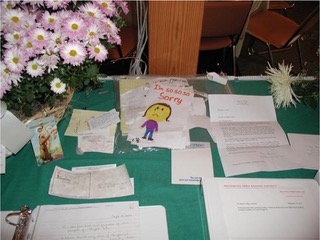
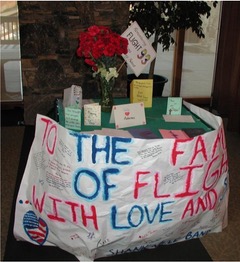
"As fast as we got there, we started to get flowers and cards and letters and banners and things from all over the country in support of these families," he said.
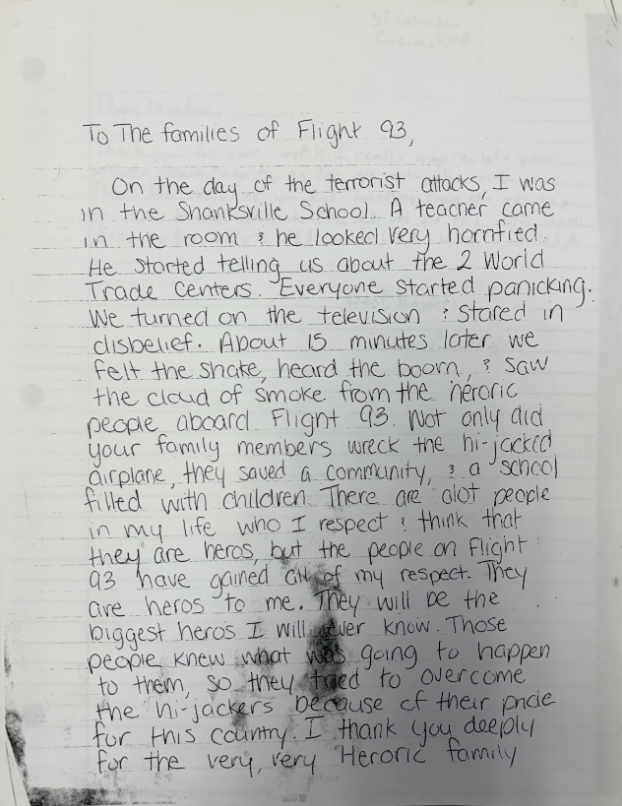
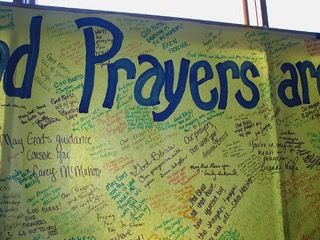
The messages soon filled the large gathering area. Schoolchildren sent handwritten notes. Communities shipped banners and flowers. A flag flown over the U.S. Capitol was displayed for the family members, a symbol of the potential target the passengers and crew aboard Flight 93 are widely believed to have prevented the hijacked airplane from reaching. John recalled hanging large banners in the windows where sunlight streamed through them "like stained glass windows."
Although family members were mourning tremendous losses, John said they were deeply moved by the support.
"They were all taken aback by all these cards and banners," John said. "We had notebooks full of letters from school children just conveying sympathy in childlike ways, but they were beautiful letters."
The surrounding community also embraced the families. As buses took the families between the assistance center and the crash site, Somerset County residents displayed flags, flowers and banners outside their homes. Local first responders saluted as the buses passed. A candlelight vigil was organized just days after the crash and welcomed the arriving families to attend.
For John, the experience was emotionally intense. After previous aviation disaster responses, he said he typically experienced "about a 10-minute cleansing cry" before returning to normal life. Flight 93 was different. After spending 12 days with the families, he drove home to eastern Pennsylvania and cried for much of the five-hour trip.
After returning home from Shanksville, John took two weeks to recover before accepting another assignment with the Red Cross. He then deployed to New York City to help lead the disaster mental health response to the World Trade Center attacks.
The role was largely administrative by design. After spending 12 days working closely with Flight 93 families, John knew the emotional impact of Shanksville was still with him.
"I tried to have as little client contact as possible while I was up there," he said. "It was more of an administrative assignment because I knew I wasn't ready for a whole lot more exposure at that point."
Looking back nearly 25 years later, John remains proud of the work the Red Cross did in Western Pennsylvania.
"I think that whole operation for that flight was the finest work the Red Cross has ever done," he said. “It’s an honor to be there and it’s what I think social work should be.”
Ultimately, he believes the response was about restoring faith in others during a moment of profound loss.
"I think we just showed the kind side of humanity," he said. "The terrorists tried to take something from these families and harm them, and we tried to put back their trust in humanity."
The Red Cross still responds when the worst happens, and volunteers make the work possible. Get started today at redcross.org/volunteer.
Support all the urgent humanitarian needs of the American Red Cross.
Find a drive and schedule a blood donation appointment today.
Your time and talent can make a real difference in people’s lives. Discover the role that's right for you and join us today!