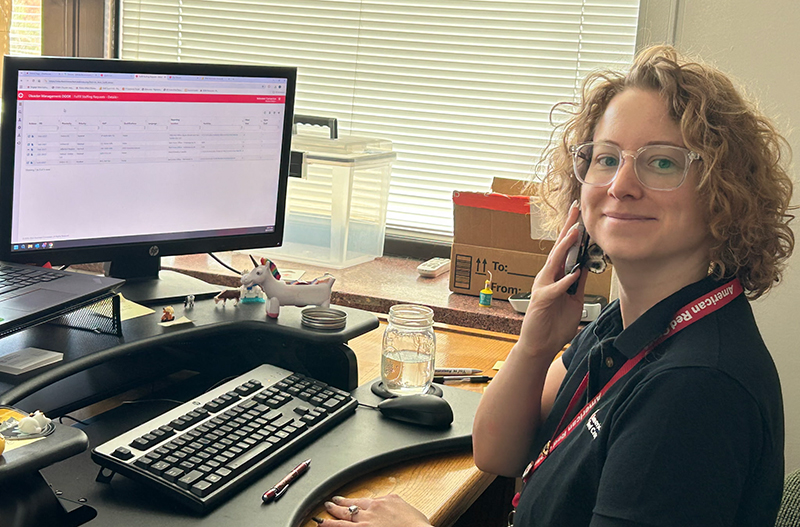
For the American Red Cross of Colorado and Wyoming, Shannon Reilly and the Deployment Workforce Team manage the many details of sending responders where they're needed. They coordinate assignments, arrange travel, answer questions and work through the unexpected problems that can arise when deploying people on short notice. Photo provided
By David Rupert, American Red Cross
When disaster strikes, Red Cross volunteers often leave their homes, families and jobs to help people they've never met. They may travel across the country or halfway around the world to provide shelter, food and comfort to those whose lives have been upended.
But getting those volunteers to those who need their help requires a team working behind the scenes.
For the American Red Cross of Colorado and Wyoming, Shannon Reilly and the Deployment Workforce Team manage the many details of sending responders where they're needed. They coordinate assignments, arrange travel, answer questions and work through the unexpected problems that can arise when deploying people on short notice.
Some volunteers have been responding to the aftermath of Hurricane Isaias in Florida and Alabama. Others are preparing to head to Guam ahead of Super Typhoon Champi, a trip that can take up to 36 hours.
"We support deployers as they support the Red Cross mission worldwide," Shannon said. "We make sure they have what they need."
"I love connecting people's desire to help with the mission," she added.
The process starts by matching people with the right skills and availability to the appropriate deployment.
"There are always details to work out. Sometimes it's relatively easy. Other times, it’s more complicated," Shannon said.
Considerable coordination occurs before a volunteer boards a plane. The team must identify available responders, assign tasks, communicate travel arrangements and ensure volunteers have the information they need. Because plans can change quickly, the team must be prepared to adapt.
Sometimes, the biggest challenge is handling the unexpected. A flight changes, a travel connection falls through, or an assignment shifts at the last minute. The team must find a solution as the situation changes while keeping volunteers informed and the deployment on track. Flexibility and adaptability become important.
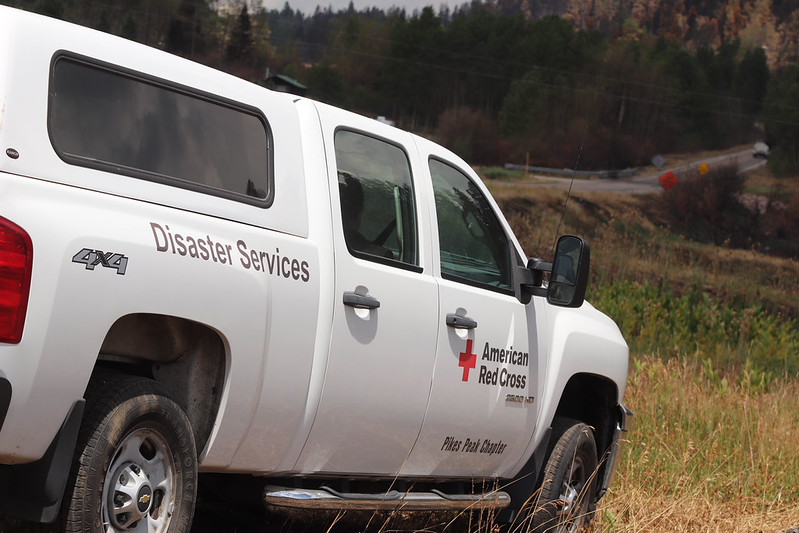
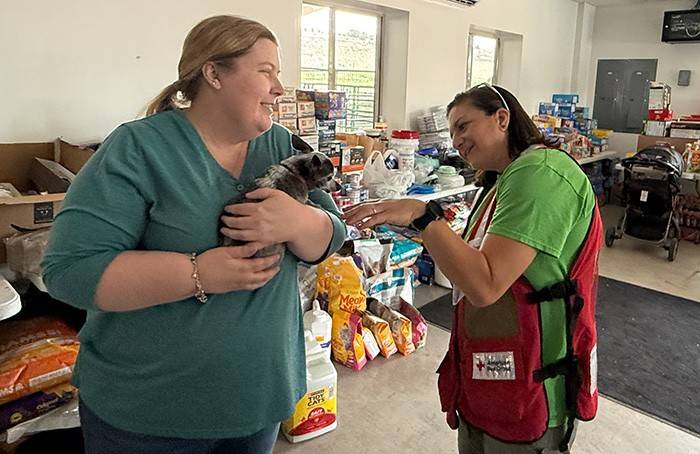
Red Cross volunteers often deploy to disasters on short notice, making it difficult to handle all of the logistical challenges alone. Thankfully, the Deployment Workforce Team works to make that transition as seamless as possible so that volunteers can focus on response and recovery for those affected by disaster. Photo by David Rupert, American Red Cross
One example is the natural tension among hurricane or storm predictions, the necessary volunteer preparation for deployment and reality.
"It's like ping-pong,” Shannon said. "It's always good news when a storm dissipates and people’s lives aren't affected, but it can be frustrating for those who are all spun up, only to have to stay home."
This happened to Colleen Hylson-Smith, who received a deployment to Guam as a sheltering supervisor. Getting there wasn't easy.
"There wasn't a direct route. I needed to take long flights with multiple connections," Colleen said.
Her last flight from Honolulu had three legs. At the last minute, the final leg was canceled because of the incoming typhoon. Then her whole deployment was canceled.
"The team watched out for me throughout the entire process," Colleen said. "Yes, it was bumpy, but they were like shock absorbers. They are such professionals."
The Deployment Workforce Team often works by phone or on a computer, far from the communities where responders will eventually serve. Yet the connection is direct. Every volunteer who arrives ready to work brings another set of hands to help families find shelter, provide meals, or offer reassurance during a difficult time.
Darlene Moore has been working with the deployment team for about five years, allowing her to work from home while remaining a valuable part of the team and contributing to the Red Cross mission.
"If I can't go myself, I try to get as many people out the door," Darlene said. "I match the GAPs with the needs and check on their availability, then make sure they have all the necessary paperwork."
Celia Sellers works as a staff planning and support supervisor. She connects volunteers with their work team, ensures they have money on their mission card and arranges all travel.
She doesn't mind helping a new volunteer who needs extra support.
"We've all been there. Everyone has had their first deployment," Celia said. "Feeling anxious and trepidatious is natural. Our job is to anticipate concerns and provide the necessary information. From the moment someone is assigned to the disaster response, we watch over and care for them."
She ensures every volunteer feels comfortable and safe.
"Lodging is always a challenge. Finding an appropriate hotel in a disaster zone is especially difficult because other aid groups and those directly affected are also seeking rooms. At the end of the day, people just need to know they have a pillow to rest their head on."
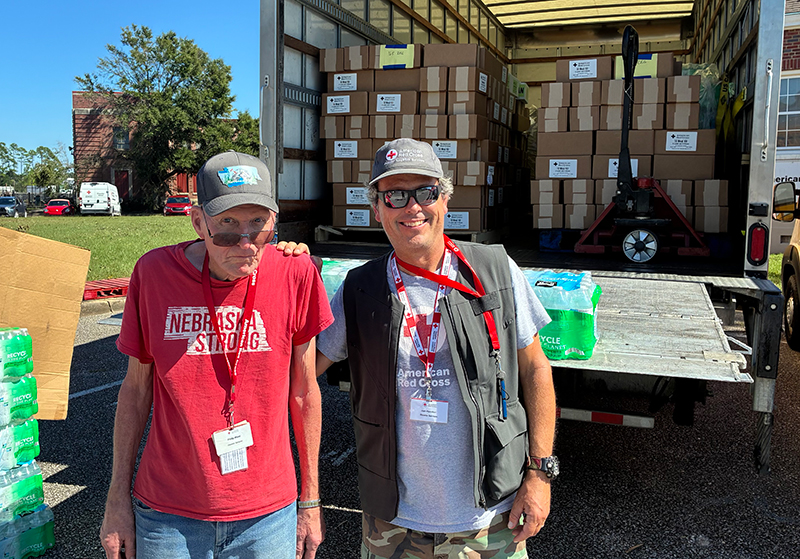
Josh Flenniken was recently deployed to Pensacola, Fla., where he worked in Logistics Fulfillment and then in Disaster Assessment in response to Hurricane Isaias. The Deployment Workforce Team worked out all the details for him so he could concentrate on the mission. Photo provided by Josh Flenniken
For volunteers preparing to leave on deployment, having someone to turn to can make a big difference in answering many of the questions that surface before heading into a disaster area.
Josh Flenniken is returning from an assignment to Pensacola, Fla., where he first worked in logistics fulfillment and then in disaster assessment. From ensuring Josh’s deployment details like transportation and lodging were met in advance, to arranging a ride to the airport with another volunteer heading to Pensacola, the Deployment Workforce Team's support has helped him focus on his mission without worrying about his own logistics.
"I'm helping people access the assistance they need," Josh said. "I've had such great personal interactions with clients and the general public."
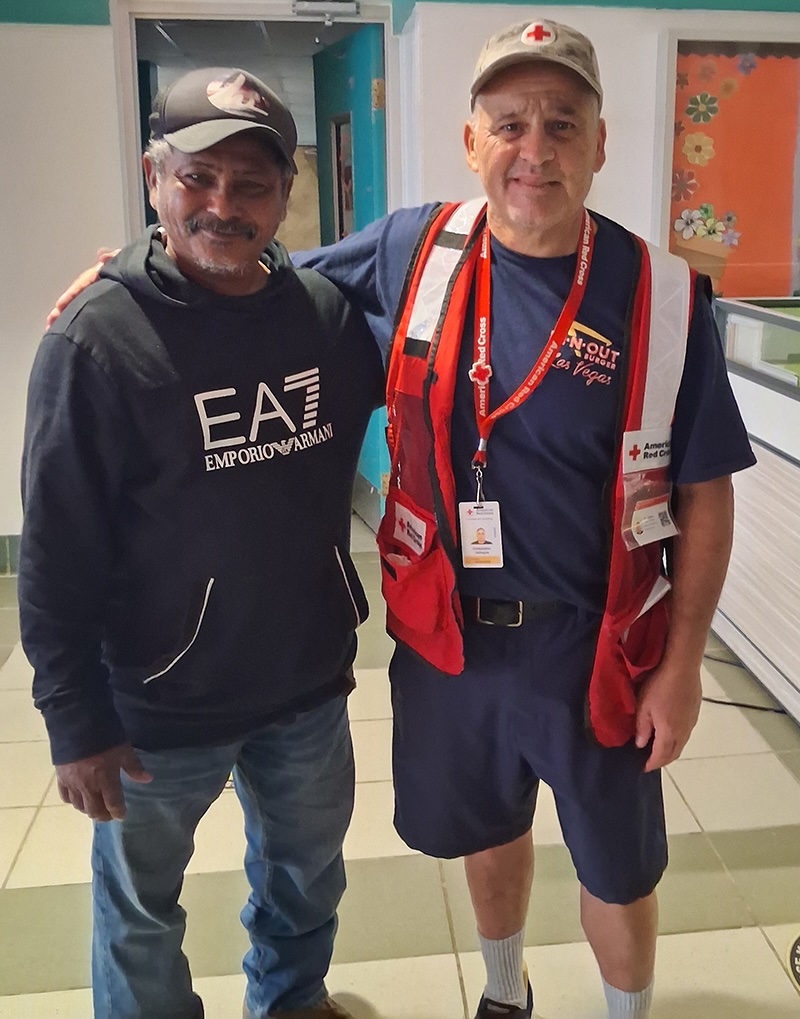
Red Cross Volunteer Chris Gallegos felt prepared for his deployment and has been embraced by the people he serves. "The people here have been caring and even generous, even in the midst of their hardship," he said. "I believe we are making a difference." Photo provided by Chris Gallegos
Chris Gallegos has been a Red Cross member for two years. He is now deployed to Rota, Saipan, for a three-week shelter volunteer assignment.
"I was helped by the Deployment Workforce Team during my training and in obtaining the GAP qualifications," Chris said. "I was made aware of the possible hardships, so there were no surprises."
He also received training specific to Chamorro culture.
Gallegos felt prepared for his deployment and has been embraced by the people he serves. "The people here have been caring and even generous, even in the midst of their hardship; I believe we are making a difference."
For Shannon and the team, the job involves tracking countless details while remembering that each one represents people in need of help and volunteers willing to give their time.
The team's work also reminds us that serving the Red Cross doesn't always require traveling to a disaster site. Many important jobs happen closer to home, including opportunities for people who prefer to volunteer within their own communities.
When a volunteer reaches a disaster site, the people receiving help may never know how much coordination went into getting that volunteer there. And that's fine with the deployment workforce team; their job is to make sure people ready to help can get where they’re needed.
"I'm so proud of this team," Shannon said. "I'm humbled by the work they do. The time and care they devote to our deployers make a difference."
For anyone interested in being part of that effort, the Red Cross has volunteer opportunities for a wide range of skills, schedules and interests.
Learn more about how you can make an impact by visiting redcross.org/volunteer.
Support all the urgent humanitarian needs of the American Red Cross.
Find a drive and schedule a blood donation appointment today.
Your time and talent can make a real difference in people’s lives. Discover the role that's right for you and join us today!