Diagnosed with sickle cell disease at just 2 months old, Tillie has relied on blood transfusions as part of her care for more than 45 years.
Sickle cell disease causes red blood cells to become hard and crescent-shaped, which can block blood flow and reduce the amount of oxygen reaching the body. Those blockages can cause severe pain and, over time, lead to complications such as organ damage or stroke. For Tillie, managing the disease includes regular transfusions, normally two units of blood each month.
That means the blood supply is not something she thinks about only during a donation campaign or awareness month. It can directly affect her care.
“During a blood shortage, I go into panic mode,” Tillie said. “I normally receive two units of blood each month, but when the blood supply is low, I may only receive one.”
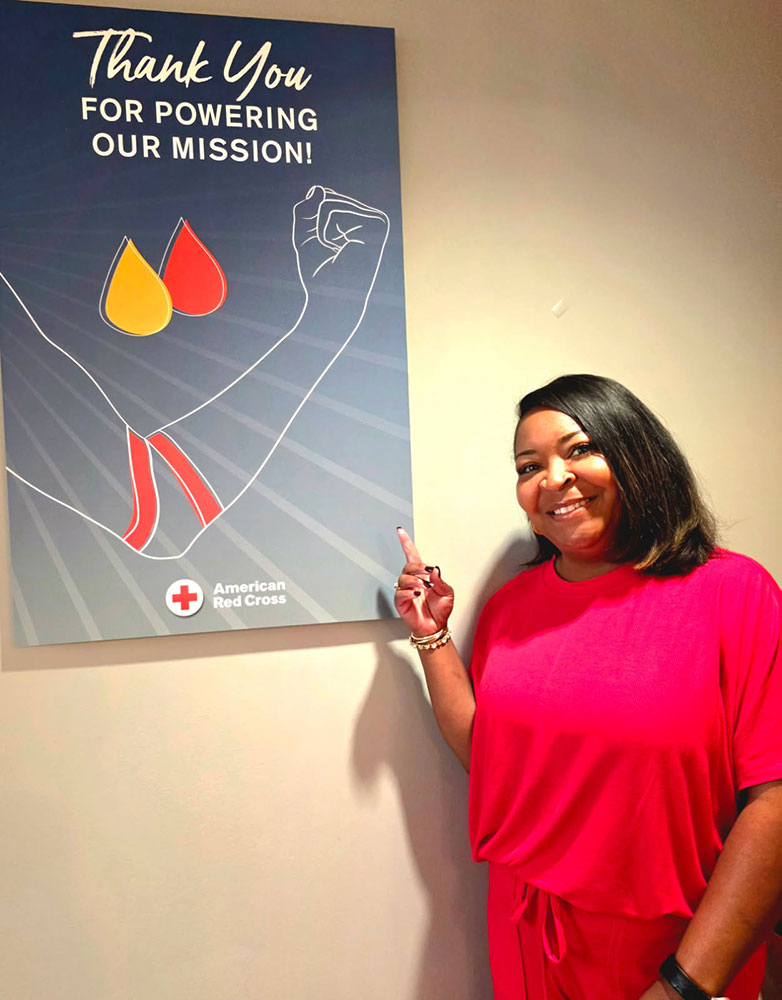
After living with that reality for decades, Tillie now uses her own experience to help others understand sickle cell disease and the importance of blood donation. She speaks with schools, churches and organizations in her community and, during Sickle Cell Awareness Month, wears red to help bring more attention to the disease.
Even while managing sickle cell herself, she continues speaking up for others living with it.
And when she talks to people who may be considering giving blood, her message comes from knowing exactly what that donation can mean on the receiving end.
“Don’t be afraid to give blood. You may be saving someone’s life.”
Support all the urgent humanitarian needs of the American Red Cross.
Find a drive and schedule a blood donation appointment today.
Your time and talent can make a real difference in people’s lives. Discover the role that's right for you and join us today!