By Georgi Donchetz, American Red Cross
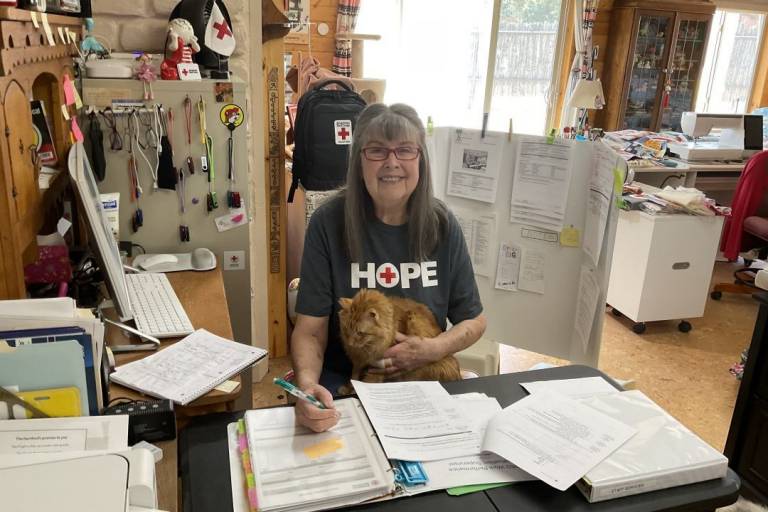
When super typhoon Sinlaku struck the American territories of Guam and the Northern Mariana Islands, hundreds of volunteers hopped on planes to assist those affected. Linda Crowden, an experienced volunteer with the Red Cross and a Corrales, NM resident, would usually jump at the opportunity to travel hours to help people she has never met. But because of planned family travel and a broken leg, Linda raised her hand for another position: a virtual assignment helping those affected communicate and reunite with their loved ones.
“Virtual deployments can be a perfect supplement if you are not able to deploy,” says Crowden. “I can still do laundry, answer my front door, and be with family, which is perfect for everything I have going on at home.”
Red Cross virtual deployments, or remote volunteering, allow volunteers to assist in disaster relief operations instead of being boots on the ground. Opportunities vary with each disaster, including administrative work, logistics, casework, and finding loved ones separated after a disaster.
A virtual deployment is not new to Linda, who has worked on seven different disasters, including the Los Angeles Wildfire, both recent New Mexico Wildfires, and, most recently, the Super Typhoon Sinlaku and wildfires in Georgia.
When Super Typhoon Sinlaku made landfall in Guam and the Northern Mariana Islands, Linda was a couple of months into rehabbing a broken leg and had travel plans to be with family. But, from her RV while visiting family, she was able to work with the reunification team to help connect missing loved ones through the Red Cross resource, the Shelter Client Information app, which keeps a record of who checks into Red Cross shelters.
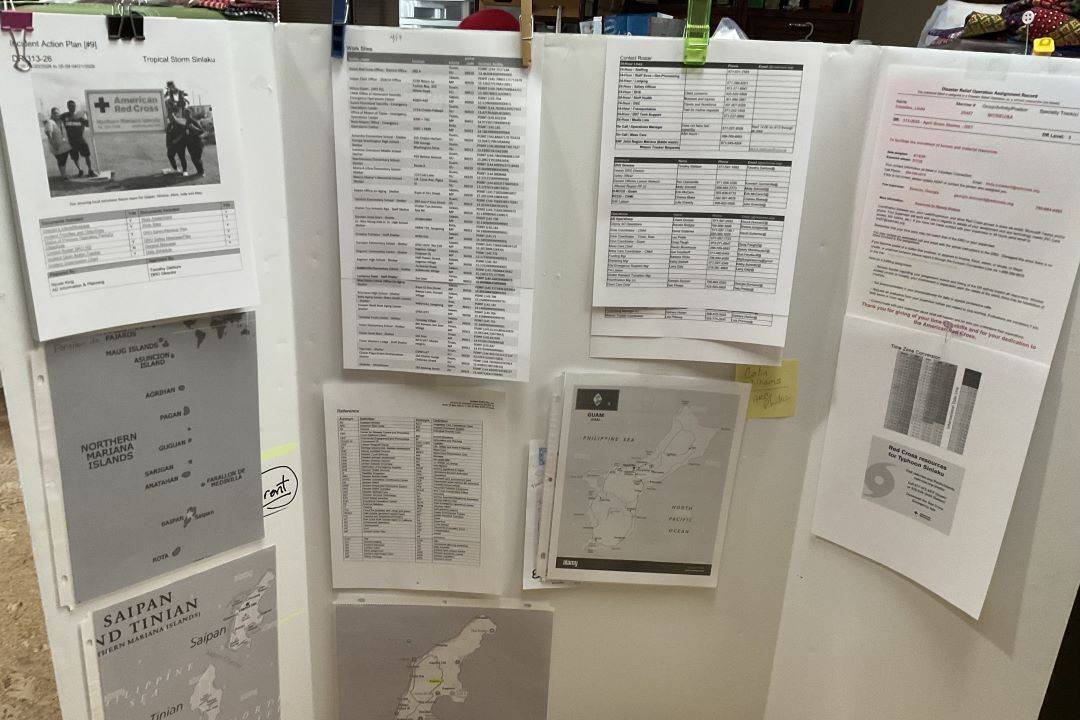
While each deployment is different, one thing remains the same: her sewing room is transformed into a disaster-response headquarters.
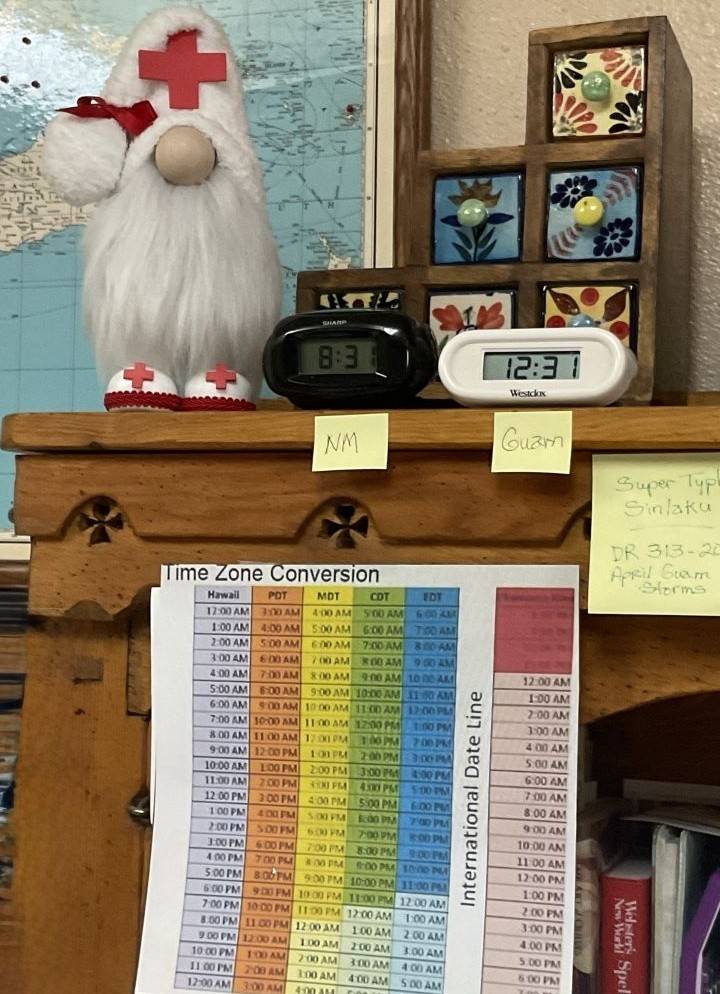
“Each deployment, I set up my trifold foam board and get all the information up there, who to contact, what our objectives are, and shelter locations so I can keep my tasks straight,” says Crowden. “Guam is the first time I have had to have a separate clock set 14 hours ahead so I can keep the time change straight.”
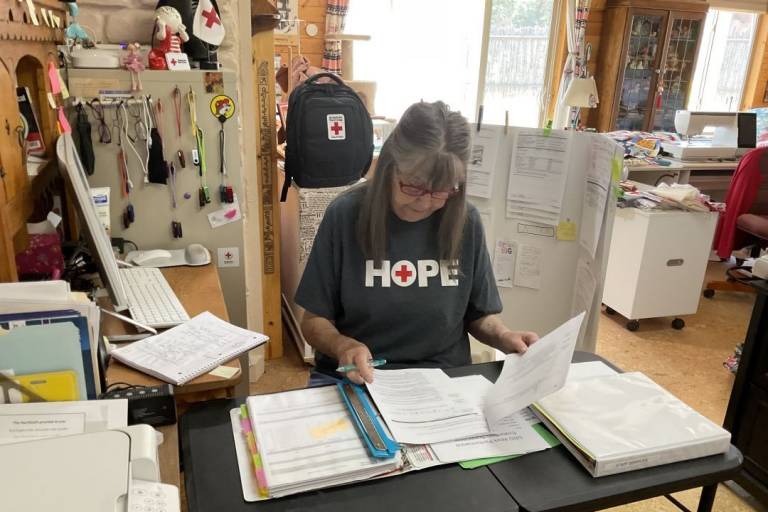
Every day starts the same: she sits down in the sewing room turned office, checks in with her supervisor, and gets to work, just like she would if she were at the headquarters in Guam.
“Deploying virtually may not be everyone’s cup of tea, but you are still helping people, and for me, that is all that matters,” she said.
Learn more about virtual deployments and other volunteer service opportunities by going to redcross.org or calling 1-800-RED CROSS.
Support all the urgent humanitarian needs of the American Red Cross.
Find a drive and schedule a blood donation appointment today.
Your time and talent can make a real difference in people’s lives. Discover the role that's right for you and join us today!