By: Suzanne Lawler, Communications Manager
As you lie down tonight, chances are you won’t think twice about the roof over your head.
Many families living in the wake of Hurricane Helene don’t have that luxury. They’re still living in a storm-damaged home covered by a thin blue tarp and worried about the future.
“Sometimes when it rains, I’m nervous it’s going to come through the house. I get very scared,” said Dontarius Dye, who suffered after the storm.
More than a year ago, Helene slammed into Georgia and the Southeast with deadly force. Winds tore down buildings, and trees punctured homes, leaving families suddenly exposed to the elements.
Some of those hardships remain. For months after the hurricane, Dye and his wife lived in their damaged home in the Lincoln Park community located in Valdosta, Georgia. The couple moved into the neighborhood 10 years ago when they were married.
“It’s a very pleasurable place,” Dye said. “We make sure we pick up the trash, make sure the crime rate is down, everybody looks out for everybody. If I need to talk to my neighbor for anything, he’ll help me.”
His neighbors couldn’t help with a gaping hole in the shingles. But Dye did find resources through the South Georgia Partnership to End Homelessness (SGPEH).
“We did surveys,” SGPEH Executive Director Ronnie Mathis recalled. “What we found was that there were a lot of homes that had severe damage to their roof that didn’t have any type of insurance.”
The goal of Mathis’ organization, founded in 1995, is simple yet vital: to keep people from becoming homeless. After Hurricane Helene, that mission gained urgency. Many families in South Georgia were living under tarps, their homes battered and gouged.
SGPEH had a plan to help, but it needed additional funding. So, it turned to the long-term recovery program of the American Red Cross and applied for a grant.
“So, I said, ‘Let’s take a shot,’” Mathis recalled.
That shot turned into a home run. Thanks to generous donors, the Red Cross funded a grant to SGPEH to repair or rebuild 17 roofs for families. These roof repairs included Dye and Tangula Mitchell, another storm victim.
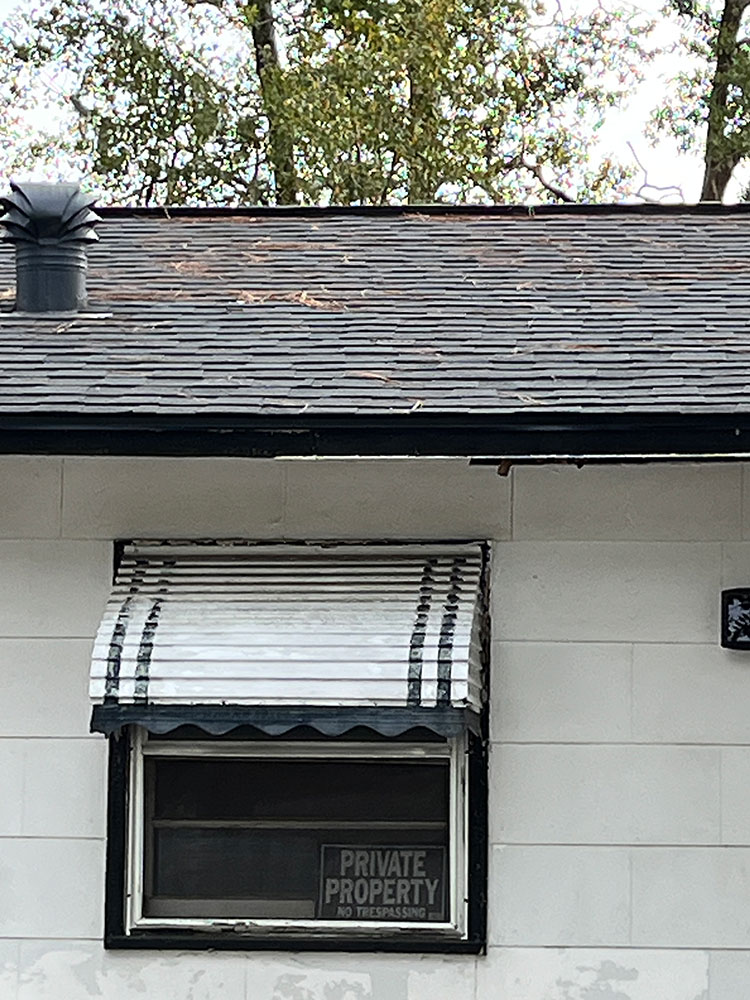
Dontarius Dye received a new roof after Hurricane Helene through help from the American Red Cross and the South Georgia Partnership to End Homelessness.
Mitchell spent the night of Hurricane Helene on the floor, frightened as the storm raged outside. Inside, it was dark, noisy, scary.
When the sun came up, Mitchell was heartbroken. The three-bedroom home that means so much to her had a gaping hole thanks to a large tree that had crashed into it.
The damage to the shingles alone would be enough to bring someone to their knees, but this house is more than just a building to her. It’s the same home she lived in as a teenager. Her family moved away, and she bought it back years later.
“It was very sentimental,” the 45-year-old said. “There are so many memories in this house. I still remember the old neighbors.”
Mitchell spent a long stretch living under a tarp, never knowing if the next storm would bring water pouring in. Today, she’s grateful to SGPEH and the Red Cross for restoring her roof — and her peace of mind.
“When they helped me at first, I thought, ‘This is not real.’ But it happened and I was blessed,” Mitchell said, tears in her eyes.
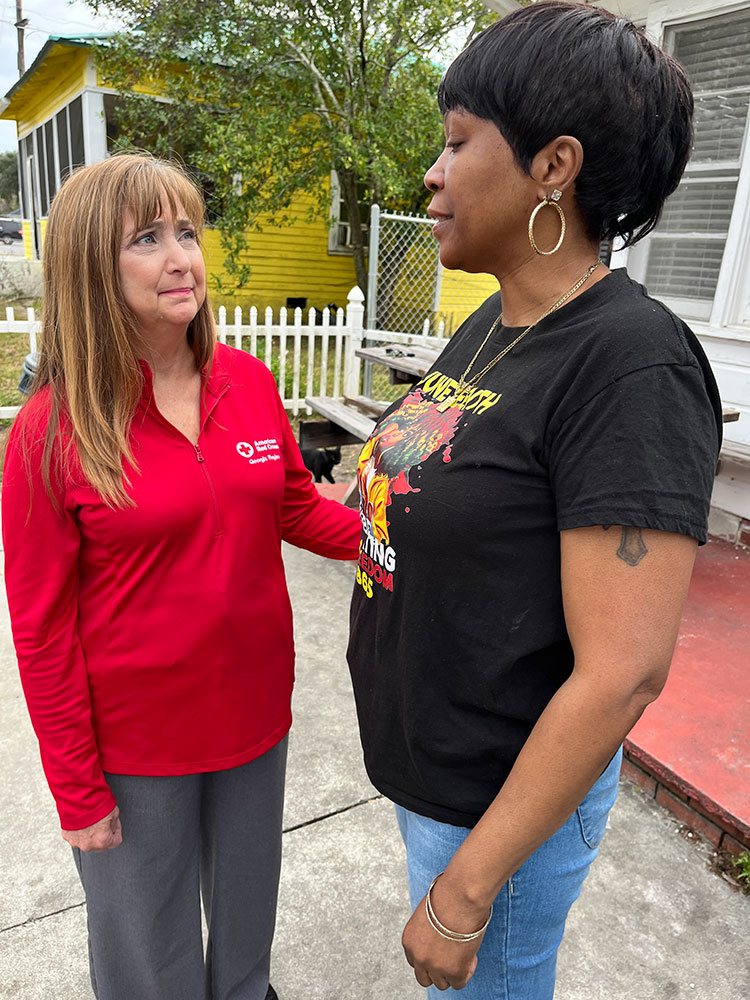
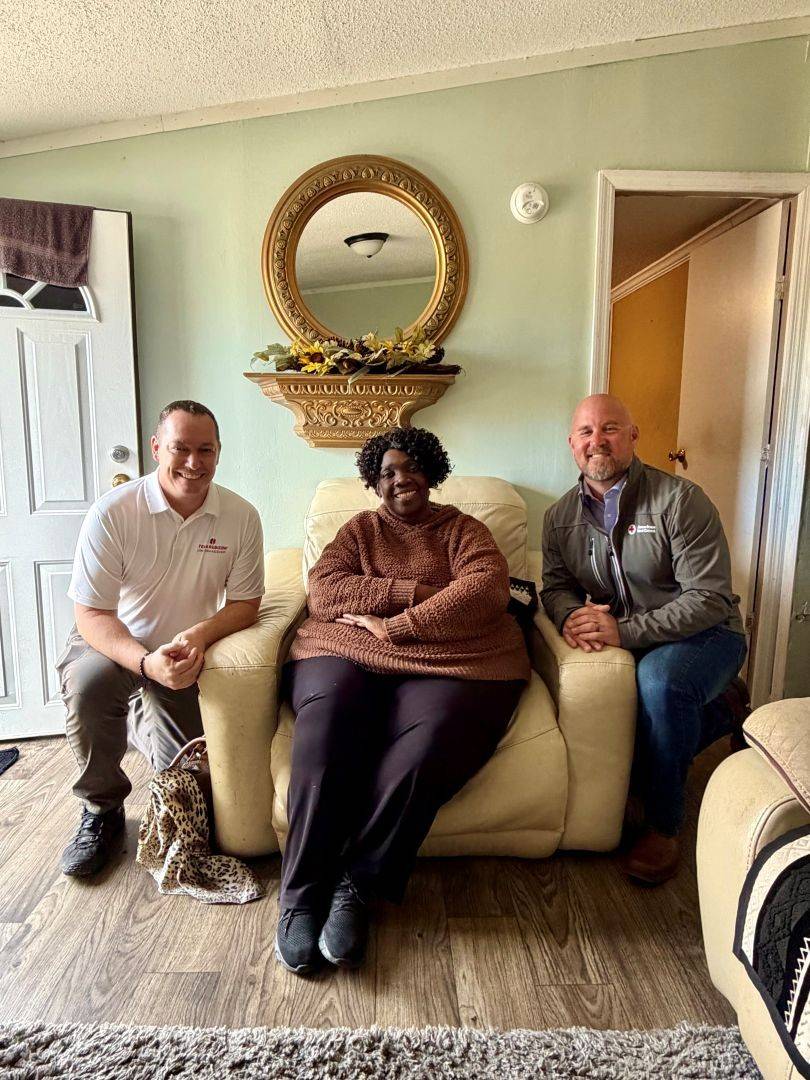
Red Cross Executive Director Jackie Shoemaker offers comfort and support to homeowner Tangula Mitchell.
“A tarp is nothing permanent. It’s only a temporary fix,” Mathis said. Yet without organizations pulling together, a tarp becomes a long-term reality.
“Oh yeah, we definitely would be living under a tarp still, because we tried to get a price check on a roof, and they were telling us $3,000, and another price was telling us $5,000,” Dye said. “We were just like, you know, barely making it as it is. So, for us to afford a roof, it was just not bearable at the time. We’re just so grateful for you guys coming through and giving us a roof.”
The Red Cross long-term recovery operation for Hurricanes Helene and Milton is helping communities in Georgia, North and South Carolina, Florida, and Tennessee build stronger and more resilient communities. Through strategic partnerships, the Red Cross supports home repairs, hazard mitigation and local capacity building. The goal is to empower communities, connect partners and create sustainable systems to promote community resilience and preparedness that last well beyond the two-year long-term recovery operation timeline.
“What we were able to do with the Red Cross grant was to help 30 homeowners in South Georgia and Valdosta repair their homes,” said CORE Community Mobilizer Myrline Newton. “We did 10 so far, and we are moving to do another 20 by February.”
One of the people CORE and the Red Cross helped is Emma Holmes. She’s a woman with a quick smile and a lighthearted manner. Hurricane Helene significantly dampened her spirits.
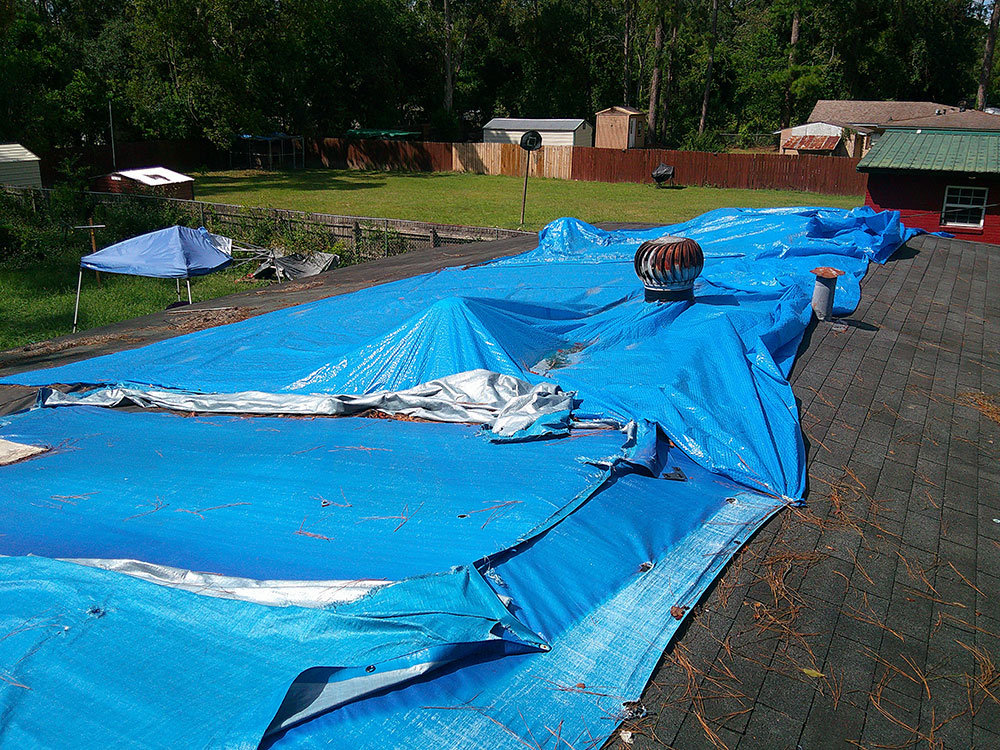
Homeowner Emma Holmes lived under a tarp after Hurricane Helene. Today, she has a new roof thanks to the American Red Cross and the Community Organized Relief Effort.
“When the hurricane hit, a tree fell on the roof and made the roof bad, and then the roof was leaking in my house,” Holmes explained. “It was raining in my front room, and it was raining in my bedroom, and it was raining in my kitchen.”
It was a tough place to be in.
“I lost my husband, and that’s another thing — he would have tried to get up there and fix it himself, but he passed on.”
Holmes, who works at a local elementary school and recently won Custodian of the Year, played an active role in selecting the shingles and the design of the new roof.
“I loved it. I loved it. When I say I loved it, it’s pretty,” she said, grinning from ear to ear. “There’s a lot of other stuff I’ve got to get fixed up, but I have a roof on my head, and it’s a blessing.”
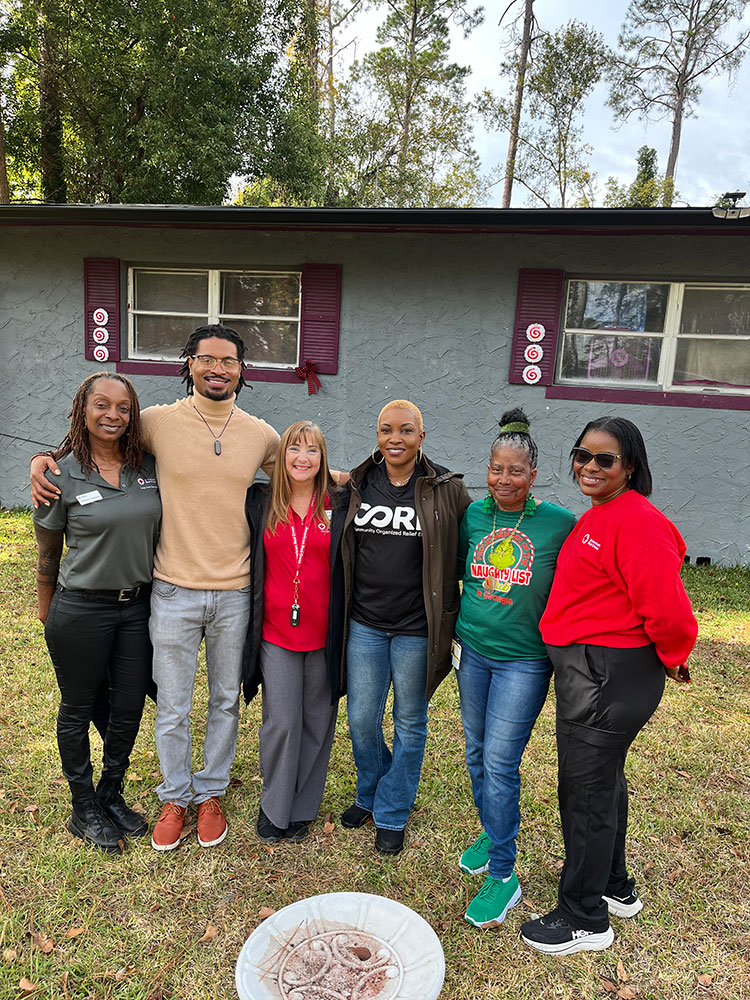
From left: Edwina Gibson of the Red Cross, Jacque Ridore of CORE, Jackie Shoemaker of the Red Cross, Myrline Newton of CORE, homeowner Emma Holmes, and Dr. Affie Ben‑Edet of the Red Cross.
Newton said it can be unsafe for people to live in a damaged home, even though for some it’s their only option.
“So, for the Red Cross to say, ‘Here’s funds, and we see the problem,’ and to help — it’s a big help,” she said.
“One year after Hurricane Helene impacted our community, many residents continued to face significant recovery challenges, evidenced by blue tarps still covering damaged roofs,” said Jackie Shoemaker, Executive Director of the Red Cross South Central Georgia Chapter. “The Red Cross was able to award long-term recovery grants to CORE and SGPEH under the individual and household needs category. These organizations played a vital role in the recovery process by addressing unmet, long-standing needs and helping families move closer to stability.”
“The more I become involved with Jackie Shoemaker and the Red Cross, the more my heart goes to see that their arm reaches further than anyone could imagine,” Mathis said. “The Red Cross is about building, and what they make sure is that when they build, it’s sustainable. They don’t want that building to last a few years; they want it to last a lifetime, so kudos to the Red Cross and thank you so much.”
About the American Red Cross:
The American Red Cross shelters, feeds and provides comfort to victims of disasters; supplies about 40% of the nation’s blood; teaches skills that save lives; distributes international humanitarian aid; and supports veterans, military members and their families. The Red Cross is a nonprofit organization that depends on volunteers and the generosity of the American public to deliver its mission. For more information, please visit redcross.org or CruzRojaAmericana.org, or follow us on social media.
Support all the urgent humanitarian needs of the American Red Cross.
Find a drive and schedule a blood donation appointment today.
Your time and talent can make a real difference in people’s lives. Discover the role that's right for you and join us today!