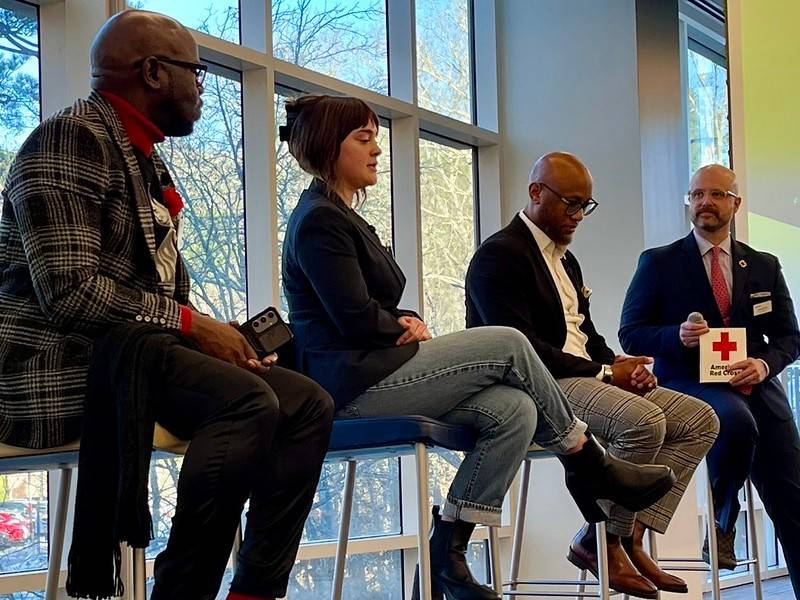
Garrett Reid (far right), Regional Donor Services Executive of the American Red Cross in Georgia, hosted a panel discussion with three Red Cross advocates at a recent event honoring financial donors.
By Ryan Bergeron, Communications Volunteer
“Every blood donation, there’s a story behind it. Every volunteer hour, there’s a story behind it. Every dollar donated to the Red Cross, there’s a story behind it.”
That was the message from Alicia Doherty, Regional Executive of the American Red Cross of Georgia, during a recent breakfast event honoring the organization’s partners. The theme of the day was “Inside the Mission: A Morning to Celebrate Our Generous Partners,” giving financial donors a chance to put faces to the lives they have helped change.
An accident. A sickness. The loss of a loved one. These are the events that shaped the lives of the three panelists and Red Cross advocates who shared their stories. They spoke about the importance of blood donations and how the work of the Red Cross, its partners and health care teams has made a difference in their lives.
Panelist Joshua Reid made it clear: “If it wasn’t for blood donors, I wouldn’t be here.”
A Second Chance
In 1999, Reid’s life changed in a matter of seconds.
During his junior year of college, Reid was involved in a head-on collision with a pickup truck in Milledgeville, Georgia. His leg was broken in six different places and his neck was lacerated by the seatbelt. He received five pints of blood in the emergency room and ended up staying in the hospital for five days.
He was lucky to be alive but the road to recovery proved to be tough.
“After the car accident, I was suicidal and went through a major depression,” Reid told the audience. “The only thing that brought me hope was the blood donors because we have something similar - we’re either going through something, about to go through something or been through something.”
With a new lease on life, Reid decided he would devote his time to giving back. He went through the American Red Cross phlebotomy training program and has now been drawing blood and working for the Red Cross for 18 years. As a phlebotomist, he is able to share his story with donors and let them know the importance of their donation.
“Not just because it saved my life, but it also can save your life.”
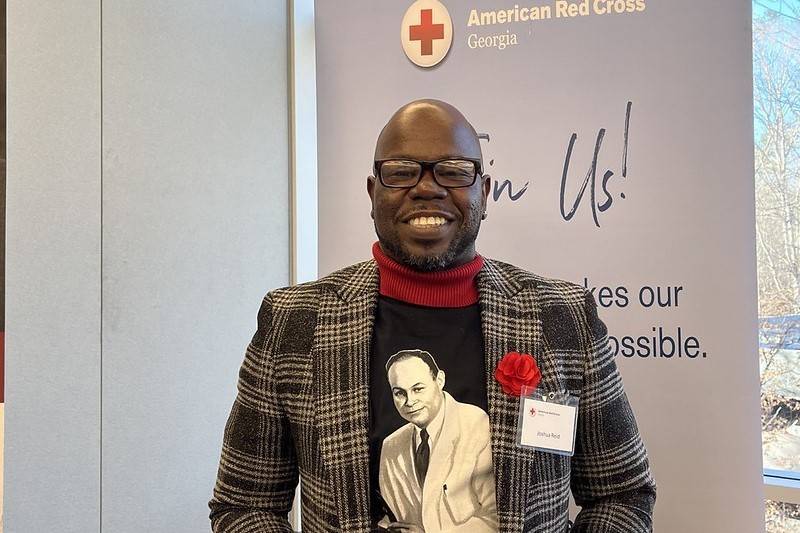
Joshua Reid spoke about how a tragic accident led him on a path to become a Red Cross phlebotomist.
“Fighting for my life every day”
Similar to Reid, Ansley Booth’s life changed while she was a young student.
She was 18 and a senior in high school in 2020 when she was diagnosed with severe aplastic anemia, a condition in which bone marrow does not produce enough new blood cells. Booth said she was getting numerous blood transfusions and going through multiple units of blood a week just to keep her stable enough to get treatment. As the COVID-19 pandemic worsened, so did her condition. What was expected to be a two-week hospital stay became six months. During that time, she battled sepsis, COVID, the flu and pneumonia, in addition to severe aplastic anemia.
“I was genuinely fighting for my life every day,” Booth said.
Through tears, Booth recalled the challenges faced by her medical team.
“They were scared. Everybody was scared. We were running out of literally everything — masks, blood especially,” she said. “You’re watching all these people give to people they don’t know, stretching above and beyond just to get through the day.”
Her experience in the hospital and as a blood transfusion patient gave her an appreciation for the importance of blood donations and a budding passion for her life moving forward. Once she regained her health, Booth went to EMT school at Grady Hospital and became a patient care tech at the Children’s Healthcare of Atlanta - the same hospital where she was treated. She’s now working on getting her master’s in biomedical sciences, but still finds time to volunteer.
“I have been working with the Red Cross at schools, talking to people [who were] my age when I got sick about donations and disasters and how important it is,” Booth said. “I hope to one day work in hematology and become a doctor. I attribute that to the people who cared for and supported me while I was sick.”
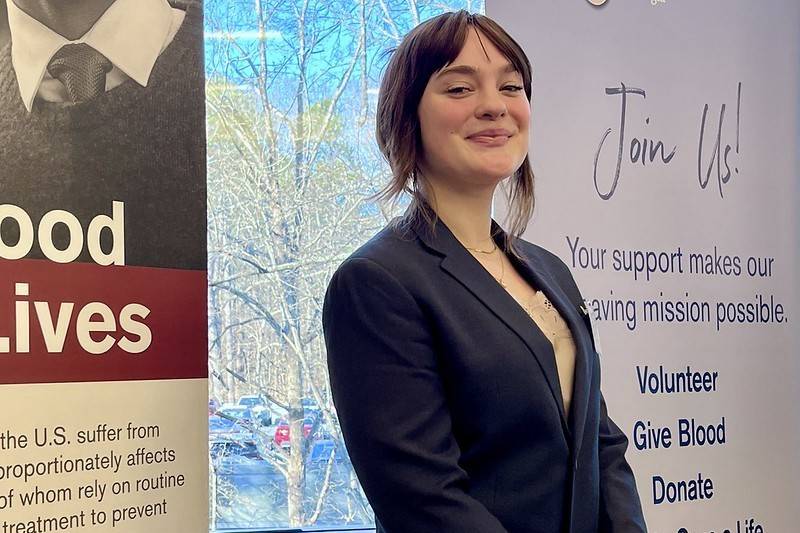
Ansley Booth was a senior in high school when a serious illness required her to get numerous blood transfusions. She now educates students on the importance of blood donations.
Turning tragedy to advocacy
Panelist Donovan Ringo’s story doesn’t have the same happy ending as Reid and Booth’s experience. His is one of loss.
In March 2022, Ringo’s sister, Raquel Neal-Barnes passed away from sickle cell complications. She was in need of a blood transfusion, but the hospital where she was being treated did not have enough blood available at the time. After his sister’s passing, Ringo began researching sickle cell to see if he could help prevent other families from losing a loved one.
“There’s not a lot of people of color and Black men who donate blood,” Ringo said. “I started an advocacy campaign focused on educating Black communities about donating blood and the importance of building the blood supply. That’s been a personal mission of mine.”
Sickle cell disease is an inherited red blood cell disorder that disproportionately affects people of African descent. According to the American Red Cross, 1 in 365 Black or African Americans are affected by sickle cell disease, and some patients may require as many as 100 units of blood each year. Frequent transfusions can make finding compatible blood types more difficult when patients develop an immune response against blood from donors that are not closely matched to the recipient.
Ringo is now an advocate for blood donation in the African American community because as the speakers on the panel can attest, the need for blood can be lifesaving. One in three Black blood donors are a match for people with sickle cell
disease.
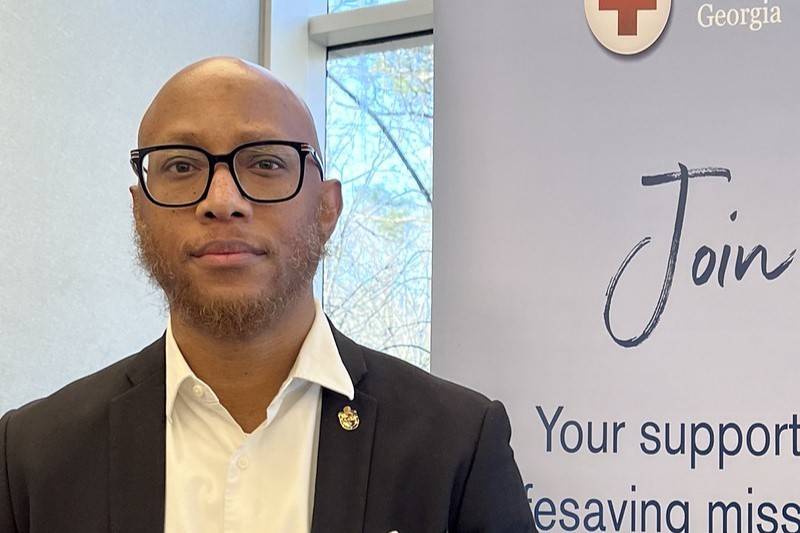
After the loss of his sister to complications from sickle cell disease, Donovan Ringo became an advocate for blood donations in the African American community.
Severe shortages
During the program, partners and donors also received an update on the current blood supply situation. Garrett Reid, Regional Donor Services Executive, told the audience that since the start of 2026, winter storms in the southeast and northeast have caused over 20,000 donations of blood and platelets to go uncollected. In Georgia alone, that includes more than 600 uncollected donations.
The personal stories shared during the event showed that every donation and unit of blood can mean the difference between life and death. This glimpse “Inside the Mission,” paints a bigger picture of how the American Red Cross and its partners work together as a team on one mission - to help others.
After a morning of emotional stories and appreciation, Joshua Reid left the audience with some lighthearted phlebotomist New Year’s advice.
“If you want to lose a little weight,” he said, “come donate blood.”
Support all the urgent humanitarian needs of the American Red Cross.
Find a drive and schedule a blood donation appointment today.
Your time and talent can make a real difference in people’s lives. Discover the role that's right for you and join us today!