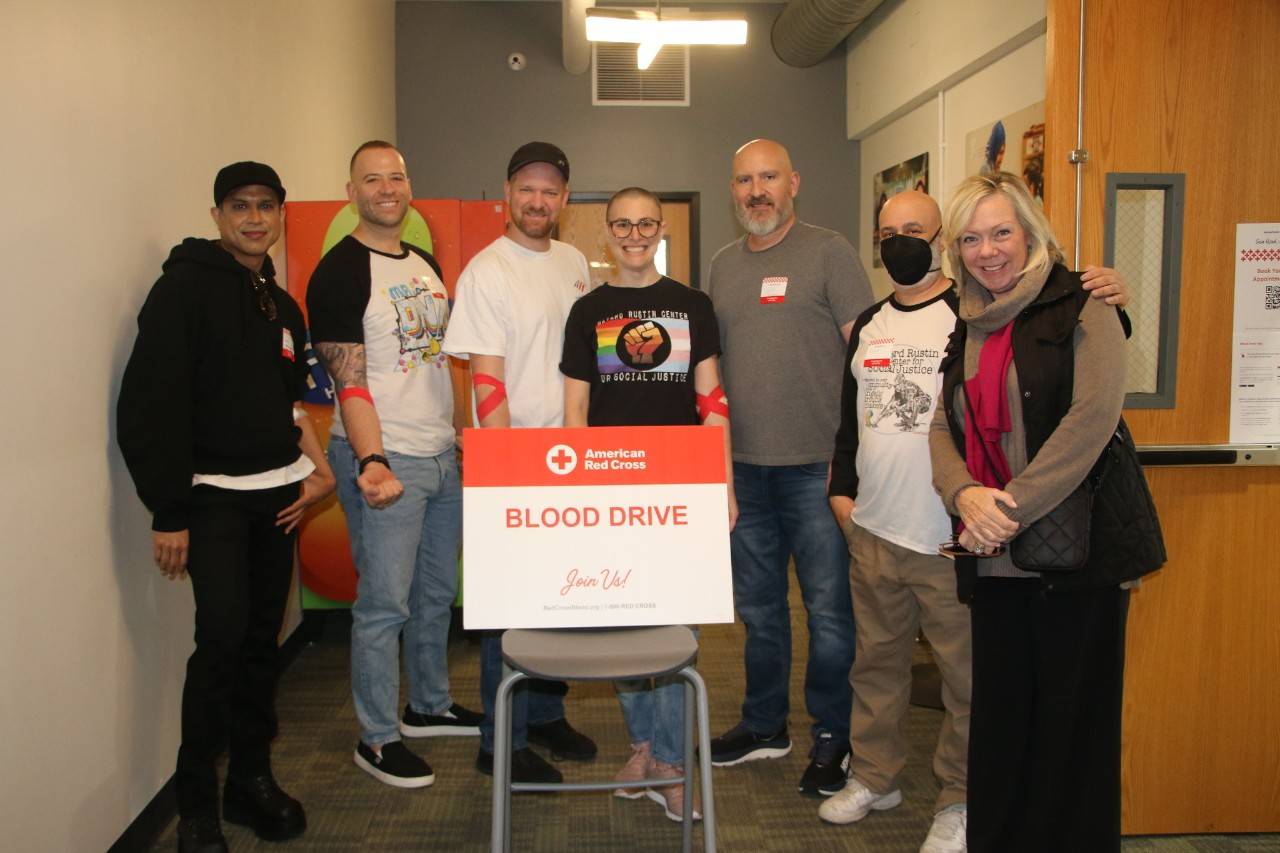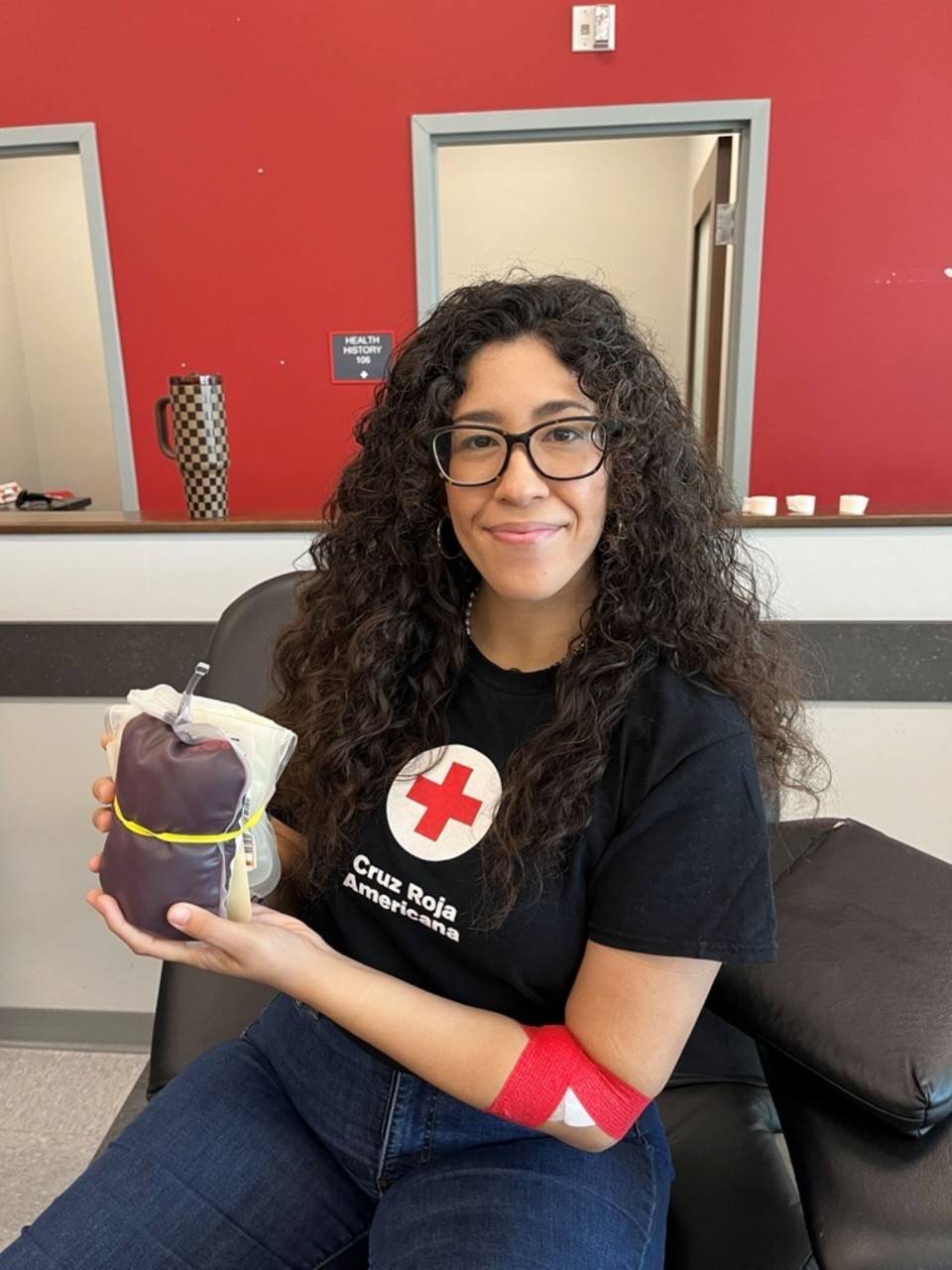
On a sunny San Diego afternoon, the dance floor at Gossip Grill looks a little different. Where clubgoers usually move to music beneath neon signs and a glittering disco ball, blood donation chairs line the room instead. The vibe is still unmistakably Gossip — warm, welcoming, full of LGBTQ+ pride — but today, the energy hums with something extra: purpose.
At the center of it all is Moe Girton.
“I’m a mama of two dogs, a wife, a bar owner, an avid motorcycle rider, and a badass feminist activist,” Girton says with a laugh. She’s also a proud blood donor and the driving force behind one of the most joyful, community-infused blood drive programs in San Diego.
For nearly 17 years, Girton has owned and operated Gossip Grill, one of the last remaining queer women’s bars in the United States and the only lesbian nightclub in California. Opened in 2009, Gossip Grill has become far more than a place to grab a drink — it’s a safe space built on a core value Girton returns to again and again: community.
“We’re not just a bar,” she says. “We take care of each other.”
That ethos shows up in the details. Gossip Grill boasts a mocktail menu larger than its cocktail list, signaling that guests don’t have to drink alcohol to belong. People come for the food, the drag shows, the dancing — or simply to feel safe being themselves. And several times a year, they come to roll up their sleeves and give blood.
Stepping Up When It Matters Most
Years before changes to blood donation eligibility, gay and bisexual men were largely excluded from donating due to restrictive federal policies. During that time, lesbian communities across the country stepped in to help meet the critical need for blood. It’s a legacy Girton takes seriously.
The rules about giving blood for the men in our community have always been so restrictive,” she explains. “Lesbians really stepped up to fill the need.”
Inspired by the historic Blood Sisters of San Diego — a group of lesbian activists who donated blood and cared for gay men during the height of the AIDS crisis in the 1980’s — Girton made a promise when she opened Gossip Grill: as long as gay men were barred from donating, her bar would host blood drives for the community.
The Blood Sisters’ story reached Girton through her dear friend Susan, herself a pioneer who helped create San Diego’s first AIDS Walk and founded the region’s first hospice for gay men living with AIDS.
“The lesbian community back then said, ‘We’re not going to let you die. You’re our family,'" Girton says. “They didn’t do it for recognition. They did it because it was needed.”
That spirit lives on at Gossip Grill.
From Fear of Needles to Pride — One Donation at a Time
Gossip Grill hosted its first blood drive eight years ago. Girton donated that day too — her first time ever, overcoming a lifelong fear of needles right there in her own bar. Since then, the drives have grown from one annual event to an every two month tradition.
In total, Gossip Grill has collected more than 240 donations so far, nearly half from first-time donors.
“That’s what blows my mind,” Girton says. “Imagine how many lives that’s touched.”
The drives are intentionally out of the box. Donors recline under club lights and a disco ball, with the unmistakable energy of an LGBTQ+ nightclub all around them. Afterward, they gather on the patio for lunch, laughter, and a beverage of choice.
“You give blood, and then you hang out,” Girton says. “It feels normal. It feels fun.”
Some of the most powerful moments come from watching her own staff — many under the age of 30 and never having donated before — work up the courage to try.
“There’s a lot of coaching,” she admits. “But once they do it, once they realize they can, they’re almost always ready to do it again. It’s about giving people confidence.”
Inclusion, Finally — And Moving Forward Together
In 2023, the FDA updated blood donation eligibility rules to eliminate questions based on sexual orientation, allowing many more LGBTQ+ people, including gay and bisexual men, to donate. For Girton, it was a long-awaited step forward — and not a stopping point.
“We always said we wouldn’t stop doing blood drives until change happened,” she says. “Now that it has, we’re still going.”
Today, Gossip Grill promotes its blood drives to the entire LGBTQ+ and ally community and beyond, repeating the message that everyone is welcome.
“It’s about education now,” Girton says. “You can give. Come down. See if you qualify.”
The drives now feel like a reunion — a place where lesbians who once donated on behalf of their brothers now sit alongside gay and bisexual men donating for the first time, all part of the same circle of care.
And sometimes, the importance of that circle becomes deeply personal. A few years ago, Girton’s friend Susan herself nearly died and required multiple blood transfusions.
“Susan told me, ‘I always go to Gossip to donate — and now I’m the one who needs it,’” Girton recalls. “That was full circle.”
Making a Difference, Together
For Girton, continuing the Blood Sisters’ legacy isn’t about attention or branding. It’s about stepping up — again and again — where there’s need.
“We stand up for women, the trans community, for Black and brown communities,” she says. “Where there’s a need, that’s where we want to be.”
For Girton, community care extends beyond donating blood. As a teen she was a Red Cross certified lifeguard, and now as a bar owner, she ensures her team members take Red Cross First Aid and CPR training so they can keep their community safe in the event of an injury or emergency.
If she has one message for people considering donating blood, it’s simple.
“Just do it,” Girton says. “Imagine saving a life. If you ever need blood yourself, it will be there because someone showed up.”
At Gossip Grill, showing up has become a tradition — one donation, one dance floor, one community at a time.
For more information about blood donation and the LGBTQ+ community, visit RedCrossBlood.org/LGBTQ.
About the American Red Cross:
The American Red Cross shelters, feeds and provides comfort to victims of disasters; supplies about 40% of the nation’s blood; teaches skills that save lives; distributes international humanitarian aid; and supports veterans, military members and their families. The Red Cross is a nonprofit organization that depends on volunteers and the generosity of the American public to deliver its mission. For more information, please visit redcross.org or CruzRojaAmericana.org, or follow us on social media.
Support all the urgent humanitarian needs of the American Red Cross.
Find a drive and schedule a blood donation appointment today.
Take a class and be ready to respond if an emergency strikes.