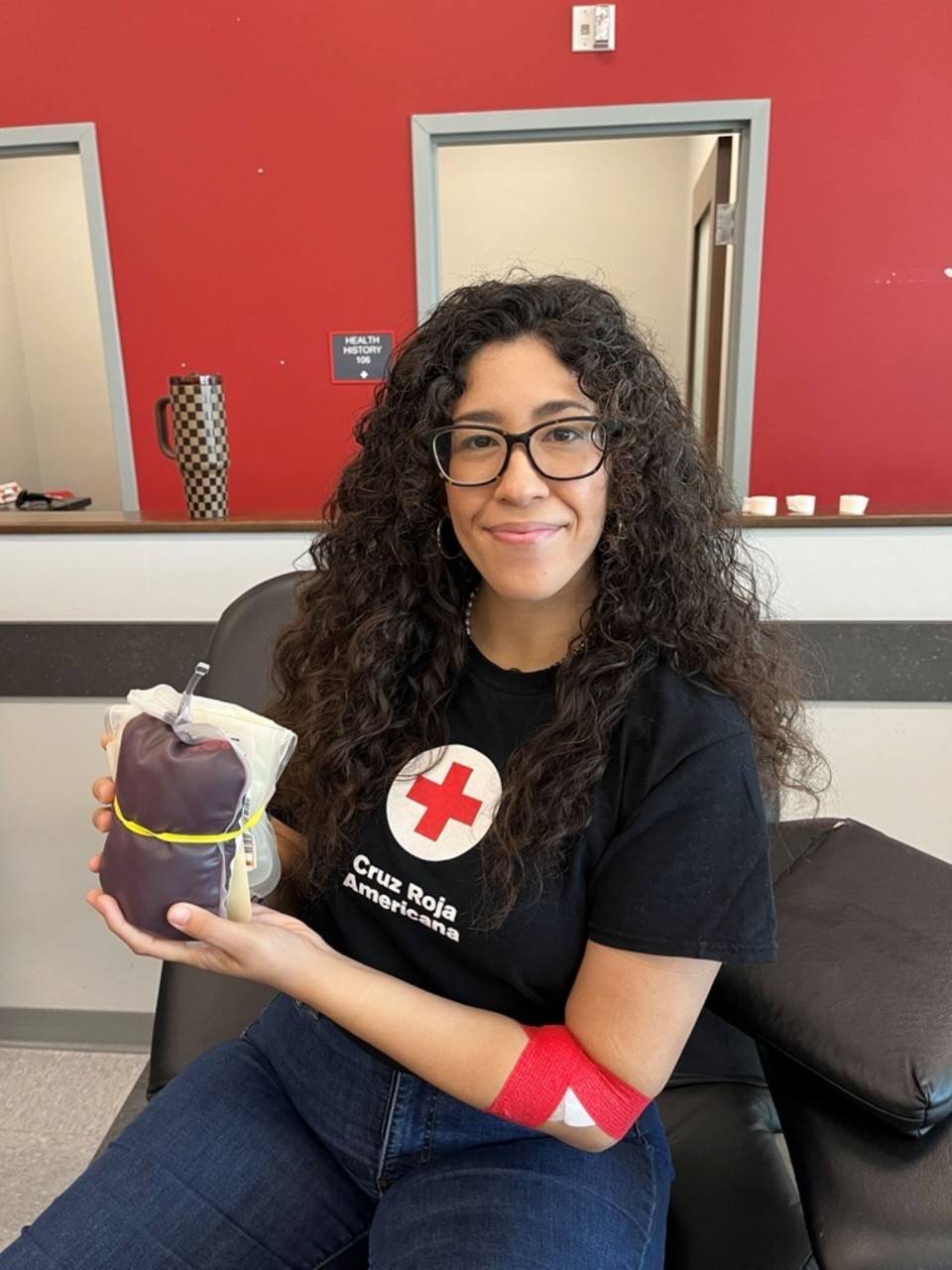
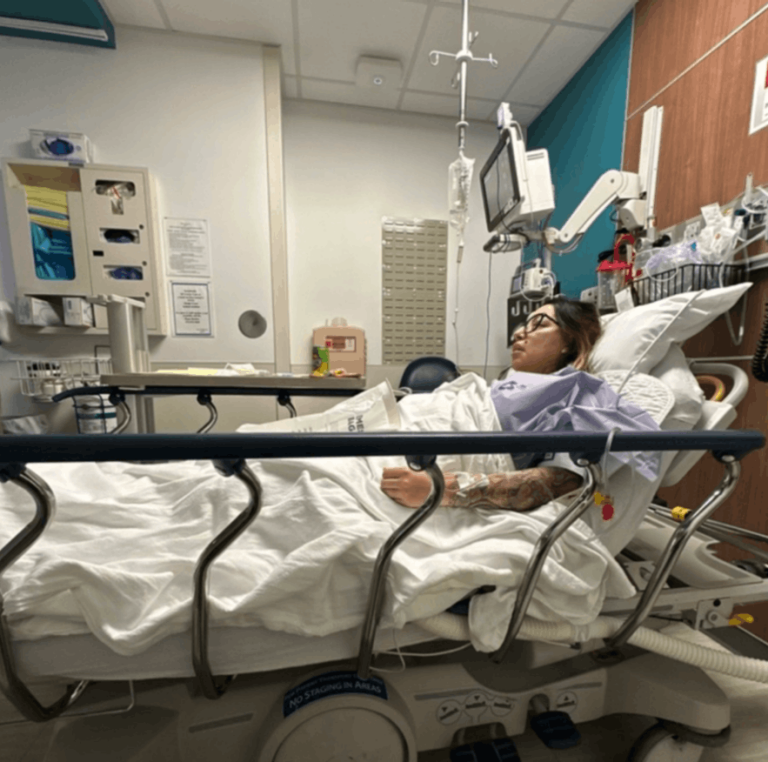
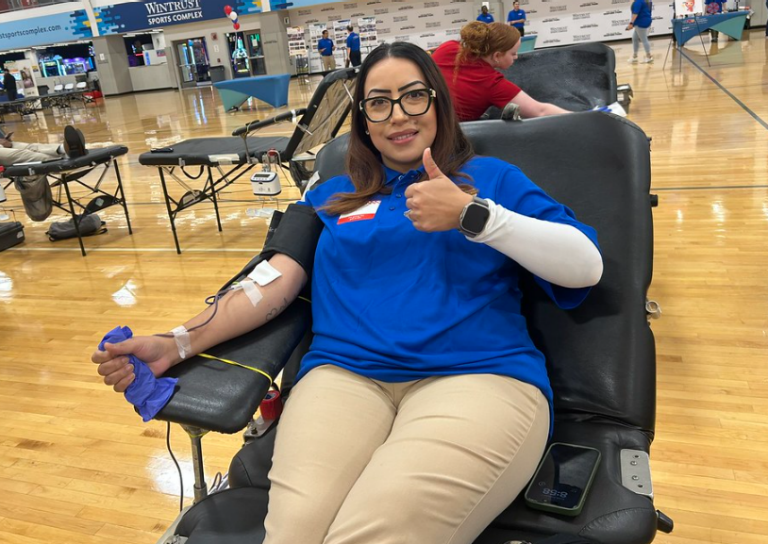
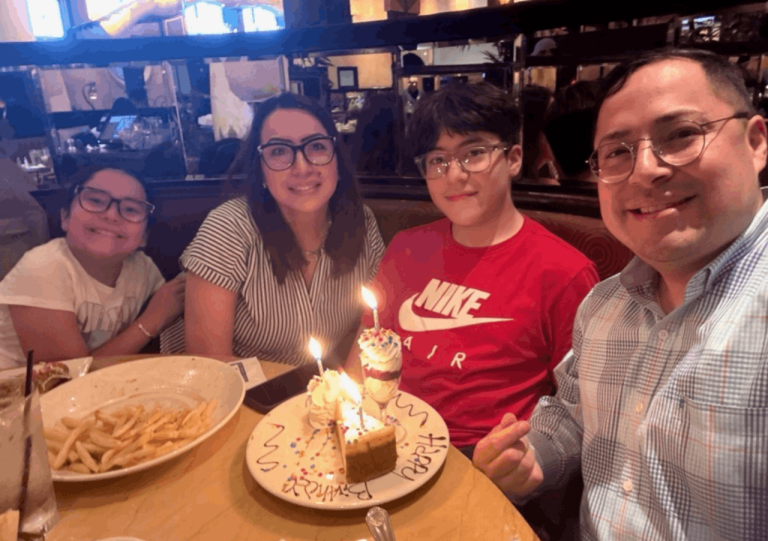
After months of seeking medical care without clear answers, Monique Gamboa faced a medical crisis that required multiple transfusions—an experience that left her deeply grateful to her donors and inspired her to donate blood.
April marks National Minority Health Month, a time to recognize the health disparities that affect diverse communities across the country, including conditions that impact women and have historically been understudied.
According to the National Institutes of Health:
The story of Monique Gamboa—a wife and mother of two from Chicago—shows how these inequities can allow common symptoms to escalate into life-threatening medical emergencies.
For months, Monique experienced extremely heavy and painful periods that left her weak and exhausted. Despite multiple visits to the doctor, she struggled to get clear answers as her condition continued to worsen. Eventually, an ultrasound revealed the cause: more than six bening uterine tumors—some as large as her fist—and dangerously low hemoglobin levels.
Her doctor recommended immediate surgery, but Monique was too weak to proceed right away. Instead, she needed to receive two units of blood each week for several weeks to stabilize her condition.
“On the day of my surgery, I lost so much blood that I needed another transfusion,” Monique recalls. “The people who donated blood have no idea how much they helped me. I’m here because of their generosity—they saved my life. Because of them and the support of the Red Cross, I was able to go back home to my children, my husband, and my family.”
Although 70% to 80% of women in the United States will develop fibroids by age 50, the condition has long been a low priority in medical research. The National Institutes of Health (NIH) has acknowledged this gap and is currently conducting an analysis—the Assessment of NIH Research on Women’s Health—to bring greater attention to understudied conditions such as fibroids and endometriosis.
The lack of research, combined with the normalization of women’s pain, has caused conditions like fibroids to be underestimated—often delaying diagnosis and leading to serious complications.
In this context, Dr. Maribel García Colón, Medical Director of the Red Cross, notes that the risk of severe blood loss is frequently overlooked when symptoms are considered “routine.”
“Sometimes we stereotype who might need a blood transfusion and think of patients in need of chronic illnesses like cancer or traumatic accidents,” Dr. García Colón explains. “We don’t always recognize that something as common as fibroids or heavy periods can lead to severe bleeding. Everyday conditions can become serious medical situations where donated blood is essential to treatment—and can mean the difference between life and death.”
After making a full recovery, Monique knew she wanted to give back. Last September, she donated blood for the first time.
“That day was incredibly emotional,” she says. “It really stayed with me. Now, I want to donate every 56 days because I want to give someone else the same chance I was given.”
This month, join our mission to reduce health disparities and save lives by scheduling a blood donation appointment at RedCross.org
Life is good. Donate blood.
The American Red Cross and Life is Good® are teaming up to celebrate the power of blood donations and the positive impact they can have. Schedule a blood, platelet, or AB Elite plasma donation today.
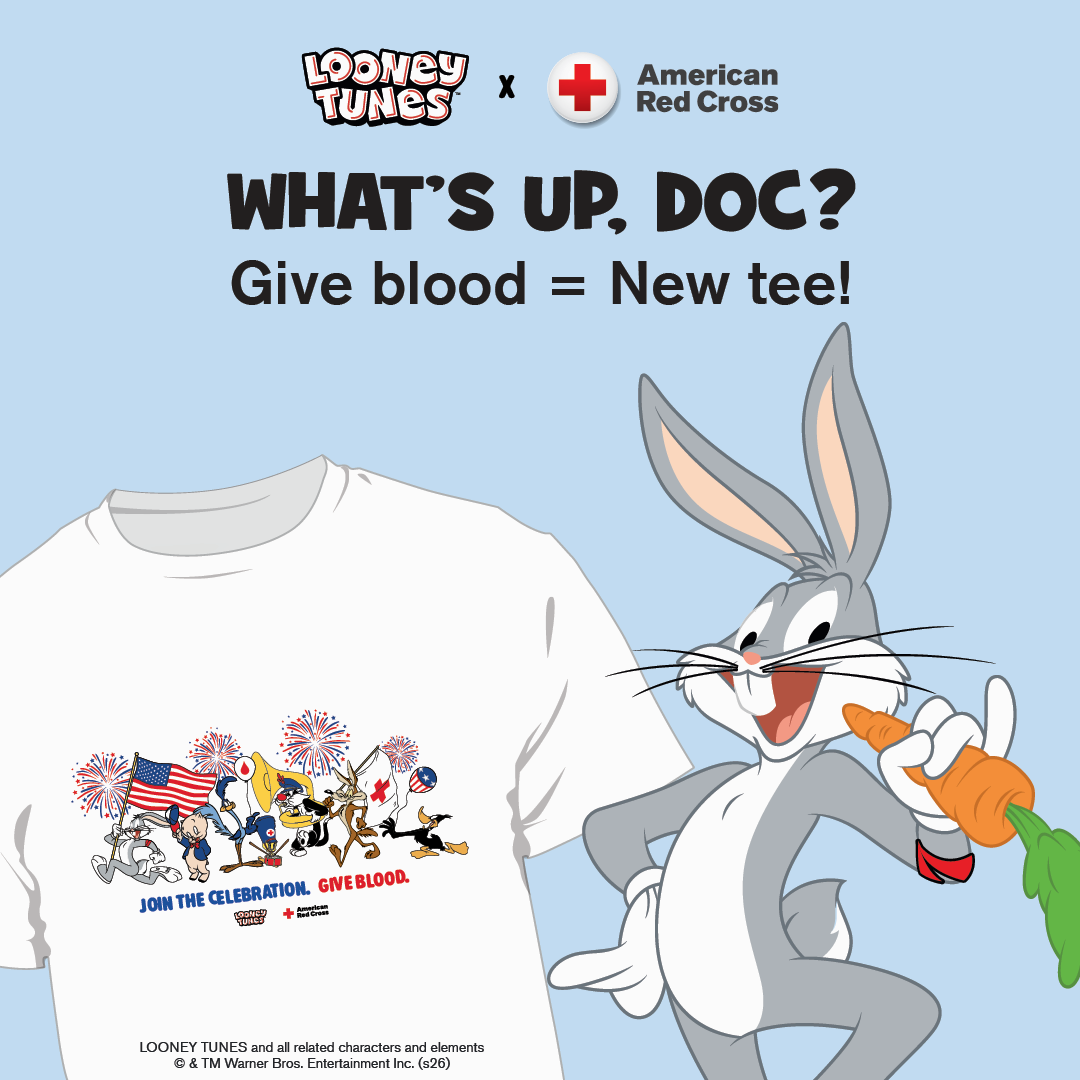
Donate blood between March 30 and April 12, 2026, and receive an exclusive American Red Cross × Life is Good T‑shirt, while supplies last. Wear it with pride and share hope with your family, friends, and community.
Your blood donation can help give others the chance to keep living. Donate today.
About the American Red Cross:
The American Red Cross shelters, feeds and provides comfort to victims of disasters; supplies about 40% of the nation’s blood; teaches skills that save lives; distributes international humanitarian aid; and supports veterans, military members and their families. The Red Cross is a nonprofit organization that depends on volunteers and the generosity of the American public to deliver its mission. For more information, please visit redcross.org or CruzRojaAmericana.org, or follow us on social media.
Support all the urgent humanitarian needs of the American Red Cross.
Find a drive and schedule a blood donation appointment today.
Take a class and be ready to respond if an emergency strikes.