As the U.S. commemorates the centennial of Black History Month, few institutions embody that history more than Historically Black Colleges and Universities (HBCUs). Born out of a commitment to advancement, HBCUs have functioned as spaces where student leaders of all backgrounds converge, build authentic community, pursue their passions and evolve into generous contributors to society. Today, the next generation of leaders is extending that legacy into one of the most urgent areas of health equity: blood donation.
In the U.S., more than 100,000 people live with sickle cell disease and may require frequent blood transfusions. This need is especially critical during winter months, when patients with sickle cell disease tend to experience more pain crises resulting in hospitalizations and blood transfusions.
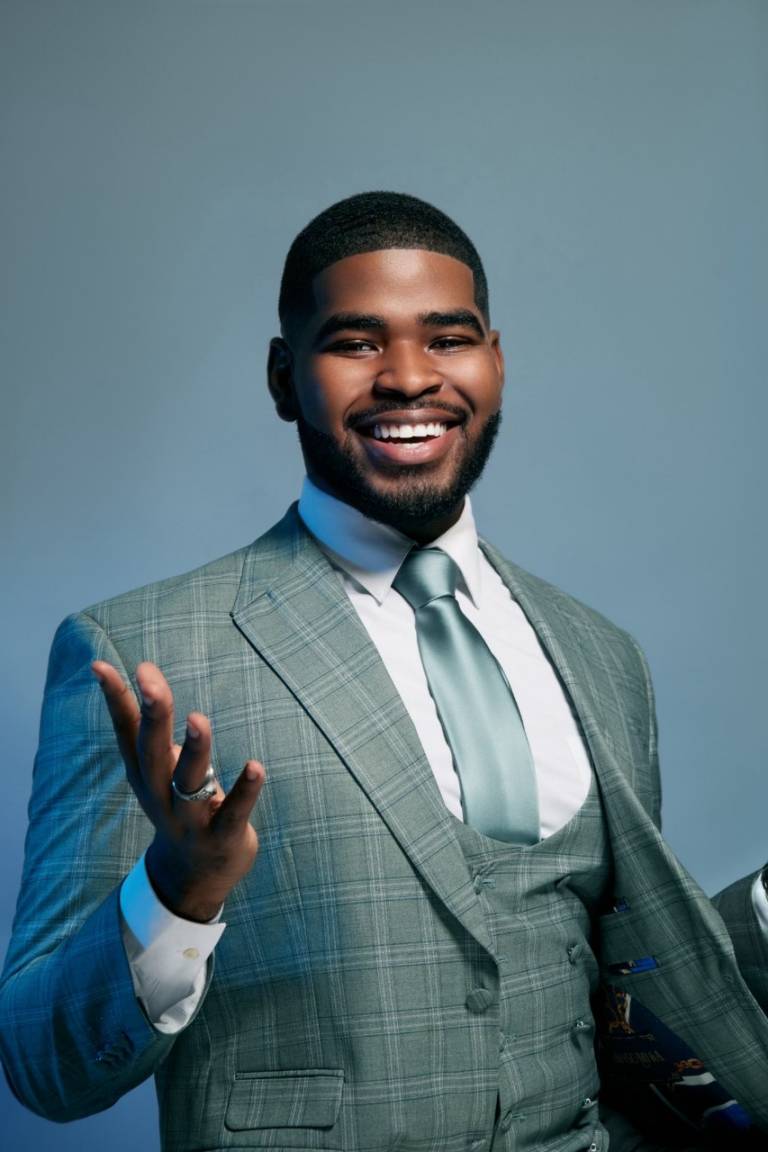
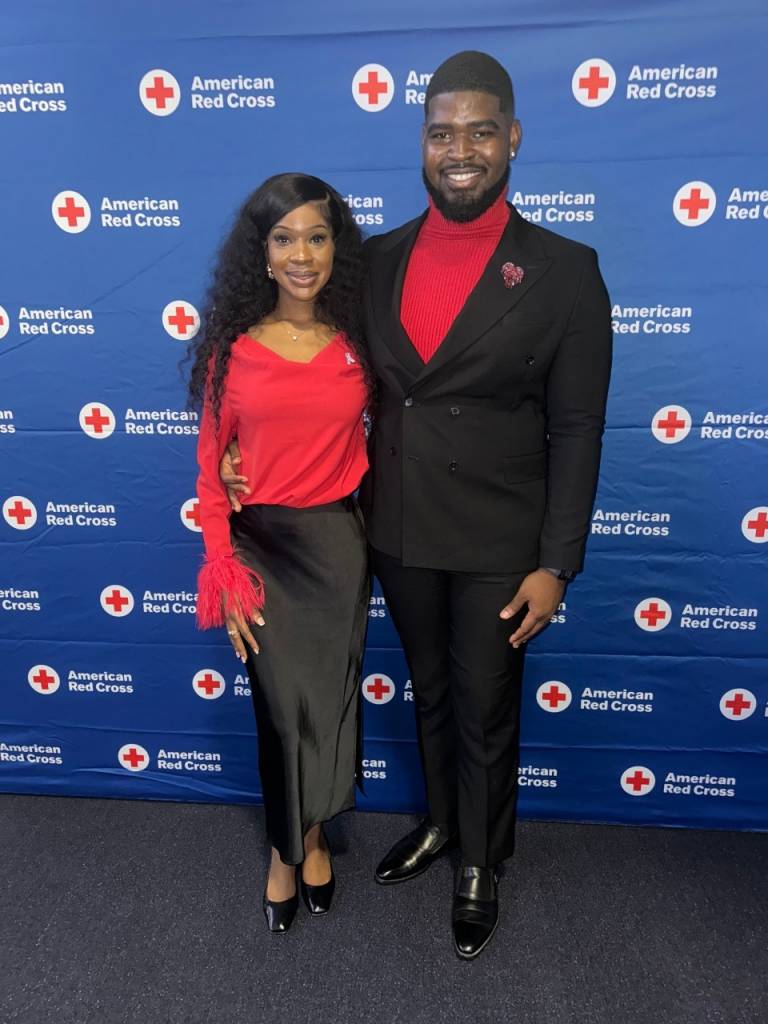
On college campuses across the country, young leaders are answering that call. Among them is Michael C. Prescot, Jr., an American Red Cross HBCU Ambassador and NHQ Biomedical Scholars Advisory Committee member, now in his third year with the program and a graduate student at Morgan State University.
“HBCUs were founded on collective responsibility. Uplifting our people when systems failed us,” says Michael. “Blood donation is a modern extension of that legacy. We are continuing a tradition of mutual care, advocacy and community-centered action that has always defined HBCUs.”
Engaging a Culture of Service on the Yard
The Red Cross HBCU Ambassador Program, sponsored by Delta Air Lines, empowers college students to improve health outcomes for diverse populations in need of blood transfusions through training, leadership mentoring and networking. Ambassadors work with local blood services teams and student organizations to coordinate blood drive events on their campuses. Since the program’s inception, students have helped coordinate over 320 blood drives, collecting more than 7,300 pints of lifesaving blood.
“Doing this work at an HBCU is deeply meaningful because I’m surrounded by peers who are purpose-driven and service-oriented,” he says. “There’s a shared understanding that leadership isn’t just about titles. It’s about responsibility.”
A Path to Purpose
Michael joined the HBCU Ambassador Program as an undergraduate at Philander Smith University, an HBCU in Little Rock, Arkansas, committed to social justice and leveling the societal playing field. There, he earned a bachelor’s degree in psychology, broke school records in hammer and weight throw and became a member of Alpha Phi Alpha Fraternity, Inc. and was inducted into multiple honor societies including Alpha Kappa Mu and Sigma Tau Delta.
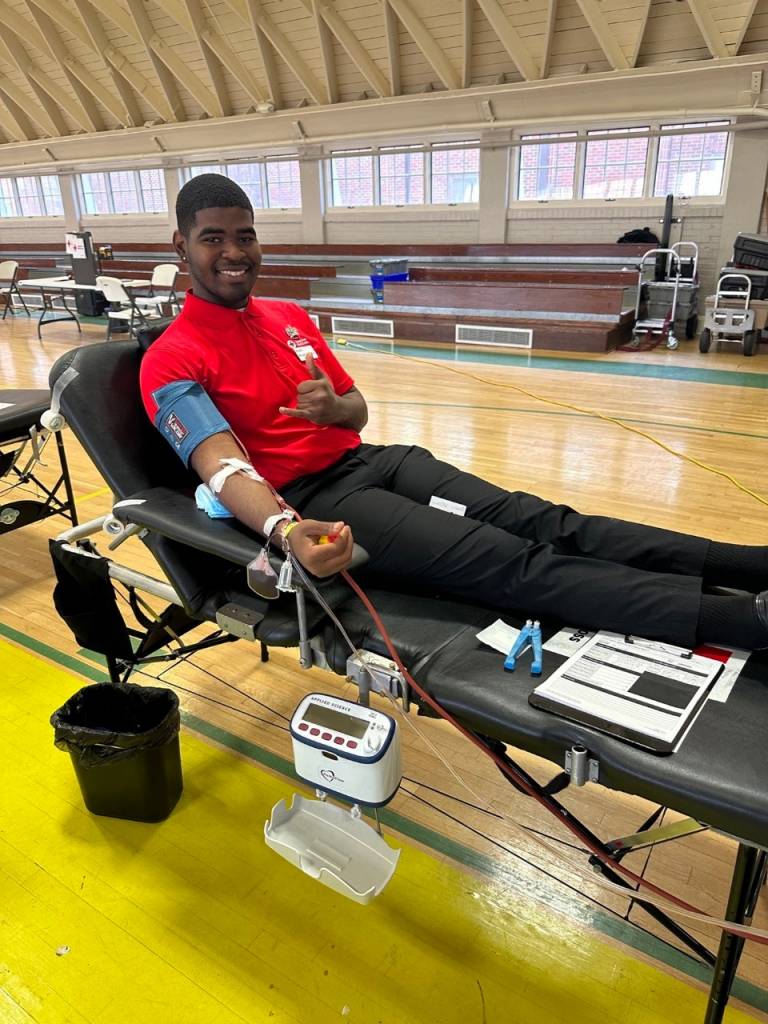
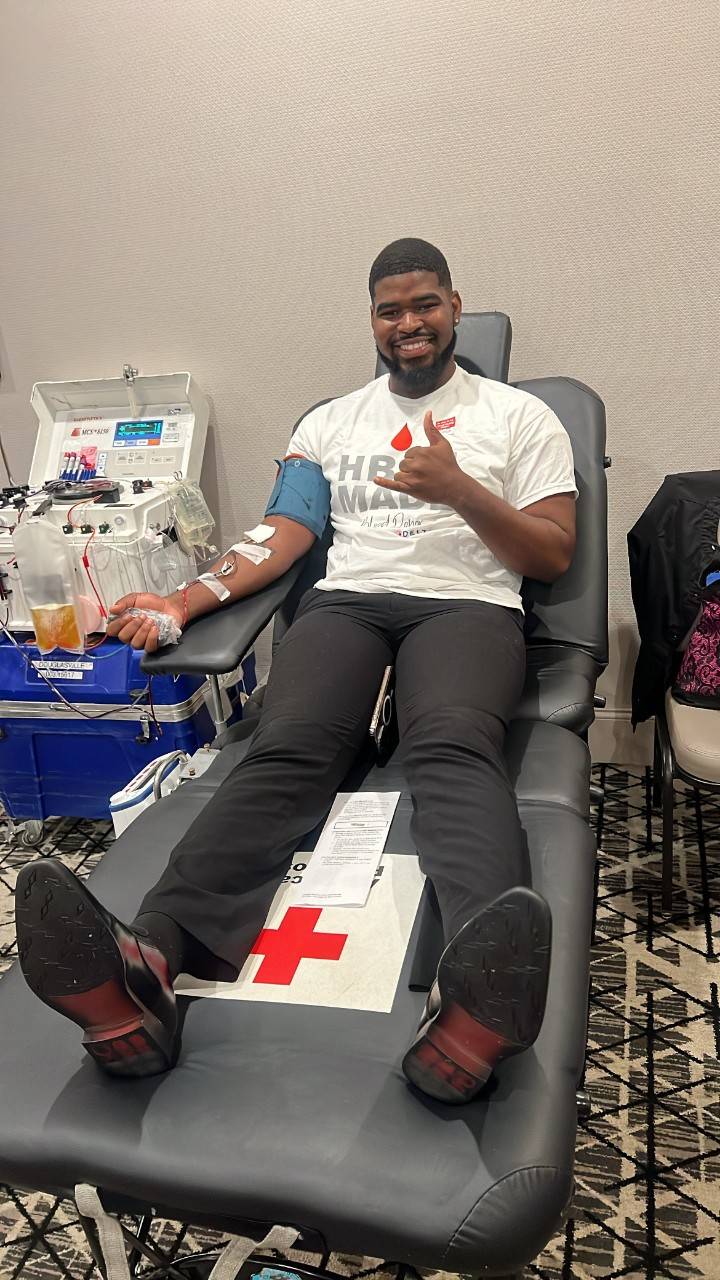
It was a fall blood drive on Philander Smith’s campus in 2023 that introduced him to the Red Cross mission. Michael donated for the first time that day—choosing Power Red, a procedure that allows one to safely donate two units of red blood cells during one donation and up to three donations a year.
“I set a personal goal to reach one gallon of blood donations,” he says. “As of March 25, 2025, I surpassed that goal. Being able to mobilize HBCU students around a cause bigger than ourselves continues to fuel my commitment."
Now at Morgan State pursuing his MBA in Human Resources Management, Michael also serves as president of Morgan State’s Society for Human Resource Management (SHRM) chapter.
Reaching Gen Z Where They Are
College campuses are where students are exposed to philanthropy and social advocacy, develop professional skills and engage their passions. For Gen Z, that process is tied to purpose, activism and societal impact.
Michael’s work on Morgan State’s campus reflects exactly that. As an ambassador, he coordinates blood drives and recruits fellow students and faculty by creating community-driven experiences that inspire the joy of giving back through peer advocacy.
"The most rewarding part is knowing that our work directly saves lives while empowering students to see themselves as agents of change,” says Michael. “Donating blood becomes an act of cultural responsibility, one that directly impacts people who look like us, share our experiences and depend on our participation. When students understand why blood is needed, who it helps and how simple the process is, fear turns into purpose.”
For many students, the decision to donate starts with a single conversation rooted in the transparency his generation values most. One in three African American blood donors is a match for people with sickle cell disease, making Black and African American donors vital to meeting patient needs and critical to reshaping the contours of possibility for patients undergoing transformative gene therapies and bone marrow transplants.
“One moment that stays with me is watching a first-time blood donor overcome fear, donate successfully and then immediately sign up to bring friends to the next drive,” says Michael. “That transformation, from hesitation to leadership, perfectly captures why this work matters.”
Beyond the Yard
Michael’s understanding of why blood availability matters extends beyond campus. Originally from Nassau, Bahamas, he watched from afar when Hurricane Melissa, a catastrophic Category 5 storm, tore through the Caribbean in October 2025, impacting Jamaica, Cuba and communities across the Bahamas.
"Seeing my country face loss and disruption, even from a distance, reinforced how fragile access to critical resources can be in times of crisis,” says Michael. “It deepened my appreciation for disaster preparedness, blood availability and coordinated response, and reminded me that collective care extends beyond proximity. In moments like these, service becomes not just local, but national, and deeply personal."
Transforming Communities
In addition to his studies, Michael serves as an AP Educator at The SEED School of Maryland, making him one of the youngest AP Educators internationally. His bold vision for the future includes serving as president of an HBCU and advancing as a Chief Human Resources Officer for a Fortune 500 company.
“Being an HBCU Ambassador has affirmed my belief that leadership is service in action,” says Michael. “When young people are trusted, educated and mobilized, they don’t just participate. They transform communities.”
Black Excellence Is in Our Blood
At the Red Cross, Black history is made fresh daily — and is saving lives. Join Michael and other HBCU Ambassadors in the fight against sickle cell disease by rolling up a sleeve to give blood during Black History Month and throughout the year. Make an appointment on the Red Cross Blood Donor App, visit RedCrossBlood.org/OurBlood, or call 1-800-RED CROSS (1-800-733-2767). Those who come to give blood, platelets, or plasma Jan. 26–Feb. 28, 2026 will receive a $20 e-gift card. Terms and additional details can be found at RedCrossBlood.org/Heart.
About the American Red Cross:
The American Red Cross shelters, feeds and provides comfort to victims of disasters; supplies about 40% of the nation’s blood; teaches skills that save lives; distributes international humanitarian aid; and supports veterans, military members and their families. The Red Cross is a nonprofit organization that depends on volunteers and the generosity of the American public to deliver its mission. For more information, please visit redcross.org or CruzRojaAmericana.org, or follow us on social media.
Support all the urgent humanitarian needs of the American Red Cross.
Find a drive and schedule a blood donation appointment today.
Take a class and be ready to respond if an emergency strikes.