Dr. Monique Rainford cared for her for years. She was young, full of promise and living with sickle cell disease (SC), a less severe form of the illness most consider manageable. One day, she walked into Dr. Rainford's obstetrics office with news that changed everything: she was going to be a mother.
She also knew what that meant. To give herself and her baby the best chance, she would need to transfer her care to a university hospital with a maternal-fetal medicine specialist. It was a careful, informed decision, the kind Black women with high-risk pregnancies often have to make while navigating healthcare systems that require them to advocate for themselves.
Dr. Rainford knew the specialist well. She knew her patient was in capable hands. Months later, her colleague called back with devastating news. The baby arrived healthy. But within days of delivery, the mother developed pneumonia and did not survive.
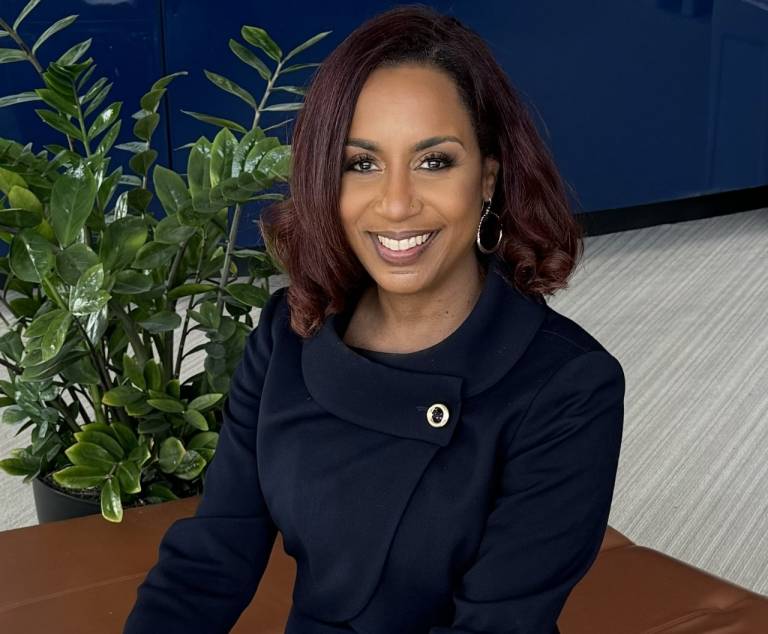
"I will always remember her telling me she was pregnant and her decision to transfer," says Dr. Rainford, an OB-GYN, assistant professor at Yale School of Medicine and author of "Pregnant While Black: Advancing Justice for Maternal Health in America". "I never saw her alive again."
That loss and the journey of a close friend who also lived with sickle cell disease were the inspiration for a chapter in Dr. Rainford's book, and their memory remains ever present in her mind as she continues her decades long journey in fighting to change outcomes for mothers.
"My overall goal is to make things better for women during their perinatal journey, especially Black women who have been failed by the system for far too long,” says Dr. Rainford. “[They deserve] safer, healthier pregnancies, healthier babies, and better experiences."
What the Numbers Reveal and What They Don't
This April marks National Minority Health Month and the 10th anniversary of Black Maternal Health Week, a milestone that reflects how far the movement has come and how far the U.S. still has to go.
The numbers are sobering, and according to recent data, they are getting worse. The Centers for Disease Control and Prevention recently reported maternal mortality rates have increased for women who are Black (up 8%) and women who are Hispanic (up nearly 9%) compared to pre-pandemic levels, even as rates for women who are white and Asian declined by approximately 7%. Women who are Black remain more than three times as likely to die from pregnancy-related complications as women of other racial and ethnic groups.
"It clearly shows the system is still broken and that the current system is not working for all women — as it never has," says Dr. Rainford.
But the data only tells part of the story. Dr. Rainford, who grew up in Jamaica, brings a perspective that makes the disparity impossible to explain away. African American women have significantly worse outcomes than African-born or Caribbean-born women of shared African ancestry. The difference is not genetics. It is social determinants of health, the lived experience of being Black in America and the cumulative toll that bias, dismissal and systemic inequity can have on a woman's body that is already doing the extraordinary work of growing life.
"This may look like having a provider who, even if they are well-meaning, is prematurely assuming that the symptoms the patient is feeling are normal and not doing the proper evaluation," she says. "This can lead to deadly consequences."
When a Mother's Life Depends on Blood
Among the most urgent of those consequences is postpartum hemorrhage, severe bleeding after childbirth. It affects 1 in 20 women and is responsible for over 25% of all maternal deaths globally. It can escalate without warning. When it does, blood transfusions can mean the difference between a mother going home to her family and a family going home without her.
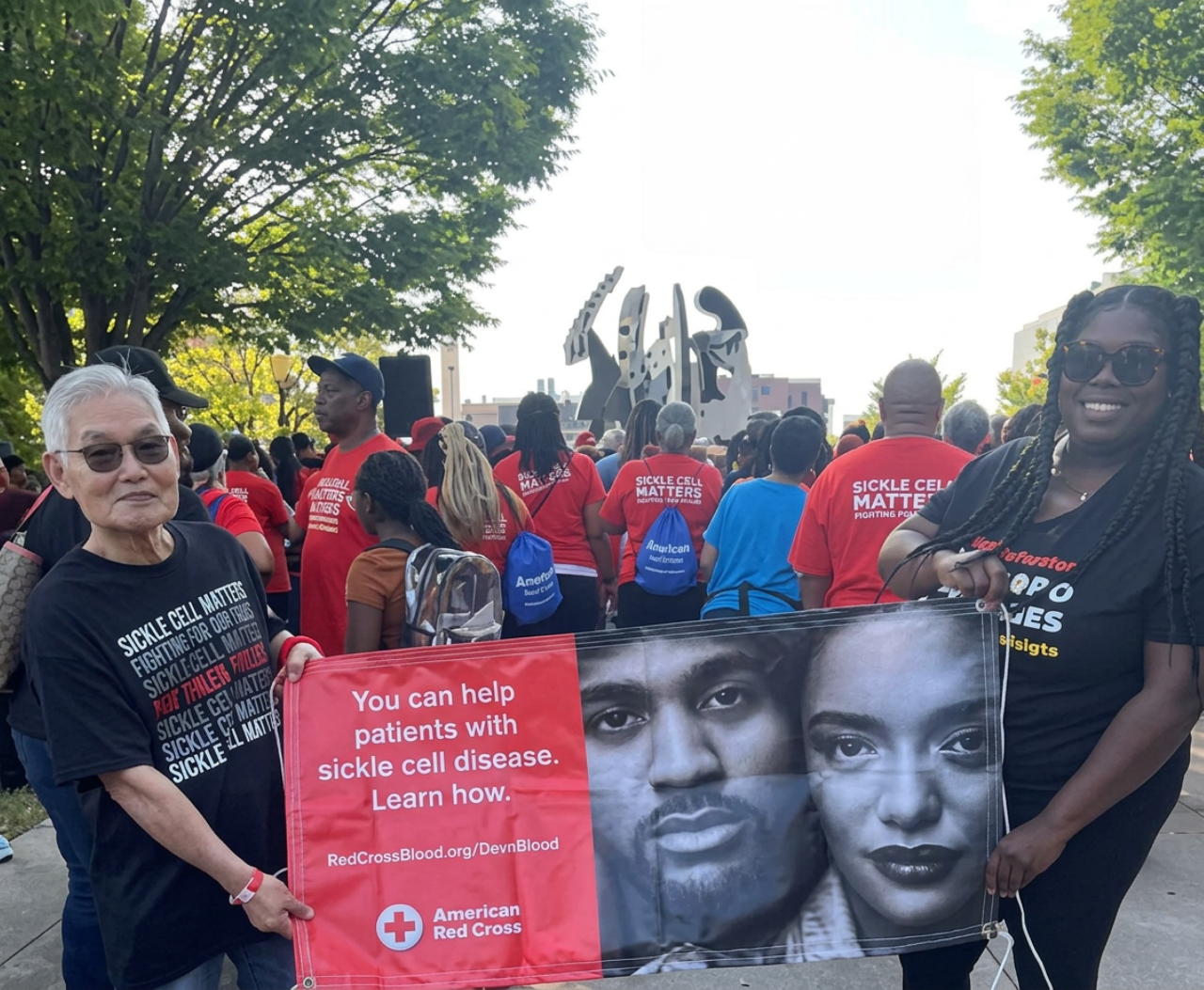
For Black women living with sickle cell disease or carrying sickle cell trait, the stakes climb even higher. Research links sickle cell disease to elevated rates of severe maternal morbidity, including higher rates of stillbirth, infection and hemorrhage. When a mother is already facing a high-risk pregnancy and the system around her is slow to listen, there is very little room for missed signs or delayed care.
"The responsibility should not fall solely on providers who are only individuals themselves," Dr. Rainford says, "but on the bigger systems so that more is in place to support the patients and the providers who care for them."
Blood donors and the mission of the American Red Cross play a critical role in that bigger system. A single hemorrhage event can require dozens of units of blood. In an emergency, hospitals depend on type O blood, which can be given to almost any patient. Notably, 57% of Hispanics and 51% of African Americans have type O blood — making these communities especially critical to ensuring lifesaving blood is available when mothers need it most.
A Call to Stand with Mothers
Mothers are resilient, powerful and deserving of a healthcare system that honors their humanity. While resilience and dignity do not ensure survival, real progress demands systemic change.
"Progress would look like maternal mortality decreasing in this country for women regardless of race and ethnicity and the disparity gap narrowing," Dr. Rainford says. "Pregnancy is a vulnerable time. I don't think all the advocacy work should fall on the pregnant woman herself. As a community, we should support them."
Her guidance to Black women is equally direct: find a supportive practice before becoming pregnant, bring someone trusted to appointments, ask questions, stay informed about your medical care and release the weight of carrying it alone.
This April, as Black Maternal Health Week marks a decade of advocacy, the Red Cross honors the mothers, clinicians and advocates still fighting, and reminds eligible donors that the simplest act of solidarity for mothers in crisis may be the most lifesaving: giving blood.
Be Part of a Lifesaving Tribe
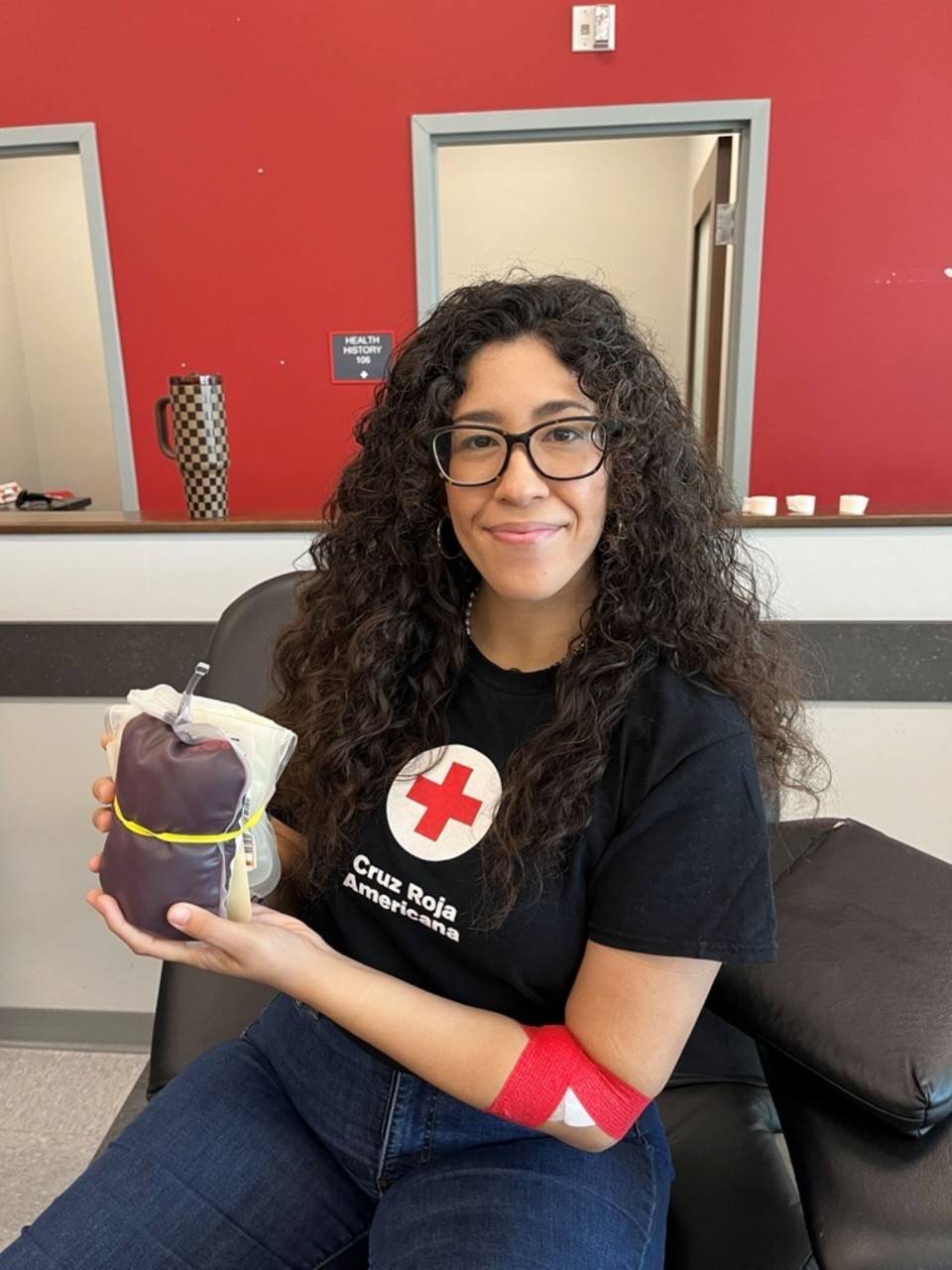
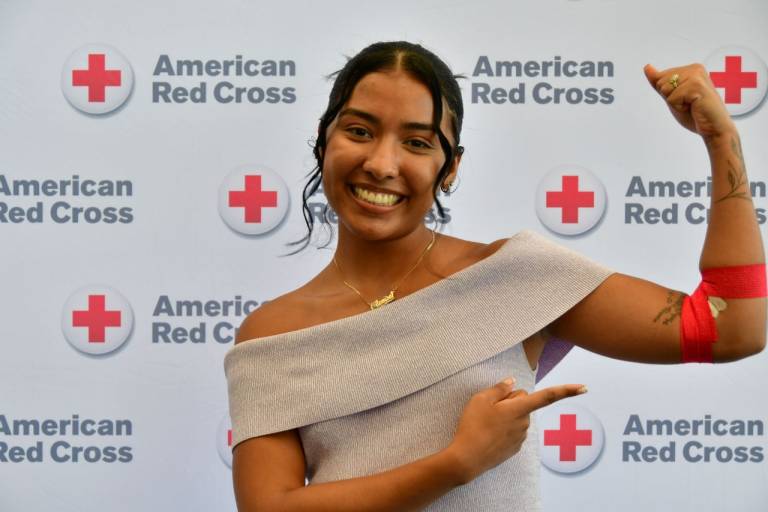
During National Minority Health Month and Black Maternal Health Week, April 11–17, roll up a sleeve in honor of mothers who may need it most. Use the Red Cross Blood Donor App, visit RedCrossBlood.org or call 1-800-RED CROSS (1-800-733-2767) to schedule an appointment to give blood, platelets or plasma.
In thanks, presenting donors who roll up a sleeve March 30–April 12, 2026, will receive an exclusive Red Cross and Life is Good T-shirt, while supplies last. Those who come to give April 13–30, 2026, will receive a $15 e-gift card to a merchant of choice. See RedCrossBlood.org/Hope for details.
Dr. Monique Rainford is an OB-GYN, assistant professor at Yale School of Medicine, CEO and co-founder of Enrich Health, and author of Pregnant While Black: Advancing Justice for Maternal Health in America.
About the American Red Cross:
The American Red Cross shelters, feeds and provides comfort to victims of disasters; supplies about 40% of the nation’s blood; teaches skills that save lives; distributes international humanitarian aid; and supports veterans, military members and their families. The Red Cross is a nonprofit organization that depends on volunteers and the generosity of the American public to deliver its mission. For more information, please visit redcross.org or CruzRojaAmericana.org, or follow us on social media.
Support all the urgent humanitarian needs of the American Red Cross.
Find a drive and schedule a blood donation appointment today.
Take a class and be ready to respond if an emergency strikes.