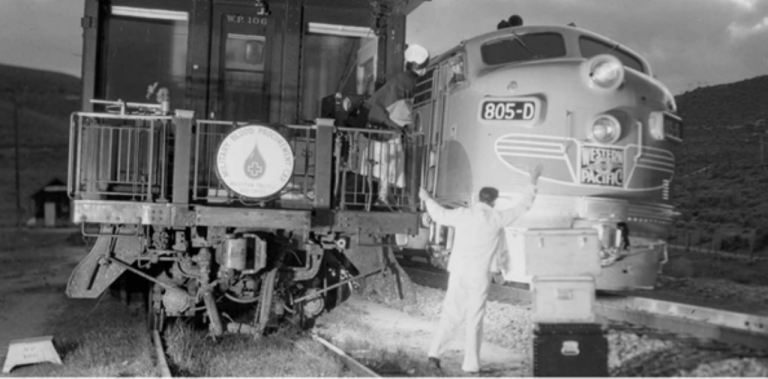
The Korean War began when North Korea invaded the south on June 25, 1950. This brought about an increased need for whole blood and plasma to treat shock in wounded soldiers and civilians. The American Red Cross became the agency to coordinate the new blood donor program, and thanks to the Western Pacific Railroad, a railcar became an important part of that program.
A LITTLE HISTORY In response to the invasion, the United Nations Security Council voted to come to the defense of South Korea. Leadership of the military forces fell to the United States.
The American Red Cross immediately mobilized a paid and volunteer work force under its Service to the Armed Forces and Veterans (SAF&V). Visit here to learn more about the role of the American Red Cross during the Korean War.
BLOOD PROGRAM NEEDED At the request of the Department of Defense, the American Red Cross also participated in a blood donor program beginning in 1950 to meet the military’s needs for whole blood and plasma.
This program sometimes fell short of meeting the military’s needs and President Harry Truman called on the Office of Defense Mobilization to provide “coordination of an integrated and effective program to meet the nation’s requirements for blood, blood derivatives and related substances.”
In response, the Department of Defense created a National Blood Program in early 1952 with the Red Cross as the coordinating agency for the collection of blood from the civilian population through its existing facilities and cooperating blood banks. The military also collected blood for the program from its members in its own facilities.
The National Program continued until the end of the war. All told, the Red Cross collected nearly five million pints of blood for military use. As a result of achieving an adequate blood supply – coupled with the introduction of helicopters to rapidly transport the wounded from the field and M.A.S.H units located just behind the lines, injured soldiers had a better chance of surviving.
BLOOD DRIVES BY RAIL Enter a unique railroad passenger car. As the war escalated, the Western Pacific Railroad considered ideas to support the troops overseas. The railroad proposed to work with the Red Cross to equip a passenger car as a rolling blood collection center.
Western Pacific outfitted the railcar to undertake the mission of gathering life-saving blood for those troops engaged in the conflict in Korea. While railcars had been used to support military medical needs before, their usage had been limited to transporting supplies or wounded troops who had been stabilized. The concept of a large travelling blood collection center that could cover longer distances, let alone one that was a railroad car, had never been tried.
At the time, blood collection centers were all in urban areas and the bloodmobiles attached to them stayed close by, going less than 75 miles from the blood centers. The Western Pacific proposed something on a much larger scale. The Blood Procurement Car would collect in small towns between California and Colorado, opening up the opportunity to become a blood donor to people far from the urban areas where blood centers were located.
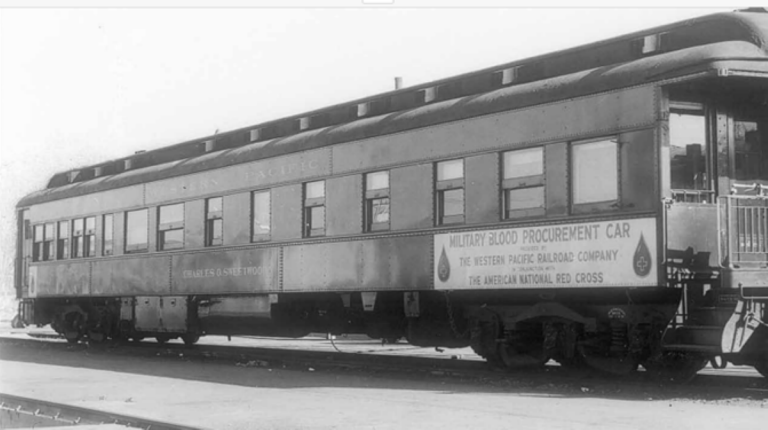
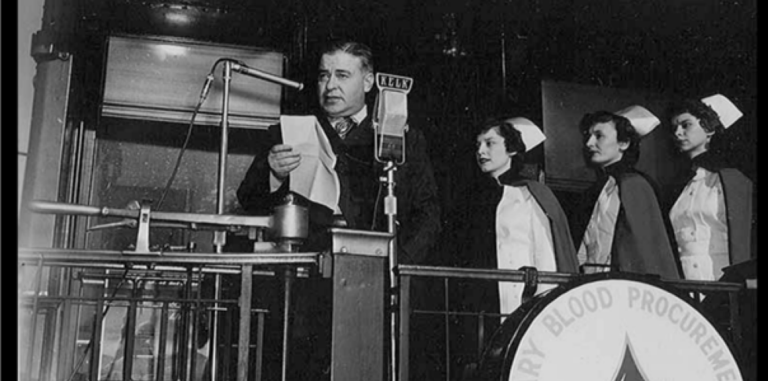
To create its blood procurement car, the Western Pacific chose Eastern Division Superintendent’s Car 106, a Pullman executive observation car. On January 10, 1951, Western Pacific presented the newly christened “Charles O. Sweetwood” to the American Red Cross.
THE CHARLES O. SWEETWOOD The car was named for a former Western Pacific carman and young Army medic. Sgt. Charles O. Sweetwood joined the Army in 1947 at the age of 18. His time was up in December 1949 and he went home to Elko, Nevada, and got married. In the spring of 1950, he reenlisted and went to Korea as a field medic, treating wounded soldiers in the field.
On September 8, 1950, just after his 21st birthday, Charles Sweetwood was killed in action while helping wounded comrades under fire. He was the first resident of the state of Nevada, and the first member of the Western Pacific Railroad family to be killed in Korea. The Red Cross car was named in his honor.
HOW THE RAILCAR WORKED Donations were handled in one of four bedrooms set aside for collecting blood. A fifth bedroom was set up as an office and exam room. Donors waited in the observation lounge at the rear of the car. After donating blood, donors rested in the Pullman beds, then they were taken to the car’s dining room for post-donation orange juice and sugar cookies. Everyone also received a donor pin.
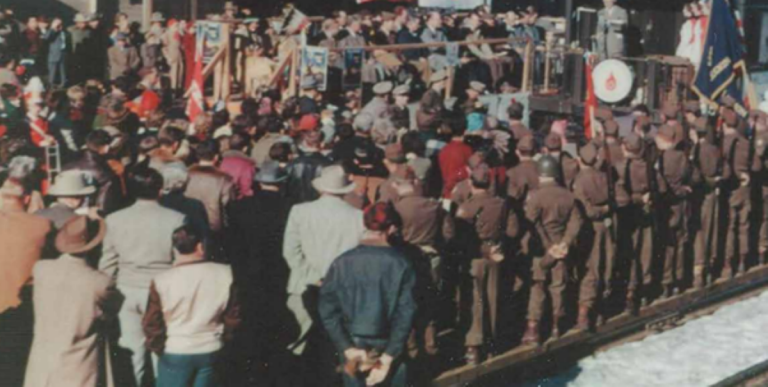
Blood collected on the car was transported for processing to the Cutter Laboratory in Richmond, California via the Western Pacific’s flagship passenger train, the California Zephyr. The Zephyr would rendezvous with the “Sweetwood” and the blood was stored in the freezers of the Zephyr’s dining and lounge cars. Blood collected on the car was sped to the lab via the California Zephyr, then processed to be sent overseas. The work done using this car is considered to have helped save the lives of thousands of soldiers.
More than 25,000 blood donations were collected aboard The Sweetwood during its nearly 3 years in operation. The railcar traveled more than 28,000 miles over 11 railroads in four states between California and Colorado.
About the American Red Cross:
The American Red Cross shelters, feeds and provides comfort to victims of disasters; supplies about 40% of the nation’s blood; teaches skills that save lives; distributes international humanitarian aid; and supports veterans, military members and their families. The Red Cross is a nonprofit organization that depends on volunteers and the generosity of the American public to deliver its mission. For more information, please visit redcross.org or CruzRojaAmericana.org, or follow us on social media.
Support all the urgent humanitarian needs of the American Red Cross.
Find a drive and schedule a blood donation appointment today.
Take a class and be ready to respond if an emergency strikes.