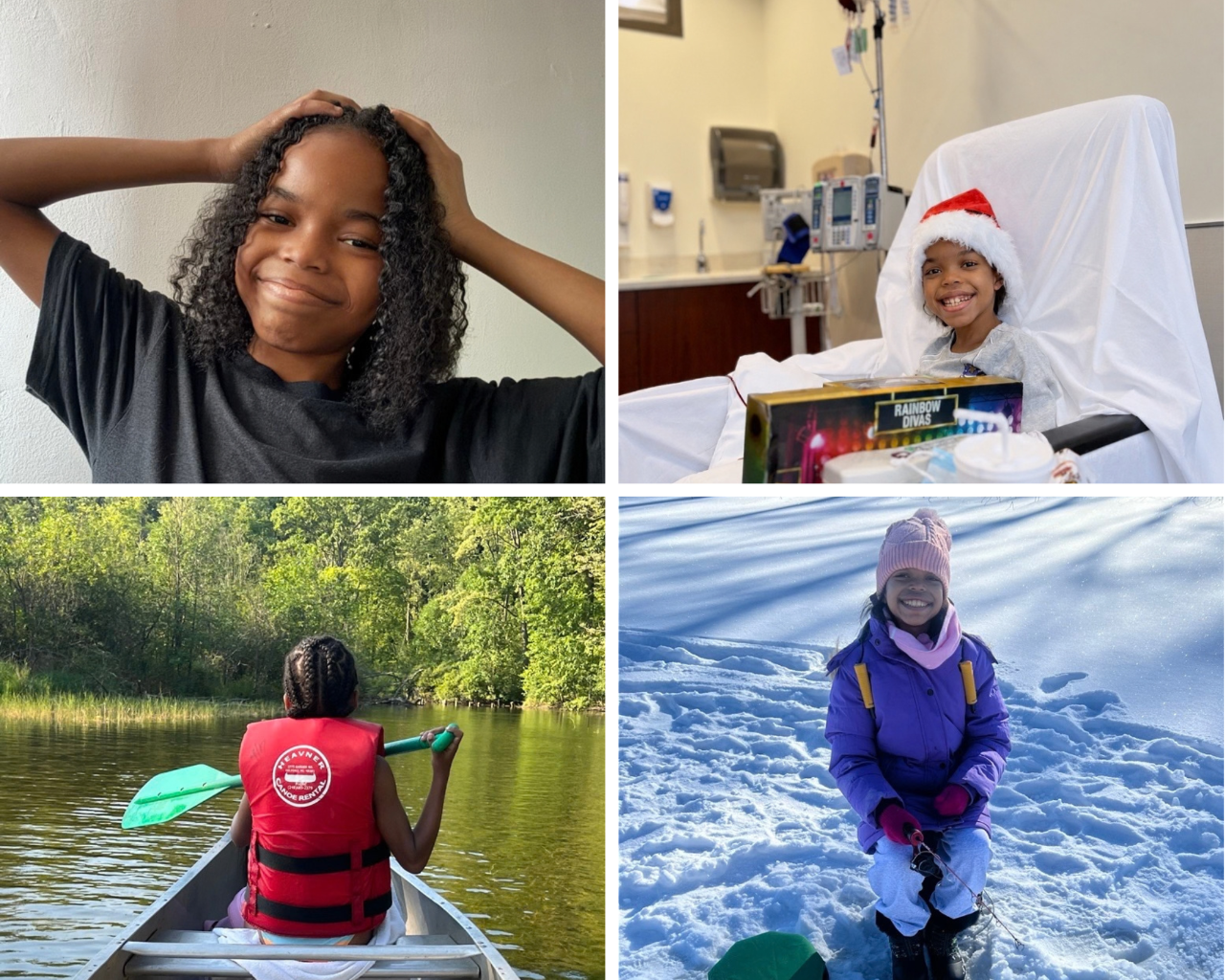
For 11-year-old Egypt of metro Detroit, navigating sixth grade means more than homework, friends and extracurricular activities. It also means living with sickle cell disease.
Sickle cell disease causes red blood cells to become hard and crescent-shaped instead of soft and round. These abnormal cells can block blood flow and reduce oxygen delivery throughout the body, leading to severe pain, anemia, tissue and organ damage, and even stroke.
"It's pretty hard because I wake up tired most days, and my eyes are always yellow from jaundice," Egypt said. "Sometimes it's hard to walk when I get a virus because my hemoglobin is too low. I have to drink lots of water to avoid becoming dehydrated, which can cause a pain crisis. When I go to my doctor's appointments, I'm always nervous they'll have to poke my arm instead of my finger because I don't want a blood transfusion."
Though Egypt would rather avoid the arm pokes that come with blood transfusions, she understands how important blood donation is for people living with sickle cell disease.
Now, she's turning that understanding into action. An active Girl Scout, Egypt is using her Bronze Award project, Egypt's Red Alert: Give Blood. Fight Sickle Cell., to educate her community about the importance of blood donation and the vital role it plays in helping patients with sickle cell disease.
In the U.S., more than 100,000 people have sickle cell disease, the nation's most common inherited blood disorder. Many require frequent blood transfusions throughout their lives, with some patients needing as many as 100 units of blood each year.
Egypt's mother, Jaren Roberts Brown, learned as a teenager that she carried the sickle cell trait, knowledge she says is critical for others to have as well.
"My mother told me that if I ever had a child with someone else who had the trait, there was a possibility our child could have the disease," Brown said.
Sickle cell trait is inherited and means a person has inherited a sickle cell gene from at least one parent but does not have sickle cell disease. About 1 in 13 Black or African American babies in the U.S. is born with the trait, according to the Centers for Disease Control and Prevention.
However, many people are unaware they carry the trait because sickle cell trait screening was not routinely provided to newborns until recent decades.
The American Red Cross has provided more than 396,600 sickle cell trait screenings to blood donors who self-identified as Black, African American or multiracial. According to a recent donor survey, more than 47% of first-time donors who screened positive for sickle cell trait were unaware of their trait status.
When Egypt was born, she was not screened for sickle cell disease. A short time later, Brown noticed a yellowish tint in her daughter's eyes. Concerned, she took Egypt to her pediatrician, who immediately advised her to seek further evaluation.
"In the emergency room, doctors kept coming in and asking all these questions. Finally, they got to the question, 'Do either of you have sickle cell trait?'" Brown said.
"I said, 'Yes, I have the trait,' and I asked her dad, 'Do you?'" Brown said. "He said, 'I don't know.'"
They soon learned the trait ran in his family as well.
"At that moment, my heart broke because I already knew my newborn daughter had this disease and that we would have a long road ahead of us," Brown said.
Since Egypt's diagnosis, Brown has been searching for a cure. Next summer, Egypt will receive a haploidentical, or half-matched, bone marrow transplant.
For people living with sickle cell disease, a bone marrow or stem cell transplant can offer a cure. Patients often need blood transfusions before, during and after the procedure until their bone marrow recovers.
"It's important to donate blood because you never know if it could save someone's life or help someone keep going," Egypt said. "I need blood transfusions to save my life, and I'm grateful to every donor who has helped me in my fight against sickle cell disease."
Blood donors play a critical role in helping patients with sickle cell disease manage their condition. Schedule a blood donation appointment by visiting RedCrossBlood.org, using the Blood Donor App or calling 1-800-RED CROSS.
By Sydney Henry, regional communications manager.
Support all the urgent humanitarian needs of the American Red Cross.
Find a drive and schedule a blood donation appointment today.
Your time and talent can make a real difference in people’s lives. Discover the role that's right for you and join us today!