By Red Cross volunteer and board chairman Darrell Fuller
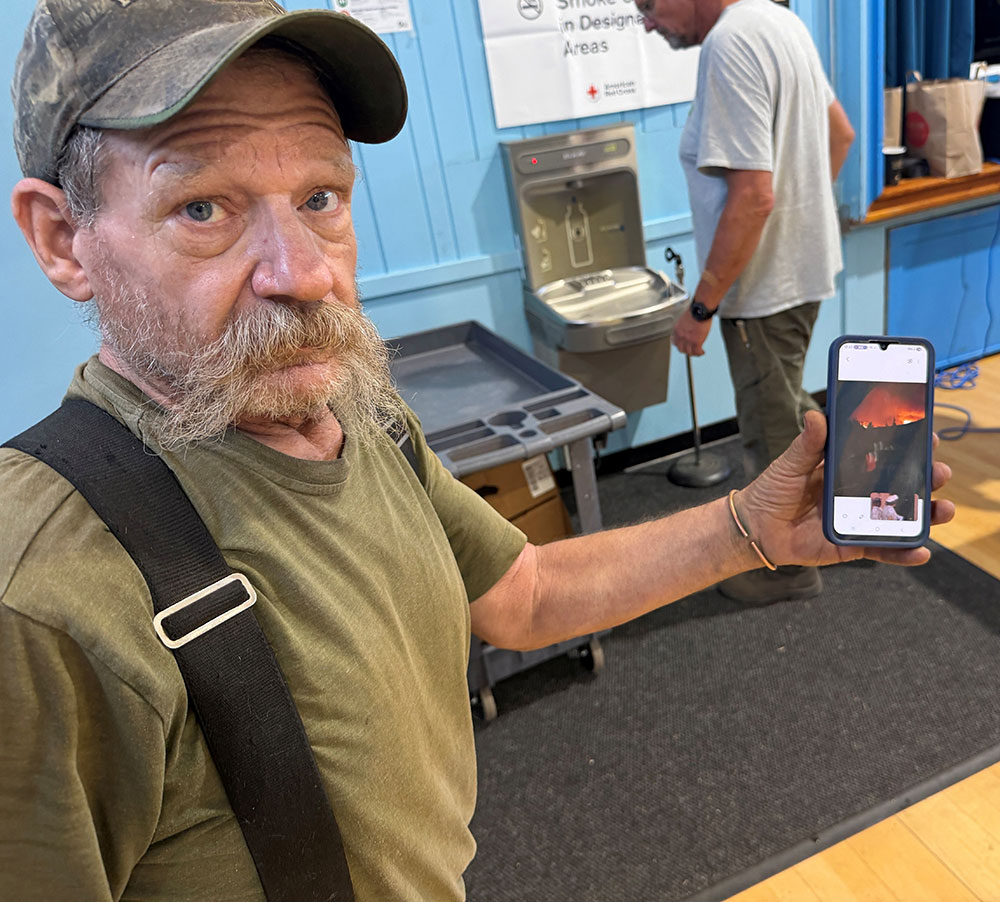
Tim Webb and his wife, Deborah, have lived in rural Klamath County for 18 years. They’ve never had an evacuation notice. Until now.
“We don’t have good cell service,” Tim noted. “We’re pretty remote. A sheriff’s deputy came by to tell us we were under a level two (get ready) evacuation. The deputy was also getting counts of how many properties were occupied, and by how many people.”
“In the middle of the next night it was a firefighter banging on our door,” he said. You could hear the tension in his voice as he relived the story he was telling. “They said we need to get out. The sky was orange. It was smoky. You don’t argue. You leave.”
He flipped through the photos on his phone, showing a picture of the orange glow as they were driving away.
The Webbs had a camper parked on a friend’s property, so they didn’t stay overnight at the Red Cross shelter in Chiloquin, but they did visit the shelter for updated information, supplies, and on this day, they grabbed lunch, just as it was arriving. People impacted by disasters can receive Red Cross services even if they don’t stay in a Red Cross shelter.
“The Red Cross is amazing,” he gushed. “You’re just always there. Everywhere. It’s amazing.”
He shared that he grew up in a Red Cross family. His parents were Disaster Relief Volunteers when he was growing up. “Mom would leave for a couple of weeks. Or Dad would leave for a couple of weeks. It was just normal at home. But I’ve never seen it from the other side.”
If you need services from the Red Cross, or want to learn more about becoming a volunteer, call 1-800-RED-CROSS or go to RedCross.org. Training to be a Disaster Relief Volunteer is free.
Support all the urgent humanitarian needs of the American Red Cross.
Find a drive and schedule a blood donation appointment today.
Your time and talent can make a real difference in people’s lives. Discover the role that's right for you and join us today!