Story told by Acacia Cameron, Red Cross Volunteer
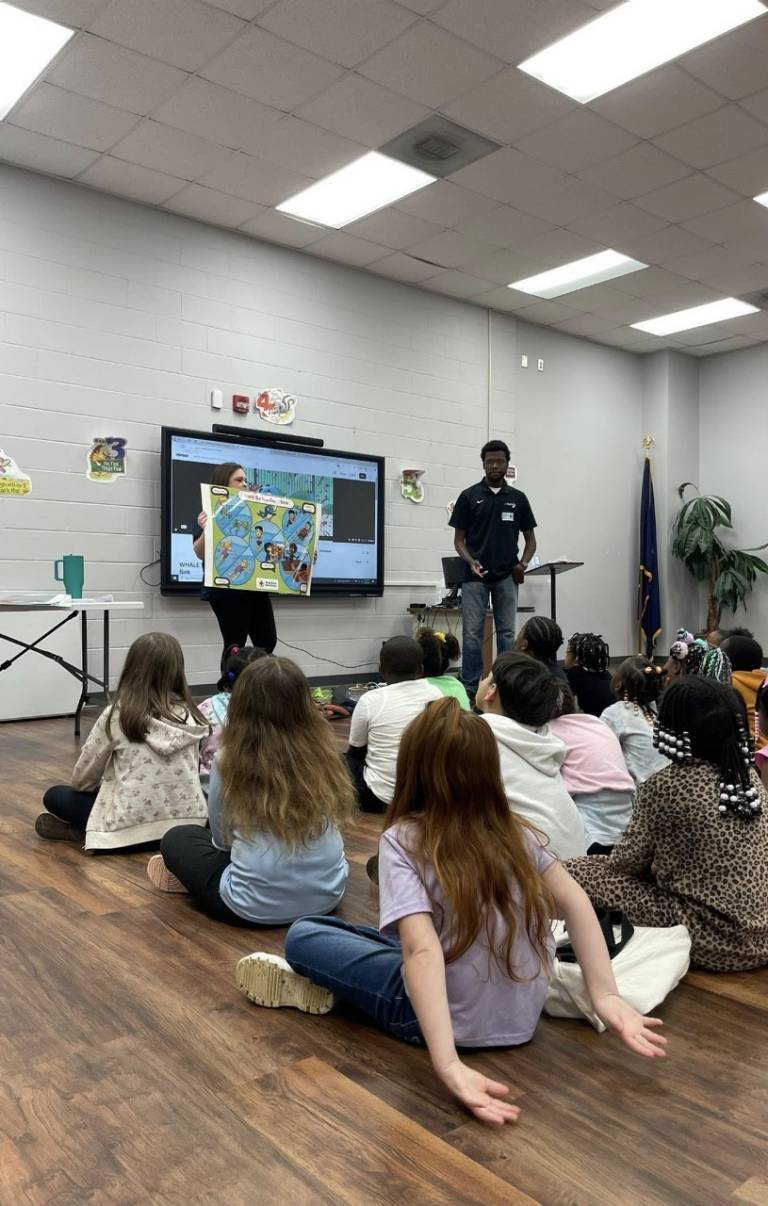
In Sumter, South Carolina, water safety education is happening in an unexpected place: the classroom floor. For the City of Sumter’s Aquatics Director, Grayce Howard, it’s a reason behind this.
“We practice floating on the ground—we know it’s silly, but we make it work,” Grayce says. “Arms behind head, toes to the sky. The kids are quiet and calm while we do this. They really enjoy it.”
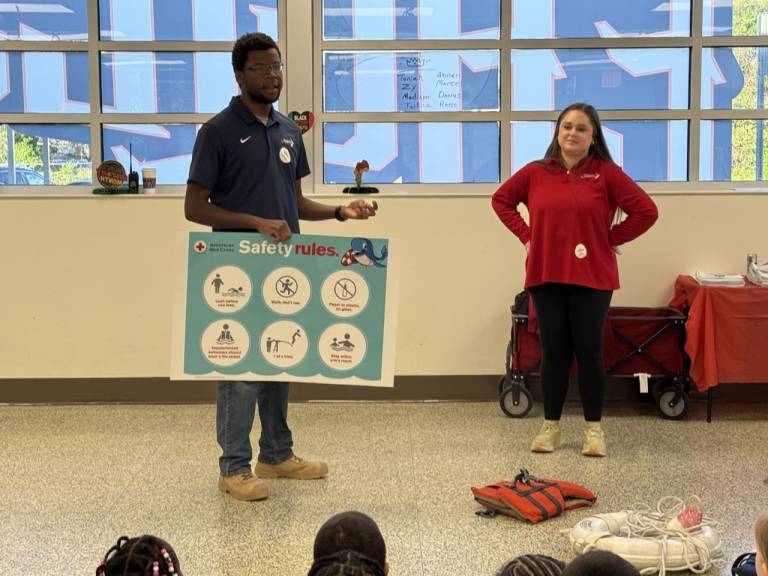
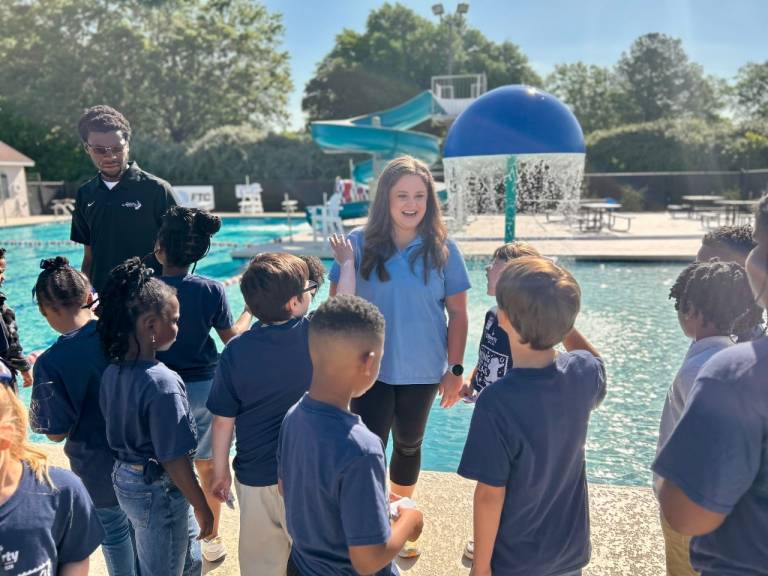
Through the American Red Cross Longfellow’s WHALE Tales program, water habits are learned early. Grayce and her colleague Brian are bringing lifesaving skills directly to elementary schools, many of which serve students who may never have access to formal swim lessons.
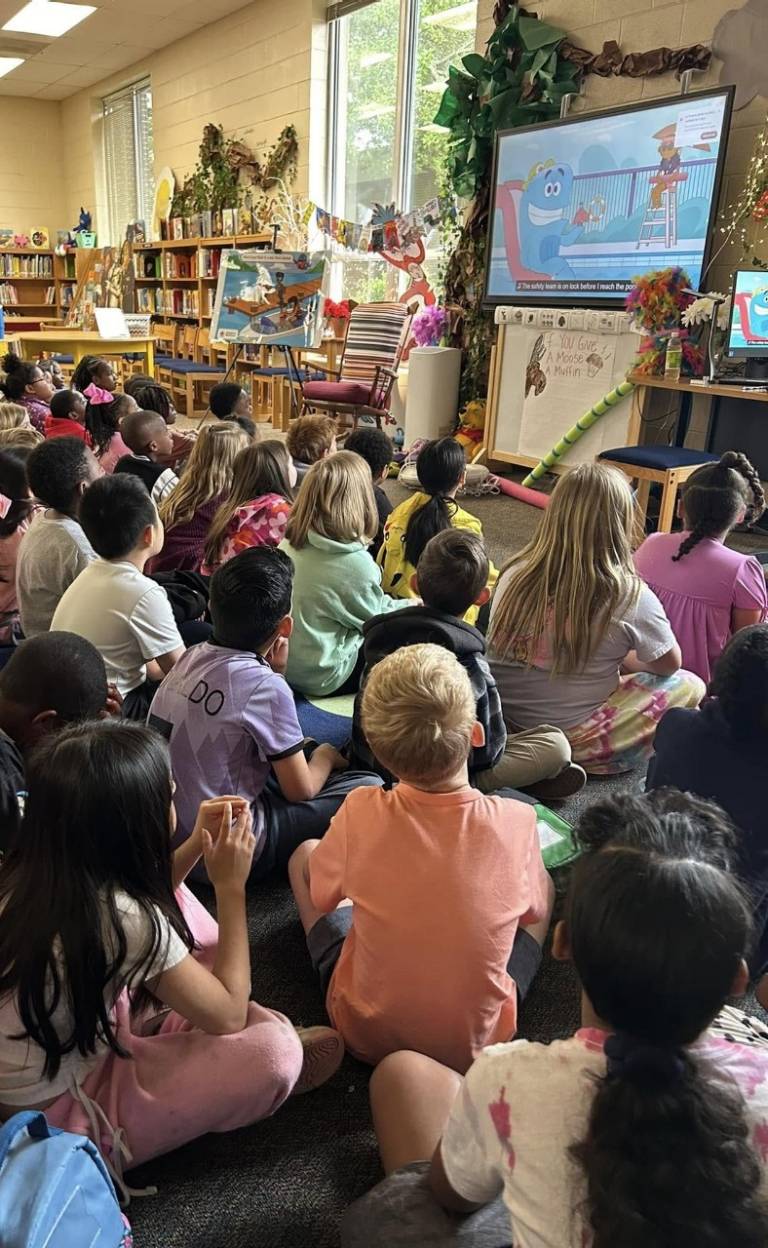
Their approach is simple, engaging, and memorable. Using posters, videos, life jackets, and hands-on activities, they teach key safety messages like “don’t just hack it, wear a jacket,” and “reach or throw, don’t go.” One favorite among students is “sing so you don’t sink,” a playful way to reinforce breathing and calmness in the water.
“The two biggest things we teach are stay calm and float belly up,” Grayce explains.
The program currently reaches 13 of the county’s 18 schools, with sessions capped at about 60 students to maintain engagement. Each 45-minute lesson ends with a quiz and rewards like stickers, reinforcing both knowledge and confidence. Teachers are also given activity packets and classroom materials to continue the conversation long after the presentation ends, and the impact is already visible.
“This is the first year that kids recognize me and come up to repeat what they learned,” Grayce shares. “They’ll say things like, my life jacket has to be Coast Guard-approved, or I went home and taught my siblings, that means everything.”
Grayce has been teaching in this specific program since 2023 and is Red Cross trained. She has spent a decade as a lifeguard and now trains lifeguards, lifeguard instructors, and even military personnel in aquatic safety. She says the mission is deeply personal.
“It’s crucial for us to be teaching these skills to students who may never have swim lessons," said Grayce. "To create change like this, there are no words to express what that means to me.”
The program continues to expand rapidly. In 2025 alone, Grayce and her team have trained nearly 3,000 students, more than doubling participation annually. They’ve also launched a scholarship initiative to provide free swim lessons for low to moderate-income families and are introducing hands-free CPR training for older elementary students.
“We were trying to figure out how to expand beyond kindergarten through second grade and keep it age-appropriate,” Grayce says. “So, we landed on CPR.” They will be teaching CPR to 4th and 5th graders at a local charter school.
For Grayce and Brian, the work is about more than numbers.
“This is nothing but a privilege,” she says. “It’s all about the students; this is something that will stick with me forever.”
American Red Cross Water Safety Reminders
Prevent unsupervised access to water and always provide constant, active adult supervision.
Teach children to stay calm and float—a critical survival skill.
In an emergency, remember: “Reach or throw, don’t go.” Entering the water can put you at risk.
Ensure every family member is water competent—this includes swimming skills, water safety knowledge and the ability to help others.
Consider taking Red Cross swim, first aid and CPR/AED courses to be prepared for emergencies.
Download the free Red Cross Swim app and explore the Water Safety for Parents and Caregivers online course for additional support at home.
For more information, visit redcross.org/WaterSafety.
Support all the urgent humanitarian needs of the American Red Cross.
Find a drive and schedule a blood donation appointment today.
Your time and talent can make a real difference in people’s lives. Discover the role that's right for you and join us today!