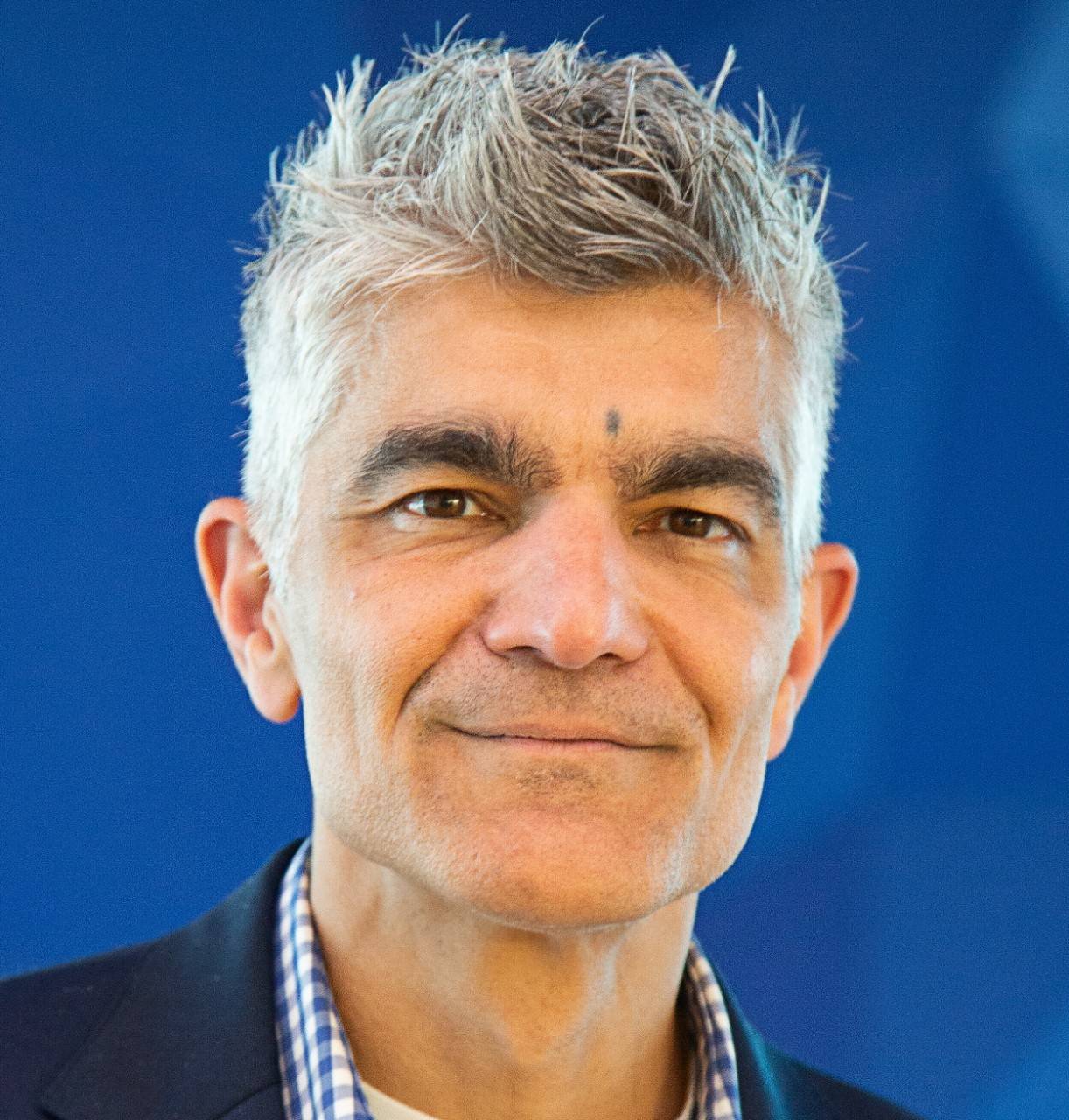
Dr. Raj Pandya, Arizona State University professor and American Red Cross Scientific Advisory Council member, says extreme heat is one of the country’s most urgent and underestimated threats.
By Raj Pandya, American Red Cross Scientific Advisory Council Member
I’ve spent much of my career working at the intersection of science, education and community - trying to understand not just how our world is changing, but how people can shape those changes in ways that lead to more sustainable futures.
Right now, one of the most urgent and underestimated changes we’re facing is extreme heat.
It doesn’t really matter where you live in the United States anymore. Extreme heat is happening in new places and heat events are happening earlier in the spring and later in the fall. Heat events are getting more frequent, lasting longer, and the temperatures during heat events are going up. Extreme heat is deadly and kills more people than any other weather event in the U.S.
And yet, extreme heat often doesn’t feel like an emergency in the way other disasters do. It doesn’t have the suddenness of a hurricane or the drama of a wildfire. It builds gradually. It stretches over days. That slow onset can make it easier to underestimate -- and therefore more dangerous.
But what concerns me just as much as the rising temperatures is how unevenly the impacts are felt.
Extreme heat reveals and amplifies existing inequities. Older adults, infants, people without access to reliable electricity or air conditioning, and those who are socially isolated face greater risks. Certain medications can make people more vulnerable. Even something as simple as not having a safe place to cool down can become life-threatening.
In cities, the “heat island effect” makes things worse. Concrete and asphalt absorb heat during the day and release it slowly at night, meaning some neighborhoods can be significantly hotter than others. Our bodies rely on cooler nighttime temperatures to recover from daytime heat. When that relief disappears, the risk of serious health impacts rises significantly.
The heat-island effect is worse in the neighborhoods without trees, parks, and green-spaces – usually areas that suffer from historic underinvestment. As an example, in the city I live in, this can mean a temperature difference of as much as 13°F.
The same large-scale climate conditions that are driving higher temperatures are also intensifying wildfires and hurricanes. We’re increasingly seeing these events overlap -- power outages followed by heat waves, or extreme heat compounding the dangers of wildfire smoke. These combinations create risks that are only worsening.
So what do we do?
One of the most powerful lessons we’ve learned comes not from technology, but from people.
After several devastating heat waves in recent years, researchers found that neighborhoods with stronger social connections fared better even when other factors were similar. When people knew their neighbors, checked in on one another and shared resources, outcomes improved.
That finding has stayed with me.
We often think of disaster preparedness in terms of infrastructure, systems and forecasts. Those are all important, but preparedness is also about relationships. It’s about whether someone will notice if you’re struggling. Whether you have someone to call when you need help. Whether your community sees you -- and you see them.
At its core, this is about participation.
Throughout my work, I’ve focused on how science can be more participatory -- how communities can be active partners in understanding and responding to the challenges we face. Extreme heat is a clear example of why that matters. The solutions aren’t just technical; they’re social. They depend on local knowledge, shared responsibility and collective action.
Everyone deserves access to the information, resources and support they need to stay safe and to help shape the future of their community. So as extreme heat becomes more common, I come back to a few simple practices -- both for myself and for others.
Take it seriously -- stay hydrated. Stay cool. Stay connected.
And perhaps most importantly: check on each other.
Because in the face of heat waves, repetitive natural disasters and larger areas of impact, one of the most powerful things we can build is not just resilience -- but connection.
That connection can not only help us survive during an event, it gives us the power work together to change the places we live, work and play to make heat waves less of a problem. We can create green spaces, change roofing materials, and replace asphalt and concrete with materials that trap less heat. We can slow down the emission of heat-trapping gasses from burning fossil fuels, to keep the heat from getting even worse. We can work together to advance sustainability and resilience for all.
Please take a few minutes today to learn about the dangers of extreme heat, how to stay safe when it’s happening and make sure you have a plan to stay cool this summer by going to redcross.org/HeatCheck. And get to know your neighbors – connection makes us safer and stronger.
About the American Red Cross:
The American Red Cross shelters, feeds and provides comfort to victims of disasters; supplies about 40% of the nation’s blood; teaches skills that save lives; distributes international humanitarian aid; and supports veterans, military members and their families. The Red Cross is a nonprofit organization that depends on volunteers and the generosity of the American public to deliver its mission. For more information, please visit redcross.org or CruzRojaAmericana.org, or follow us on social media.
Support all the urgent humanitarian needs of the American Red Cross.
Find a drive and schedule a blood donation appointment today.
Take a class and be ready to respond if an emergency strikes.