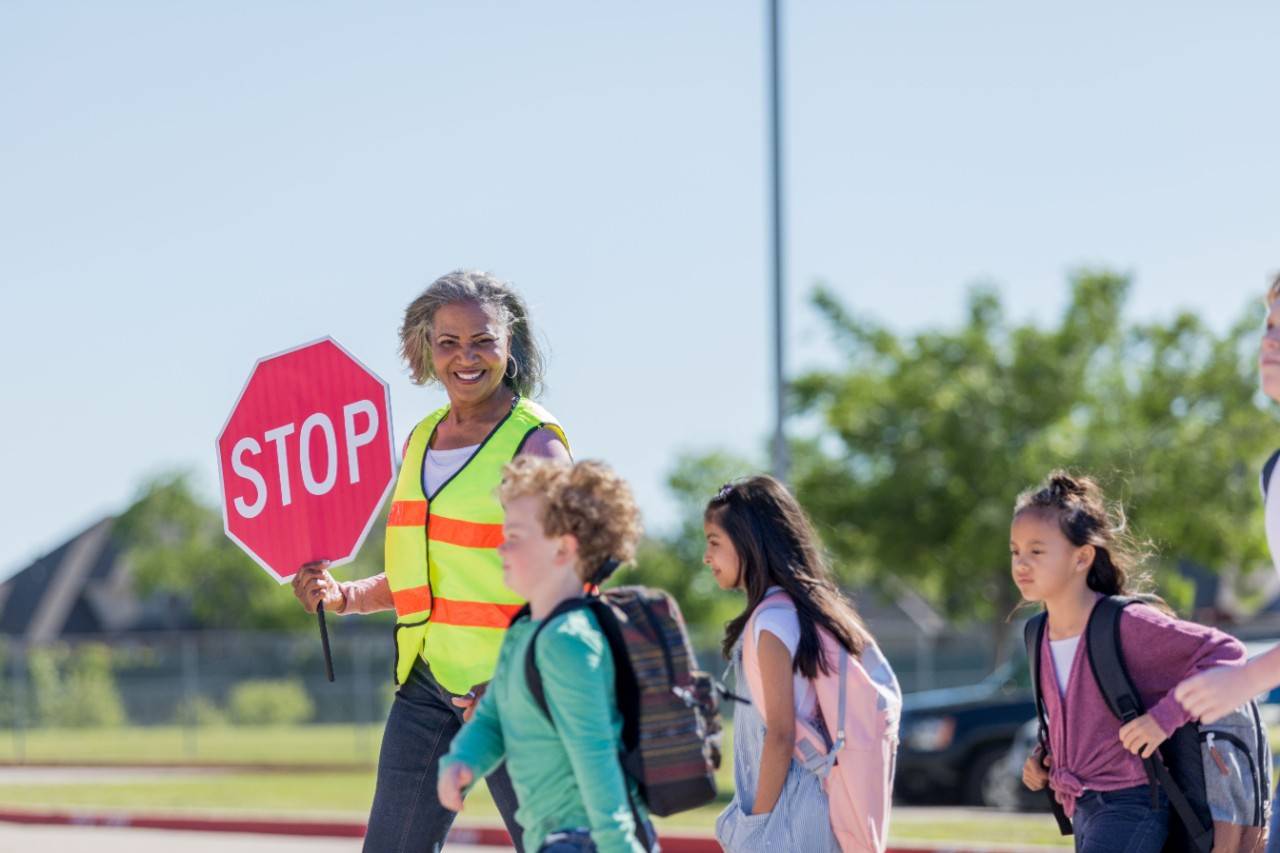
Children walking to school should only cross the street at an intersection, and, if possible, use a route along which the school has placed crossing guards.
Students and teachers alike can benefit from taking Red Cross classes or downloading our free apps.
The countdown to the first day of school has begun and the American Red Cross offers tips to help ensure kids have a safe start to their school year. In addition, there are also Red Cross apps and classes that provide additional safety information for teachers and students alike, and safety reminders for drivers to slow down and obey the school bus rules.
BACK TO SCHOOL SAFETY STEPS
1. Teach Young Children Important Personal Information
Make sure younger students know their phone number, home address, how to contact their parents at work, another trusted adult they can call, and how to dial 911 in an emergency.
2. Remind Kids Not to Talk to Strangers
Teach children never to accept rides, gifts, or invitations from someone they don’t know.
3. Walk on the Sidewalk Whenever Possible
If there’s no sidewalk available, children should walk facing traffic so they can see approaching vehicles.
4. Walking to School? Look Both Ways Before Crossing
Kids should stop at every street corner and look left, right, and left again before crossing. Encourage students to cross only at corners, obey crossing signals, and stay within marked crosswalks. Children should avoid running into traffic or crossing between parked cars where drivers may not see them.
5. Does Your Student Ride a Bus? Arrive at the Bus Stop Early
Students should get to the bus stop early and wait a safe distance from the curb. Teach kids to wait until the bus comes to a complete stop and only board when instructed by the driver or attendant. Children should stay where the driver can see them and never walk behind the bus.
6. Always Wear a Bike Helmet
If your student bikes to school, a properly fitted helmet is one of the best ways to prevent serious injuries. Kids should ride on the right side of the road and follow the same direction as traffic.
7. Buckle Up Every Time
Whether driving across town or just to school, everyone in the vehicle should wear a seat belt.
8. Use the Right Car Seat or Booster Seat
Younger children should stay in a car seat or booster seat until the seat belt fits correctly — usually when they are between ages 8–12 and taller than 4 feet 9 inches. Children under 13 should ride in the back seat.
9. Make Sure Teen Drivers Wear Seat Belts
Teen drivers should always buckle up before starting the car, no matter how short the trip.
10. Eliminate Distracted Driving
Remind teens to avoid texting, calling, eating, or drinking while driving to school.
APPS, CLASSES ENHANCE READINESS
Both students and teachers alike can benefit from taking different Red Cross classes or by downloading our free apps.
For instance, anyone with a cell phone can download our free Red Cross First Aid and Emergency apps to get access to first aid tips for common emergencies and alerts if bad weather is coming. You can find the apps in smartphone app stores by searching for the American Red Cross or going to redcross.org/apps.
Kids age 11 or more and people in childcare positions can take one of the Red Cross Babysitting and Child Care courses to not only learn unique babysitting skills, but also how to respond effectively in emergency situations. Whether someone prefers an online course or in-person training, these classes provide skills needed to care for kids of all ages.
The Red Cross Anaphylaxis and Epinephrine Auto-Injector Training is an online course that could be perfect for teachers and staff. They will learn to recognize severe allergic reactions and how to properly administer epinephrine.
DRIVERS, SLOW DOWN!
Drivers should slow down as children head back to school. Know that yellow flashing lights indicate a school bus is getting ready to stop ─ motorists should slow down and be prepared to stop. Red flashing lights and an extended stop sign indicate the bus is stopped and children are getting on or off.
Motorists must stop when they are behind a bus, meeting the bus or approaching an intersection where a bus is stopped. Motorists following or traveling alongside a school bus must also stop until the red lights have stopped flashing, the stop arm is withdrawn, and all children have reached safety. This includes two and four-lane highways. If physical barriers such as grassy medians, guide rails or concrete median barriers separate oncoming traffic from the bus, motorists in the opposing lanes may proceed without stopping. Do not proceed until all the children have reached a place of safety.
About the American Red Cross:
The American Red Cross shelters, feeds and provides comfort to victims of disasters; supplies about 40% of the nation’s blood; teaches skills that save lives; distributes international humanitarian aid; and supports veterans, military members and their families. The Red Cross is a nonprofit organization that depends on volunteers and the generosity of the American public to deliver its mission. For more information, please visit redcross.org or CruzRojaAmericana.org, or follow us on social media.
Support all the urgent humanitarian needs of the American Red Cross.
Find a drive and schedule a blood donation appointment today.
Take a class and be ready to respond if an emergency strikes.