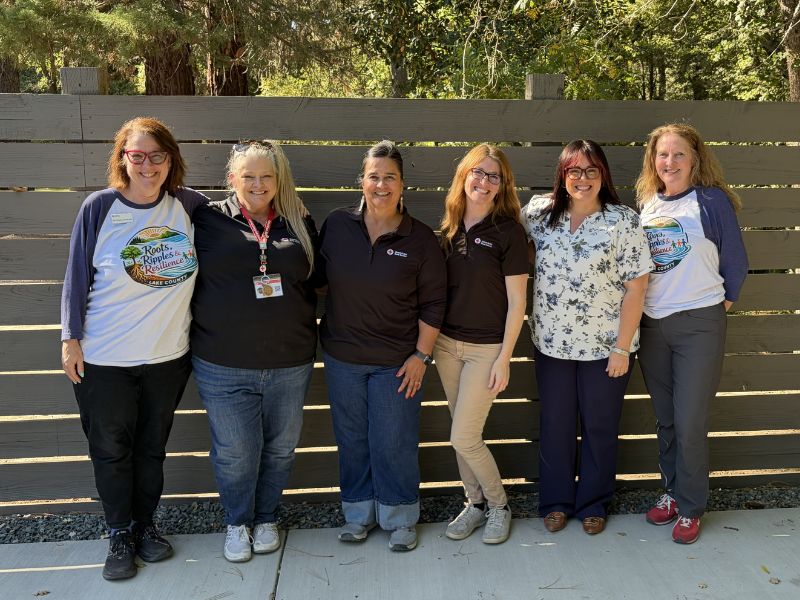
After a decade marked by wildfire, extreme heat, flooding and repeated evacuations, Lake County residents understand that resilience isn't built during a disaster. It's built beforehand through trust, partnerships and people willing to invest in their community.
That was the focus of the inaugural Roots, Ripples & Resilience Conference, a two-day event co-hosted by the American Red Cross Community Adaptation Program (CAP) and community partners to share practical solutions and strengthen the relationships that help communities prepare, recover and thrive.
At the heart of the conference was a simple idea: resilience is built by people.
"Resilience isn't theoretical to us," said the Rev. Shannon Kimbell-Auth, community disaster risk reduction coordinator for the American Red Cross. "Our survival as a community depends on it."
Not many communities understand the importance of preparedness and recovery better than Lake County. Since 2015, wildfires have burned more than 65% of the county’s land mass. Residents have also faced evacuations, extreme heat, flooding and severe storms. Those experiences have shaped a community where preparedness and recovery are everyday priorities.
The idea for the conference emerged after Lake County Community Adaptation Program team members attended Butte County's This Way to Resilience conference. Inspired by the event, organizers worked with local partners to create something tailored to Lake County's challenges and strengths.
What began as a one-day concept expanded into a two-day conference as partners recognized an opportunity to bring together a wider range of voices and expertise.
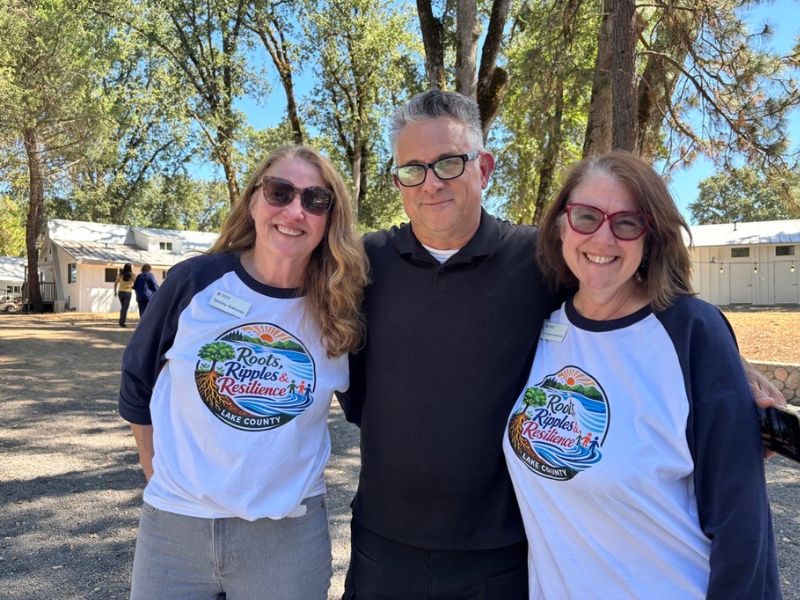
American Red Cross community disaster risk reduction coordinators Tammy Alakszay and Rev. Shannon Kimbell-Auth pictured with Daniel Homsey, an expert in the field of community disaster resilience.
Among the organizations helping lead that work is the Big Valley Band of Pomo Indians, which helped bring the Community Health Adaptation Resilience Mobilization, or CHARM, project to Lake County. Originally focused on harmful algal blooms, CHARM has since expanded its work to address extreme heat, public health and community resilience – which aligns closely with the Red Cross mission
As CHARM evolved, organizers found common ground with the Red Cross Community Adaptation Program. Both efforts recognized the importance of trusted local spaces where residents can gather, access information and connect with resources before, during and after emergencies, helping support a growing network of community resilience centers throughout Lake County.
Other partners brought different perspectives to the work.
North Coast Opportunities, a community action agency focused on reducing poverty and expanding opportunities, helped sponsor the conference and had the largest organizational presence among attendees. Its work reflects a reality many preparedness leaders understand: disasters often have the greatest impact on people already facing economic hardship.
The Halter Project highlighted the role pets and livestock play in emergency planning. For many families, decisions about evacuation and recovery are closely tied to the safety of their animals.
The conference also showcased the work of the Lake County Community Organizations Active in Disaster, or COAD, a collaborative network that brings together Tribal nations, nonprofits, faith organizations, businesses, volunteers and government agencies.
"The COAD isn't simply another organization at the disaster table," Rev. Kimbell-Auth said. "It's the table."
Those partnerships have already proven their value during emergencies.
Rev. Kimbell-Auth recalled the recent Lucas Fire, which happened just weeks before the event. Because local organizations had already been working together, they were better prepared and able to quickly coordinate support at a temporary evacuation point. "We weren't exchanging business cards in the middle of an emergency," she said. "We were calling trusted partners."
The experience underscored the value of establishing relations before disasters occur.
"We often say resilience is built at the speed of trust," she said.
Throughout the conference, attendees explored topics ranging from climate adaptation and Indigenous knowledge to public health, disaster preparedness and community organizing.
The conference title reflected those themes. Roots represented climate science and Indigenous knowledge. Ripples symbolized the relationships and social connections that strengthen communities. Resilience reflected the networks, partnerships and community infrastructure created when people work together.
A keynote presentation by Daniel Homsey highlighted neighborhood-based preparedness efforts in Sonoma County and offered lessons that could be adapted in Lake County.
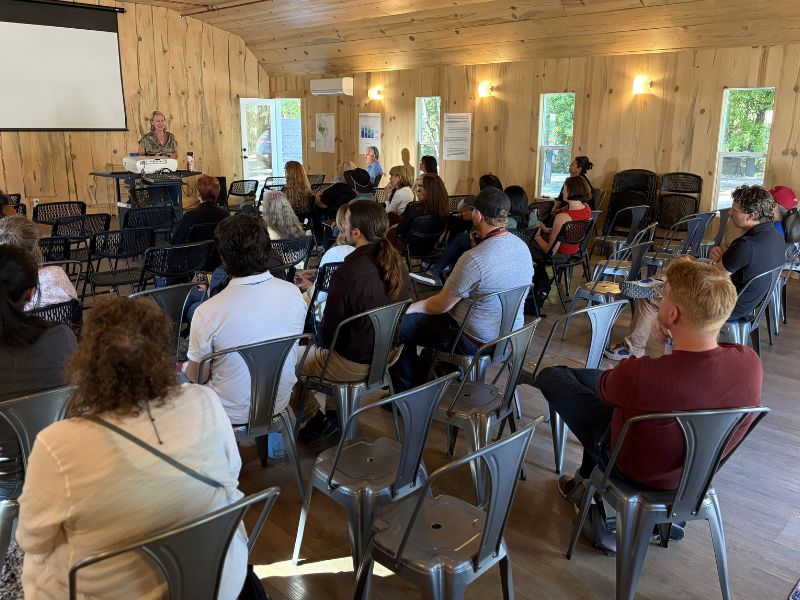
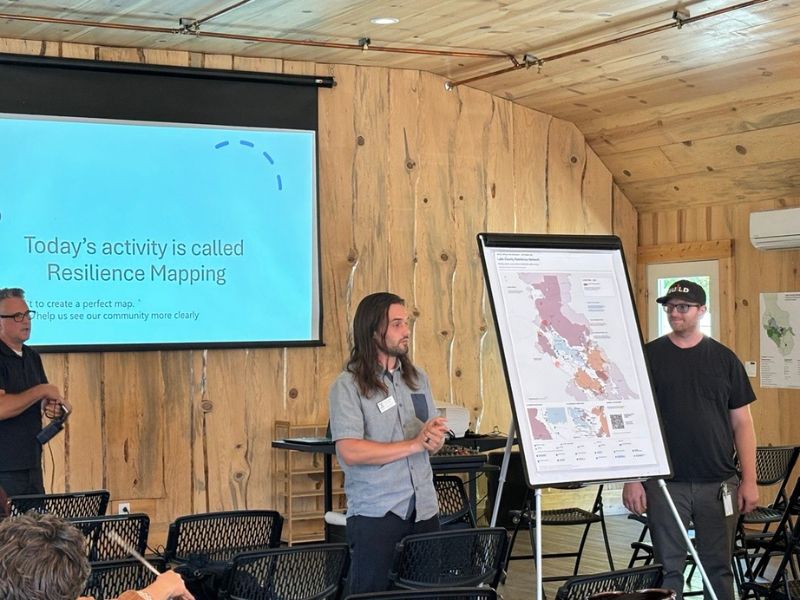
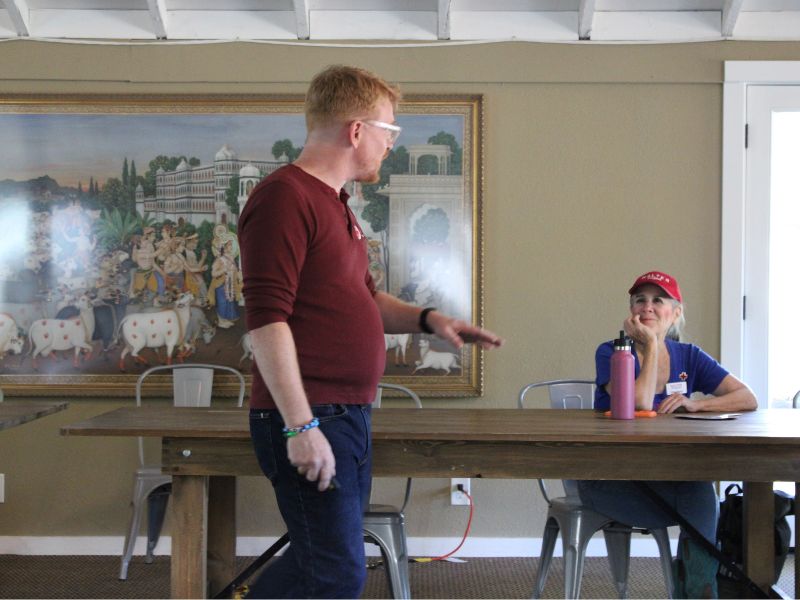
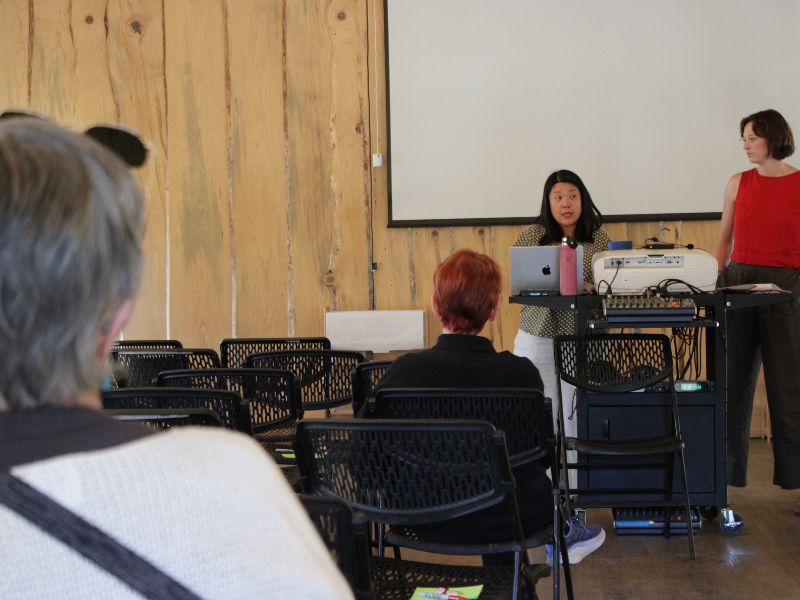
Participants also took part in a NeighborFest and Resilience Mapping workshop that encouraged residents to identify local assets, strengthen neighborhood connections and better understand available resources. The session featured a community fire map developed by North Coast Opportunities that includes resilience centers and other community assets.
For organizers, practical tools were only part of the conference's success. One of the conference's most meaningful moments came after the formal sessions ended.
During a casual bonfire gathering, organizers Rev. Kimbell-Auth and Tammy Alakszay presented CAP pins to speakers and partners in recognition of their contributions to Lake County.
The gesture quickly became a shared expression of gratitude among people who have spent years working together through disasters, recovery efforts and community initiatives.
"Resilience is often described in terms of plans, programs and preparedness," Rev. Kimbell-Auth said. "But at its heart, resilience is built through relationships."
For organizers, the moment captured the spirit of the conference.
As Lake County continues to face wildfire, extreme heat and other challenges, organizers and community leaders remain hopeful because the foundation for resilience is already in place.
Across the county, neighbors, Tribal leaders, nonprofits, public agencies and volunteers are building something stronger than any single program or project. They are building relationships.
Those relationships were the true takeaway from Roots, Ripples & Resilience, and organizers say they may be Lake County's most valuable resource when the next challenge arrives.
About the American Red Cross Community Adaptation Program
Launched in 2022, the Community Adaptation Program forges powerful partnerships with local nonprofits to expand access to health services, nutritious food, and safe housing in underserved, disaster-prone communities. Learn more about Gold Country’s program in Lake and Butte Counties.
Support all the urgent humanitarian needs of the American Red Cross.
Find a drive and schedule a blood donation appointment today.
Your time and talent can make a real difference in people’s lives. Discover the role that's right for you and join us today!