By Joe Gutierrez, American Red Cross volunteer
When American Red Cross volunteer Brenda Bridges deployed to Anchorage, Alaska, for three weeks this past October to help the people affected by Typhoon Halong, it was more than the typical Red Cross response of supplying shelter, food and relief to those affected by the disaster.
Indeed, the remnants of the typhoon devastated Alaska’s Yukon-Kuskokwim Delta, rendering entire coastal villages uninhabitable. Evacuees — many of them members of the Yup’ik tribe were airlifted to Anchorage, hundreds of miles from their ancestral homes and traditions.
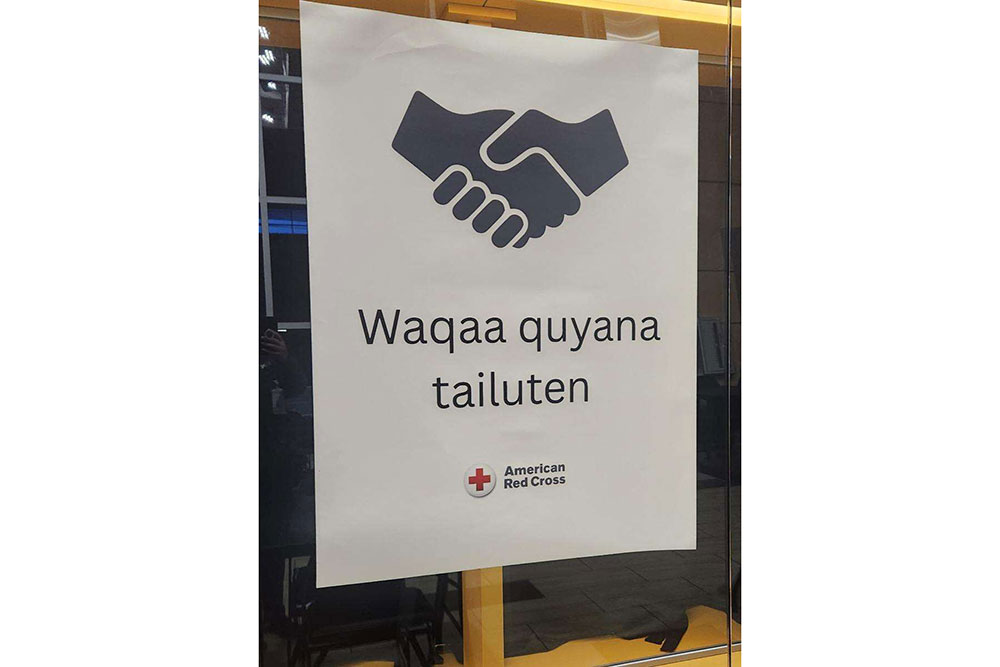
Recognizing the cultural trauma of this displacement, the Red Cross responded with more than cots and meals. Volunteers were trained in cultural sensitivity. Signage was printed in Yup’ik. Traditional foods like fish soup and seal meat were served. Community dances were held. Even the welcome baskets were thoughtfully curated — filled with reindeer salami, dried fruits and Pilot Bread, staples of Alaskan life.
Brenda, who has been a Red Cross volunteer for 10 years working out of the San Bernardino County chapter, was assigned as Assistant Director (AD) of Operations. When the Disaster Relief Operation (DRO) reached a higher level, she was asked to oversee the arrival of the first group of evacuees from the village of Kipnuk and to take over shelter operations at the Alaska Airlines Center as a Shelter Site Manager.
“We were tasked with providing a good hello and preparing to register approximately 296 residents of Kipnuk into the shelter,” Brenda said. “When the residents arrived, it was a little overwhelming, especially since these residents had traveled more than 500 miles in a military cargo plane from their remote village with very few belongings.”
She said one of the most fulfilling aspects of being a shelter manager was making connections with local organizations, tribal leaders, community volunteers, state and local governments, with the help of the various Red Cross response activities.
“Alaska’s communities were notably tight-knit, making trust an essential element for the successful operation of the shelter,” Brenda said.
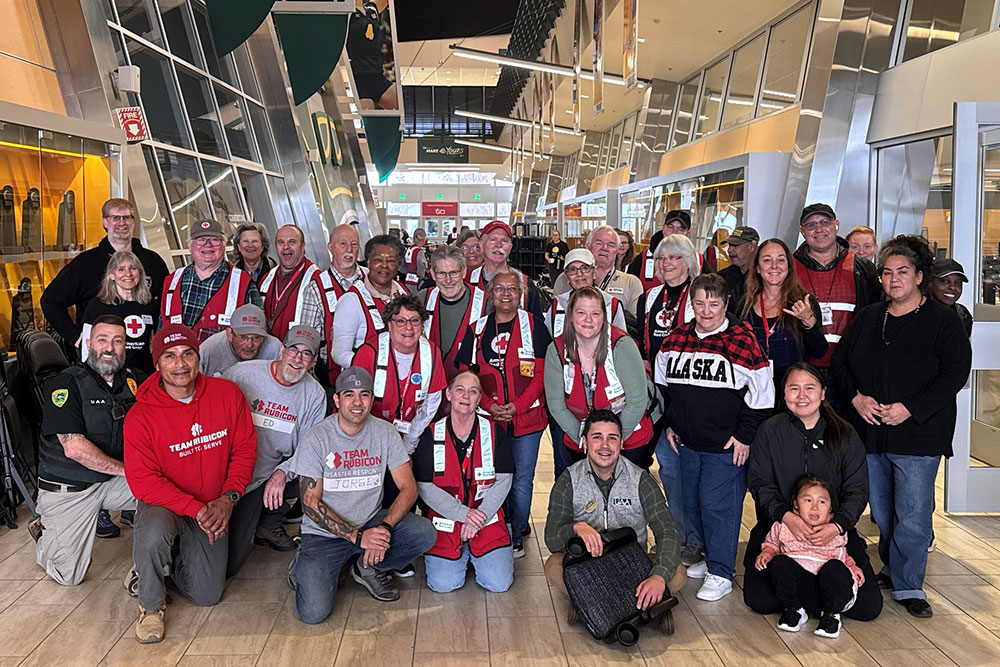
The Red Cross volunteers partnered with groups such as Southcentral Foundation, local law enforcement, nonprofit organizations, University of Alaska Anchorage staff, the State of Alaska (which provided a variety of services), ANTHC (Alaska Native Tribal Health Consortium), FEMA (Federal Emergency Management Agency), SBA (Small Business Administration), DMV (Department of Motor Vehicles), Team Rubicon, World Central Kitchen, and other tribal councils, she added.
“Through these collaborations, we could offer ‘Platinum Service’ to evacuees — delivering not just basic shelter and meals, but also medical care, mental health support, job search assistance, and housing solutions, each tailored to meet the unique needs of our clients,” said Brenda.
But the priority for the Red Cross staff was gaining the trust of the evacuees and making them feel safe. Many of the children at the shelter took a little time to warm up to the staff.
“There was one kid who just wanted to do his own thing. He kept to himself and we never really saw him smile,” said Brenda. “Until one day, he seemed to be a lot happier, and I noticed him talking to everyone. When he came to my desk, he told me his name was Walter and that it was his birthday. As he continued to walk down the aisle, he would tell everyone that it was his birthday, so Red Cross volunteers and all the partners there that day gathered around him and sang Happy Birthday.”
One of the vendors even provided a birthday cake and cupcakes.
“Needless to say, trust was strengthened even more among the kids, parents, and the tribal leaders that we would take the time out of our day to celebrate Walter's birthday,” Brenda said. “I believe he turned nine years old.”
Like many other Red Cross volunteers, Brenda’s involvement with the organization is extensive. She is currently involved with the Mass Care team, Disaster Action Team, Community Engagement Partners, and has participated in Sound the Alarm events. She also is trained to serve as AD of Operations, Mass Care Chief, Operations Management Generalist Manager, and Shelter Site Manager.
As a Red Cross volunteer, Brenda said she learned invaluable lessons in leadership, empathy, and community resilience.
“I developed a deeper appreciation for the strength that emerges when people unite for a common purpose, as well as the importance of adaptability in the face of changing circumstances,” she said. “This experience strengthened my commitment to serving others and reinforced my belief in the potential for positive change, even in the most difficult situations.”
As for deployments, Brenda said she would tell fellow Red Cross volunteers to deploy with an open mind, no expectations and be flexible.
“You may be asked to take on a position that you were not originally assigned. The unpredictable nature of shelter work means that each day will bring new challenges, but know that you are not alone,” Brenda said. “I relied on my team’s dedication and creativity to navigate any challenges or obstacles by fostering a culture of support and mutual respect.”
Thinking back, said Brenda, “Managing the shelter in Alaska was more than just a job — it was a calling that pushed me to grow and motivated me to make a difference. I hope that, as a Red Cross volunteer, I was able to make a lasting positive impact on the community in Anchorage, and the residents of Kipnuk, especially during what was, for many, one of the most challenging disasters they had ever faced.”
Support all the urgent humanitarian needs of the American Red Cross.
Find a drive and schedule a blood donation appointment today.
Your time and talent can make a real difference in people’s lives. Discover the role that's right for you and join us today!