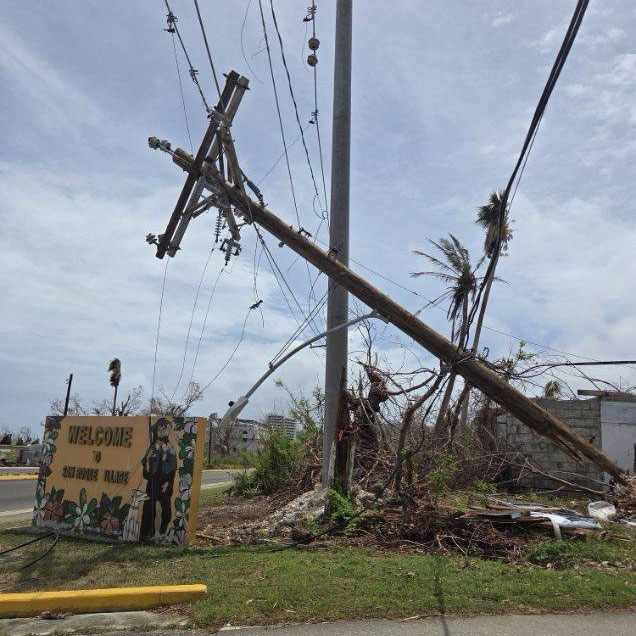
Storm Damage from Super Typhoon Sinlaku. Submitted photo.
Families in the U.S. territories of Guam and the Northern Mariana Islands are facing another difficult recovery after Super Typhoon Bavi struck communities still rebuilding from Super Typhoon Sinlaku.
In April and May, Mary Jane Westra was among 21 Red Cross volunteers from Minnesota and the Dakotas who went to Saipan to help families after Super Typhoon Sinlaku. As families now recover from Bavi, seven more volunteers from the region are helping communities across Guam and the Northern Mariana Islands.
For Mary Jane, the people she met and the strength they shared have stayed with her long after she returned home.
It was a beautiful, calm morning. Yet, while she was sitting in her living room in Battle Lake, Minnesota, her mind was thousands of miles away, reflecting on her time in Saipan with the American Red Cross.
Mary Jane spent three weeks on the island as a Disaster Mental Health volunteer, listening to people and helping them cope with the stress, uncertainty and loss that can follow a disaster.
“It does people so much good just to hear, ‘How are you doing?’” said Mary Jane. “If I dig a little bit further, they'll tell me more about their stress. Then I ask what they do to relieve stress and what they do to make themselves happy. And it usually all helps.”
A social worker by trade and now retired, Mary Jane’s career prepared her well for the role.
“I always highly recommend social work to people because you can do so many things,” said Mary Jane. “I've done everything from adoption to child welfare, to foster care, to administration. A little bit of teaching, a little bit of supervision, and then lots of crisis work.”
Disaster Mental Health volunteers may have only a short time with each person, sometimes as little as 10 to 15 minutes. But a listening ear and a thoughtful question can offer comfort when so much feels uncertain.
“You hope you've done some good,” said Mary Jane of her experience assisting during disasters. “99% of the time, I’ve gotten a ‘Thank you very much. You've helped me a lot.’ So, that keeps me going.”
What has stayed with Mary Jane most is the strength of the people she met.
“Saipan—they’re the most resilient group I've ever worked with,” said Mary Jane. “They just say… ‘The more storms we get, the more resilient we are. We help each other.’”
Her words carry new weight today. When Bavi arrived, some families were still without power, staying in temporary shelters or living beneath makeshift roofs as they recovered from Sinlaku. Red Cross teams are working alongside local officials and community partners to help people find safe shelter, food, relief supplies and other support.
For families facing another long recovery, that steady presence — someone to listen, a safe place to stay and help with immediate needs — can make all the difference.
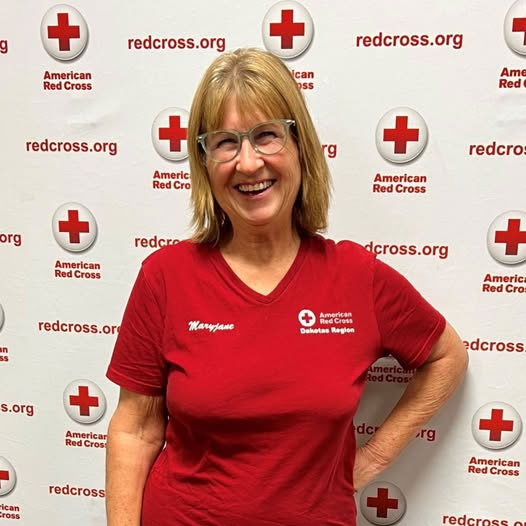
Mary Jane Westra at a Red Cross of Minnesota and the Dakotas Volunteer Recognition event.
Financial donations allow the Red Cross to respond quickly and help meet the needs of each family and community. Gifts to Red Cross Disaster Relief help provide shelter, meals, relief supplies, comfort, financial assistance and other support during disasters.
Help people affected by disasters like floods, storms and countless other crises by making a donation to Red Cross Disaster Relief.
You can donate by visiting redcross.org, calling 1- 800-RED CROSS (800-733-2767) or texting the word REDCROSS to 90999.
Your gift enables the Red Cross to prepare for, respond to and help people recover from disasters big and small, whenever and wherever they occur across the country.
Support all the urgent humanitarian needs of the American Red Cross.
Find a drive and schedule a blood donation appointment today.
Your time and talent can make a real difference in people’s lives. Discover the role that's right for you and join us today!