By Bruce Jenks, Red Cross Volunteer
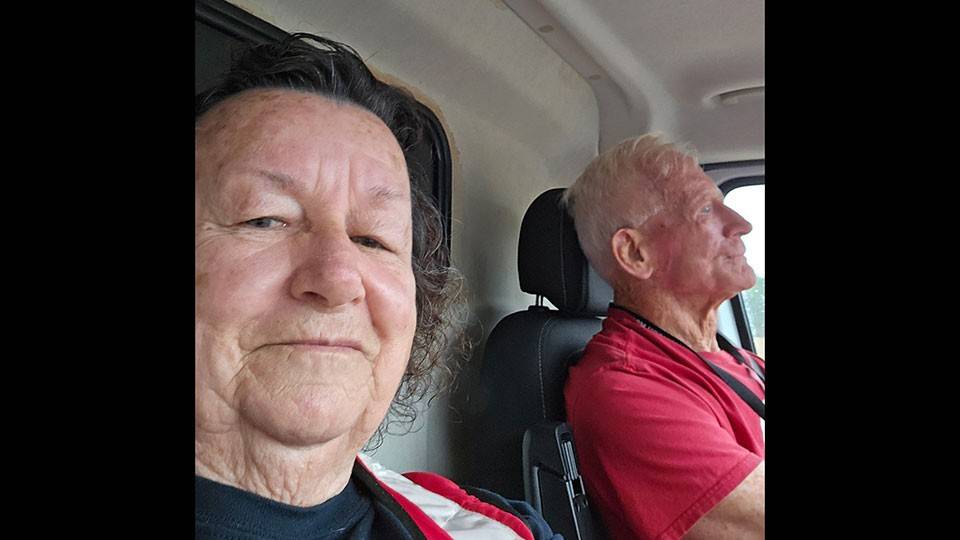
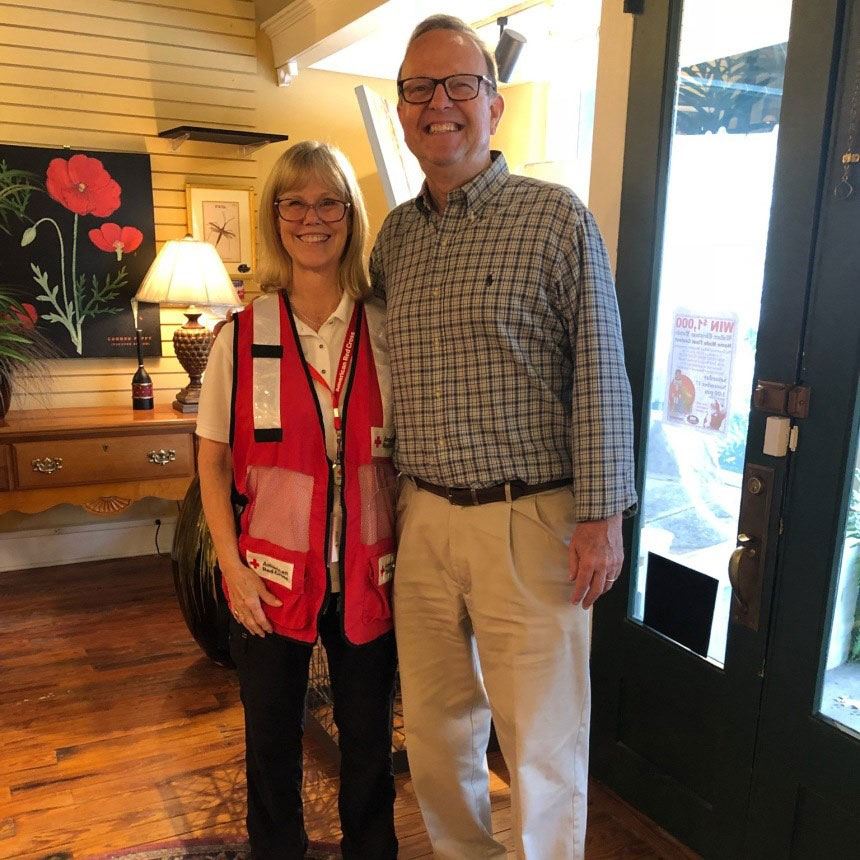
When Hurricane Florence took her home, Daryl Steinbraker faced a choice: sit in a hotel room and mourn—or walk into a shelter and help her neighbors.
Before moving to North Carolina, Daryl spent her career in Washington, D.C., as a property management executive. For Daryl, crisis management was a daily occurrence. When she retired, she wanted to find an opportunity where her experience and her heart met, and she joined the Red Cross. That was twenty years ago.
First Sheltering Experience
Daryl’s first hands-on experience was sheltering during Hurricane Florence. She watched volunteers work around the clock to make sure neighbors were heard, included, safe, fed, and warm. She shared that the work begins with a “warm hello”-meeting people in crisis where they were.
When people arrive at the shelter door, Daryl sees that many are frightened and in shock.
Slowing Down and Listening
Daryl shared that she used to think that recognizing a need and getting it resolved was success. You must do those things, but, at the same time, you need to be another human being, able to recognize what a person is going through.
“I try not to jump to conclusions about what somebody needs,” Daryl explained. “Sometimes I think they need something different than what they tell me. But I must respect what they are saying.”
At times, many guests arrive already facing significant housing and economic instability, which adds to the complexity of recovery. These challenges frequently outstrip what any volunteer or agency can provide.
A Community Bridge to a Better Future
Community is always larger than any one organization or agency, Daryl reflected.
In the days that followed the storm, Catholic Charities, the Salvation Army, and local agencies sat side by side at tables. Families can walk from one table to the next—finding clothing, housing leads, and someone who knows their name. Daryl noted that the Red Cross is a small part of a long recovery. Eventually, shelters must close, and families take their next steps in recovery. Community partners collaborate to help them along their journey.
What the Shelter Gave Back
After two decades of disaster relief service, Daryl admitted that helping others helps her too.
“It’s as much for my own sense of being part of the human race as it is for whatever I bring,” she says.
Daryl would like to remind people of two things. First, the need is critical when it arises, and even being a small part in making things better can change your neighbor’s life and your own. Second, disasters have a compounding effect. The winter storm disrupted blood drives and transportation routes, further straining an already fragile blood supply.
Daryl provided this final observation: At the end of the day, people show up because they care about their neighbors and want to do something about it. Shelters open because neighbors support one another—through time, donations, and trust.
Support all the urgent humanitarian needs of the American Red Cross.
Find a drive and schedule a blood donation appointment today.
Your time and talent can make a real difference in people’s lives. Discover the role that's right for you and join us today!