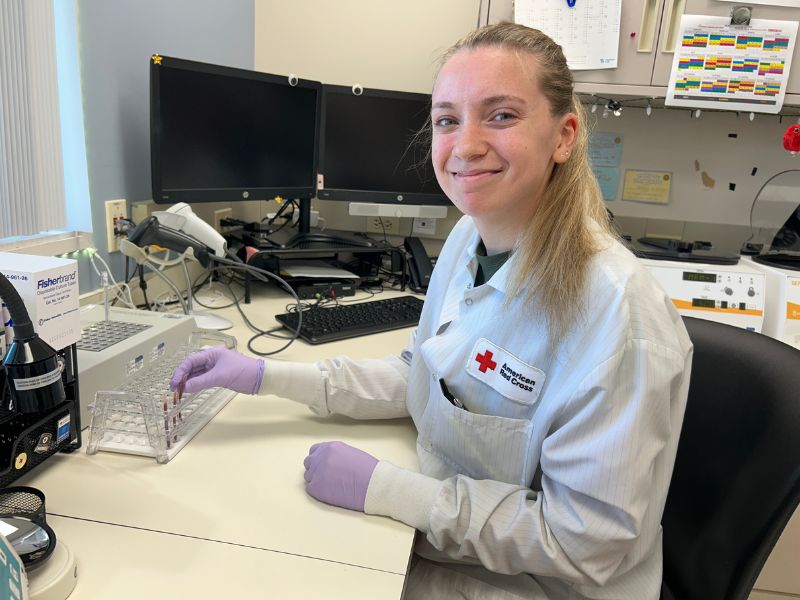
Sara Placher, medical laboratory scientist at the American Red Cross Immunohematology Reference Lab in Durham, North Carolina, tests blood samples for antigens. Her behind-the-scenes work helps ensure patients receive safe, compatible blood products.
By Kelly Flynn
The work Sara Placher does is critical, technical and lifesaving — and most patients will never know her name.
Sara is a medical laboratory scientist at the American Red Cross Immunohematology Reference Lab in Durham, North Carolina. While patients never see her work firsthand, the results of that work can mean the difference between a safe transfusion and a dangerous reaction.
“I like doing the behind-the-scenes work,” she said.
When Sara isn’t at work, she’s usually on the move. She enjoys hiking at Umstead State Park, training for races, gaming to unwind and spending time with her goldendoodle. The balance she has built outside of work is intentional and necessary for a career that requires precision, patience and constant problem-solving.
April 19 to 25 marks the 51st annual Medical Laboratory Professionals Week. The observance was established in 1975 to recognize the laboratory professionals and pathologists whose work is foundational to health care. At the Red Cross, more than 2,200 laboratory and manufacturing team members work across 116 labs and manufacturing facilities nationwide, helping process, test and distribute approximately 6.3 million blood products each year.
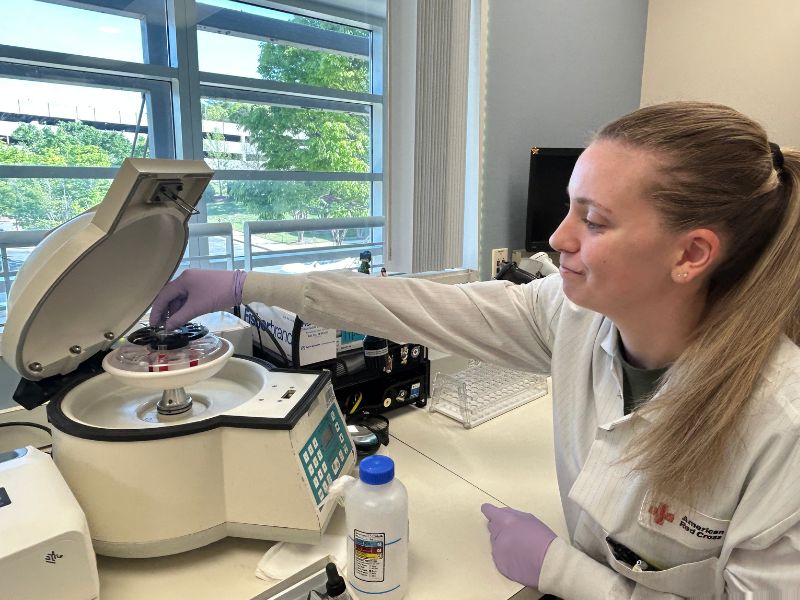
Sara works in the Immunohematology Reference Lab, commonly known as the IRL. The lab serves as a reference point for hospital transfusion services when blood compatibility questions become too complex to solve on-site.
Her path into laboratory science was not a straight line. Sara entered college as a nursing major, drawn by the desire to help people and save lives. It wasn’t until her sister pursued a degree in medical laboratory science that she realized there was another way to make that impact.
“I never really heard of MLS,” Sara said. “But my sister decided to pursue MLS, and I thought, that sounds more interesting.”
The field offered exactly what she was looking for: meaningful patient impact without direct bedside care. Over time, Sara found purpose in work that requires deep concentration and technical expertise, all conducted behind the scenes.
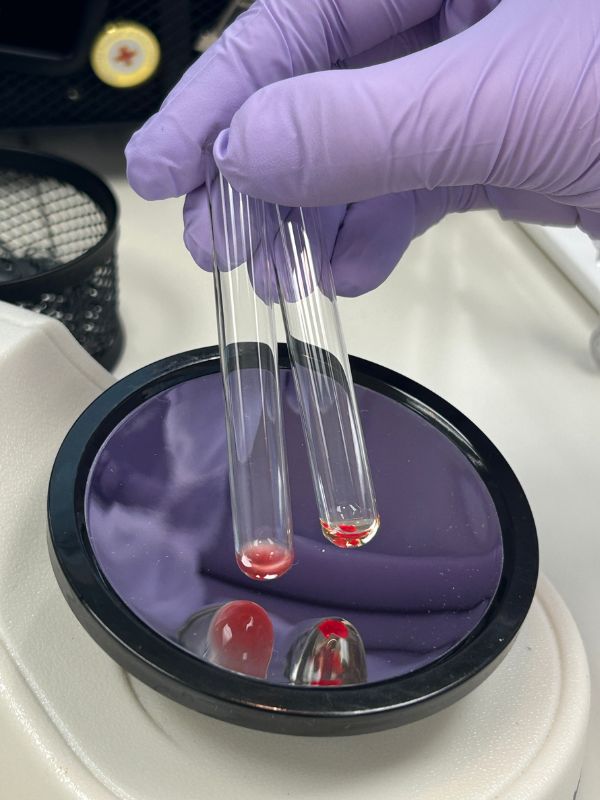
In the IRL, Sara helps identify antibodies in patients’ blood and ensures hospitals receive compatible blood products. The work can involve everything from reviewing antigen-negative blood orders to completing complex patient workups submitted by hospitals that need additional expertise.
“Any time I catch any type of error,” she said, “or if I’m able to figure out what the antibody is to give them compatible blood, it’s super rewarding.”
Much of the lab’s work supports people living with sickle cell disease, who often need repeated transfusions using closely matched blood. Over time, Sara and her colleagues become familiar with individual patients’ needs, even though they never meet them.
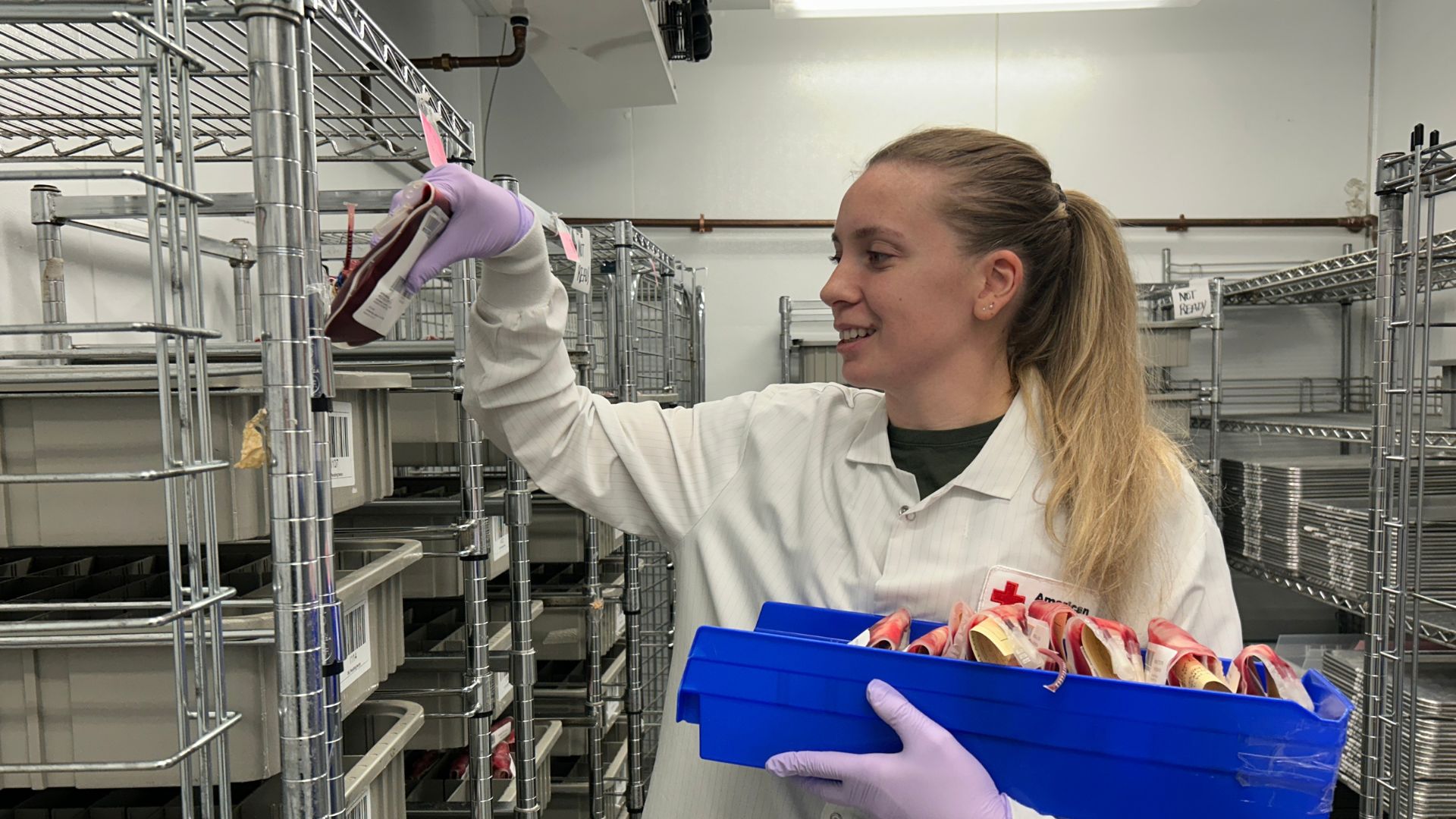
“We’ll start to recognize a name and which specific blood types people need,” Sara said.
That familiarity fuels proactive planning. When the lab identifies a rare blood type or specific phenotype, Sara’s team works to set units aside or coordinate with other Red Cross labs so blood is available if an emergency arises.
“Sometimes they do have an emergency,” she said. “So then it feels good that we remembered that name or remembered what they need and kept it aside.”
The work demands constant problem-solving, especially when antibodies do not behave the way textbooks predict. Critical thinking is essential, particularly for patient cases that can take days or longer to resolve.
“There’s not always a right or wrong answer,” Sara said. “You just have to be able to think of logical steps to keep going.”
Over the past year, Sara challenged herself to take on even more responsibility by earning her specialty in blood bank certification, a rigorous credential that required extensive studying while balancing work and major life changes.
For Sara, being recognized during Medical Laboratory Professionals Week is meaningful not just personally, but for the profession as a whole. She hopes greater visibility will help students learn about laboratory science earlier and better understand the critical role lab professionals play in health care.
“If it weren’t for my sister, I would have never heard of medical lab science,” she said. “What we do is essential.”
As Medical Laboratory Professionals Week celebrates more than five decades of impact, Sara’s story reflects the dedication and expertise of laboratory professionals across the Red Cross. These teams work quietly, collaboratively and around the clock to help ensure patients have access to lifesaving blood products whenever and wherever they are needed.
Support all the urgent humanitarian needs of the American Red Cross.
Find a drive and schedule a blood donation appointment today.
Your time and talent can make a real difference in people’s lives. Discover the role that's right for you and join us today!