By: Ara Rexford
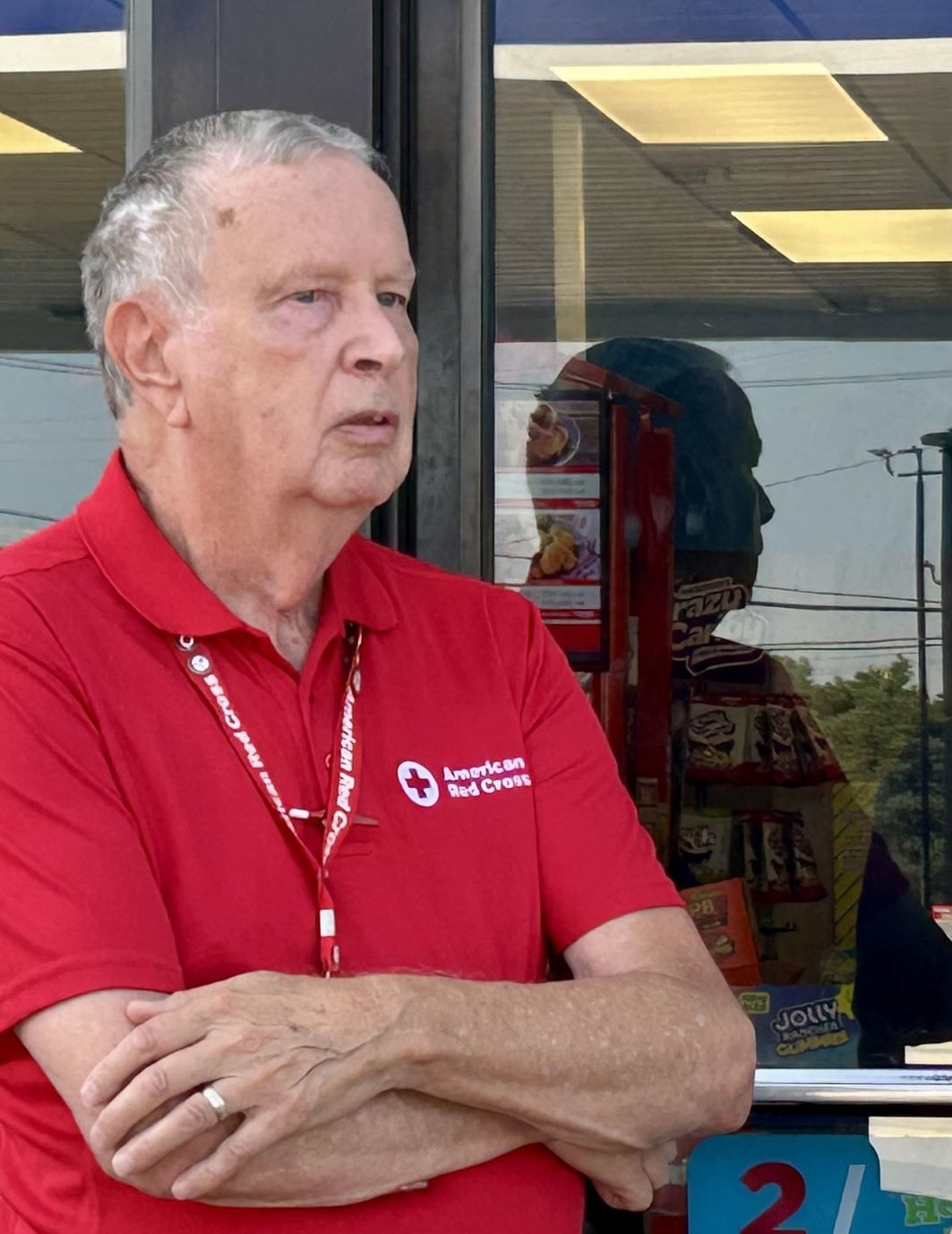
In April of 1969, Carl Biery was driving home from work when something changed the course of his life.
“It was snowing,” he recalls. “I saw a disaster scene and the Red Cross was there.”
He went home that night and could not stop thinking about it.
“I talked to my wife about it. I called the Red Cross, and they said, ‘Come on over.’ I’ve never regretted that since.”
That one phone call marked the beginning of more than five decades of service and over 4,500 disaster responses.
The Heart Behind the Work
For Carl, disaster response has always been about one thing: people.
“I enjoy disaster support and I enjoy helping people,” he says. “You get a warm and fuzzy feeling after helping. Every time a family thanks you, it warms your heart.”
Over the years, he has responded to nearly every type of disaster imaginable, including tornadoes, earthquakes, plane crashes, 9/11, Hurricane Katrina, and countless house fires and regional emergencies.
He serves on regional disaster response operations, known as DROs, choosing to stay close to home so he can also care for his wife.
While the numbers are staggering, it is the moments, both heartbreaking and hopeful, that stay with him.
The Weight of Tragedy
Not every memory is easy.
One of the most difficult calls of his career came in 1977 at a nightclub fire in Kentucky that claimed 165 lives.
A state policeman approached him that night and asked about the Red Cross vehicle.
“He said, ‘This is perfect.’ He commandeered the van.”
All night long, Carl and others used that Red Cross vehicle to transport bodies to the morgue.
“They were wearing fancy dresses. Men in suits… It bothered me for several weeks after that.”
He also remembers responding to a devastating bus crash in Kentucky in the 1980s. A group of Army children returning from a trip to Kings Island were struck by a drunk driver traveling the wrong way. The bus exploded, resulting in 27 deaths.
“We went into a big meeting room with state troopers,” Carl says. “We had to sit down with the families and ask what their children were wearing, birthmarks, things like that.”
He recalls a mother who had lost her child in a fire.
“You’re trying to get information from her and she starts crying, and you almost start crying too.”
Navigating the Emotional Toll
Over time, Carl learned that responding to disasters is not just physically demanding. It carries a mental load as well.
The Red Cross provides disaster mental health support after especially tragic events. Carl appreciated the group debriefings.
“We’d sit in a circle and talk about it. Sometimes people would cry. You could say what you wanted.”
He remembers a plane crash at the Cincinnati airport where he worked at the morgue for three days alongside dentists, coroners, doctors, and the FBI.
The team leader, a strong woman who gave steady commands throughout the operation, held everything together during the response.
“But it really affected her,” Carl says. “She broke down during the group session.”
Those shared moments of vulnerability helped volunteers process the weight of the work together.
Today, Carl says he is “fine now.” Still, he acknowledges that certain disasters stayed with him longer than others, a reminder that compassion often comes with a cost.
From Volunteer to Leader
In the 1980s, Carl stepped into a new role as team leader.
He led a team of 25 volunteers covering six counties. He coordinated responses, made sure enough volunteers showed up, and maintained communication with fire departments and first responders.
“I try to instill that in my people,” he says, referring to the importance of service, teamwork, and showing up for others.
He did more than lead responses. He built community.
“Every three months, we’d have a team social at a restaurant. Talk and enjoy ourselves.”
He worked to mentor the next generation of volunteers, ensuring strong and capable people were ready to continue the mission.
Recognition for a Life of Service
Over the years, Carl’s dedication has not gone unnoticed.
He has received numerous awards from fire departments and first responders. Among his most meaningful honors are:
One of the things he values most is the recognition of Red Cross volunteers as first responders.
“Other organizations appreciating what you do, that makes it worthwhile,” he says.
Why He Keeps Coming Back
After 4,500 disasters, countless sleepless nights, and memories that range from heavy to hopeful, what keeps him going?
“Every time I go out, I feel like I’ve done something nice,” Carl says. “I helped someone take their first step of recovery.”
That first step, whether it is a blanket, a conversation, financial assistance, or simply a steady presence, can mean everything to someone who has just lost everything.
When asked what he would say to someone unsure about volunteering, his answer is simple.
“The greatest reward is the satisfaction at a disaster, helping someone.”
He pauses.
“It makes you feel good.”
A Legacy of Compassion
From a snowy evening in 1969 to thousands of disaster scenes across decades, Carl Biery’s story is one of steadfast compassion.
He has seen the worst days of people’s lives and shown up anyway.
He has carried the emotional weight and returned again and again.
Through it all, one thing has remained constant.
A simple decision to help.
And the warmth that comes from knowing it mattered.
Support all the urgent humanitarian needs of the American Red Cross.
Find a drive and schedule a blood donation appointment today.
Your time and talent can make a real difference in people’s lives. Discover the role that's right for you and join us today!