By: Ara Rexford
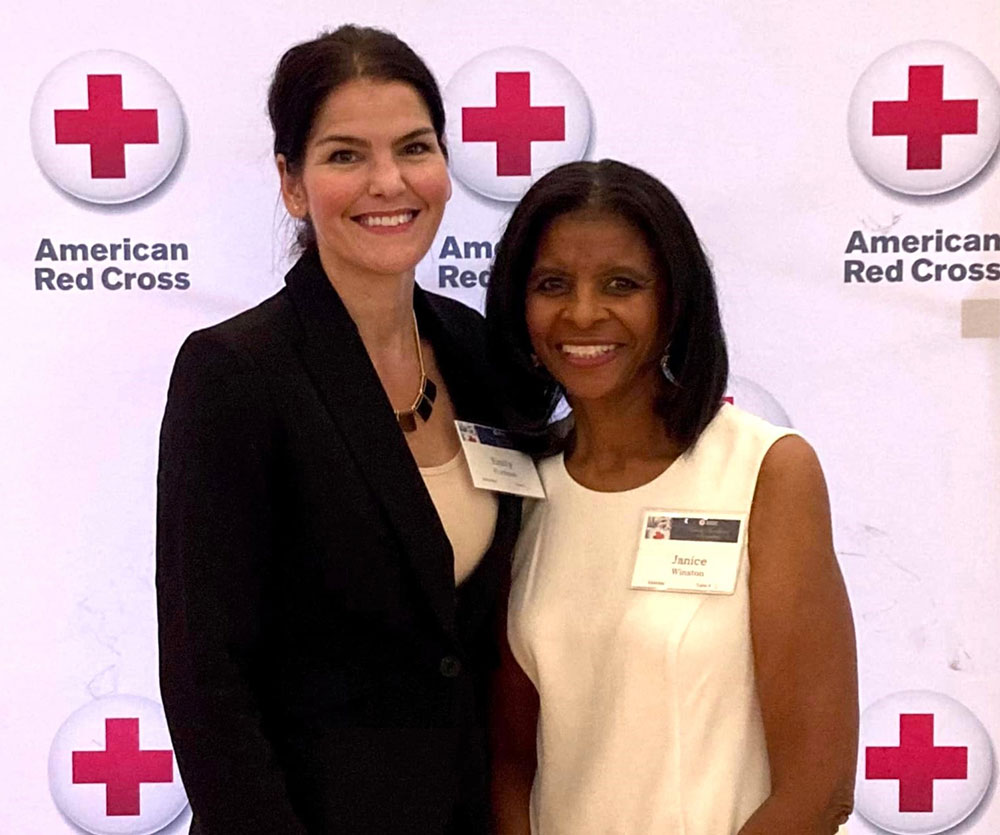
When Emily Fortman stepped into leadership at the American Red Cross, she didn’t do it alone, and she believes no one should.
Emily, who currently serves as Division Disaster Executive for the Central Atlantic Division and Interim Regional CEO for the Central & Southern Ohio Region, began her Red Cross journey after witnessing the organization’s impact firsthand. Growing up in Central California, she experienced an earthquake just days before Christmas and watched Red Cross volunteers arrive to support her community.
“I was enamored by what they were doing for us,” she shared. “I thought, that’s an organization I want to be a part of.”
Emily joined as a Disaster Action Team volunteer in 2004. About a year later, she deployed to Hurricane Katrina for three to four weeks: an experience she says cemented her commitment to the mission. By 2005, she began her first paid role with the Red Cross and has since served across multiple divisions, two regions, national headquarters, and even supported international services work tied to Geneva.
Today, even while traveling between Maryland, Columbus, and Cincinnati every other week during her interim CEO assignment, Emily stays anchored to a leadership philosophy rooted in people, trust, and volunteer engagement.
“As a volunteer-led organization, I believe volunteers really need to be at the table,” she said. “Not only in our day-to-day work, but in the leadership and the decisions that we’re making.”
That belief is one reason her partnership with Janice has become one of the most meaningful and impactful parts of her leadership.
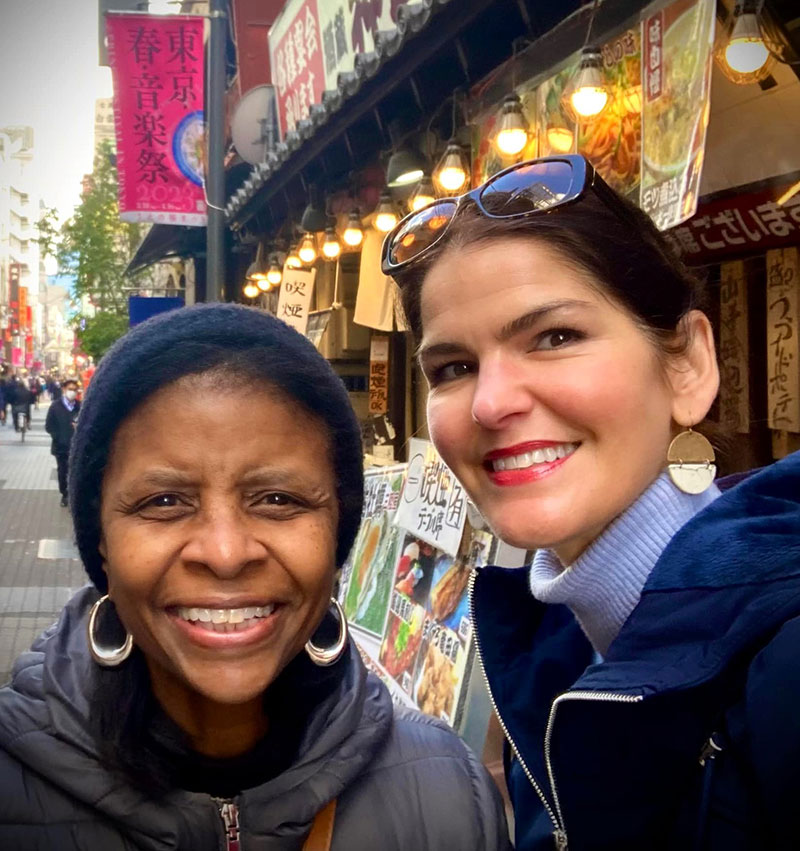
A partnership that began with trust, and grew into something lasting
Janice Winston’s Red Cross story spans decades. Many years ago, after her father passed away while her son was actively serving in the Marines, she contacted the Red Cross for support. A kind and steady caseworker helped coordinate communications and travel for her son, who was stationed on a ship in the Mediterranean Sea.
“That case worker was just so nice,” Janice recalled. “Calling us to make sure everything was okay… I said, ‘Oh, wow! It felt nice to have someone there for us.’”
Not long after, Janice decided to give back by volunteering, first through canteening for soldiers during the Gulf War. Years later, she began volunteering in International Services, helping reconnect families through international tracing: locating individuals and delivering messages from loved ones overseas.
Then came Hurricane Katrina, her first major deployment. Janice deployed six months after the storm and stayed for two and a half months, taking on new responsibilities and learning new systems along the way.
“I just loved it,” she said. “There were so many things I learned… and I came back and then I just started doing this.”
Over time, Janice found her niche in government operations and partnerships: work that supports the Red Cross mission behind the scenes, ensuring volunteers and staff have what they need to serve communities effectively.
It was through that space, government operations and emergency management relationships, that Janice and Emily’s partnership began.
Janice remembers it clearly: before Emily arrived, Janice worked closely with another leader, Anne Palmer. When Anne prepared to leave for national headquarters, Janice gave her one simple instruction:
“Anne, you better leave me somebody who I can trust that I can work with.”
Emily was that person, and neither of them knew at the time just how long their partnership would last.
Emily admits she had her own assumptions before they met.
“In my head, this woman was like 85 years old,” she laughed. “I meet Janice and I’m like, wow… I was fascinated that Janice had accomplished so much in her life and continues to do that”.
They’ve now worked together for 11 years, through role changes, division moves, and even the disruption of COVID, because, as Janice put it, they didn’t just “fall into” a partnership.
They chose to stay in it.
“We gave it a chance and we let it grow,” Janice said. “Then we decided… we could work together and we’re going to stay together.”
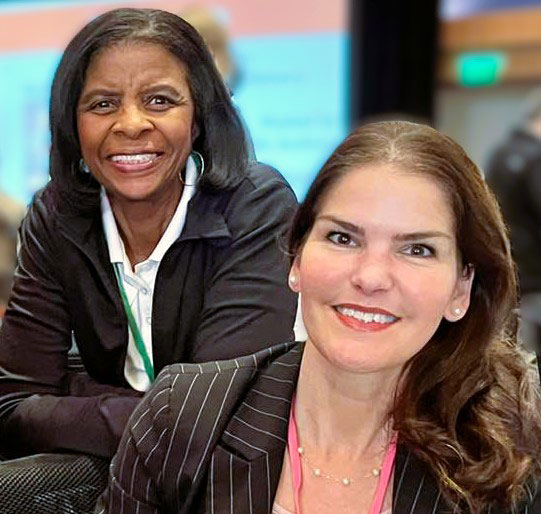
Different backgrounds, stronger decisions
Their partnership bridges generations, lived experiences, and leadership perspectives.
Emily, from Generation X, grew up in rural Central California. Janice, from the Baby Boomer generation, grew up in Philadelphia.
Despite their different paths, they share a common foundation: commitment to the mission, and care for the people delivering it.
Janice describes Emily’s greatest strength as her ability to stay kind even under pressure.
“When everything is swirling around… she keeps her kindness first and foremost,” Janice said. “She’s people-forward facing… there’s always that human aspect to everything that she does.”
Emily describes Janice as one of the smartest, most strategic people she has ever worked with.
“The way that you can balance big ideas and the tactics… it’s amazing,” Emily told her. “Everything you touch just turns out really, really great.”
That blend of calm, care, strategic thinking, and lived perspective shapes how they lead and how they make decisions.
Emily says Janice helps her check biases and stay accountable to inclusive leadership.
“She’s taught me to challenge bias,” Emily said. “She can hold me accountable, making sure I’m thoughtful about who’s around the table, and who isn’t.”
Janice says Emily has helped her grow in a different way, by strengthening her confidence and helping her see the bigger picture of the organization.
“She allows me to see that big picture,” Janice shared. “That really helps me to collaborate and effectively communicate with the volunteers and the staff that I work with around the organization.”
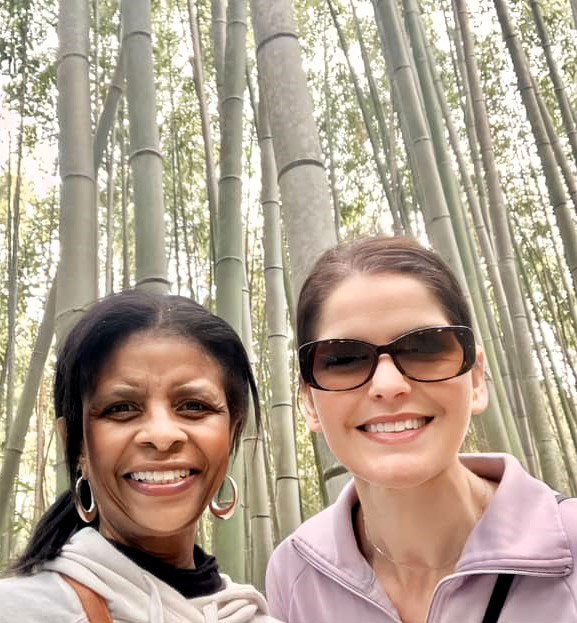
What a volunteer partner really means
In practical terms, Emily describes a volunteer partner as a force multiplier: someone you trust deeply enough to represent you, cover for you, and help carry the work with shared values and shared context.
“It means life is a lot easier,” Emily said. “If you can find a volunteer partner, do it.”
Because of the trust they’ve built over time, they can step into each other’s spaces with confidence.
“She can speak for me, I can speak for her,” Emily explained. “She knows my decision-making… her values are very much aligned with mine.”
Janice feels the weight of that responsibility and embraces it.
“I feel as though it’s a lot of responsibility because I feel I’m representing her,” Janice said. “When they see me, they should see her in me… walking lockstep with each other.”
They stay connected through scheduled bi-weekly meetings, but also through constant communication.
“We’re constantly talking… constantly texting back and forth,” Janice said. “We always have ‘call as needed’ on the table.”
And ultimately, they say their partnership helps the mission because it expands capacity and strengthens alignment.
“It brings two people to the table,” Janice said, “who can handle two different things at the same time, with that trust being the foremost part of it.”
Why multi-generational leadership matters
Both Emily and Janice believe the future of the Red Cross depends on multi-generational leadership, not just for continuity, but for relevance.
Janice is direct about why it matters:
“Every generation brings something to the table,” she said. “We’re moving in a technology world.”
Even communication styles differ. Some prefer phone calls, others prefer texts, but the organization succeeds when those approaches connect.
Emily says she and Janice have become increasingly focused on succession planning and bringing younger generations into both volunteer and staff leadership.
“We really need to have a younger generation in our workforce… more so now than ever,” Emily said. “In 20 years, I don’t see this cadre of younger people coming in behind us… and what happens if we don’t?”
That urgency, they agree, doesn’t replace the value of experienced volunteers: it complements it.
“Older is wiser,” Janice said, “with input from people who are living in a different time.”
Looking forward with hope
For Janice, what gives her hope is that the Red Cross is adapting: recognizing that volunteering looks different than it did decades ago, and making space for more people to contribute in new ways.
“The organization is recognizing that people don’t volunteer the same way they did before,” she said. “They’re really broadening the horizon of what a volunteer looks like.”
That includes people who work full-time, people who can only give a few hours, and people who want to bring their skills in different ways, all supported by staff who understand where the vision is going.
And for Emily, the heart of it comes back to something simple: trust, shared purpose, and the belief that partnership makes the mission stronger.
In three words, Janice describes their partnership as: trust, comfort, and care.
Emily’s three words: genuine, true, and supportive.
Together, those words capture what their partnership offers the Red Cross and what it can model for the future: leadership that’s shared, grounded in relationship, strengthened by difference, and always centered on people.
Support all the urgent humanitarian needs of the American Red Cross.
Find a drive and schedule a blood donation appointment today.
Your time and talent can make a real difference in people’s lives. Discover the role that's right for you and join us today!