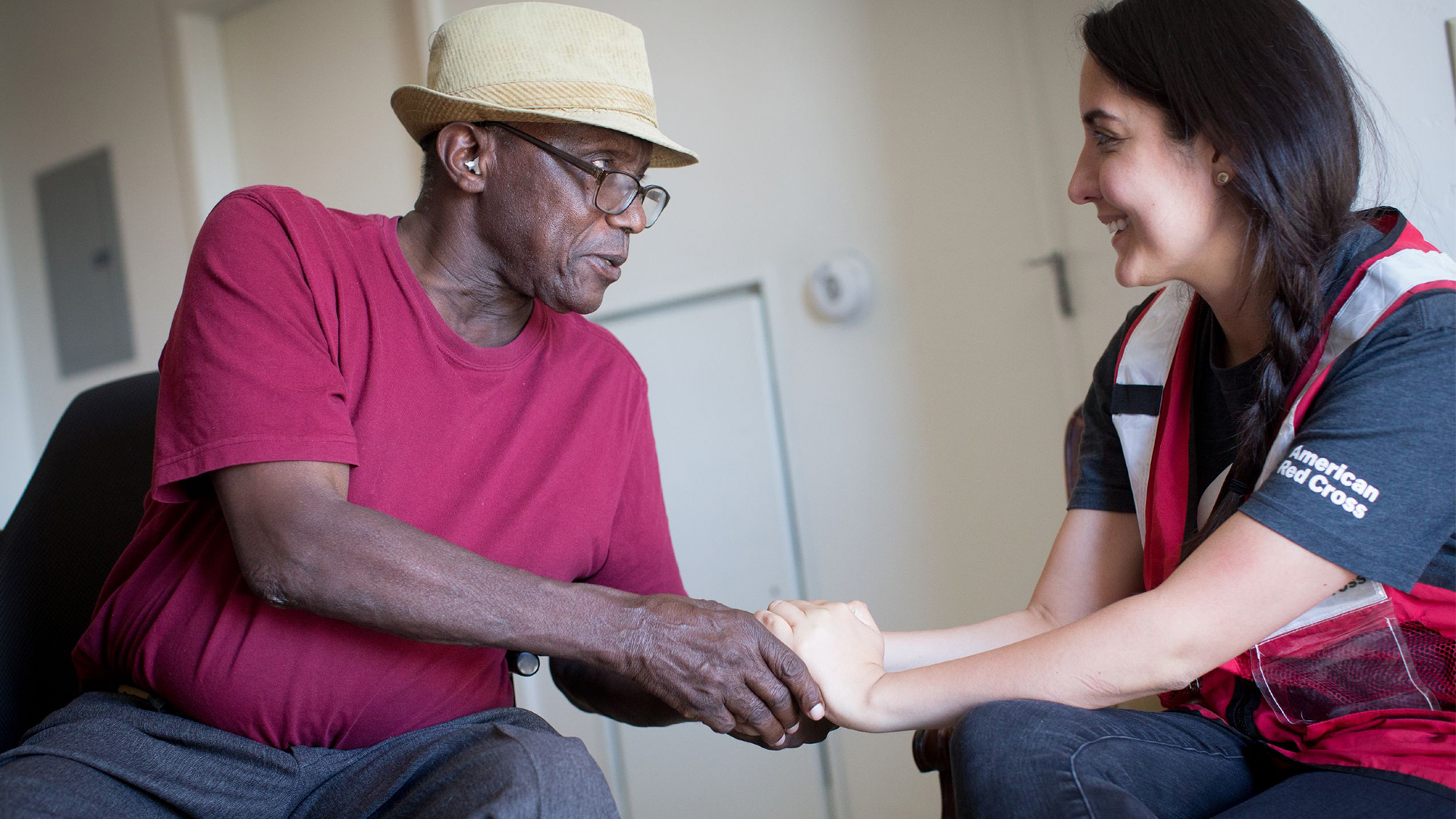
June 11, 2018. Tucson, Arizona. The American Red Cross Restoring Family Links (RFL) program helps reconnect family members separated internationally by disasters, war, conflict, migration, and other crises. The services are free and confidential. Pictured, Raphael learned through friends that his son was living in a camp in Rwanda. Desperate to get in touch with him, Raphael opened a search with the Red Cross through the RFL program. After months of waiting, Raphael finally received a message from his son: "To you, my father, I am greeting you! Photo by Michelle Frankfurter/American Red Cross
Most of us can’t stand to be out of touch with the people we love for very long. We have cell phones that instantly connect us and the instant gratification of texting, emailing or even calling.
But what if something catastrophic got in the way of that contact? What if decades went by since you saw your mother, or your brother, or your child and every day was spent wondering where they are and what happened to them?
Lost contact mysteries lead to detective work
For the volunteers who work in an American Red Cross international program called Restoring Family Links (RFL), those mysteries of lost contact become the cases that compel them to put on their detective hat and get to work.
Robert Pollock and Margot Hillman volunteer as RFL caseworkers who strive to reunite lost loves and bring families back together. If the happy ending of a reunion is not possible, then Robert and Margot try to find answers and provide the comfort of closure.
Who can use restoring family links?
To be a candidate for the RFL program, the client, or “inquirer” as they are referred to, has been separated by conflict, disaster, migration or humanitarian crisis.
“We're talking about people who have gone through (usually) really horrible things and been separated from their family by circumstances. Not because they got mad at each other, not because they had a fight, but because there was a war where they lived and they fled in different directions,” Margot said.
A wife tries to find her missing husband
Right now, Robert has an active case where he is trying to find out what happened to a Ukrainian woman’s husband, who disappeared while fighting in the ongoing war between Russia and Ukraine.
Finding out what happened to him is not easy. Robert uses computer tools like Google Translate to read the documents provided to him by the woman because they are written in Ukranian. Language is not the only challenge when someone goes missing because of armed conflict.
“There’s kind of a no man’s land like in World War 1. The two sides have been stalled. They just keep shelling each other. When people get killed they may not even be able to retrieve the body because it’s that no man’s land,” Robert said.
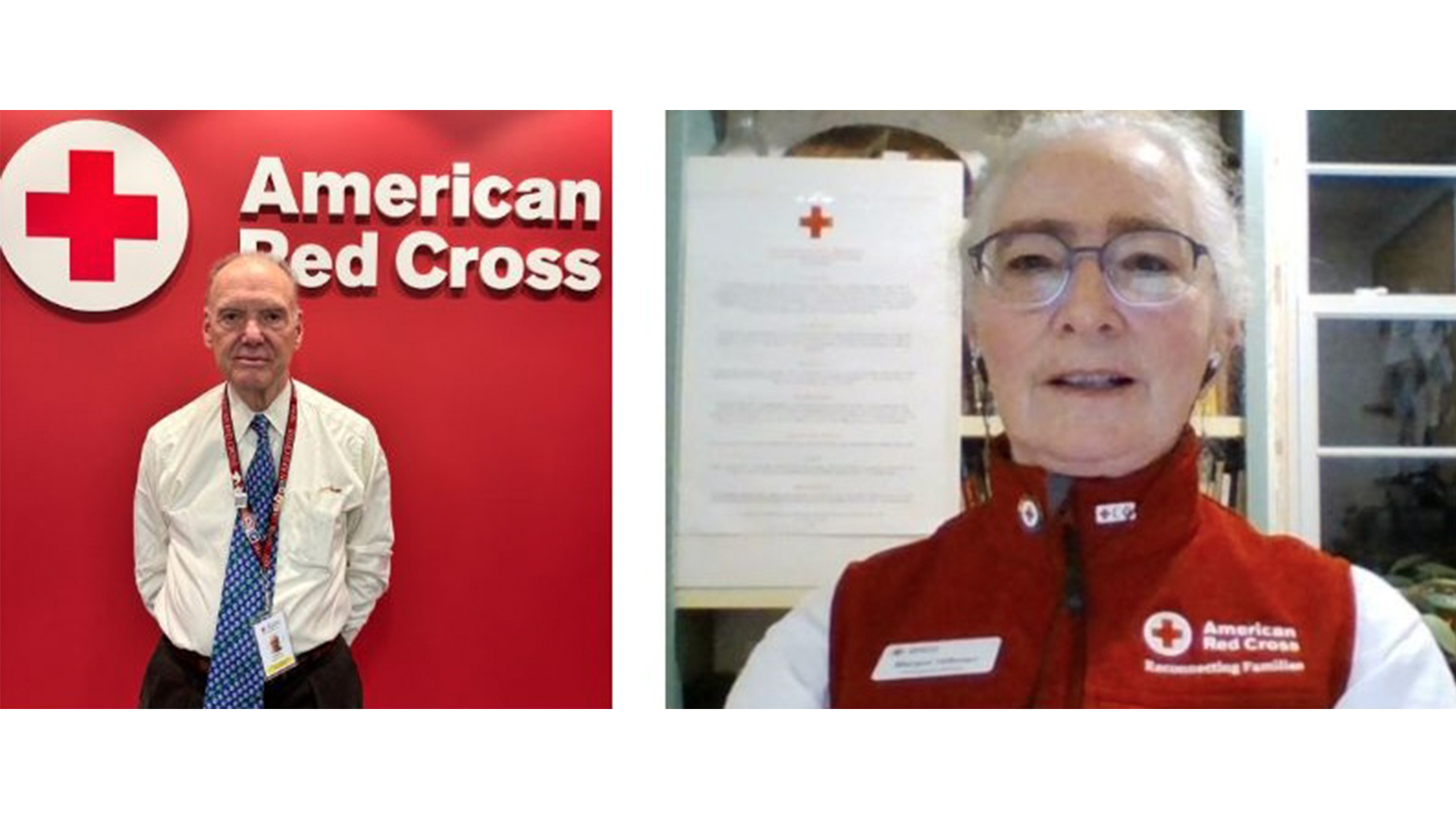
Robert Pollock (left) and Margot Hillman (right) are American Red Cross International Services volunteers with the Restoring Family Links program. Robert's photo by Alana Mauger / American Red Cross. Margot's photo was submitted.
Two dedicated volunteers: Years of Red Cross service
Robert started volunteering for the Red Cross in 2006. He used to respond to disasters like home fires before becoming an expert in Restoring Family Links. He taught Margot to be one too. She calls him her “mentor” before she became a mentor too.
Margot worked for the Red Cross for 35 years before retiring and has given more than four decades in service to the organization. Her professional career focused on Information Technology (IT).
She started volunteering for the Red Cross in 2003 when she became an International Services instructor. She described her role as “mostly focused on teaching and promoting international humanitarian law.”
Margot was drawn to be a caseworker in the RFL program because she loved the international aspect of the work and had a desire to bring families back together.
“It's a little bit of world healing that I can do from here,” she said.
From EMT to becoming a Red Cross volunteer
Before he volunteered for the Red Cross, Robert volunteered as an Emergency Medical Technician (EMT). He sees a connection between being an EMT and what he does now.
“It’s meeting people where their need is.” he said. “In many cases these people have a fairly desperate need to try to reconnect and it’s very rewarding when you can do that. It’s just a great feeling.”
Lost brother: Why reach out now?
Margot described a case where a man lost contact with his brother in Switzerland about 30 years ago and decided to try and find him. There are different reasons why people lose touch and then suddenly decide to reach out.
“Sometimes it's because they realize ‘I'm aging, I'm not going to be here forever’ and they're aging too. Sometimes it's that they've gotten ill, maybe with a terminal disease and think, ‘well, I'm going to give it one more try’ and sometimes there’s enough water under the bridge,” Margot said.
How to get help finding a lost loved one
To approach the Red Cross about finding a lost family member with a connection to a country outside the United States, there are a few ways to get help:
Details and documents matter
Once Robert or Margot get a case, they contact the inquirer and interview them. The case then gets sent to the Red Cross National Headquarters in Washington D.C. and once all details and documents are confirmed the case is sent to the Red Cross in whatever region or country is involved.
Many times the International Committee of the Red Cross (ICRC) plays a role.
“We always hope for success and we encourage the client to be very patient. It often takes a long time. It could be weeks, months, and in some cases years,” Robert said.
The 'perfect case' leads to new family
Consider the case of Mark Chew, which took two years. Mark reunited with his Vietnamese family, 47 years after he was adopted from a Catholic orphanage by an American family. Robert calls it the “perfect case” because “he actually did go back to the country and meet his siblings and spend time with them. It had all the aspects that you want.”
How you can volunteer
Robert and Margot want to get the word out about the RFL international program. They want you to know the service is free, confidential and impartial. If you are interested in becoming a RFL volunteer, go to redcross.org/volunteer to learn more.
---------------
- Written by Jenny Farley
Support all the urgent humanitarian needs of the American Red Cross.
Find a drive and schedule a blood donation appointment today.
Your time and talent can make a real difference in people’s lives. Discover the role that's right for you and join us today!