By Jessica Wurst
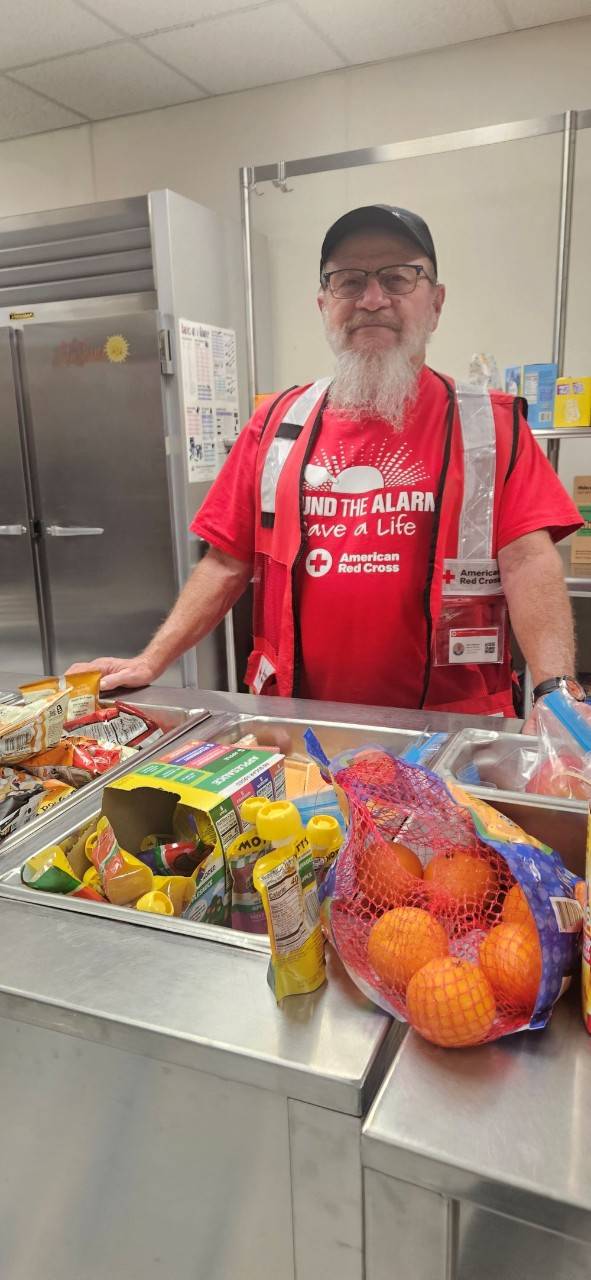
When Northwest wildfires forced tribal communities to leave their homes and seek safety in Kettle Falls, Washington, Gene Ashdown was there to welcome them.
As a former Office of Emergency Services instructor and experienced disaster responder, Gene supported evacuees for more than two weeks. He arrived ready to help with meals and daily needs, and quickly learned that one of the most important parts of his role was building relationships.
Many of the people arriving at the shelter were facing uncertainty, and some were hesitant to engage. Gene met them where they were, offering support and patience as trust grew over time.
Gene learned of one couple who lost their home in the fire. Because they could not comfortably get in and out of bed, they decided to sleep in their car. Volunteers helped secure a medical cot, making their stay more comfortable, and as the days went on, conversations became easier.
"It was very heartwarming for me to get to that point where we're now sitting down and having conversations."
At the end of his volunteer assignment, community members at the shelter were sad to see him leave.
"We went from the first night, with them not speaking to us hardly at all, to hugs and thank yous when I told them I was going back home. It makes me feel good knowing that I'm part of an organization that has made a difference in these people's lives, and building trust between communities."
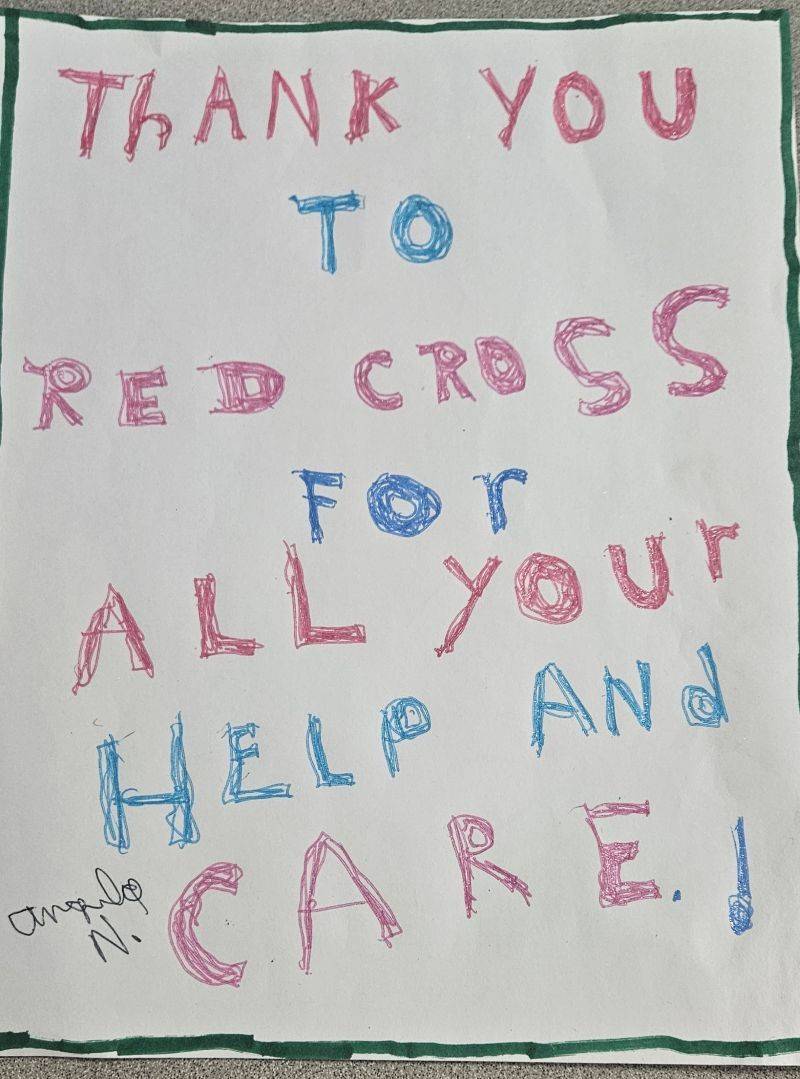
A card made for Gene by a woman he helped during his time at Kettle Falls.
After 17 days in Kettle Falls and a long journey home, Gene was exhausted. Still, when he was asked to deploy again the next day, he was ready to consider it. He said he would have gladly returned to the field if not for a family emergency.
"I think quite often, when I volunteer, I get more out of it than what I give. It's that good feeling that you're helping somebody, and hoping that I won't be in that situation, but if I get into that situation, I am hoping that people will be there when I need it."
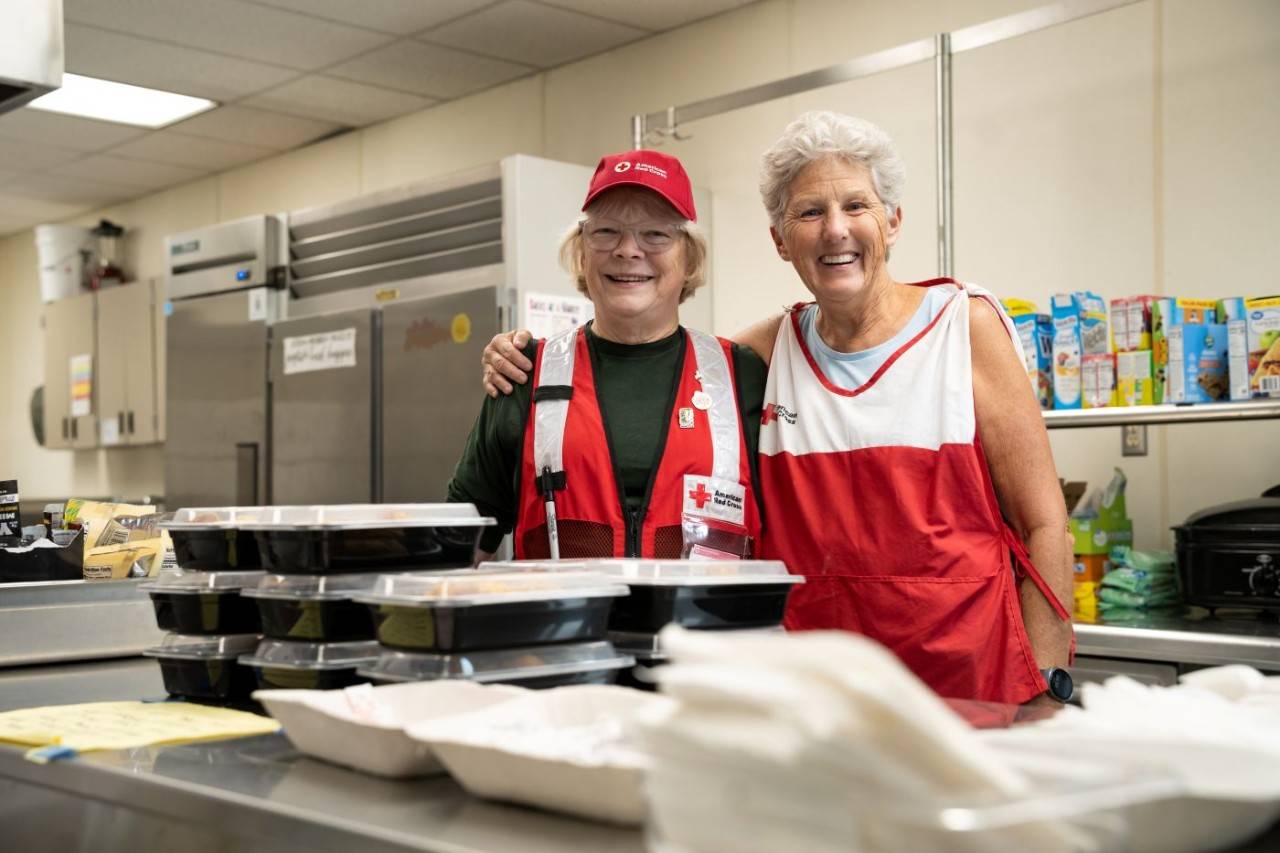
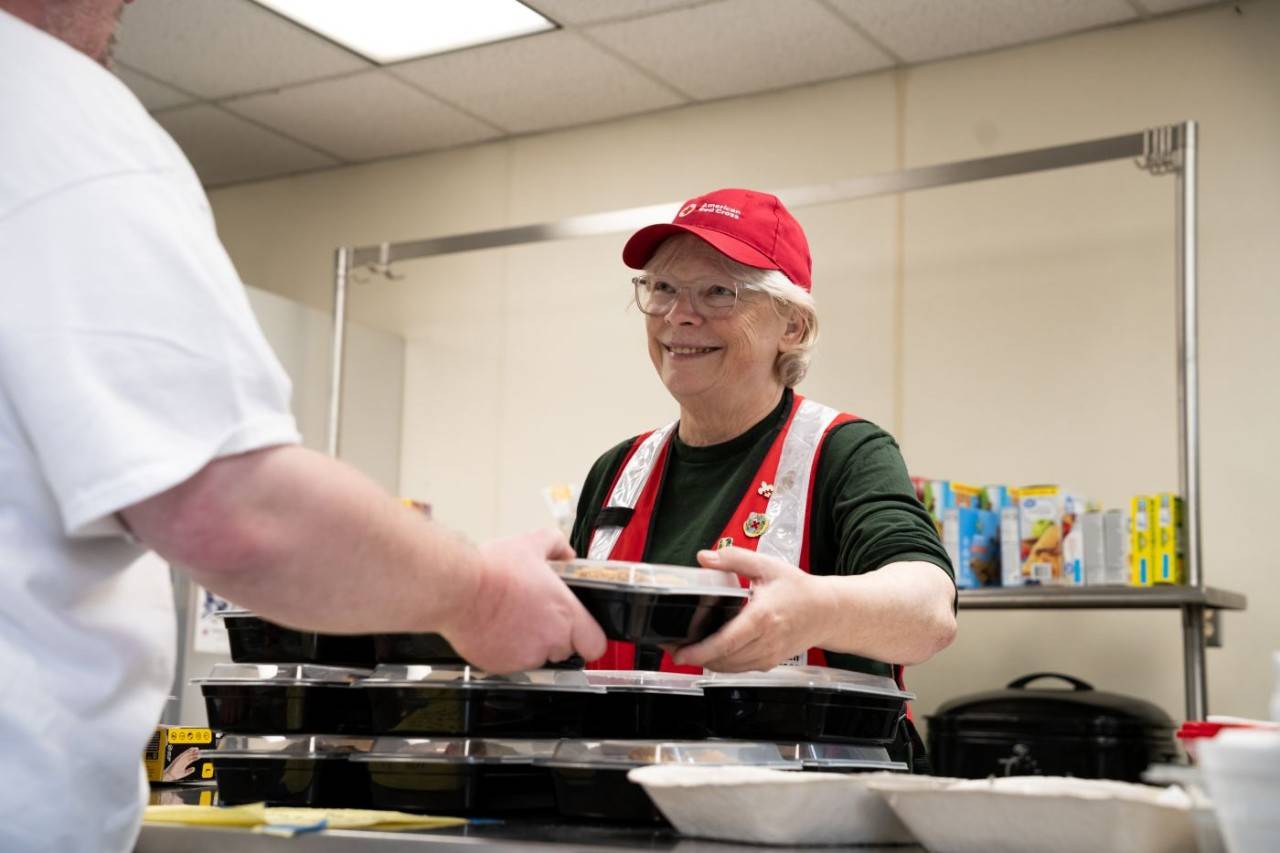
American Red Cross volunteers serve food in the shelter at Kettle Falls Middle School
Photo by Jason Colston/American Red Cross
For Gene, disaster response is about more than providing assistance. It's about showing up, building trust and helping people feel seen during some of the most challenging moments of their lives.
Disaster volunteers are essential to the Red Cross being able to respond when emergencies happen.
JOIN US TODAY On average, a major disaster now occurs about every two weeks, making the role of volunteers more critical than ever. Community members can join the Red Cross now to be trained and available for future disasters: Community members can join the Red Cross now to be trained and available for future disasters:
National Disaster Responder: When hurricanes, wildfires and other disasters strike, families are left without the basics - food, shelter and comfort. You can be the one who helps them begin to recover. Deploy across the country to deliver shelter, supplies and support when it’s needed most. Explore redcross.org/deploy to find the role that is right for you.
Local Disaster Responder: The Red Cross responds to more than 60,000 disasters a year. Most of these disasters are home fires that don’t make headlines. Be a part of the volunteer team that is there when our neighbors need them the most. From offering comfort and care during disasters to educating communities on disaster preparedness, there are many ways to get involved. Explore redcross.org/local response for current opportunities in your area.
In addition to these positions, the Red Cross has many volunteer opportunities available that satisfy a wide range of interests and time commitment. Your time and talents can make an impact ─ together, we can bring relief and hope to those affected. Sign up here today.
Support all the urgent humanitarian needs of the American Red Cross.
Find a drive and schedule a blood donation appointment today.
Your time and talent can make a real difference in people’s lives. Discover the role that's right for you and join us today!