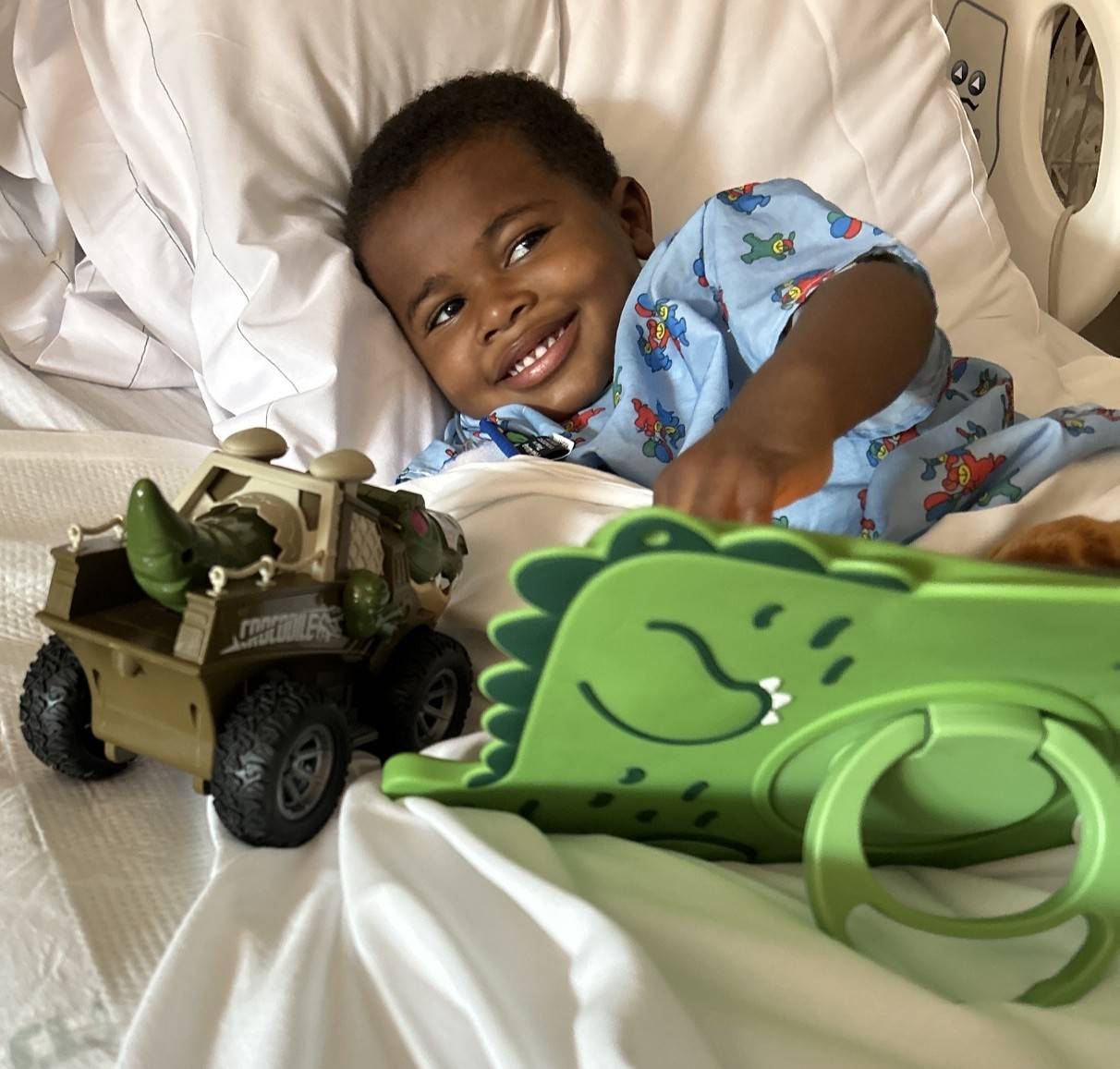
Isiah Harris' giggle can light up a room. He loves toy trucks, spending time with his brothers and doing all the things an adventurous little boy should be able to do.
When an average kid catches a cold, they stay home for a couple of days until their sniffles subside, but that wasn't the case for three-year-old Isiah.
Doctors discovered he had sickle cell disease and warned his family that he might not live beyond his third birthday.
"I just bawled. I was so sad and so heartbroken because he's already fighting, and they were telling me that he wasn't going to go past three," said Tashamia Barrow, Isiah's mom.
After that day, Barrow became Isiah's fiercest advocate and was determined to give her son every opportunity she could to help him thrive.
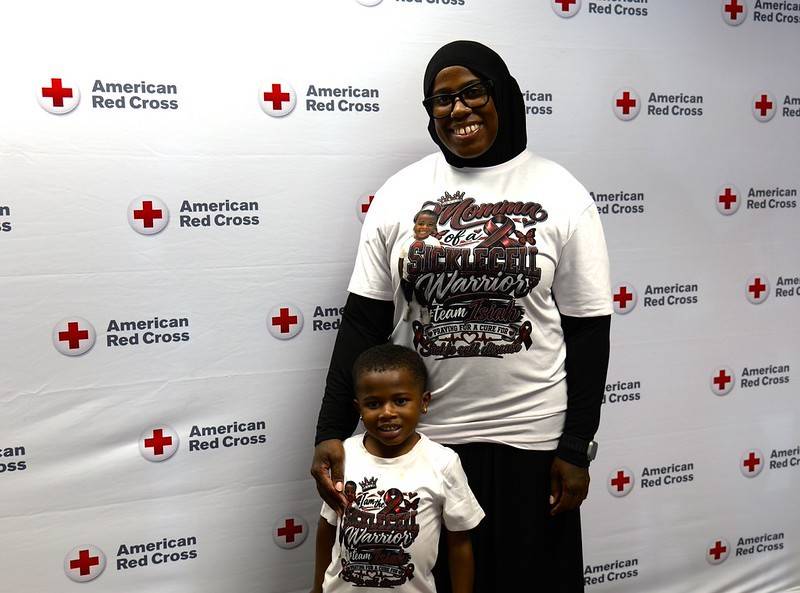
Tashamia Barrow and her son Isiah sharing his story at the American Red Cross in Sacramento, California.
Photo by Taylor Poisall/American Red Cross
She immersed herself in learning about sickle cell disease, taking classes at a wellness center alongside Isiah's brothers, Ike and Jay'trell. The family connected with adults living with the condition and built a support network rooted in knowledge, advocacy and hope. Barrow also shared what she learned with Isiah's teachers and school staff, helping them recognize symptoms and respond if he or another child needed help.
For families living with sickle cell disease, recognizing the warning signs of a pain crisis can be critical. Triggers can include illness, stress and even sugar. Barrow worked closely with Isiah to help him understand the difference between normal childhood bumps and bruises and symptoms that require immediate attention.
Unfortunately, a crisis can happen at any time, including in the middle of the night.
"I bought cameras and it's a way I can set it to detect if he's screaming or if anything is wrong," she said.
Ike and Jay'trell also listen for their brother during the night, a responsibility made even more important by the fact that Isiah does not like to draw attention to his pain.
"My baby is very strong. When he's in real pain, he will only tell me one time."
Despite his young age, Isiah has already spent significant time in the hospital. He has received seven blood transfusions in his first four years of life, each one helping his body recover and regain strength.
One of those transfusions came after a virus caused a severe medical crisis. As doctors worked to help him, the family faced another challenge: finding compatible blood.
"He had a virus that turned so bad, they didn't know what was going on. He needed a blood transfusion. It took us four days to get blood. So, within those four days when you have a kid with sickle cell disease and their hemoglobin drops, that lets us know how much pain he's in, and he was in severe pain."
The delay occurred because people with sickle cell disease often need closely matched blood for transfusions. Because sickle cell disease disproportionately affects African American communities, donations from Black blood donors are especially important in helping patients receive compatible blood for ongoing transfusion care.
This knowledge, and the painful experience of waiting on blood for Isiah, inspired Barrow to become involved with the American Red Cross and encourage more people to donate blood. She knows firsthand that every drop counts.
"Usually after a blood transfusion, he's up and running," Barrow said with a smile. "He'll be running around with his IV pole with cords and lines attached to him, and I'm like, 'oh yeah, he's back to himself.'"
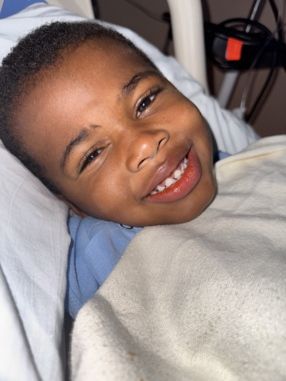
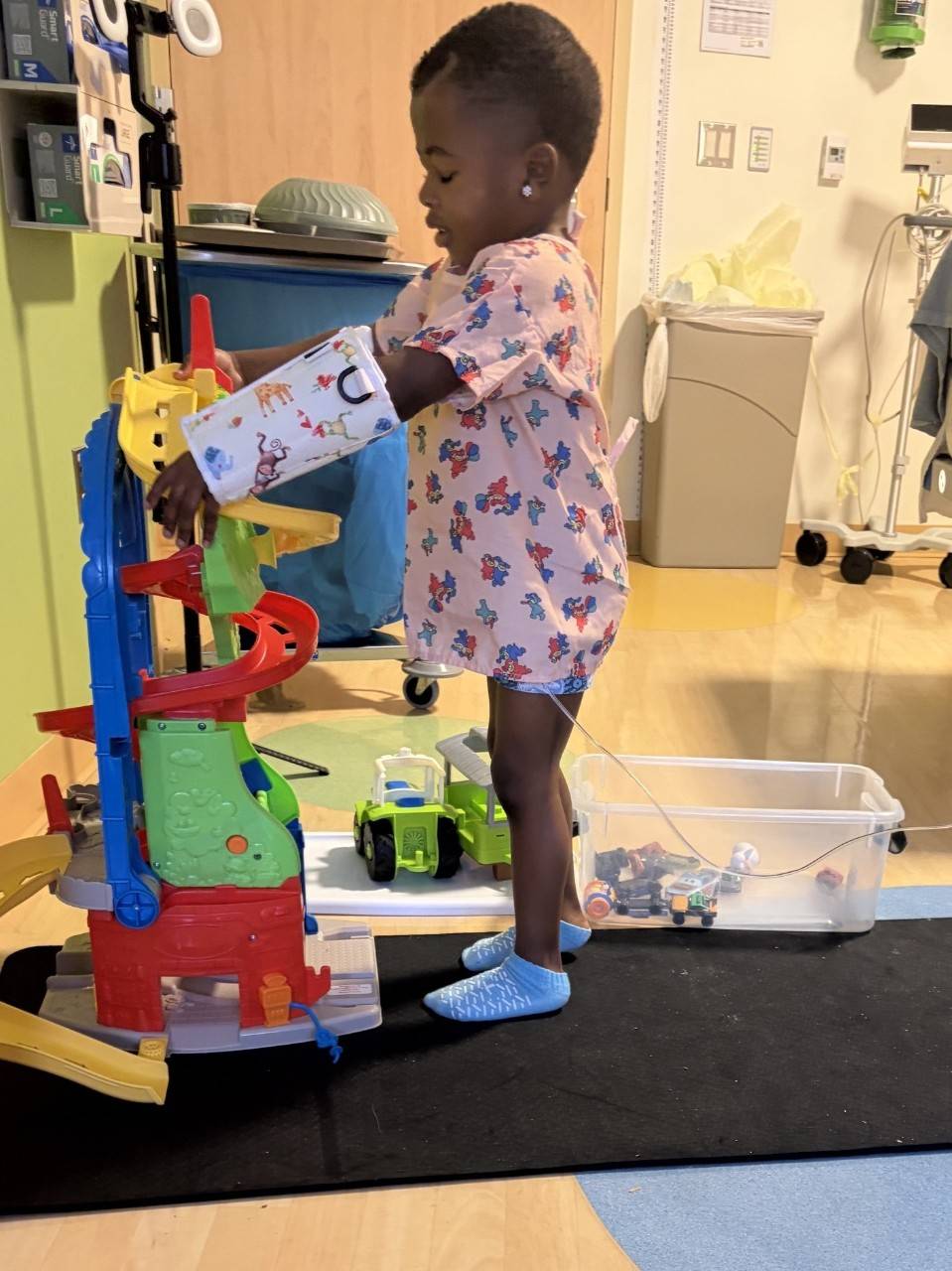
Despite the challenges of sickle cell disease, Isiah's smile shines through during a hospital stay
Today, Barrow and Isiah use their voices to raise awareness about sickle cell disease and the lifesaving importance of blood donation. Together, they have participated in blood drives, shared their story at community events and encouraged more people to become donors through their Healing Hearts for Warriors Foundation.
Supported by family, friends and fellow advocates, Barrow continues to navigate the challenges of caring for a child with a chronic illness while working to create a stronger support system for others facing the same journey.
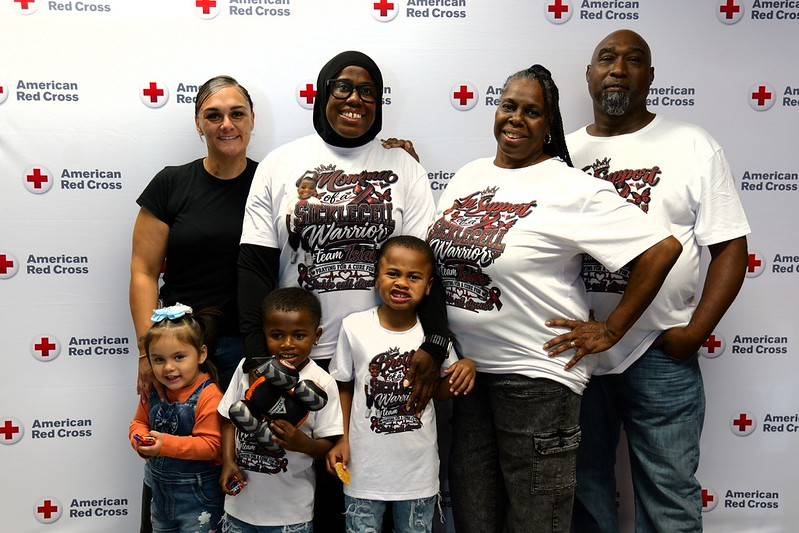
Tashamia Barrow, Isiah and their family gather during a Sickle Cell Awareness Month event, sharing their journey and helping shine a light on the realities of living with sickle cell disease.
Photo by Taylor Poisall/American Red Cross
"I feel like sickle cell is the same as cancer, but it's overlooked. They need the same love and support that cancer patients have, which they don't have. They don't have the same resources either."
For Barrow, sharing Isiah's story and helping others understand the lifelong need for blood donations is her life mission. For many warriors, one transfusion is only the beginning, and ongoing transfusions may be needed throughout their lives, making a committed community of blood donors essential.
Blood donors have helped Isiah defy the odds. This spring, he and his family will travel to New Orleans to celebrate his upcoming fifth birthday, a milestone that once felt uncertain.
Today, Isiah continues to fill rooms with laughter, keep his toy trucks close by and enjoy childhood alongside his brothers. His journey with sickle cell disease continues, along with the need for blood donors who help make those moments possible.
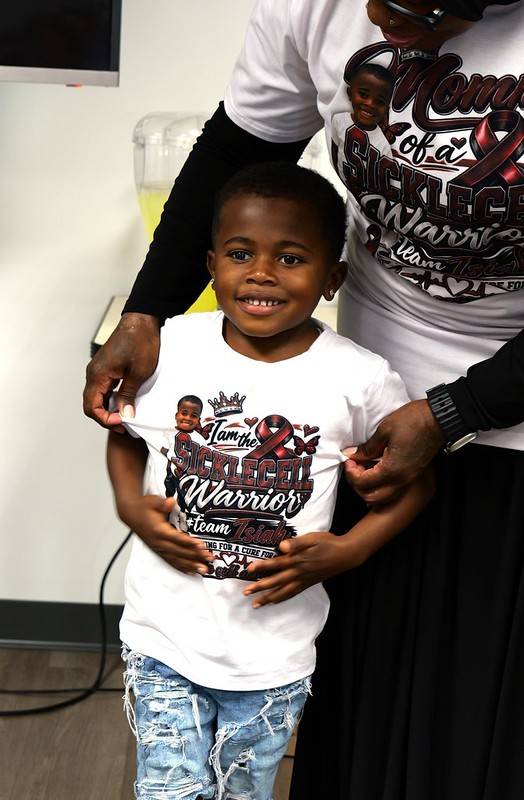
Isiah and his mom sharing his story among Red Cross staff members and volunteers
Photo by Taylor Poisall/American Red Cross
When asked what people can do to help Isiah and other sickle cell warriors experience more childhood moments filled with possibility, Barrow's answer is simple: donate blood.
Schedule a blood donation appointment today by visiting RedCrossBlood.org/OurBlood, using the Blood Donor App or calling 1-800-RED CROSS (1-800-733-2767).
Support all the urgent humanitarian needs of the American Red Cross.
Find a drive and schedule a blood donation appointment today.
Your time and talent can make a real difference in people’s lives. Discover the role that's right for you and join us today!