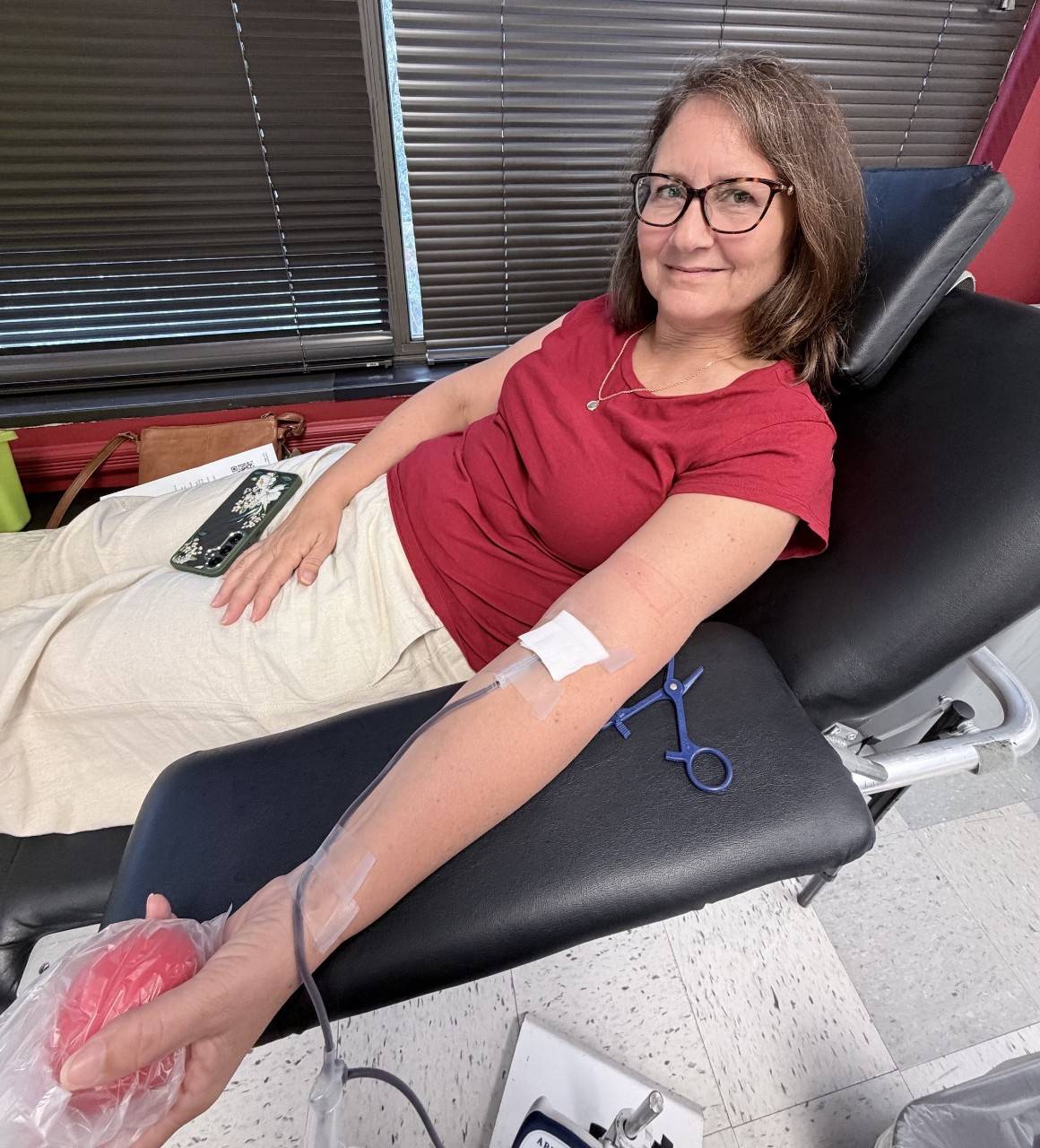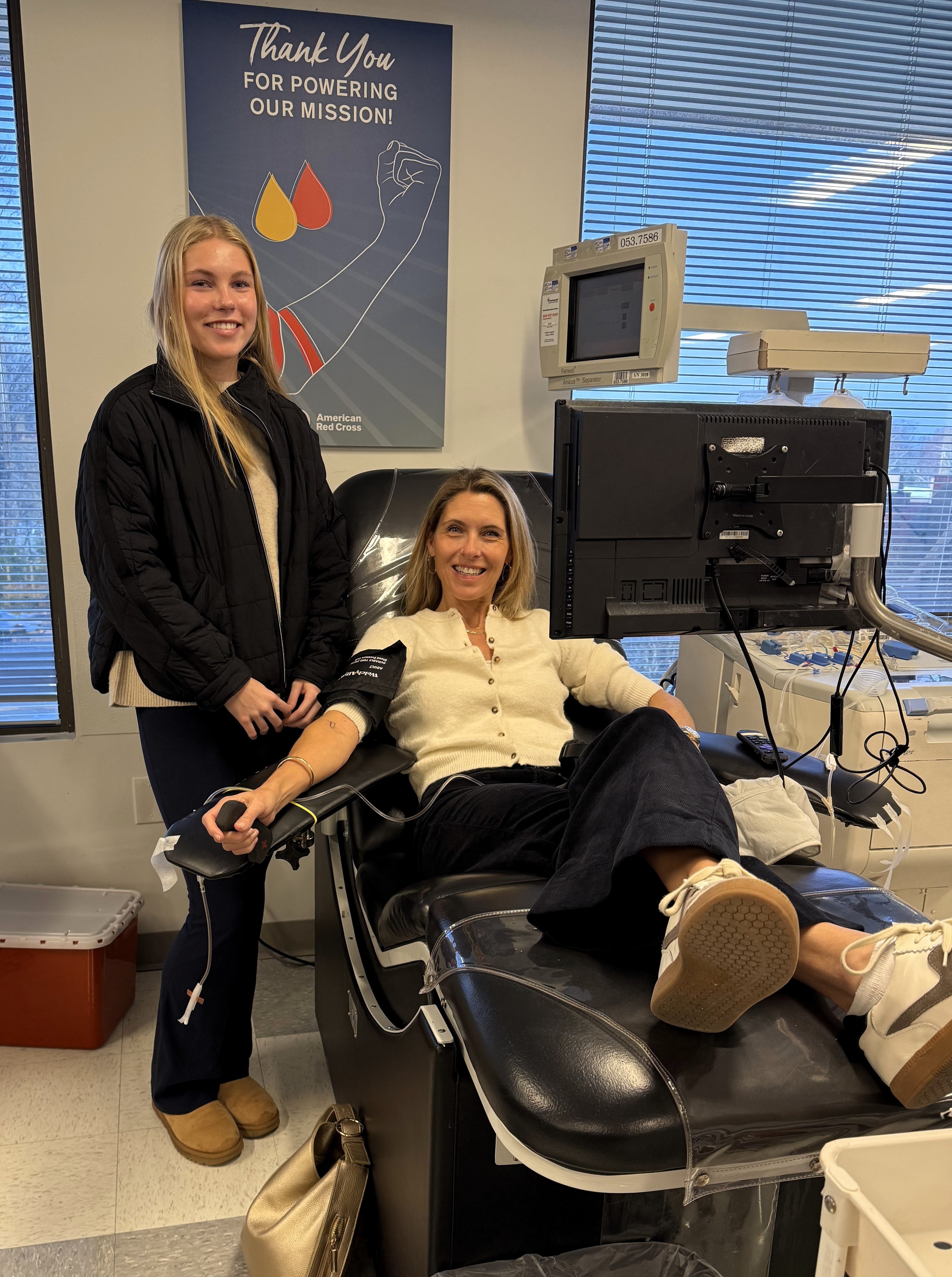
(L to R) Ellen and Lisa Malloy, pictured at the Red Cross blood donation center in Fairfax, Virginia this week.
By Lisa Malloy, platelet donor and board member of the Red Cross of Northern Virginia
When I was 17, I donated platelets for the first time. My little brother was battling leukemia, and I was grateful to discover something tangible I could do to help his treatment. It gave me a sense of purpose during an otherwise helpless time.
Last weekend, my 18-year-old daughter came home from her first year of college for winter break and asked to donate platelets with me. She's studying biology and exploring a path toward a medical career — she'd learned about platelets in class and knew that I was planning to donate.
I am proud — not just because she wants to give back, but because she understands that this small act could make an enormous difference for a family somewhere.
Platelets are a critical clotting component of blood, most often needed by patients battling cancer. Someone in the U.S. needs life-saving platelets every 15 seconds.
Unfortunately, my daughter’s hemoglobin was too low yesterday, so she couldn't donate. We'll address it and try again. But her willingness inspired me to write this now.
The holidays bring a critical shortage of platelet donations. People travel, schedules fill up, and the blood supply dips just when hospitals need it most. Cancer doesn't take a holiday. Patients receiving chemotherapy, those undergoing transplants and trauma victims all depend on platelet transfusions — and platelets have a shelf life of just five days.
Compared with a typical whole blood donation, which must be used within 42 days, the short shelf life means that a platelet donation received by the Red Cross is processed and available to help a hospital patient that same week. Donors are needed every day, and especially during the critical holiday weeks.
If you're home for the holidays and wondering how to spend a free morning or afternoon, consider this: two hours of your time could give someone's family the gift of hope.
My daughter will try again when her hemoglobin is back up. I hope many of you reading this will make your first appointment. The need is real and urgent, and you have something incredibly valuable to give.
For me, yesterday's donation was about gratitude — gratitude for my children's health and gratitude that I have the ability to help others. As I gather with loved ones this season, I'll be thinking of those who are spending their holidays in hospital rooms, hoping for treatments that depend on donors like us.
*****
Eligible donors may donate platelets every seven days, up to 24 times a year. The ideal blood types for platelet donation are A positive, A negative, B positive, O positive, AB positive and AB negative.
Find out more: RedCrossBlood.org/Platelets
"The need is real and urgent, and you have something incredibly valuable to give."
Support all the urgent humanitarian needs of the American Red Cross.
Find a drive and schedule a blood donation appointment today.
Your time and talent can make a real difference in people’s lives. Discover the role that's right for you and join us today!