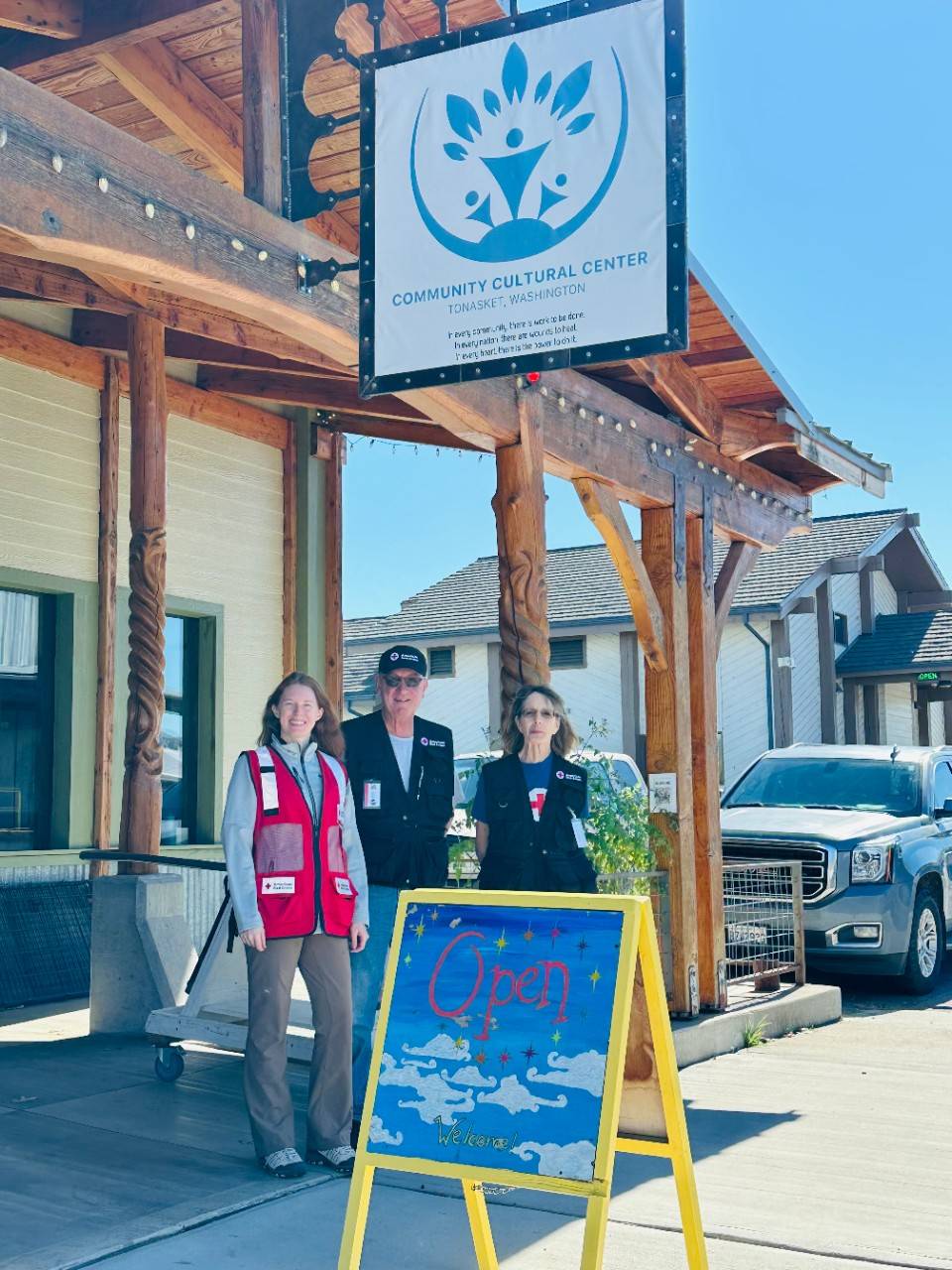
Lindsey Doyle (far left) with local volunteers George and Valerie Rohrich at a Red Cross assistance center in Tonasket, Washington.
By Lindsey Doyle, executive director, Red Cross of Southern Maryland
On January 3, 2025 in Altadena, California, my parents heard their phones buzz with alerts that their neighborhood was under a fire watch. Fifteen minutes later, the fire trucks drove down their street, using their loudspeakers to tell residents they had just minutes to evacuate.
Their house was nestled in the foothills, five blocks from the mountains. Flames emerged from the ridgeline above. Cars streamed down the street, getting stuck in panicked, frustrated traffic jams. My parents grabbed what they could and left.
At the time, I sat in my apartment 3,000 miles away listening online to the LA Fire Department radio dispatch channel where fire crews for the Eaton and Palisades fires were communicating. I heard chatter about acreage burned, embers landing on homes and igniting, coordination of the few shared water helicopters to put out hot spots, crew shift turnovers, and the locations of trapped residents where rescues needed to happen.
The U.S. National Guard stood watch on the corner of their street. I sat and listened to that radio dispatch into the night for a week, praying that I wouldn’t hear my parents’ address announced.
There was nothing I could do in that moment but sit and wait.
I watched as local businesses started opening their doors for mutual aid. The American Red Cross stood up temporary shelters, offered medical care, supported nursing homes to be evacuated and families looking to be reunited. In their hour of need, the American Red Cross showed up for my hometown.
Watching that work unfold, I knew that it had to be the last time that I sat on the sidelines when disaster struck.
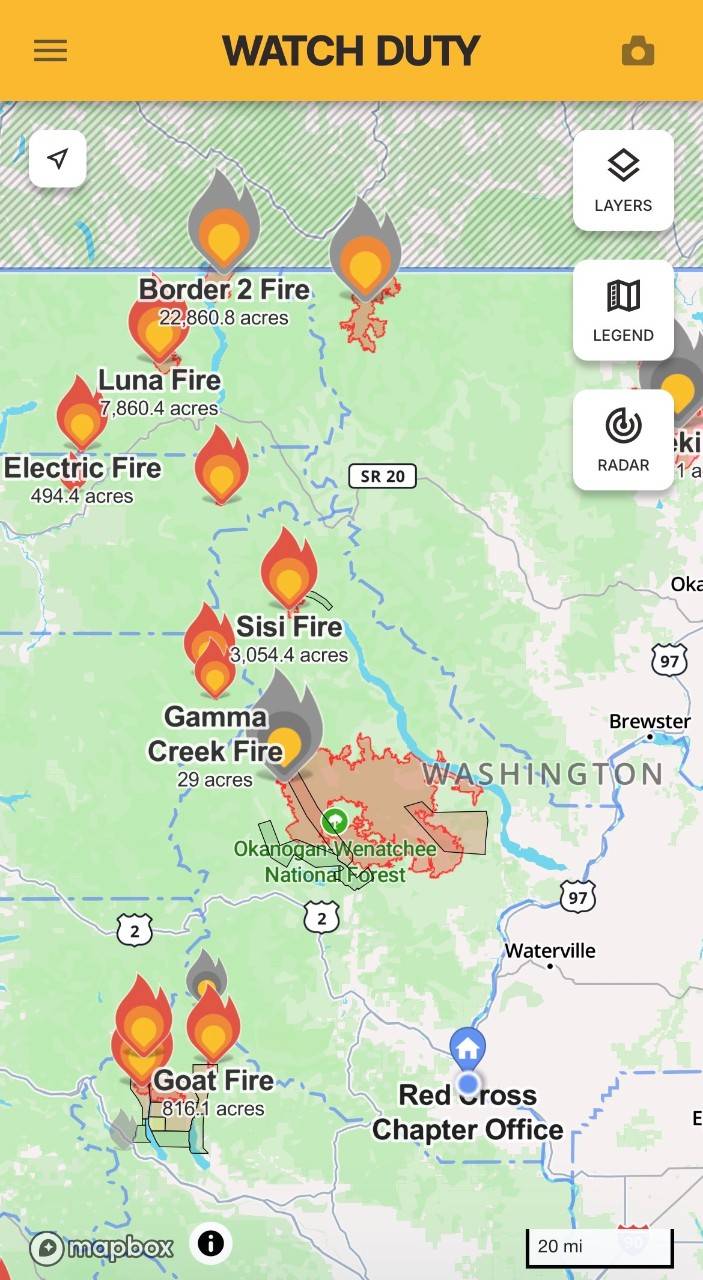
Come September 2026, five months into my new role as Executive Director for the American Red Cross of Southern Maryland, I was boarding a plane for Spokane, Washington to join hundreds of Red Cross volunteers and staff who came from across the county to be part of the statewide wildfire response throughout the summer. I was one of close to 20 volunteers and staff from my home region, the National Capital & Greater Chesapeake, who deployed there throughout August and September.
This was the second worst fire season in the state’s history. The Spokane fire alone burned 650 primary homes in Washington state. The Red Cross supported more than 4,000 families through more than 40 disaster shelters, tens of thousands of meals, mental health counseling, financial support and recovery casework.
Families – many of whom hadn’t even been back to sift through their damaged or destroyed homes yet, weeks after the fire – were able to talk into our Disaster Assistance Center to receive financial assistance from the American Red Cross and our partners.
The stories I heard will remain with me for a long time: A young couple who lost their home to the Sinlehekin fire on their wedding day; an older adult without insurance or family ties; and 100 acres of a rancher’s land burned. Lives and livelihoods upended and lost. I was proud to play a small part in the vast operation supporting residents on their first steps toward disaster recovery.
Firefighting teams remained in the field through October, and counties continue to closely monitor the risk for flooding from heavy rain falling onto burn scars as we approach winter. Thousands of people who worked this season — emergency managers, community members, climate scientists, Tribal elders, firefighters, EMS, land managers, and volunteers— were only beginning to catch their breath after two years in a row of the worst fire seasons that they have ever seen.
While immediate disaster response is often chaotic and loud, this work is also about those quiet, unseen moments weeks after the fire when you get to look another person in the eyes and let them know that what they have lost and what they have gone through is seen, and that they are not alone. That their pain is real, and in many ways, universal. Had the winds gone a difference direction in Altadena back in January 2025, their story of total loss would have been my family's story, too.
As disaster responders, we get the opportunity to turn toward this universal pain to offer the unique combination of compassion and real-world practical assistance. We get to offer love in action.
And the work doesn't stop there. The Red Cross not only stands with survivors in the immediate aftermath, but we continue to work to change the broader conditions that enabled the fires to result in property destruction and loss of life in the first place.
Long after the national deployment teams have gone home, the local Red Cross Greater Inland Northwest Washington chapter continues their work of building community connectivity, preparedness, advocacy, and local leadership — the elements of prevention that often make the biggest difference in the heat of a disaster. We continue to highlight the impact of the climate crisis on extreme heat and fire conditions, and Red Cross regions across the county continue to develop their deployable volunteer workforce to be fit for whatever the future might hold.
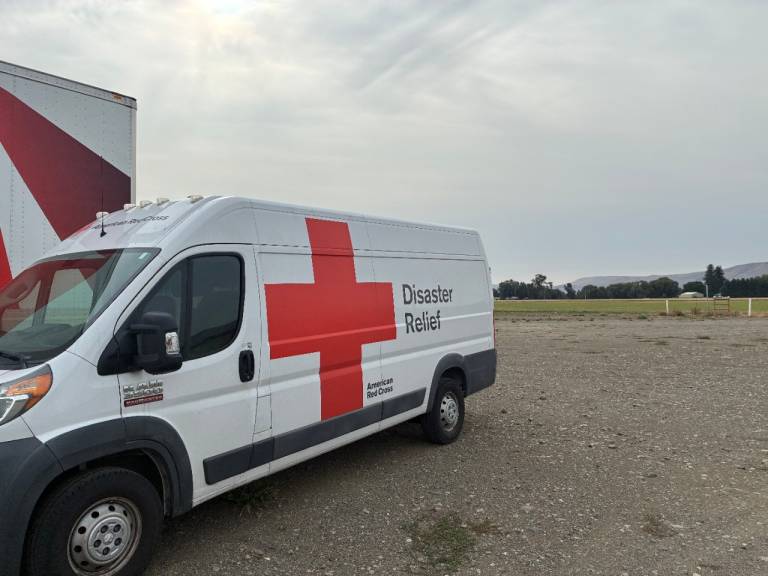
"... this work is also about those quiet, unseen moments, weeks after the fire when you get to look another person in the eyes and let them know that what they have lost and what they have gone through is seen, and that they are not alone."
When hurricanes, wildfires and other disasters strike, families are often left with critical needs for things like food and shelter. You can be one of the first volunteers on the ground.
When you deploy to support disaster relief with the American Red Cross, your two weeks of service can make all the difference to communities. Visit redcross.org/deployhope to get started.
Support all the urgent humanitarian needs of the American Red Cross.
Find a drive and schedule a blood donation appointment today.
Your time and talent can make a real difference in people’s lives. Discover the role that's right for you and join us today!