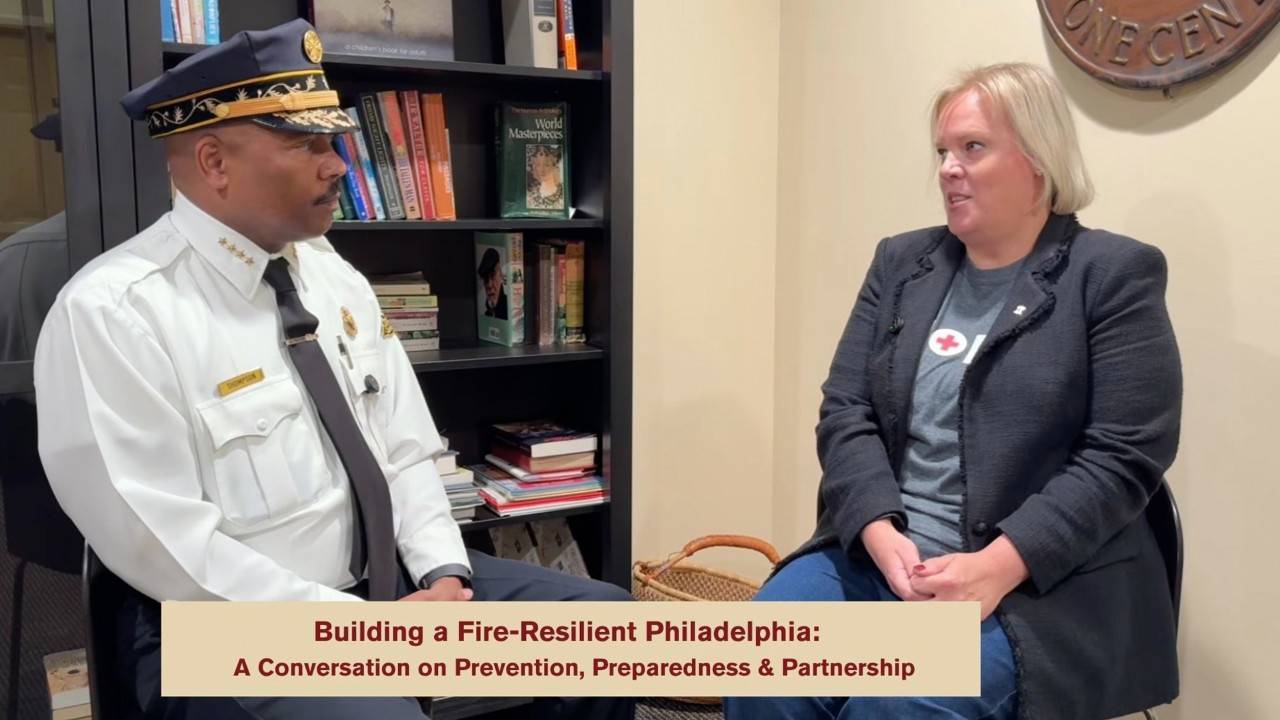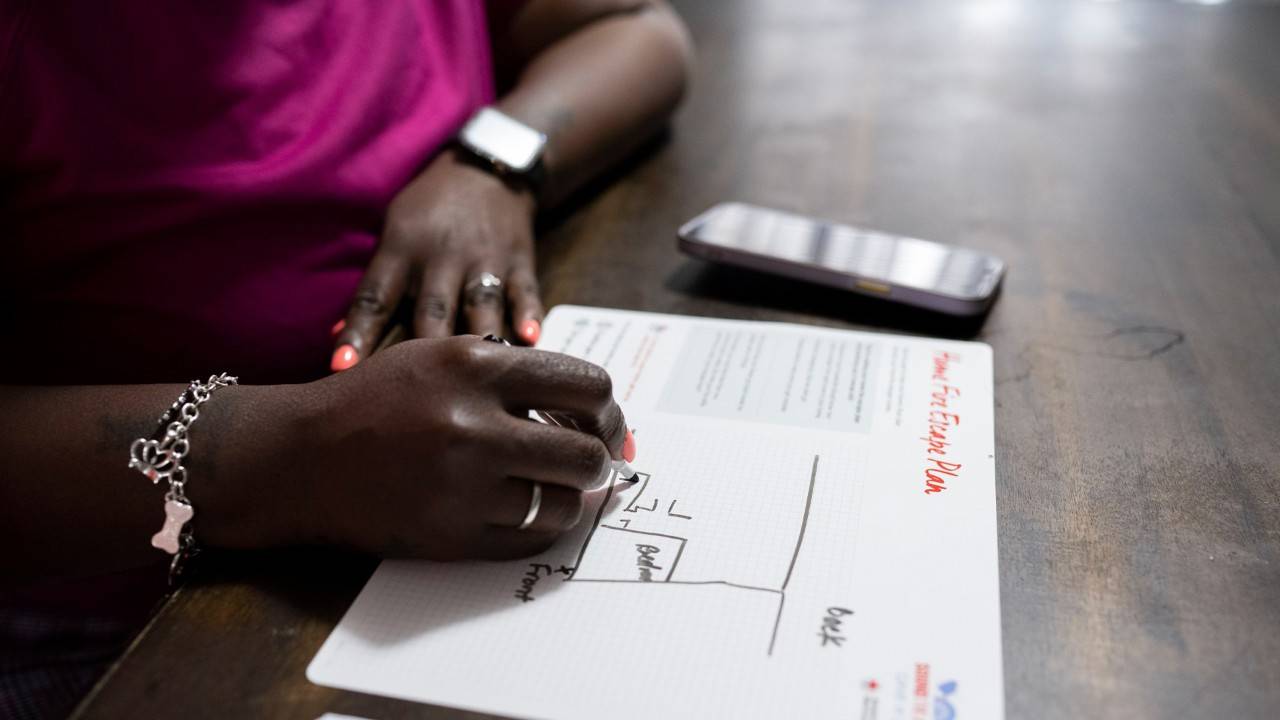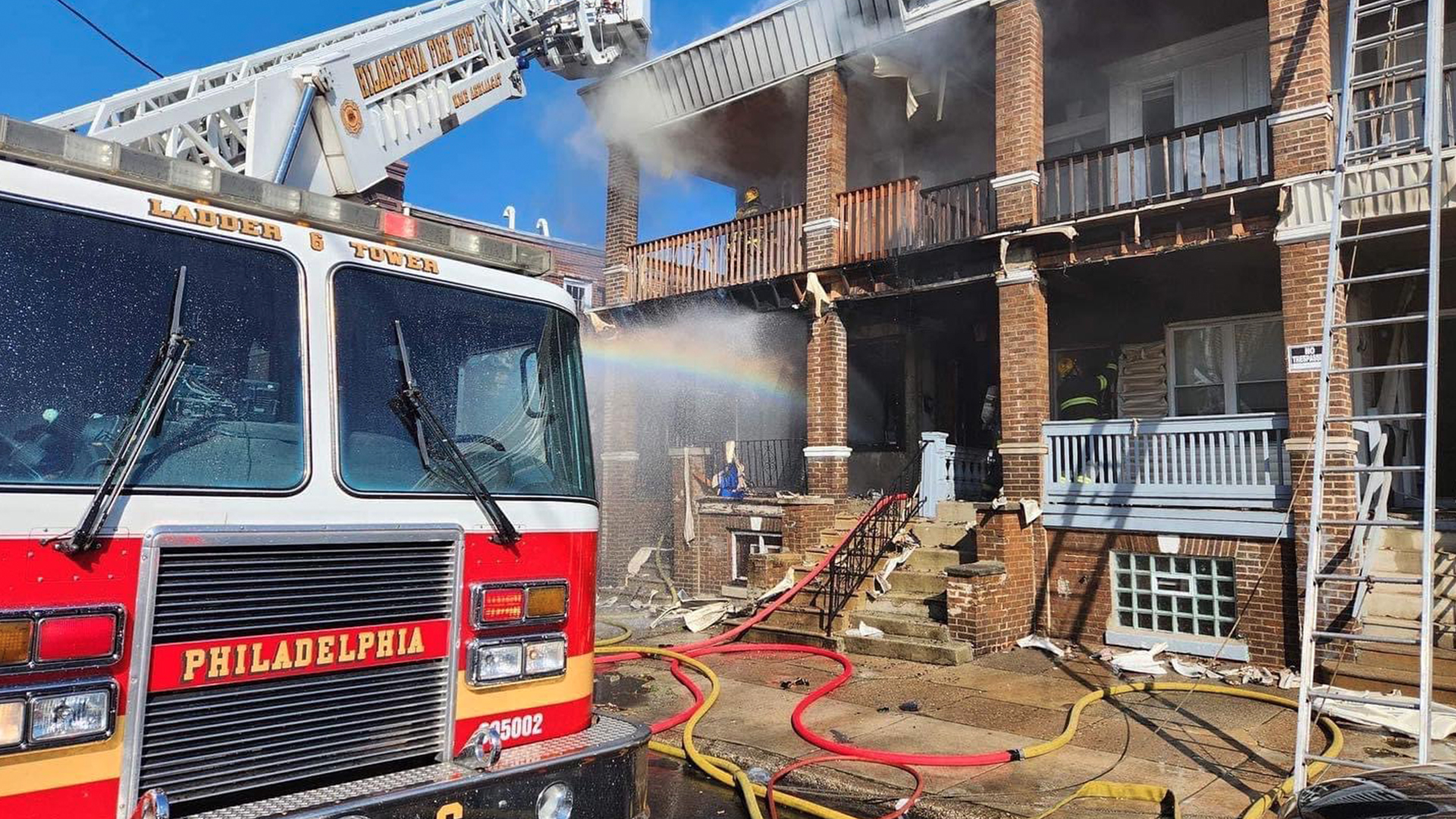
Photo taken by an American Red Cross Disaster Action Team volunteer on the scene of a home fire in 2023.
Nearly three-quarters of Philadelphians believe they’re prepared for a home fire. However, a recent survey commissioned by the American Red Cross found that more than half don’t have a home fire escape plan, and only 6% have ever practiced one. That disconnect matters. The most common thing we hear after a home fire isn’t, “I wasn’t prepared.” We hear, “I didn’t think this would happen to me.”
From our different roles, we see the gap between confidence and preparedness play out across Philadelphia every day. The Philadelphia Fire Department responds to emergencies, and the Red Cross helps families navigate what comes next.
We’ve both witnessed those moments in the middle of the night. Families standing outside in pajamas. Children wrapped in blankets. Neighbors gathering on sidewalks trying to understand what happened. Firefighters moving quickly to ensure all people and pets are accounted for. And when the smoke begins to clear, Red Cross volunteers arriving with comfort, support and a plan for recovery.
Too often, preparedness is viewed through the lens of fear. We see it differently. Preparedness is an act of care. It's making sure your children know how to get out safely if an alarm sounds in the middle of the night. It's checking that your parents and grandparents have working smoke alarms. It's taking a few minutes today to protect the people you love tomorrow.
Being prepared isn't a moment in time. It's a commitment. That’s why Fire Prevention Week is about more than fire safety tips. It’s about building a culture of preparedness across Philadelphia. A fire-resilient city isn’t defined solely by how effectively it responds to emergencies. It’s defined by how well residents prepare for them, how communities support one another afterward and how committed all of us are to preventing tragedy before it happens.
We often think about preparedness and recovery as the bookends of emergency response. On one end is prevention: smoke alarms, escape plans and education that can save lives before a fire occurs. In the middle are the first responders who answer the call when every second matters. On the other end is recovery: helping families find shelter, replace essentials and begin rebuilding after one of the worst days of their lives. A safer Philadelphia requires all three.
This Fire Prevention Week, we're asking Philadelphians to take four simple, lifesaving actions:
What does a fire-resilient Philadelphia look like? It’s a city where every home has working smoke alarms. Where families have practiced escape plans and know exactly what to do when alarms sound. Where neighbors share fire safety information and residents understand emerging risks. It’s also a city where recovery support is quick, compassionate and supported by strong partnerships across the City.
Most of all, it’s a city where fewer families experience the heartbreak of losing a loved one to fire. That’s our shared goal: zero fire fatalities in Philadelphia. Every smoke alarm tested, every escape plan practiced and every conversation about fire safety brings us closer. Fire resilience isn’t built in a moment of crisis. It’s built in the moments before one.
---------------
Written by Jeffrey Thompson, Philadelphia Fire Commissioner, and Jennifer Graham, CEO, American Red Cross Southeastern Pennsylvania
Support all the urgent humanitarian needs of the American Red Cross.
Find a drive and schedule a blood donation appointment today.
Your time and talent can make a real difference in people’s lives. Discover the role that's right for you and join us today!