By Anjan K. Garg, Youth Services Executive Board
How do you reach more blood donors for people living with sickle cell disease? For patients who depend on closely matched blood transfusions, finding compatible donors remains one of the field's most persistent challenges.
Over the past four years, youth volunteers with the American Red Cross North Texas Region partnered with schools, faith communities and local organizations across North Texas to answer that question.
Between 2021 and 2025, they developed and implemented Blood for Change, a youth-led, community-centered donor recruitment initiative to identify areas with high Black and African American populations and low blood drive density in Dallas and Tarrant counties to boost blood donations. In that time, Blood for Change collected 1,181 units of blood across seven donation sites, enough to support more than 3,500 patients. Even more significantly, more than 38% of participating donors identified as African American, compared with about 3.8% of blood donors nationwide.
These results were recently published in The Journal of Sickle Cell Disease, published by Oxford University Press, under the direction of principal investigator Adam J. Milam, MD, PhD, at the Johns Hopkins University School of Medicine.
In June, Blood for Change reached a national audience.
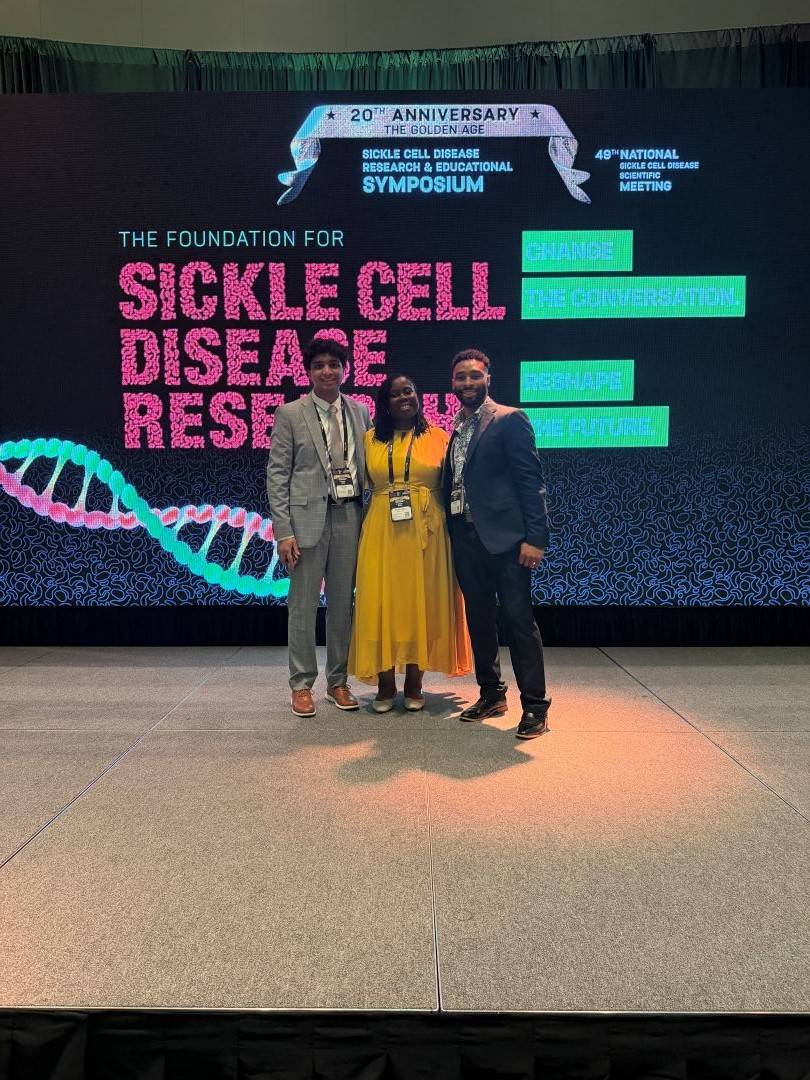
At the Foundation for Sickle Cell Disease Research's (FSCDR) 20th Annual Symposium and 49th National Scientific Meeting in Fort Lauderdale, Florida, Zachary Rouseau and I presented the Blood for Change model during a spotlight oral session.
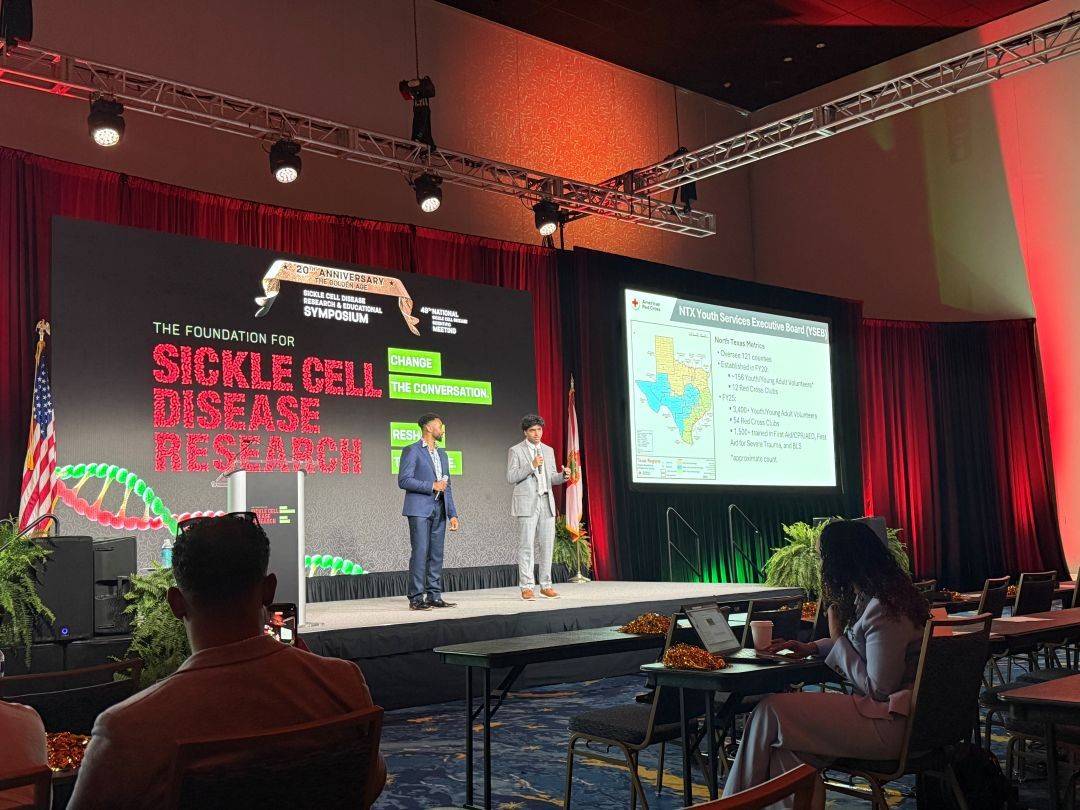
The symposium brought together researchers, clinicians, patient advocates, families and people living with sickle cell disease, all working toward the shared goal of improving care and expanding access to compatible blood. Our presentation focused on how a youth-led initiative grew into a sustainable community program.
We explained how volunteers first identified neighborhoods with limited access to blood drives. From there, they worked alongside trusted community organizations to build lasting partnerships. Community members then became Blood Program Leaders who continued organizing blood drives after the initial outreach ended.
The conversations after our presentation stayed with me.
Researchers, clinicians and community leaders wanted to understand why the model succeeded and how they might adapt it in their own communities by giving young people meaningful leadership roles.
One advocate from the United Kingdom asked thoughtful questions about how we built trust with local organizations and whether the same approach could work within a different health care system. Those conversations shifted my perspective. What began as a North Texas initiative speaks to a challenge shared by communities around the world.
Throughout the symposium, I heard about advances in gene therapy, clinical research and patient care. Our presentation offered a different perspective; one centered on community engagement and the role young people play in building lasting relationships. The experience reinforced an important lesson for me. Scientific advances improve treatment, but lasting progress also depends on people who build trust, educate their communities and encourage others to get involved.
Presenting at FSCDR and publishing our findings in The Journal of Sickle Cell Disease allowed our team to share four years of work with a broader audience while learning from others dedicated to the same mission.
I left Fort Lauderdale with a broader perspective and a deeper appreciation of how local partnerships improve care for people living with sickle cell disease.
Support all the urgent humanitarian needs of the American Red Cross.
Find a drive and schedule a blood donation appointment today.
Your time and talent can make a real difference in people’s lives. Discover the role that's right for you and join us today!